
Automatically apply for jobs with Zippia
Upload your resume to get started.
Computer laboratory technician skills for your resume and career
15 computer laboratory technician skills for your resume and career
1. Computer Lab Operations
- Assisted students and faculty with various operational problems, in addition to maintaining computer lab operations and activities.
- Maintained computer lab operations and security.
2. Network Printers
- Configured and maintain network printers and peripheral equipment.
- Network printers, projectors and devices and schedule Lab times - Run virus scans and update all computers and apply system images
3. Troubleshoot
Troubleshooting is the process of analyzing and fixing any kind of problem in a system or a machine. Troubleshooting is the detailed yet quick search in the system for the main source of an issue and solving it.
- Prioritized support requests, working directly with administrators and end-users to accurately troubleshoot and correct software issues.
- Resolved proxy configuration issues and troubleshoot other network connectivity problems.
4. Computer Software
- Answered user inquiries regarding computer software and hardware operation to resolve problems.
- Selected to provide group tutoring assistance for computer software classes
5. Mac
A media access control or simply MAC is a network policy that identifies or determines how the data is being transferred in two particular servers through a network cable. The purpose of a MAC protocol is to prevent network or technical issues and simplify transferring the information or data.
- Worked extensively with all of Microsoft Office, Mac OSX, Linux, and Windows XP, Vista, and 7.
- Provided computer and network support for PC and Mac users in several computer labs in the Instructional Technology Centers.
6. Computer System
- Tracked student attendance and inputted weekly attendance sheets into computer system.
- Completed hardware set-up and software installation of computer systems.
Choose from 10+ customizable computer laboratory technician resume templates
Build a professional computer laboratory technician resume in minutes. Our AI resume writing assistant will guide you through every step of the process, and you can choose from 10+ resume templates to create your computer laboratory technician resume.7. Word Processing
- Assisted students with various programs such as word processing, spread sheets, and major-specific software.
- Assist students and faculty with document and word processing applications.
8. Software Applications
A software application is any computer program developed and used by consumers, such as Microsoft's suite of products (Office, Excel, Word, PowerPoint, Outlook, etc.), Internet browsers such as Firefox, Safari, and Chrome, or browser add-ons that Defendant preinstalls or causes to be preinstalled onto a Covered Product. The software application is designed to help the user perform specific tasks - personal, educational, and business functions.
- Tutored Residents in various operating systems and software applications to enhance basic understanding of computer usage.
- Maintained computer hardware and software applications inventory to ensure availability of equipment in computer lab.
9. PowerPoint
- Assist students in utilizing software for class presentations and projects such as Microsoft PowerPoint, Microsoft Excel and Microsoft Word.
- Monitor computer lab, teach and train basic computer proficiency (MS Word, Excel, and PowerPoint).
10. Software Problems
- Provided ongoing maintenance on computers and performed troubleshooting on hardware/software problems.
- Performed hardware/software installations and provided troubleshooting to correct hardware/software problems.
11. Software Issues
Software issues are challenges related to the software installed in a computer that can be resolved by troubleshooting, bug fixes, and in extreme cases by a programmer. Software issues can cause the software to lag in the system, malfunction, or affect the entire function of the computer system in general.
- Conducted analysis of hardware and software issues
- Solve basic computer hardware/software issues.
12. C++
C++ is a general-purpose programming language that is used to create high-performing applications. It was invented as an extension to the C language. C++ lets the programmer have a high level of domination over memory and system resources. C++ is an object-oriented language that helps you implement real-time issues based on different data functions
- Support MS Windows 7, XP, Office 2010, Visual C++ Express, Lego NXT and HP Printers.
- Assisted students with computer use Assisted students with computer-related assignments (C++, HTML, Unix, etc.)
13. Technical Assistance
Technical assistance is the non-financial assistance provided by local or international specialists. The purpose of technical assistance is to maximize the project's implementation and quality of the final product. Technical assistance consists of sharing information, the transmission of working knowledge, and other transfer of technical data which would aid the administration, management team and help build the project. The technical assistance focuses on particular needs identified by the beneficiary country and is delivered in the form of missions.
- Provided technical assistance in operating both video and audio equipment for various services within the church sanctuary
- Provide technical assistance to students in reference to course-related software including Microsoft Office programs.
14. PCS
- Ensured that PCs were maintained and operating effectively and that students had the technological support needed to complete their work.
- Involved in the selection and purchase of a file server and revitalizing the school computer lab with Power PCs.
15. Software Programs
- Handled technical troubleshooting within a college environment, including software programs, and data recovery.
- Installed and configured software programs/packages, utility applications, and operating systems.
5 Computer Laboratory Technician resume examples
Build a professional computer laboratory technician resume in minutes. Browse through our resume examples to identify the best way to word your resume. Then choose from 5+ resume templates to create your computer laboratory technician resume.

What skills help Computer Laboratory Technicians find jobs?
Tell us what job you are looking for, we’ll show you what skills employers want.
What skills stand out on computer laboratory technician resumes?
Anthony Baron
Teaching Assistant, Associate Software Engineer, American University
What soft skills should all computer laboratory technicians possess?
Anthony Baron
Teaching Assistant, Associate Software Engineer, American University
What hard/technical skills are most important for computer laboratory technicians?
Anthony Baron
Teaching Assistant, Associate Software Engineer, American University
What computer laboratory technician skills would you recommend for someone trying to advance their career?
Kate Marek Ph.D.
Director and Professor, Dominican University
What type of skills will young computer laboratory technicians need?
Joshua Davis Ph.D.
Lecturer, Carleton College
What technical skills for a computer laboratory technician stand out to employers?
Chirag Parikh Ph.D.
Computer Engineering Chair, Grand Valley State University
As a Computer Engineering professor, I would say the job opportunities are tremendous for students out of college as they can venture into hardware field (technical support, hardware engineer, test engineer and much more) as well as software field (software engineer, software developer, software tester and much more). The possibilities are endless.
With COVID and employees working remotely there is still ample opportunity to enhance your technical and interpersonal skills as I believe remote working might stay for a while till things get back to normal.
List of computer laboratory technician skills to add to your resume
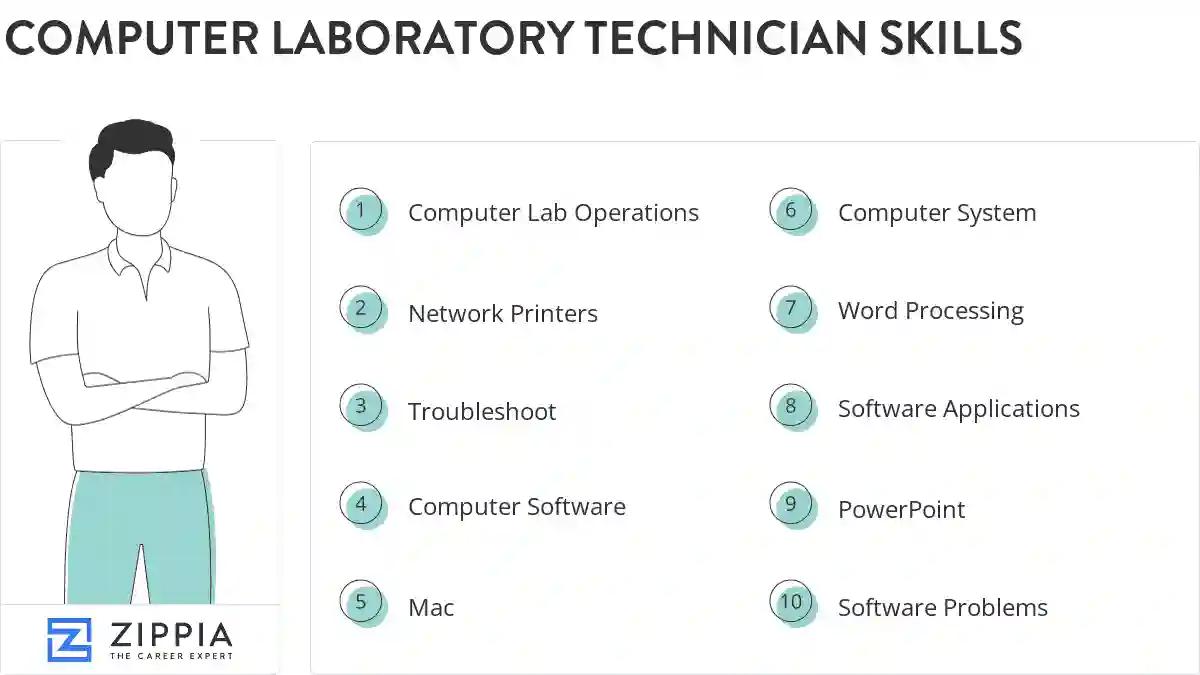
The most important skills for a computer laboratory technician resume and required skills for a computer laboratory technician to have include:
- Computer Lab Operations
- Network Printers
- Troubleshoot
- Computer Software
- Mac
- Computer System
- Word Processing
- Software Applications
- PowerPoint
- Software Problems
- Software Issues
- C++
- Technical Assistance
- PCS
- Software Programs
- Desk Support
- Desktop Computers
- Computer Programs
- OS
- Peripheral Equipment
- LAN
- Help-Desk Support
- Computer Problems
- Software Installation
- Technical Problems
- Technical Issues
- Linux
- Photoshop
- Unix
- Computer Usage
- Windows XP
- Computer Maintenance
- Routine Maintenance
- Computer Issues
- HTML
- Cad Cam
- Symantec Ghost
- Troubleshot
- Software Packages
- SQL
- IP
- Autocad
- Preventive Maintenance
- Software Upgrades
- Blackboard
- Network Problems
- Network Issues
- Software Support
- Computer Applications
Updated January 8, 2025
