What does a learning center instructor do?
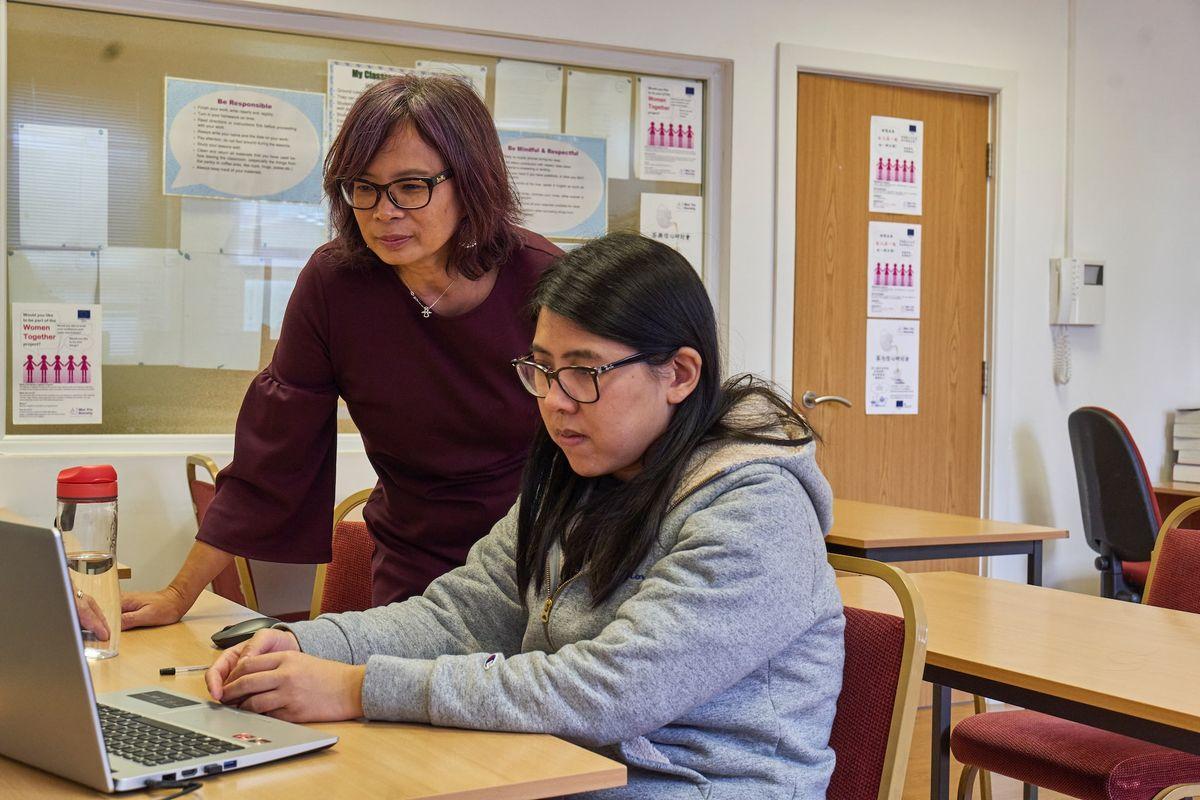
Learning center instructors' primary goal is to give direct mediation instruction for recognized students. They cooperate with staff members on suitable student placement for constructive learning. Their duties include directing all activities concerning planning, organization, development, communication, and delivery of training programs as well as initiatives. They work on leadership strategies for assisting children's emotional and social development and handling their behavior. Additionally, they coordinate with community organizations, facilities, and other professionals to design balanced recreational routines for participants.
Learning center instructor responsibilities
Here are examples of responsibilities from real learning center instructor resumes:
- Own and manage a small business as a CPR and first aid instructor and consultant for diverse clients.
- Plan and implement educational programs that build youth's reading, writing math, and science skills.
- Experience in creating WebEx sessions, PowerPoint presentations, and facilitating in both face-to-face and virtual environments.
- Serve as a tutor for various math, reading, and learning skills for students in middle school and higher.
- Provide support to teachers during associate research study.
- Guide students in developing better organizational and study skills.
- Tutor for introductory biology, anatomy and physiology, and introductory-intermediate Spanish
- Develop and instruct specialized courses and laboratory sessions for funeral directors in human anatomy and biology and conduct private tutoring sessions.
- Study and instill the TEACCH philosophy and methods, to fit the needs of individual goals.
Learning center instructor skills and personality traits
We calculated that 30% of Learning Center Instructors are proficient in Math, Professional Development, and Course Curriculum. They’re also known for soft skills such as Physical stamina, Cultural sensitivity, and Communication skills.
We break down the percentage of Learning Center Instructors that have these skills listed on their resume here:
- Math, 30%
Increased student's English, Reading, Science, Social Studies and Math test scores through private tutoring and special attention.
- Professional Development, 10%
Participate in and facilitate ongoing staff professional development focused on classroom and behavior management.
- Course Curriculum, 6%
Worked with other instructors to integrate course curriculum to achieve an interdisciplinary learning approach.
- Child Care, 6%
Provided weekly child care in my home for an infant during summer months
- Study, 6%
Tutored students using the Sylvan curriculum/technique for building phonemic awareness, vocabulary, comprehension, and study skills.
- Educational Programs, 5%
Developed and implemented educational programs for youth
"math," "professional development," and "course curriculum" are among the most common skills that learning center instructors use at work. You can find even more learning center instructor responsibilities below, including:
Physical stamina. One of the key soft skills for a learning center instructor to have is physical stamina. You can see how this relates to what learning center instructors do because "working with kindergarten- and elementary-age students can be tiring." Additionally, a learning center instructor resume shows how learning center instructors use physical stamina: "promoted and supported children's social, emotional and physical development consistent with the philosophy of head start/early childhood development. "
Communication skills. This is an important skill for learning center instructors to perform their duties. For an example of how learning center instructor responsibilities depend on this skill, consider that "teachers need to discuss students’ needs with parents and administrators." This excerpt from a resume also shows how vital it is to everyday roles and responsibilities of a learning center instructor: "coordinated communication between students and school administration to create an effective and culturally-sensitive learning environment. ".
Patience. For certain learning center instructor responsibilities to be completed, the job requires competence in "patience." The day-to-day duties of a learning center instructor rely on this skill, as "kindergarten and elementary school teachers must respond with patience when students struggle with material." For example, this snippet was taken directly from a resume about how this skill applies to what learning center instructors do: "embodied and honored the instructor s code of ethics of professionalism, patience, rapport, respect, and admission. "
Resourcefulness. A commonly-found skill in learning center instructor job descriptions, "resourcefulness" is essential to what learning center instructors do. Learning center instructor responsibilities rely on this skill because "kindergarten and elementary school teachers must be able to get students engaged in learning." You can also see how learning center instructor duties rely on resourcefulness in this resume example: "showed resourcefulness and teaching effectiveness in meeting the needs of students with limited english language proficiency as well as learning disabilities. "
The three companies that hire the most learning center instructors are:
- KinderCare Education6 learning center instructors jobs
- Good Shepherd Services5 learning center instructors jobs
- Crozer Health4 learning center instructors jobs
Choose from 10+ customizable learning center instructor resume templates
Build a professional learning center instructor resume in minutes. Our AI resume writing assistant will guide you through every step of the process, and you can choose from 10+ resume templates to create your learning center instructor resume.


Compare different learning center instructors
Learning center instructor vs. Tutor
Tutors are individual contributors who make sure that students assigned to them can understand classroom lessons. They are often full-time educators themselves, but they may also be working in other fields and are only passionate about teaching. Tutors usually meet students after school to go over any lesson that the students find challenging. They assist students with their homework or other schoolwork that the students may need help in. At times, tutors are tapped to help students study for future lessons, meaning that they go through classroom lessons in advance.
There are some key differences in the responsibilities of each position. For example, learning center instructor responsibilities require skills like "professional development," "course curriculum," "child care," and "educational programs." Meanwhile a typical tutor has skills in areas such as "academic subjects," "muse," "organic chemistry," and "literature." This difference in skills reveals the differences in what each career does.
Tutors tend to make the most money working in the professional industry, where they earn an average salary of $37,356. In contrast, learning center instructors make the biggest average salary, $37,954, in the health care industry.The education levels that tutors earn slightly differ from learning center instructors. In particular, tutors are 5.5% less likely to graduate with a Master's Degree than a learning center instructor. Additionally, they're 1.4% less likely to earn a Doctoral Degree.Learning center instructor vs. Tutor/mentor
Tutors and mentors are two different teaching jobs. Tutors oversee helping students understand varied subjects, assessing as well as encouraging them during the learning process. On the other hand, mentors go far beyond the role of tutors. They are wise and trusted counselors who help students get the motivation they need to advance in their chosen careers. Also, they share with their mentees their career paths, act as their role model, as well as provide guidance and emotional support.
In addition to the difference in salary, there are some other key differences worth noting. For example, learning center instructor responsibilities are more likely to require skills like "professional development," "basic mathematics," "course curriculum," and "child care." Meanwhile, a tutor/mentor has duties that require skills in areas such as "homework assignments," "mentoring students," "role model," and "organic chemistry." These differences highlight just how different the day-to-day in each role looks.
Tutor/mentors earn lower levels of education than learning center instructors in general. They're 7.2% less likely to graduate with a Master's Degree and 1.4% less likely to earn a Doctoral Degree.What technology do you think will become more important and prevalent for learning center instructors in the next 3-5 years?
Helen Callus
Professor of Viola, Northwestern University
I imagine this might become part of the framework that we offer in the future. Students should understand how to present themselves in these situations, understanding sound and picture quality devices (what microphones and cameras are best), internet speeds, ethernet cables, router devices, lighting, etc. But it is an excellent opportunity to understand the media of film/video and how to create best a sound video recording for competitions, summer festivals, or college applications. We were already using that medium for prescreens, so this is a chance to refine that skill as, without doubt, that will be a part of our future.
Learning center instructor vs. Math tutor
A math tutor's role is to provide mathematical lessons on an individual or small group setting. Most sessions take place after class or during the weekends, usually outside school premises or at home. The tutor's responsibility is to develop strategies for better learning, address difficulties, assist in homework and advanced studies, evaluate progress, and provide encouragement to a student. It is also essential for a math tutor to establish rapport, providing a student with a healthy learning environment.
The required skills of the two careers differ considerably. For example, learning center instructors are more likely to have skills like "professional development," "course curriculum," "child care," and "educational programs." But a math tutor is more likely to have skills like "kids," "linear algebra," "geometry," and "pre-calculus."
Math tutors earn the highest salary when working in the professional industry, where they receive an average salary of $35,916. Comparatively, learning center instructors have the highest earning potential in the health care industry, with an average salary of $37,954.Most math tutors achieve a lower degree level compared to learning center instructors. For example, they're 6.0% less likely to graduate with a Master's Degree, and 1.6% less likely to earn a Doctoral Degree.Learning center instructor vs. Academic tutor
An academic tutor is responsible for assisting the students' learning goals and development by helping them with school work and related academic tasks. Academic tutors implement effective learning strategies to improve the student's academic standing, such as identifying areas of improvement and addressing those difficulties by administering learning activities to evaluate the student's progress and adjust the learning approach as needed. They also review the school's curriculum and present educational materials adhering to the requirements, encouraging the student to set goals for learning objectives.
Even though a few skill sets overlap between learning center instructors and academic tutors, there are some differences that are important to note. For one, a learning center instructor might have more use for skills like "professional development," "basic mathematics," "course curriculum," and "child care." Meanwhile, some responsibilities of academic tutors require skills like "student athletes," "organic chemistry," "gpa," and "pre-calculus. "
The education industry tends to pay the highest salaries for academic tutors, with average annual pay of $32,838. Comparatively, the highest learning center instructor annual salary comes from the health care industry.academic tutors reach similar levels of education compared to learning center instructors, in general. The difference is that they're 3.8% more likely to earn a Master's Degree, and 1.0% less likely to graduate with a Doctoral Degree.Types of learning center instructor
Updated January 8, 2025
