
Automatically apply for jobs with Zippia
Upload your resume to get started.
Medical attendant skills for your resume and career
15 medical attendant skills for your resume and career
1. Patients
- Assisted patients and family members with personal and environmental difficulties which accompany a predisposed illness.
- Provided quality information to potential patients and family member who sought information concerning Evergreen Ministries.
2. Vital Signs
Vital signs are a set of values indicating different body systems' performance. They are measurements of the body's most basic functions. The four major vital signs used in medicine to assess a patient are body temperature, pulse rate, respiration rate, and blood pressure.
- Provided medical treatment to inmates including monitoring vital signs, accuchecks, EKG's, venipuncture, and administering prescribed medications.
- Monitored maternal condition during labor by checking vital signs and monitoring uterine contractions.
3. Patient Care
Patient care entails the diagnosis, recovery, and control of sickness as well as the maintenance of physical and emotional well-being through the use of healthcare providers' services. Patient care is described as services provided to patients by health practitioners or non-professionals under guidance.
- Opened and closed proper procedures of office, Assisted with primary Physicians and Specialists for patient care in any procedures required.
- Noted all charting of patient care and documenting reason of patient's visits.
4. CPR
Cardiopulmonary resuscitation or CPR is a medical procedure that involves chest compression to help a patient breathe. This artificial ventilation helps in keeping the brain function in place and regulates blood throughout the body. CPR is a lifesaving procedure that is used in emergencies.
- Recommend and/or initiate patient management in cases of acute distress with medications, laboratory orders and initiation of CPR when necessary.
- Completed a rotatory Medical Internship program along with CPR certification after graduating Medical School.
5. Administer Medications
- Assist physician in any procedures or patient requests, administer medications via oral or injection according to physicians recommendations.
- Administer medications to residents Supervise staff to ensure quality resident care Provided medication assistance documentation per policy and state requirements
6. Surgery
- Provided care for a patient, after being diagnosed with hypo-plastic left heart syndrome and a three stage open heart surgery.
- Provide Medical Service for Children, Adults and Elder -Minor Surgery -Reproductive Health for Women
Choose from 10+ customizable medical attendant resume templates
Build a professional medical attendant resume in minutes. Our AI resume writing assistant will guide you through every step of the process, and you can choose from 10+ resume templates to create your medical attendant resume.7. Blood Pressure
- Take and record the person's blood pressure, temperature, pulse and respirations.
- Measured blood pressure and glucose level to study diabetic base rates to determine if villagers with sugarcane crops have higher rates.
8. Physical Therapy
- Assist patients in performing physical therapy exercises and with administering medication based on doctor's orders.
- Used physical therapy skills to safely assist patients in after surgery recovery.
9. Patient Charts
- Provided clerical support to office staff including, filing patient charts, ensuring patient medical history and insurance forms completed appropriately.
- Acquired insurance authorizations for procedures, reviewed patient charts to collect appropriate information for approval of services.
10. Hippa
HIPAA, which stands for Health Insurance Portability and Accountability Act, is a United States federal statue created, enacted, and turned to law in 1996, which whose primary purposes were to modernise the healthcare systems in the United States, secure and generally enhance the management of that personal information of patients that was in the hands of healthcare facilities, such as hospitals and insurance companies, and to enable the providing of healthcare and insurance to more people.
- Received and processed customer inquiries and requests ensuring adherence to HIPPA regulations and department policies and procedures.
- Monitored the Scanning process of updated HIPPA forms into patient's charts efficiently and accurately.
11. Medical Appointments
A medical appointment is a scheduled / specific day and time for a person to be examined or treated by a physician, nurse, or other licensed healthcare professional. The aim of the medical appointment is for the physician to be able to identify health problems or illnesses at an early stage.
- Administer daily medications and accompany clients to medical appointments as needed.
- Documented accurately daily activities, behaviors, and medical appointments.
12. Emotional Support
At its core, emotional support involves providing support, reassurance, acceptance, love, and encouragement. It is especially important in a time of stress/sadness as it stabilizes an individual and provides a positive foundation for trust. Honing this skill is important for individuals who want to pursue the career of caregivers and emotional support nurses. Their job includes monitoring mental health and helping patients to handle any mental challenge.
- Provided patient with emotional support and safeguarded patient from danger.
- Provided patient and family with emotional support.
13. Meal Preparation
- Light housekeeping Duties, administering oral medication, meal preparation, and monitoring symptoms that maybe caused by any medical condition
- Provided health care assistance to elderly and/or disabled including meal preparation, physical hygiene and companionship
14. Exam Rooms
An exam room in a hospital is a place where patients are examined by medical representatives. In several cases, the exam room distinguishes the doctor-patient relationship and is a critical component of the overall care process.
- Escort patient to a regular exam room and assure comfort and offer refreshments if available.
- Assisted with preparing patients for physicians, administering immunizations, directing patient education, and maintaining exam rooms and laboratory area.
15. EMR
- Assist with admission duties, access and review patient records, and document care using Point of Care EMR.
- Prepared proper doses and administered medication using an Electronic Medical Records (EMR) using kiosk.
5 Medical Attendant resume examples
Build a professional medical attendant resume in minutes. Browse through our resume examples to identify the best way to word your resume. Then choose from 5+ resume templates to create your medical attendant resume.

What skills help Medical Attendants find jobs?
Tell us what job you are looking for, we’ll show you what skills employers want.
What soft skills should all medical attendants possess?
Carolyn Rutledge Ph.D.
Professor, Associate Chair, Director Doctor of Nursing Practice (DNP) Program, Old Dominion University
List of medical attendant skills to add to your resume
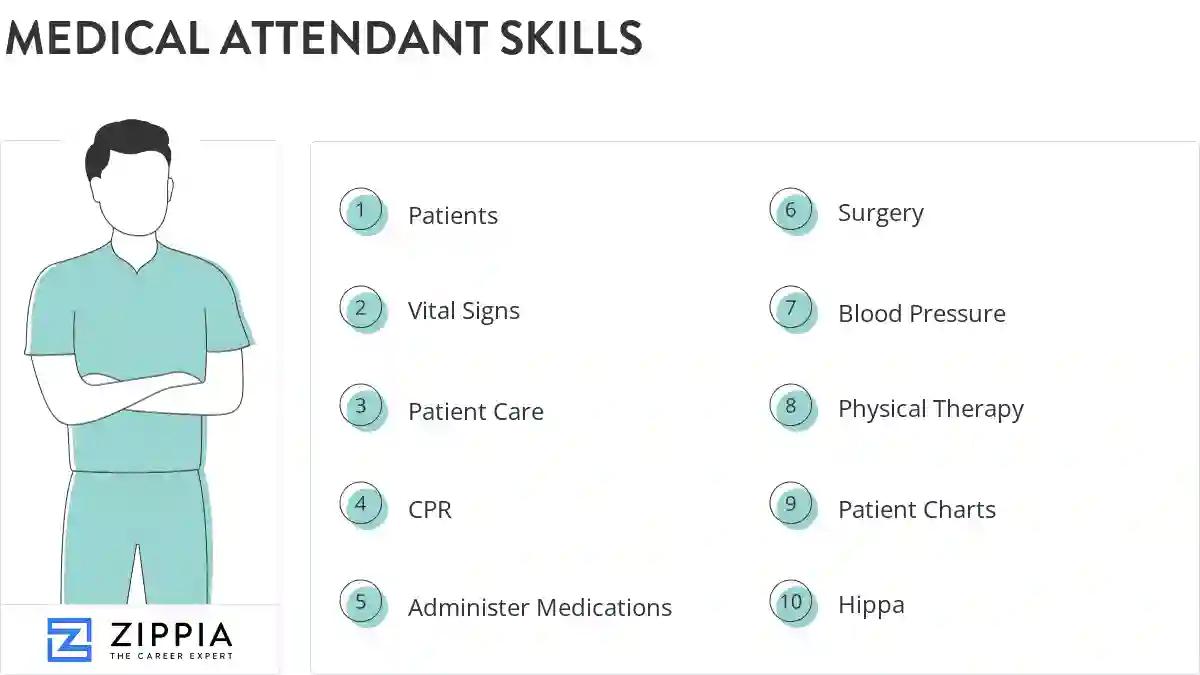
The most important skills for a medical attendant resume and required skills for a medical attendant to have include:
- Patients
- Vital Signs
- Patient Care
- CPR
- Administer Medications
- Surgery
- Blood Pressure
- Physical Therapy
- Patient Charts
- Hippa
- Medical Appointments
- Emotional Support
- Meal Preparation
- Exam Rooms
- EMR
- Medical Professionals
- EKG
Updated January 8, 2025
