What does a training analyst do?
A training analyst is responsible for planning and monitoring training programs and activities according to business functions and requirements. Training analysts inspect the program materials, content delivery, and training schedules. They also strategize on efficient teaching methodologies, develop ideas for group activities and discussions, and determine other training needs for the company's benefits upon reporting to the management. A training analyst observes the instructor's work and identify areas of improvement and adjust techniques as needed.
Training analyst responsibilities
Here are examples of responsibilities from real training analyst resumes:
- Manage internal and external procedures and guideline changes are appropriately communicate via SharePoint or external notification.
- Team exceed DoD requirements of 15 minutes, completing the task in only 11 minutes 15 seconds.
- Utilize a proprietary SDLC methodology.
- Conduct train-the-trainer sessions and administer on-job-training (OJT) when require by production manager.
- Conduct workflow analysis using Visio diagramming to show requirements for existing systems' enhancements.
- Deliver numerous train-the-trainer courses domestically and internationally.
- Participate in UAT testing and report defects/issues/gaps.
- Assist other areas with the facility in understanding FDA, ISO and Baxter quality requirements.
- Maintain complete and accurate records to ensure compliance with FDA, PPTA, CLIA, and internal auditing group requirements.
- Deliver numerous train-the-trainer courses domestically and internationally.
Training analyst skills and personality traits
We calculated that 9% of Training Analysts are proficient in Training Programs, Training Materials, and PowerPoint. They’re also known for soft skills such as Business skills, Critical-thinking skills, and Collaboration skills.
We break down the percentage of Training Analysts that have these skills listed on their resume here:
- Training Programs, 9%
Conducted effective training programs for all phases and levels of the computerized operational systems crucial to financial and operational success.
- Training Materials, 6%
Developed training materials, and provided formal classroom and informal training to nurses and physicians in preparation of implementation.
- PowerPoint, 6%
Revised PowerPoint training presentations with updated subject matter and established company formats for trouble-free and accurate deployment of required training modules.
- DOD, 6%
Trusted to train Commissioned Officers, DoD civilians and peers in logistics plans and Special Operations support.
- SME, 6%
Lead out the Curriculum Review Board sessions with appointed SME s to make sure training documents were vetted for clinical relevance.
- Course Content, 5%
Prepared changes and recommendations as needed to ensure course content is current and complies with Navy training and education regulations.
Most training analysts use their skills in "training programs," "training materials," and "powerpoint" to do their jobs. You can find more detail on essential training analyst responsibilities here:
Collaboration skills. Another skill that relates to the job responsibilities of training analysts is collaboration skills. This skill is critical to many everyday training analyst duties, as "specialists need strong interpersonal skills because delivering training programs requires coordinating with instructors, subject-matter experts, and trainees." This example from a resume shows how this skill is used: "created training materials for new computer applications in collaboration with systems personnel. "
Communication skills. A commonly-found skill in training analyst job descriptions, "communication skills" is essential to what training analysts do. Training analyst responsibilities rely on this skill because "training and development specialists must convey information clearly and facilitate learning to diverse audiences." You can also see how training analyst duties rely on communication skills in this resume example: "analyzed and tested modules to ensure appropriate communication between hit and emr systems. "
Instructional skills. Another skill commonly found on training analyst job descriptions is "instructional skills." It can come up quite often in training analyst duties, since "training and development specialists deliver employee training programs." Here's an example from a resume of how this skill fits into day-to-day training analyst responsibilities: "conducted needs assessments/instructional analysis to ensure conformity with training objectives, and developed training plans as needed. "
The three companies that hire the most training analysts are:
- SAIC29 training analysts jobs
- PIH Health12 training analysts jobs
- ManTech4 training analysts jobs
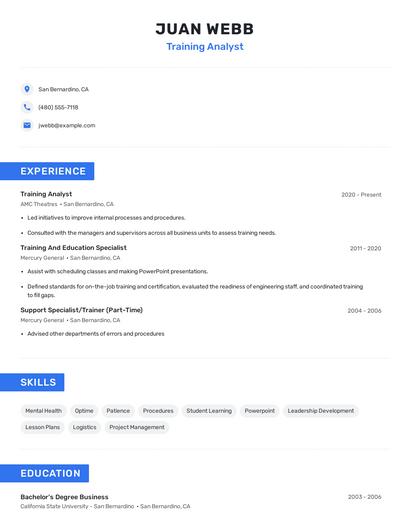
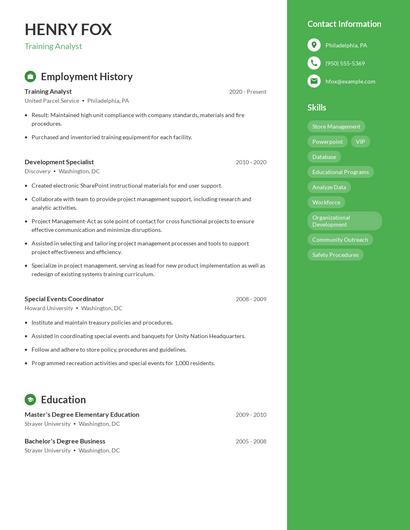
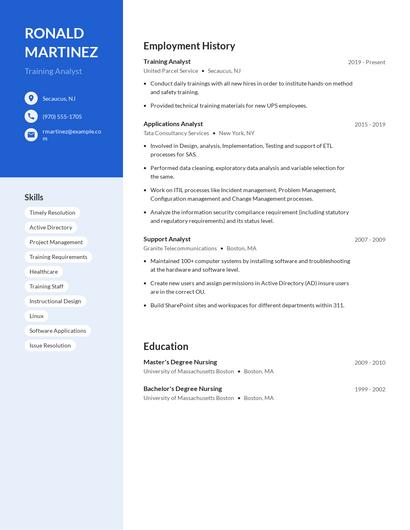
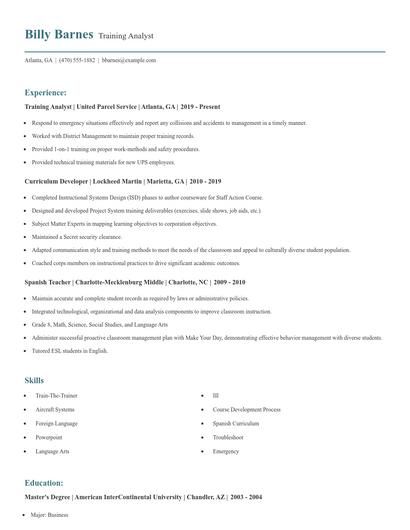
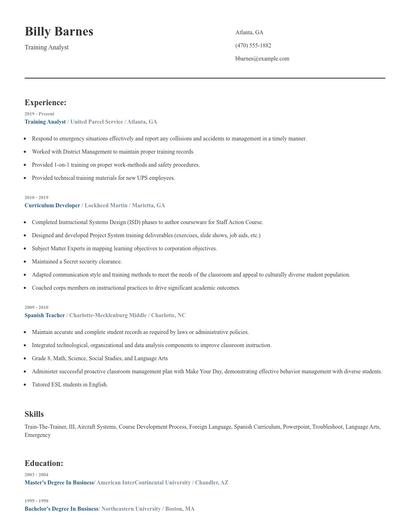
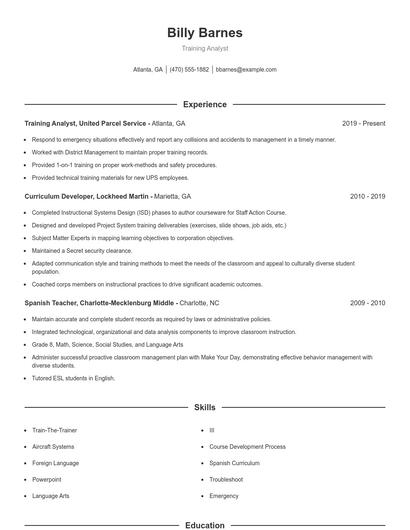
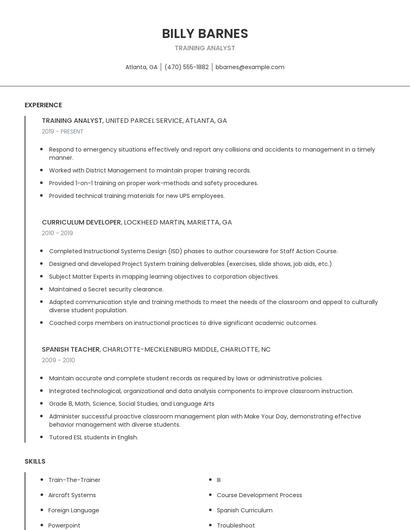
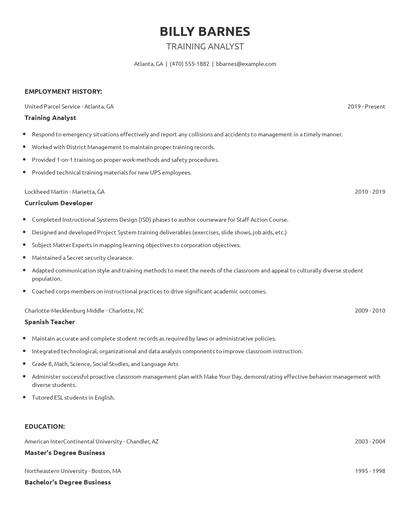
Choose from 10+ customizable training analyst resume templates
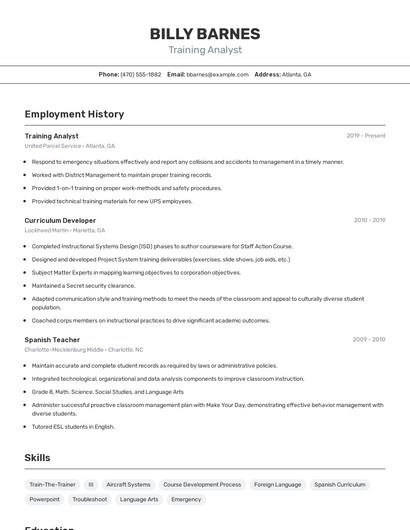
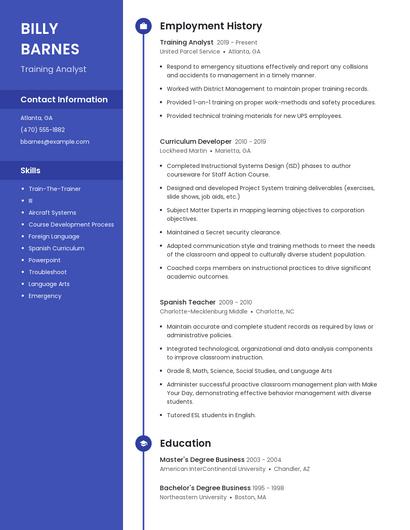
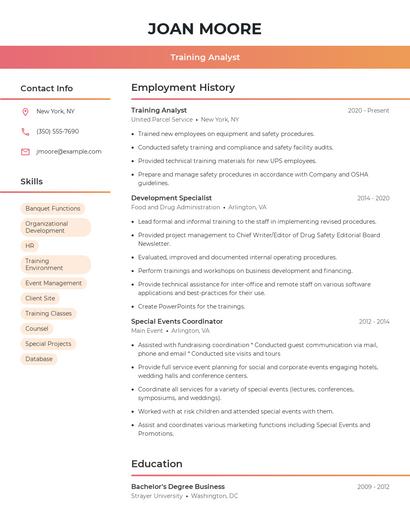
Build a professional training analyst resume in minutes. Our AI resume writing assistant will guide you through every step of the process, and you can choose from 10+ resume templates to create your training analyst resume.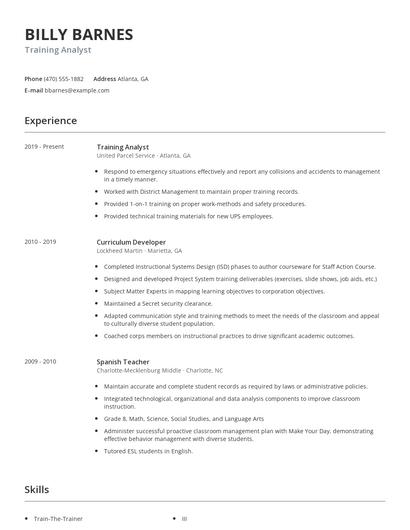
Compare different training analysts
Training analyst vs. Staff development coordinator
Staff development coordinators take responsibility for the creation and enactment of employee training programs. These programs should be in alignment with the company's objectives. They look for interesting and creative techniques to disseminate the information. They aim to see to it that workers attain a better understanding of the material used. They also advance the initiatives of the enterprise by finding business partners.
While similarities exist, there are also some differences between training analysts and staff development coordinator. For instance, training analyst responsibilities require skills such as "powerpoint," "dod," "sme," and "course content." Whereas a staff development coordinator is skilled in "staff development," "patients," "in-service programs," and "cpr." This is part of what separates the two careers.
Staff development coordinators tend to make the most money working in the health care industry, where they earn an average salary of $66,411. In contrast, training analysts make the biggest average salary, $78,076, in the finance industry.The education levels that staff development coordinators earn slightly differ from training analysts. In particular, staff development coordinators are 3.5% less likely to graduate with a Master's Degree than a training analyst. Additionally, they're 0.6% more likely to earn a Doctoral Degree.Training analyst vs. Epic credentialed trainer
Epic credential trainers are professionals who are trained at the hospital client where they provide training to users. The responsibilities of the trainers include the delivery of end-user training and assistance in technicalities. They balance various projects and their deadlines while still managing caseloads. Their job involves the establishment and enforcement of training interventions. Also, they offer extensive customer service through communication on a professional level and provide support via telephone or WebEx.
Each career also uses different skills, according to real training analyst resumes. While training analyst responsibilities can utilize skills like "training programs," "dod," "sme," and "course content," epic credentialed trainers use skills like "patients," "end user training," "coordinators," and "home health."
Epic credentialed trainers earn a higher average salary than training analysts. But epic credentialed trainers earn the highest pay in the health care industry, with an average salary of $77,624. Additionally, training analysts earn the highest salaries in the finance with average pay of $78,076 annually.epic credentialed trainers earn similar levels of education than training analysts in general. They're 0.9% less likely to graduate with a Master's Degree and 0.6% more likely to earn a Doctoral Degree.Training analyst vs. Workforce development specialist
A workforce development specialist is responsible for designing and conducting training and development programs to significantly improve organizational and individual performance. You will perform a few duties that include evaluating training delivery modes, such as virtual or in-person to optimize training effectiveness and costs, developing, obtaining, or organizing training guides and procedure manuals, and coordinating the placement of trainees. As a workforce development specialist, you also have to choose and assign training instructors and negotiating contracts with clients.
Some important key differences between the two careers include a few of the skills necessary to fulfill the responsibilities of each. Some examples from training analyst resumes include skills like "training materials," "dod," "sme," and "course content," whereas a workforce development specialist is more likely to list skills in "social services," "community resources," "career development," and "supportive services. "
Workforce development specialists earn the best pay in the transportation industry, where they command an average salary of $60,428. Training analysts earn the highest pay from the finance industry, with an average salary of $78,076.workforce development specialists typically earn similar educational levels compared to training analysts. Specifically, they're 3.1% less likely to graduate with a Master's Degree, and 0.5% less likely to earn a Doctoral Degree.Training analyst vs. Development specialist
A development specialist is responsible for monitoring career training and programs for the employees, improving their capabilities and maximum potential to contribute to the company's growth and success. Development specialists also assist in assessing departmental operations, evaluating training needs, and facilitate skill development discussions and exercises. A development specialist helps identify business opportunities to generate more revenues for the organization and improve profitability status. A development specialist must have excellent communication and organization skills and comprehensive knowledge of human management to assist employees with their inquiries and concerns.
Types of training analyst
Updated January 8, 2025
