- Job Seeker Statistics
- Career Change statistics
- Internship Statistics
- Job Search Statistics
- Average Number Of Jobs Applied
- Average Salary Increase When Changing Jobs
- Part Time Job Statistics
- Age Discrimination Statistics
- Networking Statistics
- Interview Statistics
- Average Number of Jobs In A Lifetime
- Resume Statistics
- Side Hustle Statistics
- Teacher Statistics
25+ Essential Networking Statistics [2026]: Harnessing the Power of Connections in the Workplace
Research Summary: Networking remains a vital component in career advancement, with many jobs filled through personal and professional connections. Yet, many underestimate its significance. The reality is that a substantial number of employees attribute their success to effective networking.
In this article, we present the most critical insights on networking dynamics and relevant statistics. Our comprehensive research reveals:
-
85% of jobs are filled through networking, leveraging personal and professional connections.
-
As much as 70% of employees landed their current roles via networking.
-
68% of individuals prefer in-person networking, while 95% of professionals believe that face-to-face interactions are essential for cultivating long-term business relationships.
-
Despite the crucial role of networking, only 48% of people maintain regular contact with their networks.
-
49% of individuals who fail to keep in touch with their network cite lack of time as a significant barrier.
-
79% of Americans acknowledge that networking is vital for their career growth.
-
41% of professionals express a desire to participate in networking events more frequently.
For a deeper analysis, we’ve categorized the data into the following topics:
Career Success | In-Person Networking | Virtual Networking | Networking Challenges | Demographics
General Networking Statistics
To understand how networking influences career trajectories and its overall positive impact, we’ve compiled essential general facts. Research indicates that networking is crucial not only for job acquisition but also for career advancement. Here are the findings:
-
70% of individuals secured their current jobs through networking.
This is significant considering that around 80% of job openings are not advertised online. Networking proves to be significantly more effective than other job search methods, at a ratio of seven to one.
-
57% of respondents believe having a business card is essential for networking.
This is supported by the fact that 72% of people judge a company based on the quality of its business card, and 39% would avoid doing business with a company that has a “cheap-looking” card.
-
Data shows the highest engagement for networking emails occurs between 9 and 11 a.m.
During this time frame, 53% of networking emails are opened, with peak engagement at 10 a.m.
-
Employee referrals account for 40% of all hires.
Despite making up only 7% of applicants, employee referrals lead to 40% of hires, highlighting their importance in recruitment processes, especially given that 62% of interviews stem from job boards and similar platforms.

Networking Statistics by Career Success
Networking is an integral aspect of career development recognized by everyone from entrepreneurs to clients. A significant 79% of individuals agree that networking is essential for career success, and 40% of prospects become new clients after face-to-face interactions. Here are some insights from our research:
-
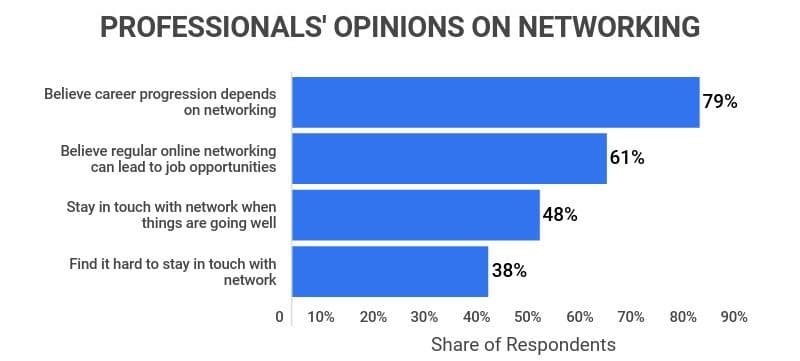
79% of professionals believe networking is key to career success.
A large majority recognize the importance of networking, whether online or in-person. However, only 48% actively maintain their networks, often due to time constraints and other challenges.
-
Networking contributes to the success of 78% of startups.
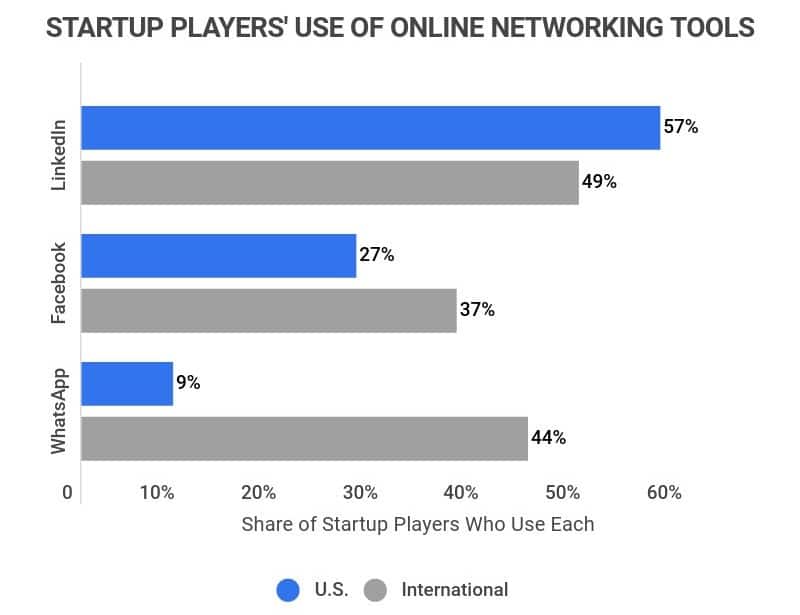
For entrepreneurs, networking is crucial, especially online. Platforms like LinkedIn and Facebook are the most utilized networking tools, with 56% of entrepreneurs using LinkedIn and 37% using Facebook.
-
Face-to-face meetings convert 40% of prospects into customers, compared to only 16% without.
Face-to-face interactions are vital for business success, as they increase the likelihood of acquiring new clients by 24%. Furthermore, 27% of current business could be lost without in-person meetings.
In-Person Networking Statistics
This section delves deeper into the benefits of in-person networking. Here are the key statistics:
-
Maintain eye contact 50% of the time when speaking and 70% when listening.
Establishing eye contact shows interest in the conversation. Follow the 50/70 rule, but remember to maintain eye contact for only four to five seconds at a time.
-
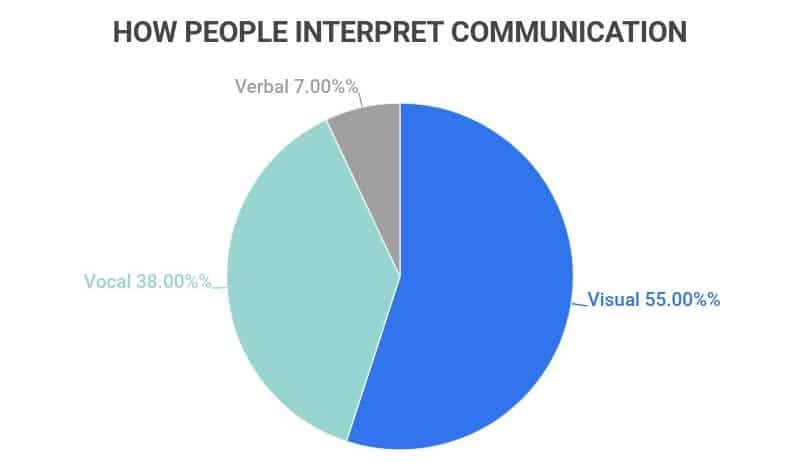
55% of all communication relies on body language.
Body language encompasses posture, eye contact, personal space, facial expressions, and gestures. Verbal communication constitutes only 7% of interactions, while 38% is vocal and 55% visual.
“Vocal” refers to tone, while “verbal” pertains to the actual words spoken. Thus, up to 93% of communication is interpreted through nonverbal cues.
-
95% of professionals agree that face-to-face communication is crucial for their business.
Handshakes significantly influence first impressions, with 72% of people factoring them into their judgments. In-person communication increases the likelihood of acquiring clients by 24%.
-
In-person networking is 24% more effective in gaining customers.
The personal connection created through face-to-face interactions fosters trust and collaboration.
-
Leisure activities are excellent networking opportunities.
Shared interests drive connections. Optimal networking venues include hobby clubs, coffee shops, retreats, classes, alumni events, online forums, job fairs, charitable events, and cultural gatherings.
Virtual Networking Statistics
With the rise of remote work, virtual networking has transformed how professionals connect. Here are the key insights:
-
61% of employees prefer remote group meetings.
For large meetings, 61% favor virtual formats, while preferences for small team meetings are more evenly split, with 51% favoring virtual and 49% preferring in-person.
-
49% of employees cite “easier accessibility” as a primary benefit of online networking.
Additionally, 70% find that online networking enables them to attend more meetings, with 19% noting it as a more cost-effective option.
-
40% of professionals report networking more online than in-person.
Despite the effectiveness of in-person networking, nearly half of all professionals prefer online networking methods.
-
35.5 million people have secured jobs through LinkedIn.
This professional networking platform has facilitated 122 million interviews and resulted in 35.5 million hires.
-
69% of professionals prefer meeting new clients or customers in-person rather than virtually.
This preference extends to other work-related activities, with 59% favoring in-person meetings with their direct reports.
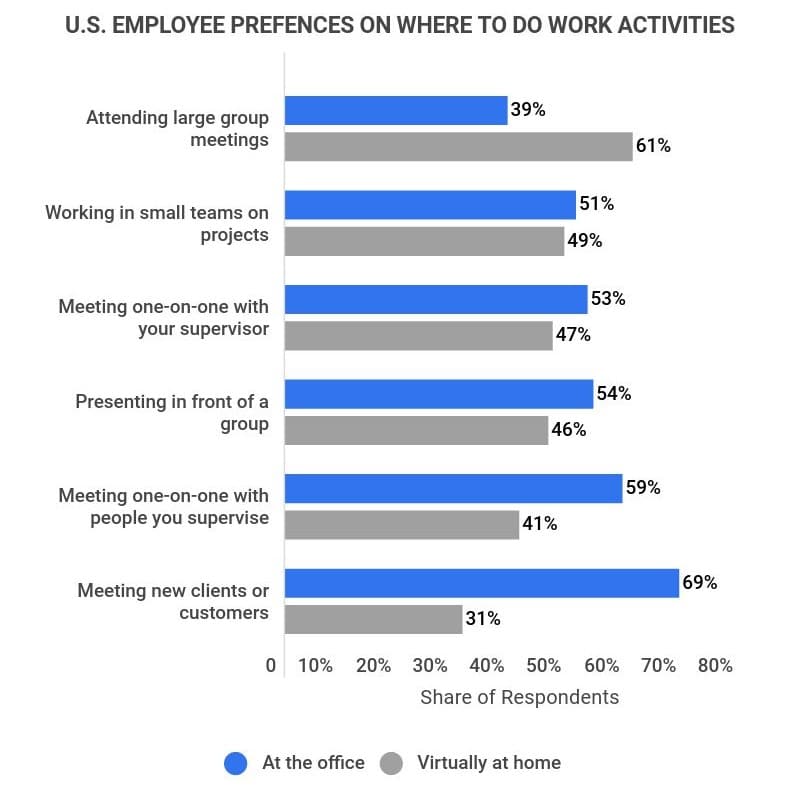
Employee Workplace Activity Preferences: In-office or Virtual
If given a choice, would you prefer to conduct each of the following work activities in person at your workplace or virtually from home?
| At the Office | Virtually at Home | |
|---|---|---|
| Attending large group meetings | 39% | 61% |
| Working in small teams on projects | 51% | 49% |
| Meeting one-on-one with your supervisor | 53% | 47% |
| Presenting in front of a group | 54% | 46% |
| Meeting one-on-one with colleagues | 59% | 41% |
| Meeting new clients or customers | 69% | 31% |
Statistics on Networking Challenges
Despite its benefits, maintaining a network can be challenging. If you struggle to keep in touch, you’re not alone. Here are the findings:
-
Only 48% of professionals maintain contact with their network.
Moreover, 38% find it difficult to stay in touch, with lack of time being the primary reason reported.
-
41% of individuals wish to network more frequently.
Given that 38% find it challenging to maintain their connections, it’s unsurprising that many express a desire for more networking opportunities.
-
44% of employees work from home at least part-time.
Prior to the pandemic, only 17% of Americans worked remotely, but this figure has surged by 27%. Consequently, online networking has become increasingly viable.
-
Cybercrime has surged by 600% since the onset of the COVID-19 pandemic.
This poses significant challenges for online networking, as security issues, including hacking and phishing, complicate effective connections. Maintaining cybersecurity can be a costly endeavor for larger networking teams.
Networking Statistics by Demographics
Interested in learning more about the demographics of networking? Here are detailed statistics on where, when, and with whom to network:
-
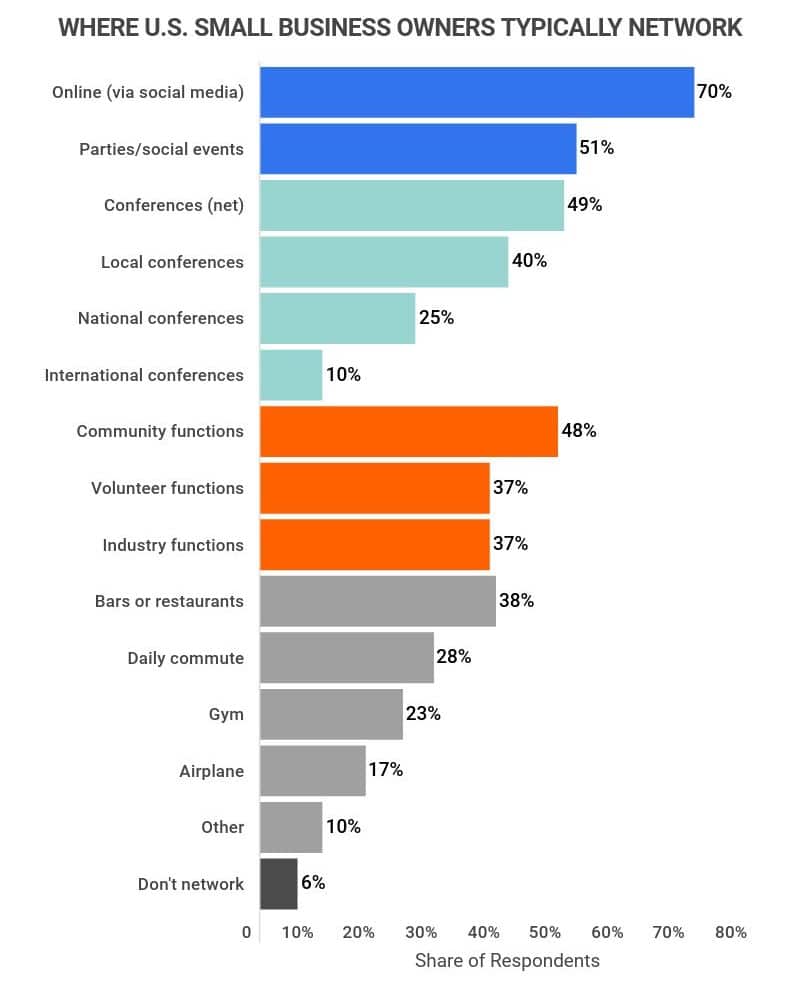
38% of small business owners report that bars and restaurants are common networking venues.
However, “community functions” are the preferred networking locations for 48% of small business owners, while 70% utilize online platforms. Other notable networking spots include gyms (23%), airplanes (17%), and during commutes (28%). Networking opportunities abound in everyday life.
-
93% of Millennials own a smartphone, compared to only 68% of Baby Boomers.
This trend indicates that Millennials are more inclined towards online networking, utilizing platforms like Facebook, which is favored by 37% of entrepreneurs, as opposed to 60% of Baby Boomers.
-
Most LinkedIn users are aged between 25 and 34.
60% of LinkedIn users belong to this age group, with 18- to 24-year-olds constituting the next largest segment at 21.7%.
Where American Small Business Owners Network
| Location | Share Of Small Business Owners Who Network There |
|---|---|
| Online (via social media) | 70% |
| Parties/social events | 51% |
| Conferences (net) | 49% |
| Local conferences | 40% |
| National conferences | 25% |
| International conferences | 10% |
| Community functions | 48% |
| Volunteer functions | 37% |
| Industry functions | 37% |
| Bars or restaurants | 38% |
| Daily commute | 28% |
| Gym | 23% |
| Airplane | 17% |
| Other | 10% |
| Don’t network | 6% |
Professional Networking Statistics FAQ
-
The most effective way to enhance your network is to engage with your community. This involves attending social events, complimenting individuals, asking questions, discovering common interests, leveraging social media, tracking who you meet, following up post-meeting, and positioning yourself as a resource for others.
You’re not alone in wanting to enhance your networking skills. Only 48% of professionals maintain regular contact with their networks, with 38% citing difficulty as a barrier. For more guidance, check out this guide on networking effectively.
-
Should I network online or in-person?
While in-person networking is often preferable, online networking has its advantages. Statistics indicate that businesses are 24% more likely to acquire new customers through in-person networking. However, this should not deter you from leveraging online platforms.
With more Americans working remotely than ever, and younger generations favoring online interactions, the choice between networking online or in-person should align with your networking goals and target demographics.
-
How effective is networking?
Networking is highly effective for discovering job opportunities, enhancing your skills, and staying informed about industry trends. Approximately 85% of jobs are filled through networking as opposed to conventional job boards, highlighting the importance of maintaining a robust network for career growth.
To ensure networking is effective, approach relationship-building intentionally, and consider how you can provide value to others.
-
Why is networking so challenging?
Networking often feels daunting due to societal perceptions and personal apprehensions. Many view networking as a means of gaining unfair advantages, conflicting with the belief in meritocracy. Yet, building personal relationships has always been integral to career success.
Networking can also require stepping out of comfort zones and engaging with new people. To ease this process, shift your mindset from viewing networking as a chore to embracing the excitement of connecting with those who share your passions.
Conclusion
Networking presents challenges, with 38% of individuals acknowledging its difficulties. Nevertheless, its importance cannot be overstated. An impressive 70% of people secured their current positions through networking, and a staggering 80% of job opportunities are never publicly advertised. Additionally, in-person and online networking is responsible for 16-40% of customer acquisition.
Whether you seek a new job or aim to expand your client base, networking is crucial for your success. Therefore, it is essential to actively maintain and nurture your professional connections. Begin utilizing social media platforms such as LinkedIn and Facebook to enhance your networking efforts.
References
-
CNBC. “How to Get a Job Often Comes Down to One Elite Personal Asset, and Many People Still Don’t Realize It”. Accessed on August 11, 2021.
-
Payscale. “How Many Jobs Are Found Through Networking, Really?”. Accessed on August 11, 2021.
-
The New York Times. “Small Meetings, Big Pluses”. Accessed on August 11, 2021.
-
Progressive Grocer. “Consumers Still Prefer In-Store Shopping”. Accessed on August 11, 2021.
-
Small Business Trends. “72 Percent Will Judge Your Company by the Quality of Your Business Card (INFOGRAPHIC)”. Accessed on August 11, 2021.
-
LinkedIn. “Eighty Percent of Professionals Consider Networking Important to Career Success”. Accessed on August 11, 2021.
-
Chicago Booth Review. “The Network is an Entrepreneur’s Best Asset”. Accessed on August 11, 2021.
-
Forbes. “Face-to-Face is Still Best for Networking and Dealmaking, So What’s Your Conference Strategy?”. Accessed on August 11, 2021.
-
Michigan State University. “Eye Contact: Don’t Make These Mistakes”. Accessed on August 11, 2021.
-
Lifesize. “Nonverbal Communication: How Body Language and Nonverbal Cues Are Key”. Accessed on August 11, 2021.
-
Business Pundit. “25 Best Places to Network”. Accessed on August 11, 2021.
-
Zoom. “New Survey: What People Really Think About Hybrid Work”. Accessed on August 11, 2021.
-
Nature. “Online Collaboration: Scientists and the Social Network”. Accessed on August 11, 2021.
-
Kinsta. “Mind-Blowing LinkedIn Statistics and Facts”. Accessed on August 11, 2021.
-
Statista. “Change in Remote Work Trends Due to COVID-19 in the United States”. Accessed on August 11, 2021.
-
Purplesec. “Cyber Security Statistics: The Ultimate List of Stats and Trends”. Accessed on August 11, 2021.
-
Undercover Recruiter. “Why Employee Referrals are the Best Source of Hire”. Accessed on August 11, 2021.
-
Pew Research Center. “Millennials Stand Out for Their Technology Use, but Older Generations Also Embrace Digital Life”. Accessed on August 11, 2021.
-
CoSchedule. “What 14 Studies Say About The Best Time to Send Email”. Accessed on August 11, 2021.
-
Ipsos. “Business Card/Networking Study”. Accessed on February 8, 2022.
-
DataReportal. “LinkedIn Statistics and Trends”. Accessed on February 23, 2023.
- Job Seeker Statistics
- Career Change statistics
- Internship Statistics
- Job Search Statistics
- Average Number Of Jobs Applied
- Average Salary Increase When Changing Jobs
- Part Time Job Statistics
- Age Discrimination Statistics
- Networking Statistics
- Interview Statistics
- Average Number of Jobs In A Lifetime
- Resume Statistics
- Side Hustle Statistics
- Teacher Statistics

Author

Jack Flynn is a writer for Zippia. In his professional career he’s written over 100 research papers, articles and blog posts. Some of his most popular published works include his writing about economic terms and research into job classifications. Jack received his BS from Hampshire College.