Find a Job You Really Want In
Let’s face it, if given the choice between accessing something for free or spending your hard-earned money on it, most people would prefer to save their cash.
For movie enthusiasts (or films, for those passionate film majors), streaming sites have become a popular alternative to traditional paid services. They provide an avenue to enjoy countless movies and television shows without cost.
Platforms like Putlocker, Solarmovie, and ProjectFreeTV have gained significant traction, offering thousands of films and shows daily at no charge.
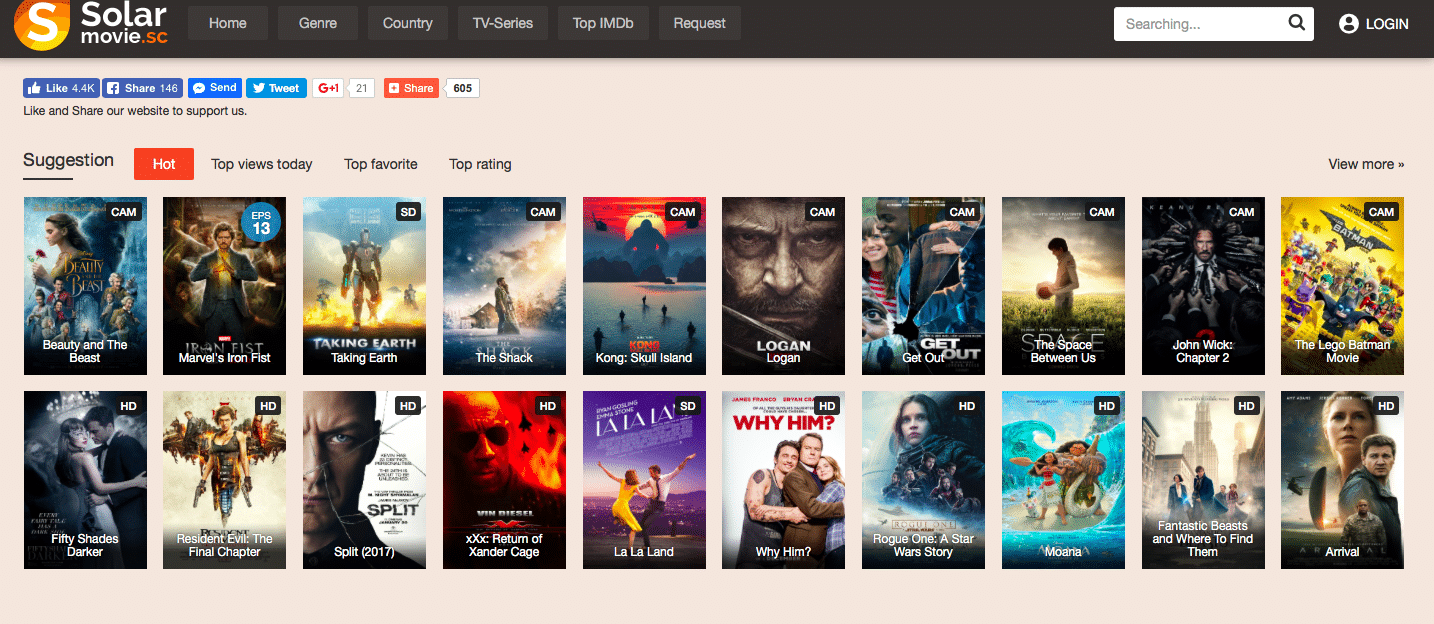
However, as you settle in to watch a movie still in theaters from your living room, a wave of concern may wash over you. You might wonder: “Is this illegal? Am I risking consequences?”
This leads to several pressing questions:
- How do these sites operate?
- Are they legal?
- Could I face legal repercussions for watching movies and TV shows on them? I’m not downloading anything, right?
- And how do these streaming sites make money? Is there any profit for their owners?
The answers to these questions can be quite complex. However, after thorough research, we’ve compiled information to clarify your concerns.
How Do Streaming Sites Operate?
After exploring various blogs and reputable articles from sources like Business Insider, Quora, and The Telegraph, we can explain how these streaming sites function:
- Streaming sites avoid legal issues by not hosting content directly.
- Platforms like Solarmovie and ProjectFreeTV serve more as search engines, linking to content hosted elsewhere.
- When you click play, the site requests the file from an external source.
- The actual video content resides on this secondary site, which you don’t see.
- The server streams the file back to your device, bypassing the first site.
- Your device then decodes and plays the video.
Now that you understand their functionality, let’s address the legality of these sites.
Are Streaming Sites Legal?
Don’t worry, you’re not in legal jeopardy. Here’s why:
According to copyright laws, downloading even a portion of a file qualifies as pseudo-streaming, which is illegal. Similarly, streaming content intended for a broader audience outside a personal circle also constitutes copyright infringement.
However, if you’re merely accessing streamed content without downloading or sharing, it is generally legal for you, the user.
Conversely, if someone were to upload or share unlicensed content, that activity would be illegal.
The streaming sites mitigate legal risks by not hosting content themselves. They function as a conduit for links to streamed media, often embedded from secondary sites.

To determine accountability, you must consider the inducement rule established in a 2005 Supreme Court ruling. This rule states that a company or website is liable for distributing unlicensed content only if it actively encourages copyright infringement.
Essentially, streaming sites provide access to illegal copyrighted material without hosting it themselves. They may say, “Here’s free, illegal content, but we didn’t upload it, so we’re not liable.” However, if it’s determined that they are promoting copyright infringement, they too could face legal consequences. It’s a nuanced legal landscape.
Secondary sites, where the content actually resides, clearly violate copyright law. The government can pursue these sites without difficulty, and they can also take action against streaming sites if they can prove encouragement of copyright infringement.
Typically, identifying the operators of these streaming sites is challenging, leading to site closures rather than arrests.
To summarize:
- You, as the user, are generally safe from legal action. Authorities focus on the streaming sites and secondary sources, not individual viewers.
- Even if new laws were enacted to penalize users for accessing unlicensed content, enforcing such laws against millions would be impractical. Thus, the focus remains on shutting down streaming and secondary sites.
- Secondary sites are undeniably conducting illegal activities by hosting unlicensed content.
- The legality of streaming sites hinges on whether they encourage copyright infringement, a gray area that can lead to legal trouble.
- Site owners often remain anonymous, resulting in takedowns rather than arrests.
Information about streaming sites and their legality is scarce, and as copyright laws evolve, clarity is expected in the future.
So, while these streaming sites persist, do they profit?
How Do These Sites Generate Revenue?
Yes, streaming sites do make money.
They generate revenue primarily through two types of advertisements:
- Website Ads
- Video Ads that play during the film
Website ads might be visible directly on the page or pop up in new tabs when you interact with certain features. Some sites interrupt your viewing experience to show ads before resuming playback. It can be frustrating, but given the free access to content, many find it acceptable.
While there’s little concrete market data on these sites, a user on Quora estimated potential revenues. Here’s a simplified breakdown:
A) # of Visitors: Assume the site attracts 10 million visitors annually
B) % of visitors who watch a film: 5% of A = 500,000
C) % of ads clicked: 2% = 200,000
D) Peak concurrent users: 10% of (B) = 50,000
E) Web hosting cost = $5,000
F) # of movies hosted = 500,000
G) Other employee salaries (excluding J) = $200,000
H) Sales and marketing = $50,000 (minimal to avoid drawing attention)
I) General & admin cost = $50,000
J) Cost of primary resources = $200,000
B.1) Ads served per film = 4
B.2) Revenue per film = $1
B.3) Revenue while streaming = (B)(B.1)(B.2) = $2 million
C.1) Revenue per ad click = $0.25
C.2) Website ad revenue = $50,000
Operating Costs:
D.1) # Of Peak Users = (D)(B) = 50,000
D.2) Per-user server cost = $0.40
D.3) Server maintenance = (D.1)(D.2) = $20,000
This does not include the cost of purchasing servers, which would be a one-time expense spread over 3-4 years for depreciation.
F.1) Size per movie = 699MB
F.2) Total space required = (F)(F.1) = 341,308GB
F.3) Cost per 2TB HDD (bulk) = $80
F.4) Storage cost = (F.2)(F.3) = $26,665 (assuming a 1-year lifespan for drives due to high usage)
Income Statement:
Revenue Sources
C. Advertisement = $50,000
B. Ads while Streaming = $2,000,000
Total Revenue = $2,050,000
Cost of Revenue
J. Advertisement = $4,878
J. Ads while Streaming = $195,122
Total Costs = $200,000
Gross Income = $1,850,000
Operating Expenses
D.3 Servers = $20,000
E. Web Hosting = $5,000
F.4 Data Storage = $26,665
G. Employee Salaries = $200,000
H. Sales & Marketing = $50,000
I. General & Admin (including Rent) = $50,000
Total Operating Costs = $351,665
Operating Margin = $1,498,335
In conclusion, streaming sites can indeed generate substantial annual revenue.
They operate as somewhat legitimate businesses… in a questionable way.
Should You Start Your Own Streaming Site?

Relax—you’re not headed for jail.
You can now enjoy streaming free movies without the cloud of legal worry.
What you should know:
You (as the user) are unlikely to face arrest or fines for simply viewing streamed content online. The operators of these streaming sites are usually difficult to locate and apprehend, resulting in site closures instead.
These streaming sites do earn revenue and manage to turn a profit at year-end.
While starting your own streaming site may seem enticing, it remains a precarious venture currently. As copyright laws evolve and become more defined, launching your own streaming service could become a viable career path in the future.

Author

A graduate of the University of North Carolina Wilmington. Earned a BFA majoring in Creative Writing and a minor in English.