Find a Job You Really Want In
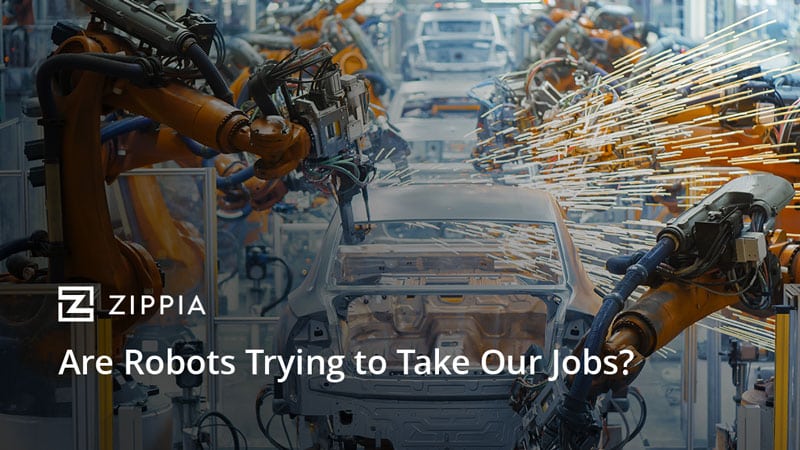
The conversation surrounding robots and automation has intensified in recent years, with many discussions revolving around the potential impact on employment. The term “robot takeover” often surfaces, but it’s essential to clarify that this transformation is not a distant future event—it’s happening now.
Welcome to the era of the robot revolution! While it can be tempting to fear a future dominated by advanced machines, it’s crucial to understand the actual landscape of the job market today. As noted by industry leaders, the rise of artificial intelligence and automation presents both challenges and opportunities for the workforce.
To grasp the extent of this trend, we analyzed current job postings and discovered that there are already 9,001 job listings that involve robotics and/or artificial intelligence.
That’s right: robots aren’t just a future concern; they’re actively shaping our job market today.

We analyzed millions of resumes to identify the jobs most likely available to you based on your degree, including salary insights—choose a field with resilience against automation.
Before diving into our findings, let’s explore…
What Does It Mean to Be Robotic?
To understand the impact of robotics on employment, we needed to define our criteria beyond simply searching for the word “robot.” A robot is generally understood to be a machine—often programmable by a computer—that can perform complex actions automatically.
Futurists generally agree that robots possess at least one of the following characteristics:
- A degree of autonomy
- A defined set of tasks
- Mobility within their environment
- Functionality without human intervention
This definition guided our search, which included terms like automation, AI, and unmanned systems. We found that our search keywords appeared in either job titles or descriptions, resulting in 985 matches—494 of which had multiple postings for that title.
Current Robotic Trends
While you might expect “Robotics Engineer” to top the list of job titles, the reality is quite different. Surprisingly, the medical field shows the highest demand for jobs that require robotic skills, with eight of the top ten titles linked to healthcare. Among the 492 titles with multiple postings, 68 were health-related, primarily involving robotic-assisted surgeries.
Most Notable Job Titles Involving Robotics
While some experts, like Stephen Hawking, have raised alarms about the advancement of artificial intelligence, it’s essential to recognize the significant roles these technologies play in various sectors. Below are nine key job titles that require interaction with robotics and automation.
1. Decal Appliers
Rank: #1
Results: 2,711
The Decal Applier position led our findings, largely due to the inclusion of “automated” in our search terms. This broad category involves applying labels and graphics to diverse products, showcasing how automation streamlines various job functions.
2. Dermatologist
Rank: #2
Results: 789
The second-highest title involves dermatologists, who increasingly utilize robotics in procedures such as hair transplants, revolutionized by systems like the ARTAS.
3. Applied Anthropologist
Rank: #8
Results: 203
This role is in high demand as tech companies engage Applied Anthropologists to understand user preferences and bridge the gap between technology and human experience.
4. Urologist
Rank: #10
Results: 164
Urologists are increasingly familiar with robotic systems like the da Vinci Surgical System, leading to improved surgical outcomes and patient care.
5. Computer-aided Drafter
Rank: #15
Results: 108
Computer-aided Drafters use technology to transform concepts into precise models across various industries, from architecture to manufacturing.
6. Tank Driver
Rank: #23
Results: 84
In military applications, Tank Drivers utilize automated systems for enhanced targeting and operational efficiency.
7. Indirect Fire Infantryman
Rank: #62
Results: 12
This military role appears in our search due to automation in weaponry, highlighting the evolving nature of combat technology.
8. Robotic Welder
Rank: #72
Results: 11
Robotic Welders program and operate automated welding systems, highlighting the need for skilled technicians in an increasingly automated environment.
9. Robotics Engineer
Rank: #81
Results: 10
Finally, the Robotics Engineer role may not be the most common but is crucial for developing the technologies that power these jobs.
Do We Really Have Anything to Fear?
Experts generally agree that while the rise of automation can induce anxiety, it is mostly driven by uncertainty. History shows us that past technological advancements, from the steam engine to the computer, have ultimately created new opportunities.
The prevailing view is that collaboration between humans and machines will yield the best results, as evidenced by teams that integrate human expertise with robotic efficiency. The robotic revolution promises to reshape our workforce and enhance productivity, but it’s a transformation that has been in motion for decades.
So, rest assured, unless your job is to operate a Roomba inefficiently, the likelihood of you being replaced by a robot is minimal. However, it may be wise to reassess your career prospects in light of these changes, and we can help you.
If you harbor fears about the future of work due to robotics, know that you’re not alone—but it’s time to embrace the change.

Author

David Luther was the Content Marketing Editor for the Zippia Advice blog. He developed partnerships with external reporting agencies in addition to generating original research and reporting for the Zippia Career Advice blog. David obtained his BA from UNC Chapel Hill.