Company culture research summary. Company culture plays a pivotal role in determining workplace productivity, positivity, and overall success. When employees feel secure, connected, and valued within their environment and with their colleagues, it enhances their performance and satisfaction. We’ve compiled key insights about company culture for 2026:
-
46% of job seekers view company culture as a critical factor in their job selection process.
-
94% of entrepreneurs believe a healthy company culture is essential for success.
-
47% of job seekers state that company culture is a primary reason for seeking new employment.
-
56% of employees prioritize a positive workplace culture over salary considerations.
-
86% of job seekers actively avoid companies with negative reputations.
-
70% of job searches commence on Google.
For detailed analysis, we’ve categorized the data as follows: Management | Employees | Benefits | Downsides
Job Seekers and Company Culture
For many job seekers, identifying a positive company culture is paramount. The impact of company culture on employee productivity and happiness is substantial. Here are key insights from job seekers regarding company culture:
-
88% of job seekers assert that a healthy company culture is crucial for success.
This statistic highlights that job seekers share similar perceptions to entrepreneurs regarding the importance of a positive workplace culture.
-
15% of job seekers have turned down job offers due to concerns about company culture.
While many avoid companies with poor reputations, over 10% of candidates reject offers after applying due to cultural misalignment.
-
35% of workers would forgo the “perfect job” if the culture did not align with their values.
A truly ideal job cannot be considered such without a compatible company culture, as a significant portion of employees recognize.
-
77% of workers evaluate company culture before submitting applications.
Considering that 15% of job seekers reject offers after applying due to cultural concerns, it’s startling that three-quarters don’t even apply initially.
Management and Company Culture
Company culture should be a top priority for every effective manager. From boosting revenue to minimizing turnover, prioritizing company culture has numerous benefits. Our research reveals:
-
91% of managers believe that job seekers who align with their company culture are more valuable than those with merely strong skills or experience.
Most managers prefer hiring individuals with the right attitude over those who are merely experienced if they do not fit the culture.
-
Companies with strong cultures can see revenue increases of up to 33%.
This implies that a company generating $1 million annually could potentially earn $1.33 million simply by valuing company culture.
-
85% of companies acknowledge that a positive culture provides a competitive advantage.
Employees who appreciate their workplace culture are less likely to leave and exhibit greater productivity, both of which enhance competitive positioning.
-
72% of companies believe culture facilitates successful change initiatives.
In dynamic industries like technology, maintaining adaptability is crucial, and a supportive culture fosters this adaptability.
-
Only 28% of executives truly understand their company’s culture.
While 92% of CEOs assert they understand their culture, only half of employees agree with this perception, indicating a disconnect that can lead to significant challenges.
Employees and Company Culture
Company culture significantly impacts employees, often more than any other group within the organization. Here are some essential findings from our research on the effects of company culture on employees:
-
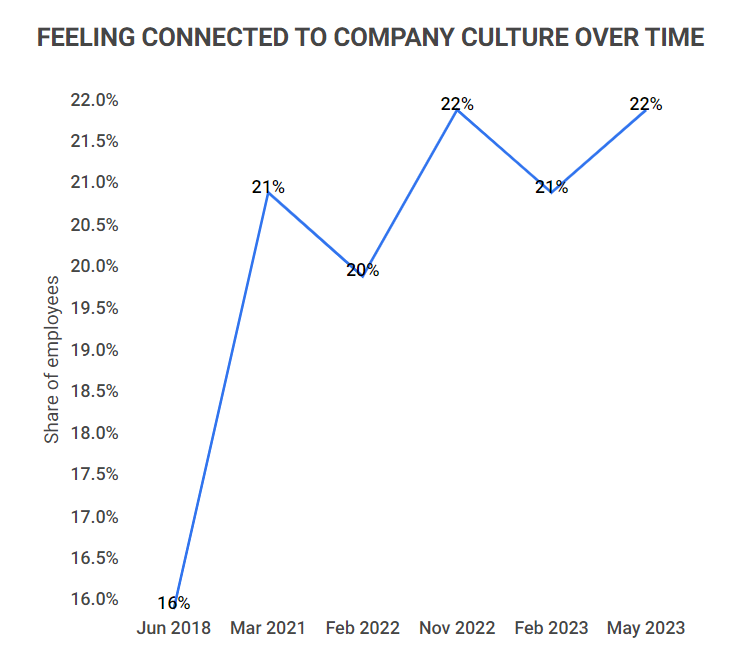
22% of employees feel a connection to their company culture.
This represents an increase from 2018’s figure of 16%, marking a 37.5% rise in employee connection to culture.
Feeling Connected to Company Culture Over Time
Month/Year Share of Employees Who Feel Connected to Their Company Culture June 2018 16% March 2021 21% February 2022 20% November 2022 22% February 2023 21% May 2023 22% -
80% of employees would put in more effort if they received greater recognition.
Employee recognition is vital to fostering a positive culture, driving both productivity and reducing turnover rates by 31%.
-
88% of employees believe a strong culture is essential for business success.
This consensus among employees echoes the views of entrepreneurs and job seekers, indicating widespread recognition of the negative effects of poor cultures.
-
72% of workers globally rate their company culture as “good.”
Conversely, 20% rate it as average, while 7% deem it poor or very poor. This suggests that many organizations are making strides in enhancing their cultures.
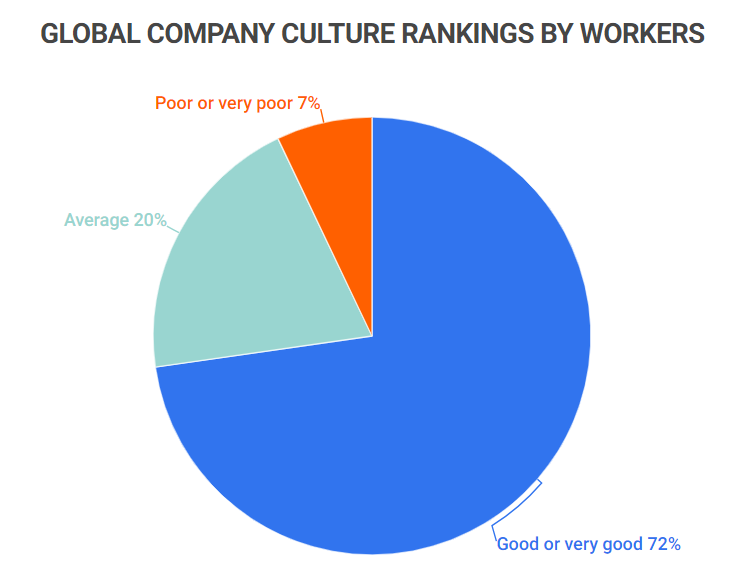
Global Company Culture Rankings by Workers
Ranking Share of Workers Good or Very Good 72% Average 20% Poor or Very Poor 7%
Benefits of a Strong Company Culture
A robust company culture yields numerous advantages for both employers and employees. Here are some of the key benefits:
-
Highly engaged employees are 17% more productive.
Research indicates that employee engagement, often stemming from a positive culture, enhances workplace performance, boosting profitability by an average of 21%.
-
Happy employees are 20% more productive than their unhappy counterparts.
Employee happiness is significantly influenced by alignment with company culture, leading to notable productivity increases.
-
Companies with strong cultures are 89% more likely to report high customer satisfaction.
A positive culture fosters engaged and satisfied employees, which directly correlates to improved customer experiences.
-
Organizations with strong company cultures experience a 4x increase in revenue growth.
This translates to a potential rise from $500,000 annually to $2 million over the same period.
-
Companies with strong cultures see a 25% growth in workforce over three years.
A strong culture is linked to growth; for instance, a company could expand from 500 to 625 employees within three years.
Downsides of a Poor Company Culture
While a strong culture has clear benefits, the downsides of a poor culture are equally significant. Here are some notable drawbacks:
-
90% of workers who rate their company culture as poor have considered quitting.
Poor company culture poses a serious threat to employee retention, as 9 out of 10 workers contemplate leaving.
-
40% of employees would resign if they encountered negative office politics.
Employees prefer to avoid drama in the workplace, leading to nearly half willing to leave due to toxic dynamics.
-
Employees dissatisfied with company culture are 10.4 times more likely to quit.
The high turnover costs associated with poor culture, averaging over 30% of an employee’s salary, can severely impact organizations.
Company Culture FAQ
-
How important is company culture?
Company culture is critical as it can significantly influence a company’s success. For example, 86% of job seekers will avoid companies with negative reputations, and 90% of employees in companies with poor cultures think about quitting. This negativity can lead to costly turnover and staffing issues.
Conversely, companies with healthy cultures can experience up to 20% increased productivity, 21% more profitability, and potentially 4x revenue growth over time. These benefits compound, contributing to a company’s long-term success.
-
What are the 4 Cs of company culture?
The 4 Cs of company culture are Competence, Commitment, Contribution, and Character. Here’s a breakdown of these components:
-
Competence. A culture that promotes competence enables employees to continually acquire knowledge and skills, allowing the company to adapt to innovations.
-
Commitment. A committed culture motivates employees to pursue goals and challenges consistently, fostering skill development and project completion.
-
Contribution. A culture prioritizing contribution ensures that skilled employees share their expertise, leading to more successful project outcomes.
-
Character. A strong character in culture sets the tone for operations, motivating employees and guiding behavior during challenges.
-
-
What makes a good company culture?
A good company culture is built on ethics, values, workflow, goals, management, and clear expectations. Employees thrive when they feel heard, leading to higher happiness, engagement, and productivity.
Creating a healthy culture begins with identifying what to avoid. Employees dislike workplace politics and seek alignment with their values. Building a supportive, drama-free environment with like-minded individuals is essential, alongside establishing a collaborative atmosphere with transparent expectations.
While this can be challenging, we recommend reviewing critical statistics, learning from successful organizations, and seeking employee feedback on cultural improvement.
-
What are the signs of a good company culture?
As a job seeker, look for evident signs of a strong company culture, including:
-
A steady influx of well-qualified job applicants
-
High performance expectations from employees
-
Clear communication of company values by leaders
-
Low turnover rates
-
A conflict resolution plan for employees and customers
-
No signs of office politics
-
Frequent employee referrals
-
A high level of trust among employers, employees, and customers
-
Investment in employee training
-
A proven track record of strong financial performance
-
Conclusion
Company culture is a vital component of business success, a fact recognized by both employers and employees. Job seekers often steer clear of organizations with negative reputations, while employees frequently contemplate leaving toxic workplaces.
Ultimately, organizations with robust cultures enjoy numerous advantages, including reduced turnover, increased productivity, enhanced profitability, and more. Over time, a strong company culture can amplify revenue by up to 4x, making it a worthwhile investment with significant returns.
References
-
Work Life – How to Build a Company Culture That Sets You Apart
-
People Plus – Is Your Company Culture Attracting the Right Talent?
-
Haiilo – Company Values: Definition, Importance and Examples
-
SHRM – Strengthening Workplace Culture: A Tool for Retaining and Empowering Employees Globally
-
Forbes – Culture Is A Company’s Single Most Powerful Advantage. Here’s Why

Author

Jack Flynn is a writer for Zippia. In his professional career he’s written over 100 research papers, articles and blog posts. Some of his most popular published works include his writing about economic terms and research into job classifications. Jack received his BS from Hampshire College.