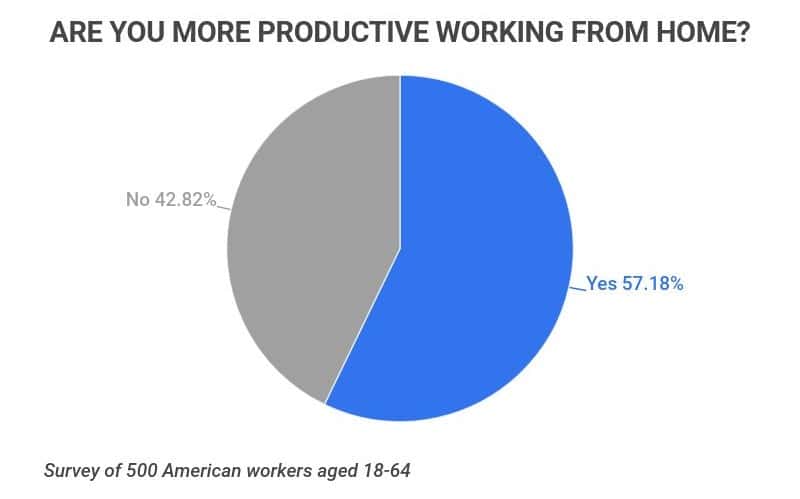
Are employees more productive when working from home? Absolutely. Recent data shows that 57.2% of workers feel they are more productive in a remote setting.
This sentiment is backed by extensive research. A comprehensive study involving 16,000 employees over nine months by Stanford University revealed a remarkable 13% increase in performance attributed to remote work. Key factors included extended working hours due to fewer breaks and a quieter, more convenient work environment.
Furthermore, 78% of remote workers report feeling “highly engaged” at work, compared to just 72% of their in-office counterparts. Given that engaged employees are, on average, 22% more productive than those who are disengaged, remote work seems to foster enhanced productivity in many individuals.
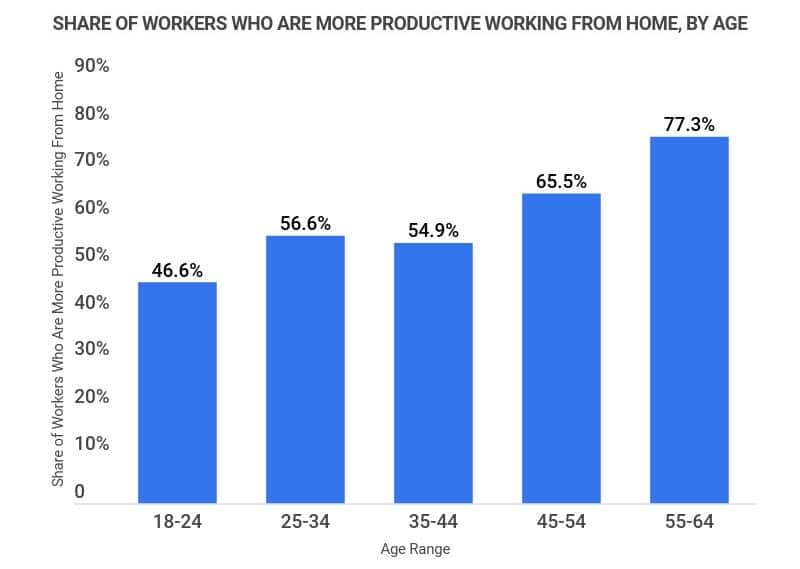
Interestingly, the productivity benefits of remote work tend to increase with age. Only 46.6% of workers aged 18-24 report enhanced productivity at home, whereas a significant 77.3% of workers aged 55-64 believe that remote work boosts their productivity.
Working From Home FAQ
-
What percentage of employees work remotely?
As of 2026, approximately 30% of U.S. employees work remotely. Additionally, around 20% of companies operate fully remotely. This trend is likely to continue, as 59% of workers express a preference for employers that offer remote work options.
-
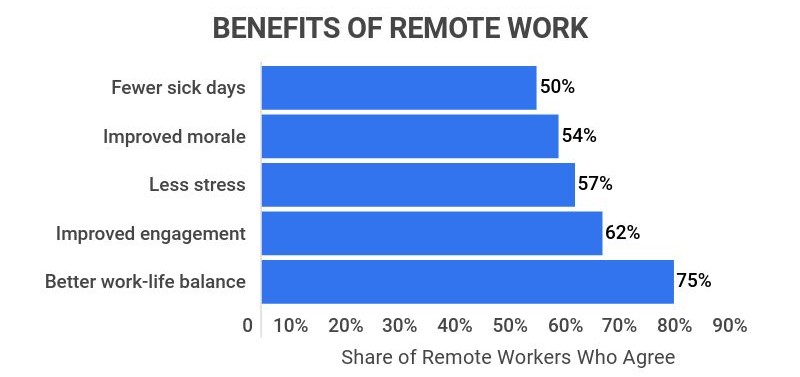
Yes, remote workers report higher levels of happiness based on several metrics. About 75% of remote employees believe their work-life balance has improved, and 62% feel that remote work positively impacts their engagement levels.
However, remote work does have its challenges; approximately 50% of remote workers report feeling lonely at least once a week.
-
Do companies save money with remote employees?
Yes, companies do save money by employing remote workers. With reductions in commuting costs, lower absenteeism, decreased turnover, and increased productivity, businesses can expect to save approximately $11,000 annually per remote employee.
References
-
Stanford. “Does Working From Home Work?” Accessed on March 7, 2022.
-
Zippia. “Remote Work Survey.” Accessed on March 7, 2022.
-
Zippia. “Employee Engagement Statistics.” Accessed on March 7, 2022.

Author

Matthew Zane is the lead editor of Zippia's How To Get A Job Guides. He is a teacher, writer, and world-traveler that wants to help people at every stage of the career life cycle. He completed his masters in American Literature from Trinity College Dublin and BA in English from the University of Connecticut.