- Quality Of Life At Work Statistics
Find a Job You Really Want In
Survey Summary: In 2026, the cultural perception of work continues to evolve, yet many Americans still grapple with guilt when it comes to taking time off. Our survey, conducted with 217 verified job seekers on Zippia, reveals insights into this ongoing dilemma about work-life balance. Here’s what we found:
-
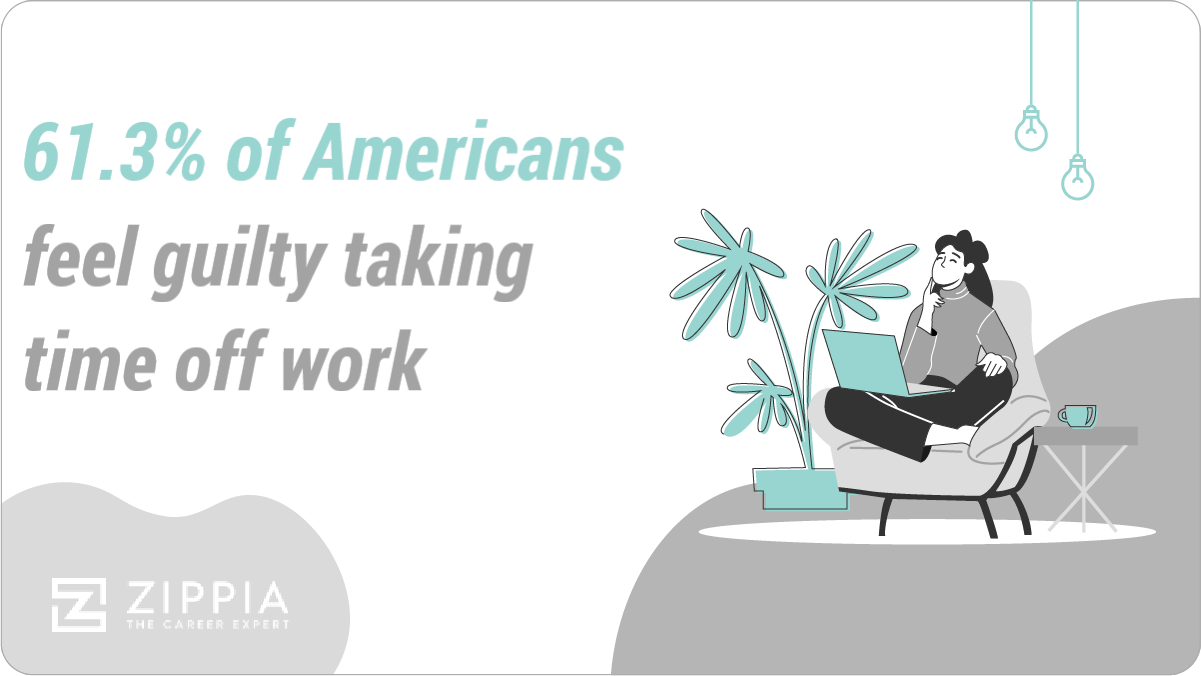
61.3% of Americans experience guilt when taking time off work.
-
Female workers are 20% more likely to feel guilty about taking time off than their male counterparts.
-
Individuals are 58% more likely to feel guilty about taking a sick day compared to a vacation day.
-
The primary concern for workers when taking time off is falling behind on projects.
-
Among older workers, over 2/3 of those aged 56+ report feeling guilty about taking time off.
-
65.4% of women feel guilty about taking time off from work, compared to 54.5% of men.
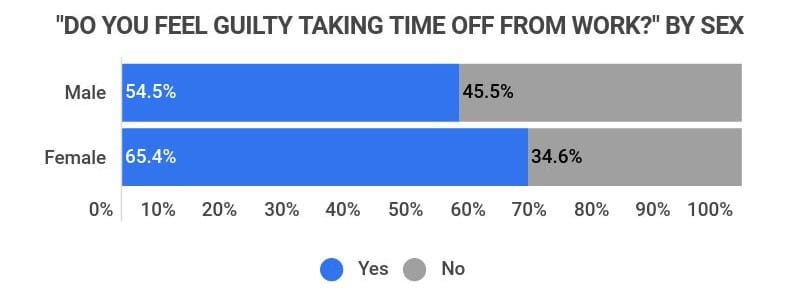
Nearly two-thirds of female respondents reported feeling guilty about taking time off. This trend aligns with findings from various studies that suggest women often worry about “burdening others” with their absence, a sentiment that extends to requests for time off.
-
People generally feel less guilty about taking time off as they age—until their senior years.
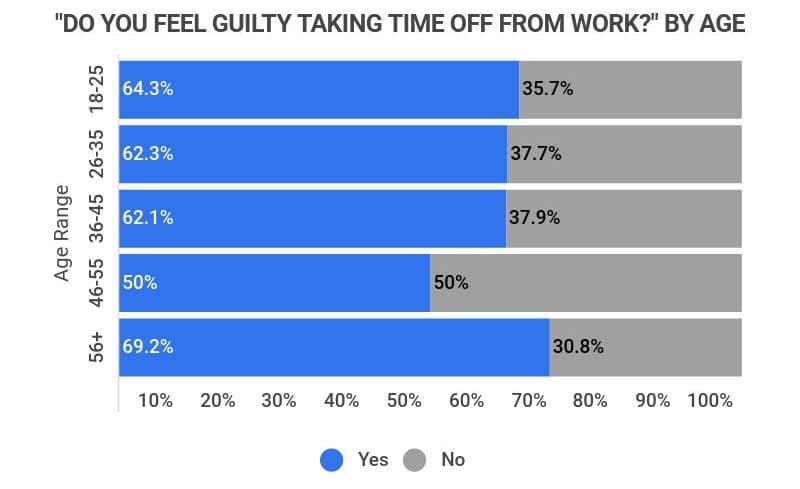
Newer employees often feel greater pressure to please, leading to increased anxiety about taking breaks. Conversely, seasoned employees recognize the importance of time off and feel less guilt. However, workers aged 56+ exhibit the highest levels of guilt, likely influenced by age-related stereotypes.
Age Range Yes No 18-25 64.3% 35.7% 26-35 62.3% 37.7% 36-45 62.1% 37.9% 46-55 50% 50% 56+ 69.2% 30.8% -
Illness remains the primary reason for taking time off work, with only 4.1% of respondents stating they “don’t take time off.”
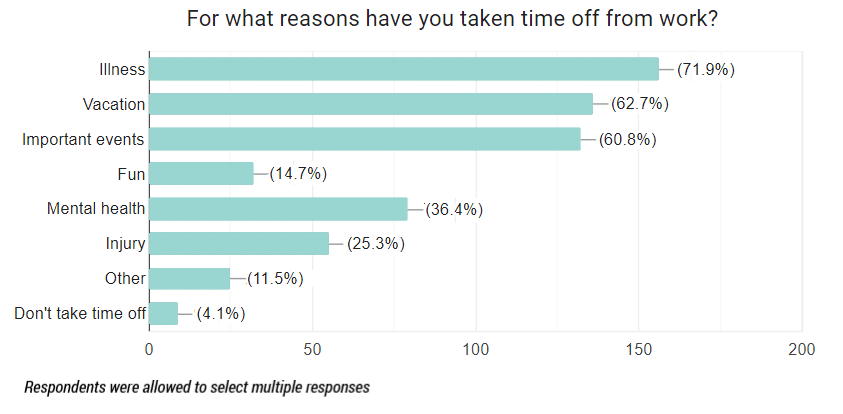
A notable 71.9% of workers report taking time off due to illness, which may seem low considering the guilt associated with sick days. Vacation follows closely, with around 60% of workers using time off for leisure activities, while significant life events rank third.
Mental health days are also recognized, with about a third of respondents having taken one.
Reason Share of Respondents Illness 71.9% Vacation 62.7% Important Events 60.8% Mental Health 36.4% Injury 25.3% Fun 14.7% Other 11.5% Don’t Take Time Off 4.1% -
35% of workers admit to calling out sick when they weren’t actually ill.
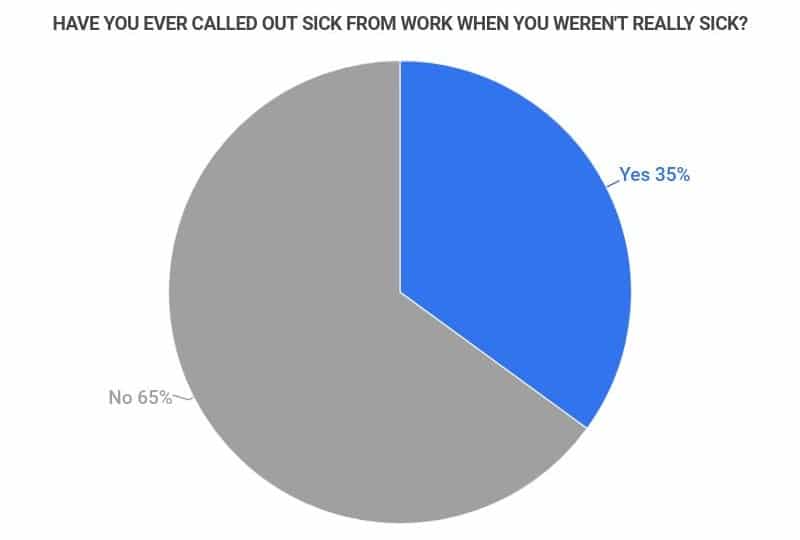
This figure only reflects those who are willing to admit the behavior, indicating a broader issue of trust and communication in workplace cultures.
-
31% of workers are concerned about falling behind when they take time off.
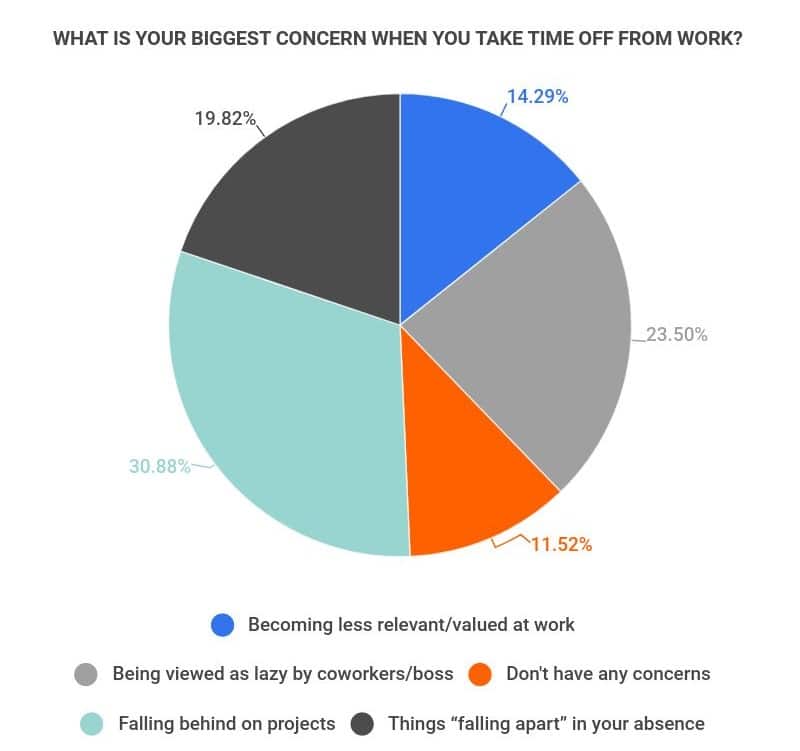
Falling behind is the primary concern for many, while only 11.5% of respondents reported having no worries about time off.
Concern Share of Respondents Falling Behind on Projects 30.9% Being Viewed as Lazy by Coworkers/Boss 23.5% Things “Falling Apart” in Your Absence 19.8% Becoming Less Relevant/Valued at Work 14.3% Don’t Have Any Concerns 11.5% -
53.9% of workers leave paid vacation days unused by year-end.
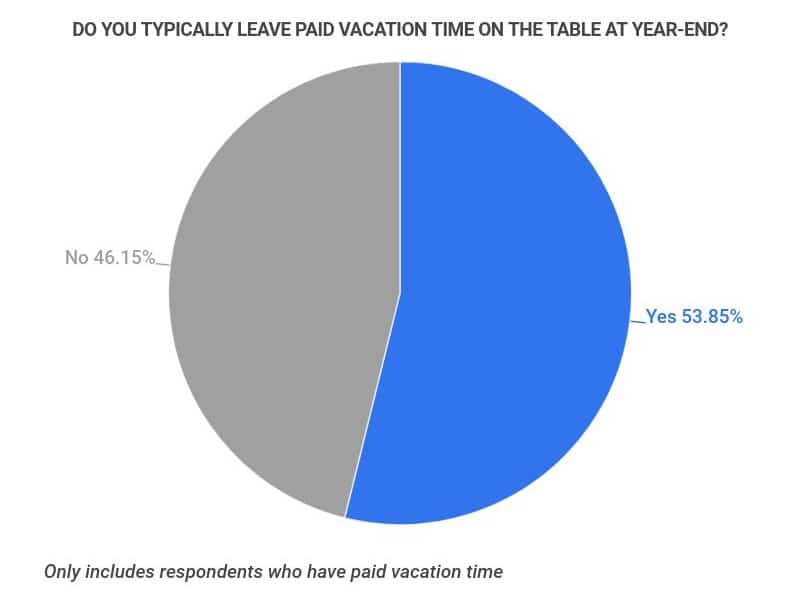
This statistic highlights a persistent issue with work culture, as more than half of respondents with paid vacation options report not fully utilizing their entitlements.
-
61.3% of respondents feel more guilty about taking sick days than vacation days.
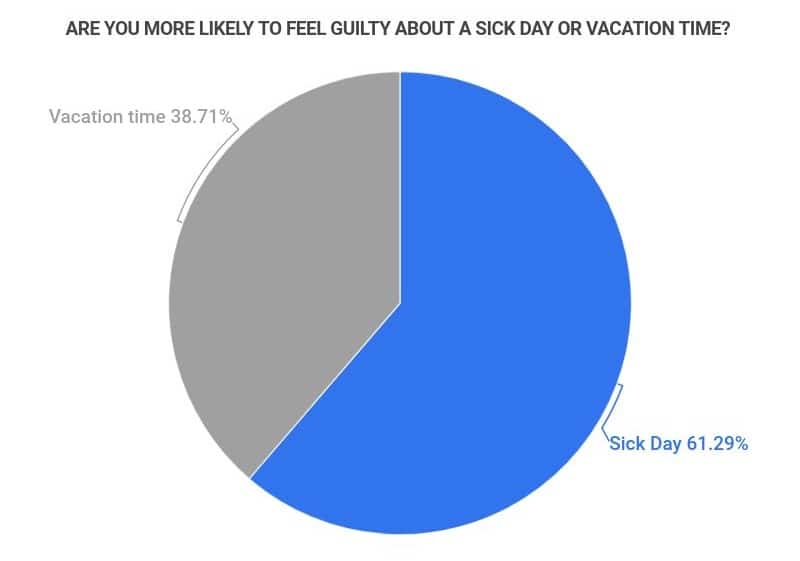
This disparity may stem from a perceived lack of control when calling out sick, as employees often feel they leave their teams in a difficult position, unlike with planned vacations.
-
Most workers feel their employers do not encourage a healthy work-life balance.
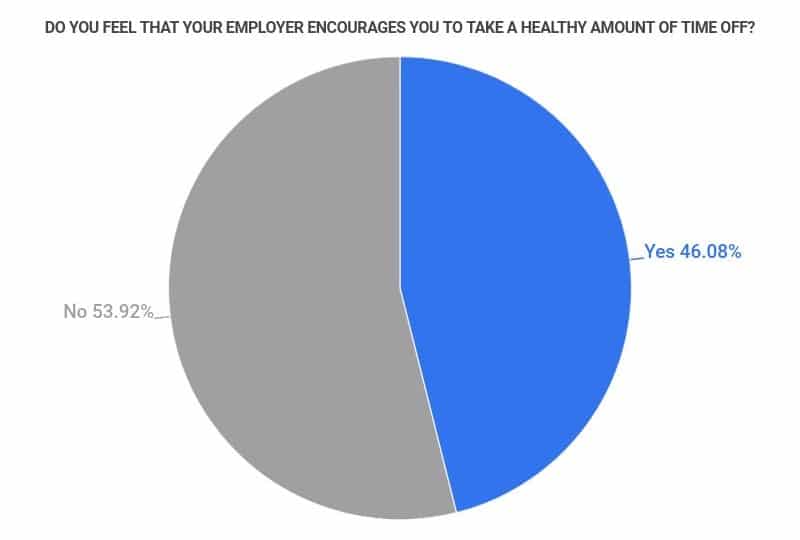
54% of respondents reported that their employer does not promote taking time off, whether through direct encouragement or by modeling the behavior themselves.
As the workplace continues to evolve in 2026, the importance of addressing guilt surrounding time off remains crucial for employee well-being. Encouraging a culture that values mental health and work-life balance can lead to a more productive and satisfied workforce. Organizations that actively promote taking breaks can not only improve employee morale but also enhance overall performance.

Author

Matthew Zane is the lead editor of Zippia's How To Get A Job Guides. He is a teacher, writer, and world-traveler that wants to help people at every stage of the career life cycle. He completed his masters in American Literature from Trinity College Dublin and BA in English from the University of Connecticut.