Job Satisfaction by Country: 2026 Update Job satisfaction has seen gradual improvements globally, though significant disparities persist among countries. This article explores the average job satisfaction across 34 nations, revealing valuable insights into workforce sentiment and trends.
Key Takeaways:
-
The global average job satisfaction stands at 56.7%.
-
India leads with the highest job satisfaction rate of 89%.
-
Japan ranks lowest with a job satisfaction rate of 42%, exhibiting double the job dissatisfaction compared to several other low-ranking countries.
-
The US maintains a robust average job satisfaction of 78%, placing it within the top five globally.
Average Job Satisfaction by Country
| Rank | Country | Satisfied | Neutral | Dissatisfied |
|---|---|---|---|---|
| 1 | India | 89% | 8% | 3% |
| 2 | Mexico | 85% | 11% | 4% |
| 3 | Turkey | 80% | 15% | 5% |
| 4 | Norway | 79% | 12% | 7% |
| 5 | US | 78% | 15% | 6% |
| 6 | Denmark | 78% | 16% | 4% |
| 7 | Spain | 77% | 15% | 7% |
| 8 | Argentina | 75% | 16% | 9% |
| 9 | Brazil | 74% | 16% | 9% |
| 10 | China | 74% | 21% | 5% |
| 11 | Canada | 74% | 20% | 6% |
| 12 | UK | 74% | 20% | 7% |
| 13 | Malaysia | 73% | 19% | 7% |
| 14 | Poland | 73% | 19% | 8% |
| 15 | Chile | 73% | 19% | 8% |
| 16 | Austria | 72% | 18% | 8% |
| 17 | Germany | 71% | 18% | 9% |
| 18 | Belgium | 71% | 18% | 8% |
| 19 | Switzerland | 71% | 20% | 8% |
| 20 | Romania | 70% | 23% | 6% |
| 21 | Netherlands | 70% | 21% | 7% |
| 22 | Luxembourg | 70% | 21% | 8% |
| 23 | Australia | 70% | 20% | 10% |
| 24 | Italy | 69% | 21% | 9% |
| 25 | New Zealand | 68% | 22% | 10% |
| 26 | Portugal | 68% | 18% | 14% |
| 27 | France | 68% | 19% | 12% |
| 28 | Sweden | 66% | 23% | 10% |
| 29 | Greece | 65% | 27% | 8% |
| 30 | Czech Republic | 64% | 27% | 8% |
| 31 | Hungary | 64% | 25% | 10% |
| 32 | Singapore | 61% | 28% | 10% |
| 33 | Hong Kong | 49% | 40% | 11% |
| 34 | Japan | 42% | 30% | 21% |
Countries with the Highest Job Satisfaction
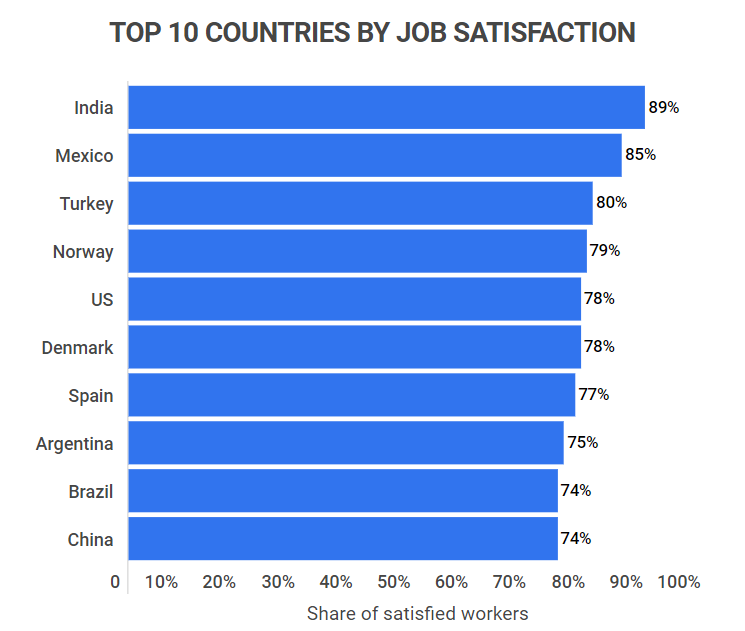
Understanding job satisfaction is crucial for assessing productivity, turnover rates, and work-life balance. Below is a list of the top 10 countries with the highest average job satisfaction—factors to consider if contemplating relocation.
Top 10 Countries by Job Satisfaction
| Country | Share of Satisfied Workers |
|---|---|
| India | 89% |
| Mexico | 85% |
| Turkey | 80% |
| Norway | 79% |
| US | 78% |
| Denmark | 78% |
| Spain | 77% |
| Argentina | 75% |
| Brazil | 74% |
| China | 74% |
Among these nations, India stands out with an impressive 89% of employees expressing satisfaction with their jobs. Only three countries—India, Mexico, and Turkey—report job satisfaction rates exceeding 80%.
Notably, the US and China also feature prominently on this list, reflecting satisfaction rates of 78% and 74%, respectively.
Countries with the Lowest Job Satisfaction
While many countries exhibit modest job dissatisfaction rates (10% or lower), Japan’s situation is particularly concerning. With a dissatisfaction rate of 21%, Japanese workers are twice as likely to report dissatisfaction compared to their counterparts in the bottom 10 countries and seven times more than those in India.
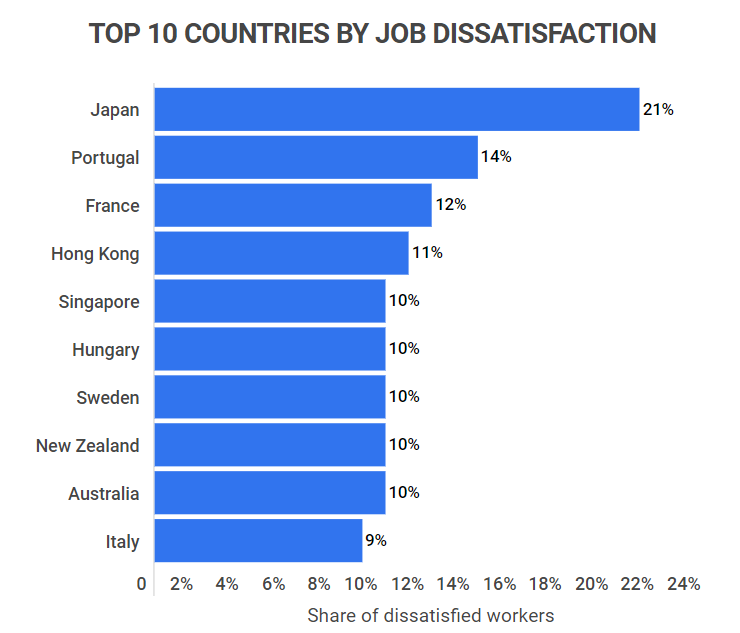
Below is a detailed chart of countries with the highest levels of employee dissatisfaction:
Top 10 Countries by Job Dissatisfaction
| Country | Share of Dissatisfied Workers |
|---|---|
| Japan | 21% |
| Portugal | 14% |
| France | 12% |
| Hong Kong | 11% |
| Singapore | 10% |
| Hungary | 10% |
| Sweden | 10% |
| New Zealand | 10% |
| Australia | 10% |
| Italy | 9% |
While these findings highlight significant dissatisfaction in Japan, the global dissatisfaction rate remains around 30.15%. Japan’s rates are notably higher than those in Portugal, France, and Hong Kong, which also feature dissatisfaction rates exceeding 10%.
Job Satisfaction by Country FAQ
-
What country has the highest job satisfaction?
India boasts the highest average job satisfaction at 89%. Only 3% of Indian workers report dissatisfaction in their jobs.
Interestingly, despite having one of the lowest per capita incomes on this list at $1,670 per year (ranked 112 out of 164 countries), India demonstrates that income isn’t the sole factor influencing job satisfaction. Elements such as recognition, opportunities for advancement, flexible work schedules, and workplace culture play a more significant role.
-
Is job satisfaction a global concept?
Yes, job satisfaction is indeed a global concern and can be measured across different nations. However, accurately gauging job satisfaction can be challenging in countries facing high poverty rates or limited freedoms.
This context may explain why Japan, despite its high dissatisfaction, is one of the easier workforces to assess among those with lower satisfaction rates.
-
Are Americans satisfied with their jobs?
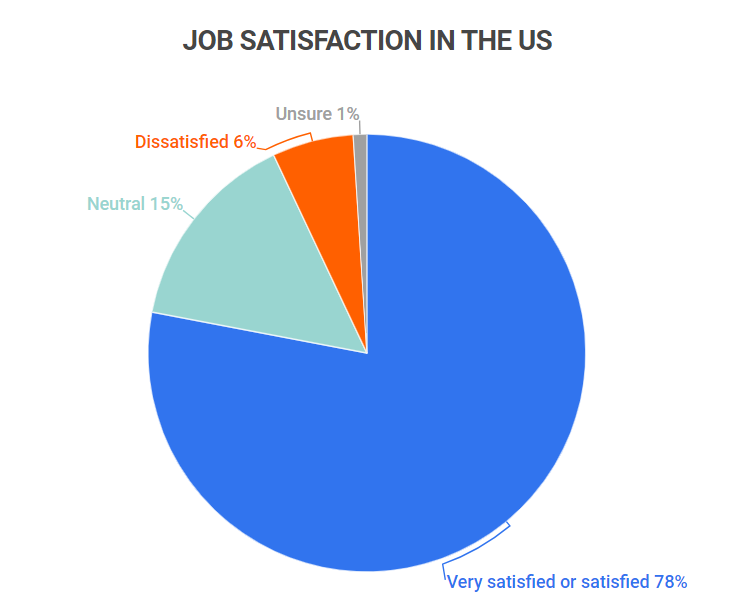
Yes, a significant majority of Americans report job satisfaction (78%). Approximately 6% express dissatisfaction, placing the US among the top five countries for job satisfaction.
-
How do you measure job satisfaction in the workplace?
Job satisfaction is measured through employee surveys and by analyzing productivity and turnover rates. Surveys can be conducted annually to assess employee sentiment, allowing organizations to compile meaningful data. For employees, these surveys present an opportunity to voice their needs for increased job satisfaction.
Moreover, while productivity and low turnover rates do not directly correlate, they can indicate a more satisfied workplace.
Conclusion
Measuring job satisfaction across various countries can present challenges, yet the data available highlights clear global trends. The average global job satisfaction rate is currently at 56.7%, with India, Mexico, and Turkey standing out at rates of 80% or higher.
Conversely, Japan’s average job satisfaction is the lowest at 42%, with a significant 21% of workers expressing dissatisfaction.
Ultimately, the interplay of culture, tradition, and economic conditions in different countries impacts these satisfaction rates. It is essential to recognize that many countries with lower dissatisfaction rates may not have been surveyed, suggesting that this information is part of a broader narrative.
References

Author

Jack Flynn is a writer for Zippia. In his professional career he’s written over 100 research papers, articles and blog posts. Some of his most popular published works include his writing about economic terms and research into job classifications. Jack received his BS from Hampshire College.