- Quality Of Life At Work Statistics
Research Summary: Whether you’re a seasoned nurse or pursuing a degree in nursing, this profession continues to be demanding and high-pressure. Nurses frequently work extended hours and are pivotal in delivering patient care.
Recent years have seen a significant shift in the healthcare landscape, exacerbated by ongoing staffing challenges and the evolving demands of patient care. Consequently, burnout remains a pressing concern for nurses across the United States.
Our in-depth research sheds light on the current state of nursing burnout. Here are the key findings:
-
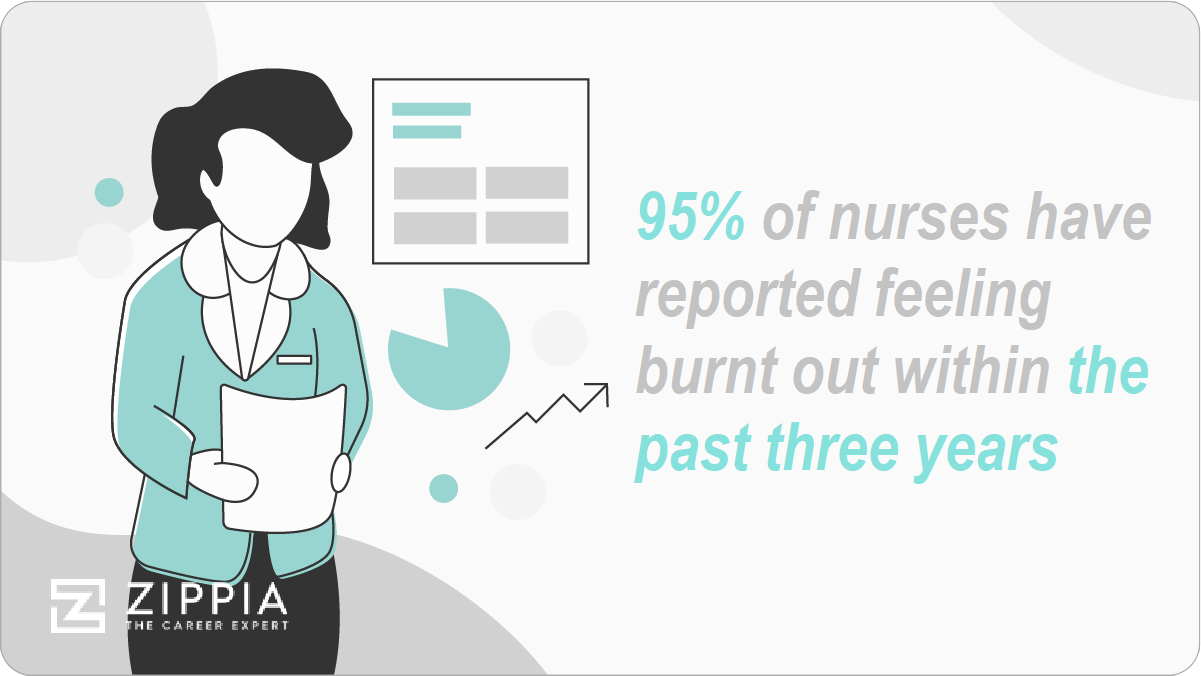
95% of nurses have reported experiencing burnout at some point in the last three years.
-
In 2019, only 15.6% of nurses indicated feelings of burnout; this number skyrocketed to 62% following the pandemic and its aftermath.
-
Approximately 30% of U.S. nurses left their positions in 2021.
-
27% of those who resigned cited burnout as their primary reason.
-
The current annual turnover rate for nurses stands at 27.1%.
For a deeper analysis, we categorized the data in the following ways:
Contributions | Burnout in Healthcare
General Nursing Burnout Statistics
To grasp the extent of the nursing burnout crisis, we compiled various compelling statistics. Here’s what we found:
-
2.7 million U.S. nurses feel burnt out.
This staggering statistic indicates that burnt-out nurses make up around 15% of all healthcare professionals in the U.S.
-
At least 25% of nurses are experiencing symptoms of burnout.
These symptoms encompass stress, anxiety, depression, and emotional exhaustion. Many also report feelings of depersonalization and a decreased sense of professional achievement.
-
85% of nurses experience career fatigue.
The most prevalent form is compassion fatigue (40%), which significantly impacts nurses’ ability to empathize with patients and often leads to reconsidering their career choices.
-
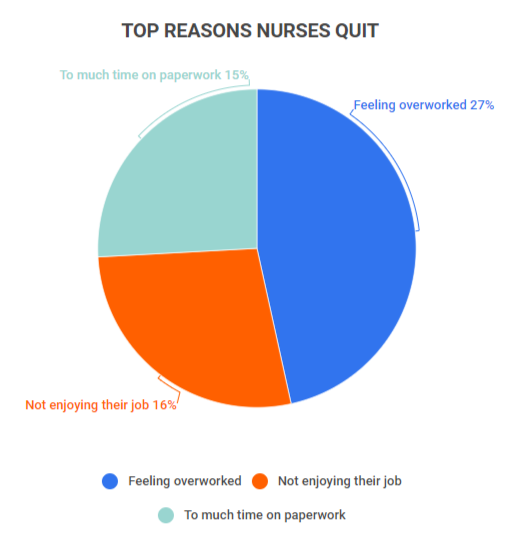
The primary reason nurses leave is feeling overworked.
27% state that they quit due to feeling overburdened, followed by a lack of enjoyment in their jobs (16%) and excessive paperwork (15%).
-
34% of nurses planned to leave their roles by the end of 2022.
44% of these individuals cited burnout as their main motivation for pursuing new job opportunities.
What Contributes to Nurse Burnout?
Numerous factors contribute to a nurse’s overall sense of burnout. From excessive workloads to challenging interpersonal dynamics, we’ve compiled the most relevant statistics:
-
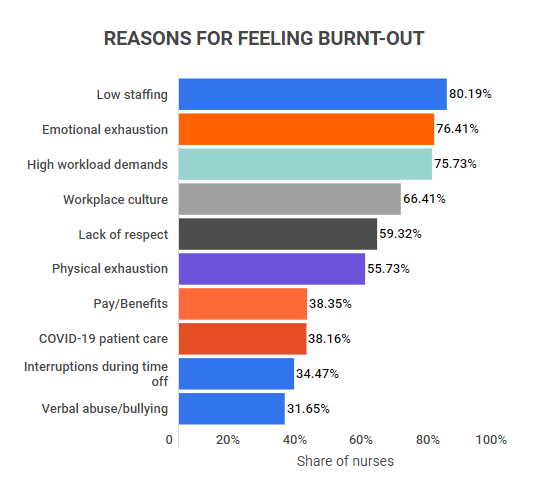
80.19% of nurses attribute burnout to low staffing levels, making it the leading cause of burnout.
Other significant contributors include emotional exhaustion (76.41%), high workload demands (75.73%), workplace culture (66.41%), and lack of respect (59.32%).
Reasons for Feeling Burnt Out
Reason for feeling burnt-out Share of nurses Low staffing 80.19% Emotional exhaustion 76.41% High workload demands 75.73% Workplace culture 66.41% Lack of respect 59.32% Physical exhaustion 55.73% Pay/benefits 38.35% COVID-19 patient care 38.16% Interruptions during time off 34.47% Verbal abuse/bullying 31.65% -
26.47% of nurses feel uncomfortable discussing burnout with their supervisors.
Of those who have broached the topic, over 60% reported that their supervisors either took no action or retaliated against them.
Share of Nurses Who Reported Feeling Burnt-out
Have you reported feeling burnt-out to a superior? Share of nurses Yes, and my employer did nothing to fix the problem 44.08% No, I do not feel comfortable addressing the issue 26.47% Yes, and I faced retaliation in the workplace 11.07% No, I have not experienced any issues 7.22% No, I don’t know who to report to 5.68% Yes, and my employer implemented changes to fix the issue 5.49% -
24% of healthcare facilities report staffing shortages among nurses.
This trend is expected to worsen, with 92% of nurses anticipating that the labor shortage will escalate in the coming months.
-
98% of hospital nurses describe their work as physically and mentally demanding.
In light of staffing challenges and rising patient volumes, nurses have experienced an increase in role demands. In fact, 85% report that these demands contribute to their fatigue.
Burnout in the Medical Field
Nurses and other healthcare professionals experience varying levels of burnout based on their work environments, particularly in understaffed hospitals. Here are some significant insights from our research:
-
92% of nurses report frequent fatigue related to their work.
A significant 71% of nurses feel fatigued “very often” rather than occasionally.
-
81% of critical care nurses display signs of burnout.
Critical care nursing is particularly challenging, with these professionals experiencing burnout symptoms at rates exceeding those of other nursing specialties.
-
Critical Care and Neurology nurses show a burnout rate of 48%.
In contrast, plastic surgeons report the lowest burnout rates at only 23%.
Medical Field and the Burnout Rate
Medical field Burnout rate Critical Care 48% Neurology 48% Family Medicine 47% Ob/Gyn 46% Internal Medicine 46% Emergency Medicine 45% Radiology 45% Physical Medicine & Rehabilitation 44% Urology 44% Allergy & Immunology 44% General Surgery 43% Cardiology 43% Otolaryngology 42% Pulmonary Medicine 41% Pediatrics 41% Infectious Diseases 40% Nephrology 40% Oncology 39% Gastroenterology 38% Anesthesiology 38% Rheumatology 38% Psychiatry 36% Public Health & Preventive Medicine 36% Diabetes & Endocrinology 35% Orthopedics 34% Ophthalmology 33% Pathology 32% Dermatology 32% Plastic Surgery 23% -
44% of nurses are concerned that their burnout negatively affects the quality of patient care.
As burnout intensifies, many nurses experience a decline in compassion for patients, which can lead to serious consequences in care quality.
Nursing Burnout Statistics FAQ
-
Why is burnout so common in nursing?
Burnout is prevalent in nursing because it is a high-stress profession. Contributing factors include poor staffing ratios, inadequate organization, lack of time off, and ineffective leadership.
Over 80% of nurses cite staffing shortages as a significant cause of their burnout.
-
Which field of nursing has the highest burnout rate?
Critical care nurses experience the highest levels of burnout. Approximately 81% of critical care nurses report symptoms of burnout due to the demanding nature of their work environments.
-
How many nurses leave the profession due to burnout?
44% of nurses who resign attribute their decision to burnout. This is the most frequently cited reason for leaving the profession.
Considering there are approximately 4.3 million nurses in the U.S., this suggests that around 660,000 nurses could potentially leave their jobs due to burnout.
-
What percentage of nurses quit in the first five years?
Over 50% of nurses leave the profession within the first five years. Specifically, more than 17% quit in the first year, and 56% leave by the end of the second year.
Conclusion
With significant understaffing issues and challenging patient care demands, nurses throughout the U.S. face escalating stress and burnout. Currently, 2.7 million nurses report feeling burnt out.
This situation has intensified in recent years, with burnout rates climbing to 62%, and 95% of nurses indicating they have felt burnt out within the past three years.
If the trend of nurses exiting the profession continues, the problem may worsen, exacerbating staffing shortages. Therefore, it is crucial for employers to take proactive steps to enhance working conditions and support their nursing staff.
References:
-
Nursing CE. “Nursing CE Central: Nurse Burnout Study 2021.” Accessed on September 26th, 2022.
-
PMC. “Burnout and Resilience among Frontline Nurses during COVID-19 Pandemic.” Accessed on September 26th, 2022.
-
Forbes. “Amid Healthcare’s Great Resignation, Burned Out Workers Are Pursuing Flexibility And Passion.” Accessed on September 26th, 2022.
-
NSI. “2022 NSI National Health Care Retention & RN Staffing Report.” Accessed on September 26th, 2022.
-
EHR. “Nurses Report Decreased Levels of EHR Burnout Compared to Physicians.” Accessed on September 26th, 2022.
-
Supplemental Health Care. “Nurses Dealing With Compassion Fatigue Have Options.” Accessed on September 26th, 2022.
-
RNnetwork. “Survey Finds Nearly Half of Nurses Considering Leaving the Profession.” Accessed on September 26th, 2022.
-
Fierce Healthcare. “Third of nurses plan to leave their jobs in 2022, survey finds.” Accessed on September 26th, 2022.
-
Fierce Healthcare. “Nursing shortage looms large and projected to intensify in next 18 months: report.” Accessed on September 26th, 2022.
-
NIH. “Fatigue and the Female Nurse: A Narrative Review of the Current State of Research and Future Directions.” Accessed on September 26th, 2022.
-
Medscape. “Medscape Report.” Accessed on September 26th, 2022.
- Quality Of Life At Work Statistics

Author

Jack Flynn is a writer for Zippia. In his professional career he’s written over 100 research papers, articles and blog posts. Some of his most popular published works include his writing about economic terms and research into job classifications. Jack received his BS from Hampshire College.