Find a Job You Really Want In
Summary. Cover letters can be essential for clarifying any confusion in your resume, addressing employment gaps, and providing additional information not included in your resume. However, it is advisable to avoid sending a cover letter if the employer explicitly states it is unnecessary or if you’re not tailoring it for the specific job.
The job market has evolved significantly in recent years, with remote and hybrid work becoming standard, increased competition for positions, and a greater emphasis on personal branding. In today’s landscape, making a strong impression is crucial for securing the job you desire.
The first question on your mind is likely: Are cover letters necessary?
While there’s a common belief that employers often overlook cover letters, many still value them highly. The truth is, a well-crafted cover letter can differentiate you from the crowd, even in a saturated job market.
In this article, we’ll clarify the importance of cover letters, help you understand when they are particularly beneficial, and guide you on how to craft one that resonates with potential employers.
Key Takeaways:
-
Including a cover letter, even when optional, demonstrates your initiative and dedication, making you a more appealing candidate.
-
Always review the employer’s application requirements; if there’s no clear instruction, it’s generally safer to include one.
-
A poorly written cover letter can hinder your chances; ensure it’s well-crafted and free of errors.
-
Cover letters allow you to express your motivations for applying and highlight achievements that might not fit neatly into your resume.
-
They also provide a platform to explain any irregularities in your employment history, such as gaps or unique projects.
When is a Cover Letter Important?
How can you determine whether a cover letter is needed?
Not all jobs share the same requirements, and the necessity of a cover letter varies across industries. Here are some situations where a cover letter is particularly important:
-
To clarify a confusing resume. If there are aspects of your resume that require further explanation, a cover letter is the ideal place to address them.
-
To fill in or explain gaps in your employment history. Use your cover letter to address any breaks in your work history.
-
To indicate your willingness to relocate. If you are open to moving for the job, make that clear in your cover letter.
-
To bolster your credentials if you’re new to the field. If you’re an entry-level worker, a cover letter can highlight relevant non-professional experiences and convey your enthusiasm.
-
To showcase key skills. If you possess specific skills that align with the job, emphasize them in your cover letter.
-
To highlight personal connections. If you have a connection to the company, mention it in your cover letter.
-
For higher-level positions. Always include a cover letter when applying for mid-management or senior roles.
-
If the employer requests one. If it’s specified in the job listing, a cover letter is mandatory.
-
To include information not covered in your resume. If there’s something relevant that isn’t in your resume, a cover letter allows you to elaborate.
When Not to Send a Cover Letter
While cover letters are generally beneficial, there are circumstances where it may be best to forgo one:
-
When the employer specifies not to include one. If the job description states that a cover letter is not necessary, respect that request. Note: If it says “optional,” consider submitting one.
-
If your cover letter contains errors. A letter filled with mistakes can harm your candidacy. Always proofread your cover letter carefully.
-
If you’re using a generic cover letter template. A non-customized cover letter offers no value; it’s better to skip it altogether.
Why Write a Cover Letter?
A cover letter serves as your first impression with the company. It’s your opportunity to introduce yourself beyond the resume. Even if only a portion of hiring managers read cover letters, this is your chance to make a memorable impact by showcasing your achievements, skills, and experiences.
Though it may seem like a formality, a compelling cover letter can set you apart, create a positive impression, and highlight your potential contributions to the company.
Some hiring managers and recruiters genuinely appreciate cover letters. A strong letter articulates your value, suggests solutions for the role, and includes your contact information and availability.
If a hiring manager is torn between candidates, an outstanding cover letter can tip the scales in your favor.
Is a Cover Letter Necessary to Get a Job?
In most cases, a cover letter may not be strictly necessary, but submitting one can enhance your candidacy. Your resume provides an outline of your experience, but a cover letter adds depth.
Moreover, while many employers may only skim cover letters, they still play a valuable role in the application process.
-
Unless stated otherwise in the job posting, consider a cover letter necessary unless specified otherwise.
-
It demonstrates your ability to follow directions and your willingness to go the extra mile, which can be a deciding factor for employers.
-
If you encounter an employer who values cover letters, use this opportunity to your advantage. With the competitive job market, maximize every opportunity to stand out.
-
Ensure your cover letter is tailored to the specific job and includes relevant information that the employer wants to hear.
Your goal is to create a cover letter that the hiring manager will remember, ideally wanting to frame it after your interview—well, not literally, but that’s the mindset you should adopt when crafting it.
Submitting a Cover Letter and Resume
Amidst the focus on cover letters, don’t overlook the importance of your resume. Crafting a compelling resume is essential and deserves its own attention. Remember, if you submit a cover letter, a resume must accompany it, as it’s likely to be reviewed more thoroughly by potential employers.
Parts of a Cover Letter (With Examples)
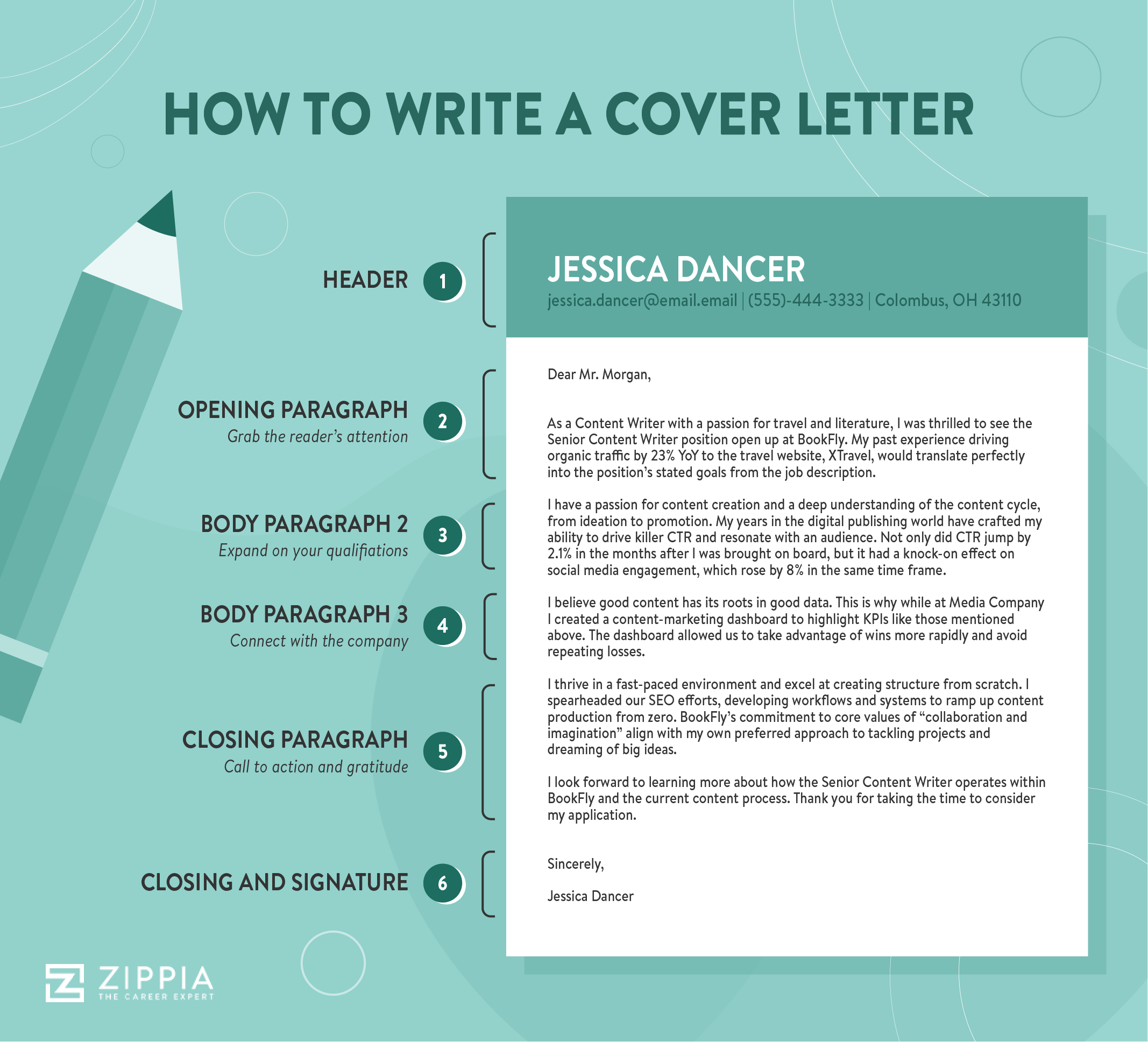
Now that we’ve emphasized the importance of a cover letter, it’s time for you to write one that stands out. Ensure you include all the standard parts of a cover letter:
-
The header. Include all pertinent contact information for yourself and the employer, along with the current date between the two sets of addresses.
Bill Billson
22 Happy Court
Marigold, TX, 10987April 26, 2026
Alice Allison
New Company
5225 East Park Ln.
Austin, TX, 73301If you’re emailing your cover letter, you can omit this information and include only relevant contact details after your signature.
-
The greeting. Always strive to find the hiring manager’s name. Check the job listing, the company website, or LinkedIn. If you have no luck, simply call the company to inquire about whom to address your letter.
Avoid using “Mrs.” as marital status is often unclear. Stick with Ms./Mr./Dr. (or any other relevant title) followed by their last name. If their name is gender-neutral, use their full name.
If you can’t find the hiring manager’s name, consider using “Dear Hiring Manager” or similar alternatives. Avoid “Dear Sir or Madam” or “To Whom It May Concern” to prevent appearing outdated.
Dear Ms. Bickerly,
Dear Pat Thompson,
Dear Software Engineering Hiring Team, -
Opening paragraph. Start by specifying the role you’re applying for, then capture the reader’s attention with a relevant accomplishment. Aim to convey enthusiasm, knowledge, and competence from the outset.
When I saw a job posting for a Marketing Manager at ABC Inc., I knew I had to apply. I’ve long admired ABC’s approach to direct email campaigns, social media outreach, and organic content marketing, and my 6+ years in Marketing have equipped me with expertise in these areas.
-
The body. Your cover letter’s body paragraphs should do two things: explain why you’re a perfect candidate with appropriate qualifications and experience, and express your interest in this particular company. Be sure to incorporate relevant keywords from the job description.
The second part may require research into the company’s values and demonstrating how they align with your own.
I am passionate about content marketing that drives results. By strategizing a 6-month campaign that produced over 400 quality content pieces, I helped XYZ’s organic traffic surge by 569%. By aligning our sales and product teams, we achieved a 36% increase in revenue year-over-year. Your brand statement, “Quality Solutions the First Time,” resonates deeply with my commitment to excellence.
-
Closing. Conclude your cover letter by reiterating your enthusiasm for the role and inviting follow-up. A call-to-action is an effective way to close; this could look like:
I look forward to discussing ABC’s marketing goals and how I can contribute to achieving them. Thank you for considering my application.
-
Signature. If sending a physical letter, leave space between your sign-off and printed name for your signature. If emailing, you may include an email signature or simply your contact information after your typed name.
Stick with a classic like:
Sincerely,
Best Regards,
Thank you for your consideration,
As you draft your cover letter, focus on the opening, as it’s crucial for capturing attention. Personalize your letter to clearly explain why you’re the ideal fit, and feel free to highlight your strengths.
Finally, conclude with a friendly and personal tone. Rather than worrying about whether it will be read, assume it will and put forth your best effort.
Importance of a Cover Letter FAQ
-
How important is a cover letter?
A cover letter is crucial. Including a cover letter with your resume offers hiring managers a more comprehensive view of what you bring to the company. It can address questions and alleviate concerns stemming from your resume.
If there’s a gap in your work history, it’s challenging to convey the reasons for that gap through your resume alone. Moreover, your enthusiasm for the job is difficult to express through bullet points, yet employers want to see your passion.
A cover letter allows you to elaborate on these points, letting your personality shine through, which can be advantageous in a competitive job market.
-
What happens if you don’t include a cover letter?
Not including a cover letter may cause you to be overlooked in favor of candidates who did. If a company specifically requests a cover letter and you don’t provide one, your application may be discarded immediately. Conversely, if the company states not to include one, do not send one.
-
If the company doesn’t provide explicit instructions and you omit a cover letter, you risk losing your competitive edge.
-
Hiring managers must narrow down their candidate list. If you and another applicant have similar qualifications, the one who submitted a cover letter is more likely to remain in contention.
-
Writing a cover letter, even when not requested, shows you’re willing to go the extra mile, demonstrating your passion for the role and your communication skills.
-
Additionally, your cover letter can address any uncertainties about your resume, keeping you in consideration.
-
Neglecting this communication channel diminishes your chances of progressing in the hiring process, especially if another candidate successfully addresses concerns in their cover letter.
-
-
Should I include a cover letter if they don’t ask for one?
Yes, you should include a cover letter even if not requested. A cover letter provides employers with insight into your personality and passion for the job, allowing you to effectively present yourself as a candidate.
Explain your interest in the position and how your skills can advance the organization’s goals.
This is critical because if hiring managers are hesitant about inviting you for an interview based solely on qualifications, your cover letter could be the determining factor that pushes your application forward.
However, exceptions exist. Avoid including a cover letter if:
-
You cannot ensure it will be professionally written and free of errors.
-
You plan to use a generic template.
-
There’s no option to submit a cover letter in the online application.
A poorly crafted cover letter can do more harm than good; if you cannot dedicate the time to tailor it or have someone proofread it, it’s usually better to skip it altogether.
Additionally, if an online application doesn’t allow for a cover letter, take it as a hint that the company prefers not to receive one.
-
-
Do cover letters really make a difference?
Yes, cover letters can significantly impact your application. When applying for a job, hiring managers look for reasons to move your application forward or eliminate you as a candidate. Your resume, answers to application questions, and cover letter provide the necessary information for this decision.
A cover letter fulfills various roles in advocating for you as a candidate, including:
-
Clarifying any employment gaps.
-
Highlighting your soft skills, especially if you’re new to the industry with limited relevant experience.
-
Demonstrating your personality to foster a personal connection.
-
Illustrating how your skills and experiences align with the position.
-
Explaining why you are interested in this particular job and what you would contribute if hired.
While it’s not guaranteed that you’ll secure a job with a cover letter, failing to submit one means missing out on its potential benefits.
To grasp the difference a cover letter can make, consider yourself in the hiring manager’s position. You have a stack of similar resumes awaiting review.
Wouldn’t you prefer a candidate who shares their personality and passion for the role over one who merely lists accomplishments?
Moreover, a cover letter can address questions that may arise, reinforcing your suitability for an interview.
-
-
What do employers look for in a cover letter?
Employers seek conciseness, professionalism, and personality in cover letters. While the specifics will vary by job and requirements, these three elements are universally important.
-
Hiring managers typically do not have time to sift through lengthy letters filled with unnecessary details; they want you to be direct and to the point.
-
Maintain a level of professionalism that exceeds casual emails, while still allowing for your personality to shine through.
-
Follow standard formatting guidelines for formal letters, including the recipient’s name and address, and your own. Keep a polite tone and proofread your letter carefully, ideally having someone else review it as well.
-
Hiring managers appreciate seeing your passions and why you should be selected for the position, so make sure to connect your values and skills with the organization’s goals.
-
References
-
Columbia University Center for Career Education – How and Why to Write a Great Cover Letter

Author

Kristin Kizer is an award-winning writer, television and documentary producer, and content specialist who has worked on a wide variety of written, broadcast, and electronic publications. A former writer/producer for The Discovery Channel, she is now a freelance writer and delighted to be sharing her talents and time with the wonderful Zippia audience.
Expert
Matt Warzel a President of a resume writing firm (MJW Careers, LLC) with 15+ years of recruitment, outplacement, career coaching and resume writing experience. Matt is also a Certified Professional Resume Writer (CPRW) and Certified Internet Recruiter (CIR) with a Bachelor of Science in Business Administration (Marketing Focus) from John Carroll University.