Find a Job You Really Want In
No job is without its risks.
However, some professions carry a significantly higher danger level. We’re not referring to sedentary roles that may contribute to health issues over time, nor the emotional toll of highly stressful jobs. Instead, we’re discussing occupations where the risk of homicide is alarmingly elevated.
In the most recent data from the Bureau of Labor Statistics (BLS), workplace fatalities reached 5,190, with 453 of those being homicides.
We examined BLS statistics to identify the jobs where employees face the greatest risk of such violent outcomes, as well as the perpetrators behind these tragic incidents.
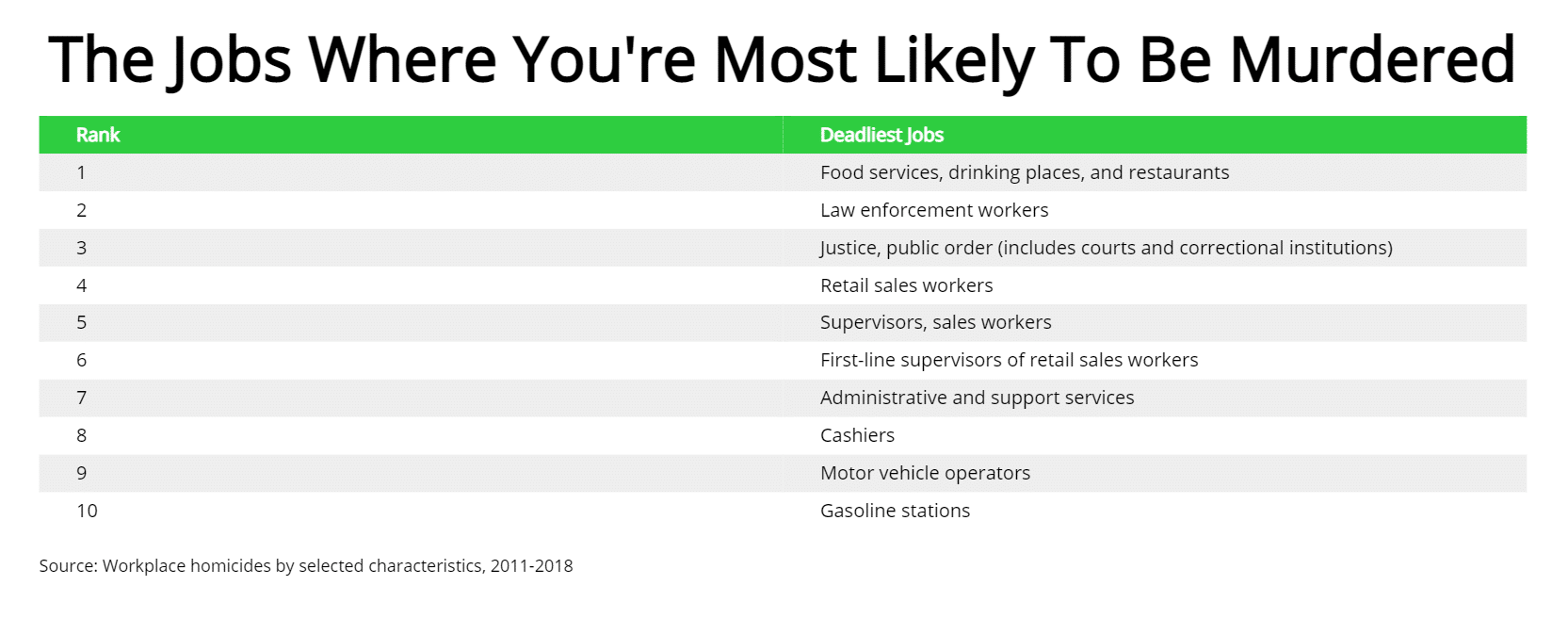
The Deadliest Jobs
- Food services, drinking places, and restaurants
- Law enforcement workers
- Justice, public order, and safety activities (including courts and correctional institutions)
- Retail sales workers
- Supervisors of sales workers
- First-line supervisors of retail sales workers
- Administrative and support services
- Cashiers
- Motor vehicle operators
- Gasoline stations
The jobs listed above represent the highest occurrences of workplace homicides. So, the next time you find yourself frustrated with service at your favorite fast-food outlet for a minor mistake, remember that their job is not only stressful but can also be perilous.
Who is Most Likely to Commit Workplace Homicide?
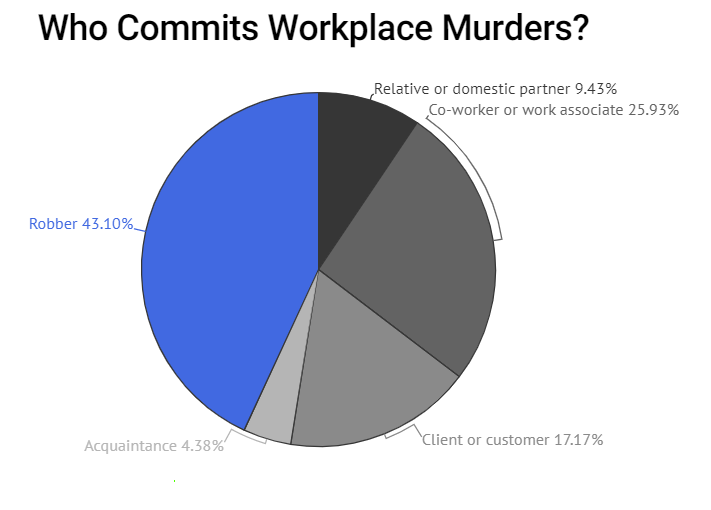
The predominant assailants in workplace homicides are robbers. This is particularly evident in cash-handling positions, which align with the higher murder rates in those roles.
Additionally, 17% of incidents involve aggravated customers.
Worryingly, a significant percentage of workplace murders are committed by coworkers or associates—approximately 25%. This statistic highlights a concerning issue within workplace dynamics, where grievances can escalate to extreme violence.
When to Watch Out
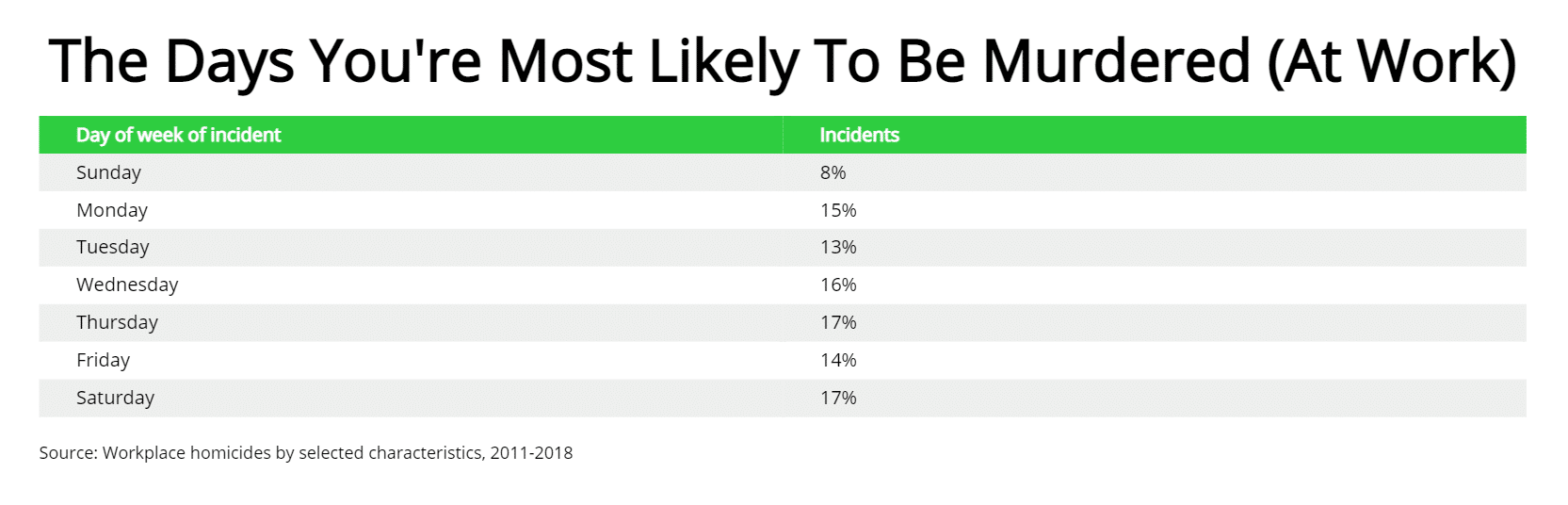
While Mondays are often disliked, they aren’t particularly known for violence. In fact, Thursdays and Saturdays have the highest rates of workplace homicides.
With nearly half of all workplace murders linked to robbery, it’s no surprise that Saturdays rank high, as foot traffic increases in stores and restaurants, leading to more cash on hand that may attract malicious intent.
The reasons behind Thursday’s elevated homicide rates remain unclear.
Some Months Are Deadlier Than Others
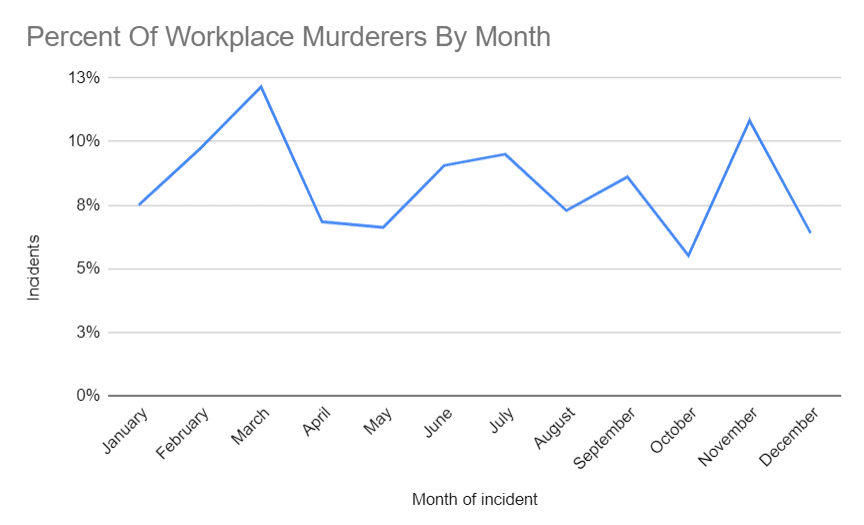
March has the highest percentage of workplace homicides, accounting for 12% of the total. It is followed by November, which sees 11% of workplace murders.
Notably, December, often associated with increased stress, accounts for only 6% of workplace homicides.
How We Determined This
This analysis utilized the BLS report on workplace homicides covering various characteristics from 2011 to 2018.
The data was well-organized; however, to identify the ten occupations with the most murders, we sorted by the number of homicides in 2018 (the latest year available). We then excluded certain industries (highlighted in the report) to find the most accurate descriptors.
Jobs with similar roles, such as “Police officers” and “Police and sheriff’s patrol officers,” were grouped for clarity and to avoid duplication. Titles were modified for improved readability.
You Probably Won’t Be Murdered at Work
While workplace homicides are tragic, they remain statistically rare. Certain jobs do carry a higher risk, but the vast majority of employees in any field face overwhelmingly favorable odds of completing their shifts without incident. With over 150 million workers in the American workforce, only 453 were victims of workplace homicide in 2018.
In fact, workers are at a far greater risk of dying from workplace accidents or sustaining injuries than from homicide.
So, while avoiding the ten most dangerous jobs may seem prudent, it’s generally more beneficial to focus on safety protocols and best practices to minimize risks on the job.

Author

Kathy is the head of content at Zippia with a knack for engaging audiences. Prior to joining Zippia, Kathy worked at Gateway Blend growing audiences across diverse brands. She graduated from Troy University with a degree in Social Science Education.