- Job Seeker Statistics
- Career Change statistics
- Internship Statistics
- Job Search Statistics
- Average Number Of Jobs Applied
- Average Salary Increase When Changing Jobs
- Part Time Job Statistics
- Age Discrimination Statistics
- Networking Statistics
- Interview Statistics
- Average Number of Jobs In A Lifetime
- Resume Statistics
- Side Hustle Statistics
- Teacher Statistics
Job interview research summary. Job interviews can be intimidating, but understanding the process through data can help alleviate some anxiety. Our extensive research reveals the following insights:
-
On average, it takes 24 weeks for job seekers to navigate the hiring and interview process before securing a position.
-
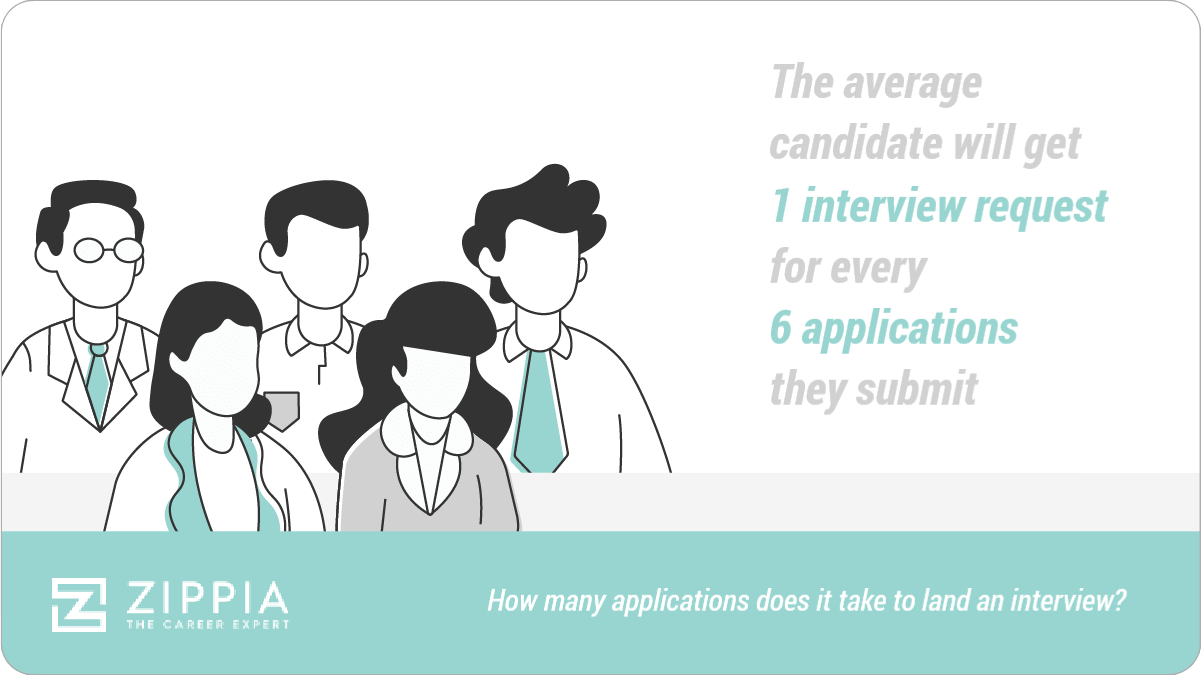
Candidates receive one interview request for every six applications submitted.
-
Women are 30% less likely to be invited for a job interview compared to men with comparable qualifications and experience.
-
For a typical corporate job posting, there are approximately 250 resumes submitted, with only four to six candidates being invited for an interview.
-
Interview processes generally last about 23 days.
-
The average applicant submits around 27 applications before receiving an interview opportunity.
For a deeper dive into the specifics, check out these sections:
Percentage | Average Length | Failure | Video and Phone | Age | Race | Gender | Education | Industry
How many interviews does it take to get a job?
While securing a job after one interview is ideal, it’s often not the reality. In many sectors, multiple interviews are standard. Here are some intriguing statistics:
-
Job seekers face a 26.24% chance of receiving a job offer.
Those applying for 21 to 80 positions have about a 30.89% chance of being hired, while applicants submitting over 81 applications see their chances drop to 20.36%.
Typically, candidates wait about 20 to 40 days after an interview to receive a job offer, with rejections often communicated five to eight weeks post-interview.
-
Job seekers have a 36.89% chance of receiving an offer after one interview.
Individuals who interview within two months of applying have a 36.89% likelihood of receiving an offer, compared to a mere 9.94% for those without an interview in that timeframe.
-
If candidates have three interviews, their chance of getting hired rises to 51%.
Recruiters suggest that being shortlisted for three interviews provides the highest likelihood of securing a job offer. For context, two interviews yield a 17% chance, four interviews a 22% chance, and five or more interviews drop to 9%.
What percentage of applicants get an interview?
Securing an interview can significantly depend on the number of applicants for the position. Some jobs attract hundreds of candidates, making it challenging to get an interview. Here are vital statistics regarding interview opportunities:
-
More applications lead to more interviews.
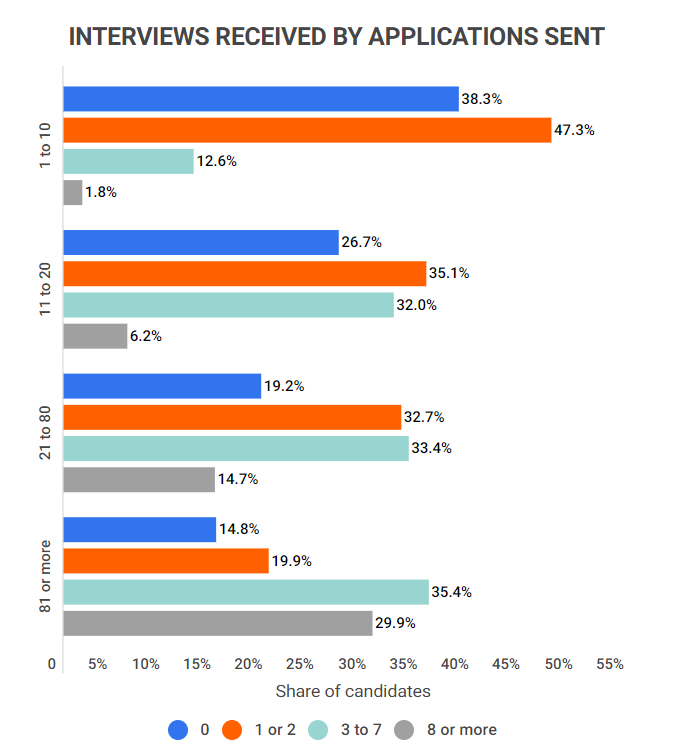
Job seekers who apply for one to ten positions over two months typically get 0 to two interview requests, but those applying for 21 to 80 jobs can secure one to seven interviews.
-
Most applicants receive one interview invitation for every six applications submitted.
According to the Bureau of Labor Statistics, about 47.3% of individuals submitting up to ten applications receive one or two invitations, while 35.1% of those sending 11 to 20 applications see similar results.
Average length of a job interview
The duration of a job interview varies across industries and roles. Some candidates might experience brief interviews, while others may endure longer sessions. Here are some statistics on interview lengths:
-
Face-to-face interviews average 40 minutes.
Most interviews last between 30 and 90 minutes, with candidates typically hearing back within 24 hours to two weeks.
-
The initial minute and a half are crucial.
Research indicates that about 33% of interviewers determine a candidate’s suitability within the first 90 seconds of an interview.
-
The average interview process spans 27.5 days in the U.S.
Job seekers can expect the entire process—from application to interviews and potential offers—to take just under a month.
Job interview failure statistics
Fear of interview failure is common, but candidates can take steps to improve their chances. Here are some factors that contribute to interview outcomes:
-
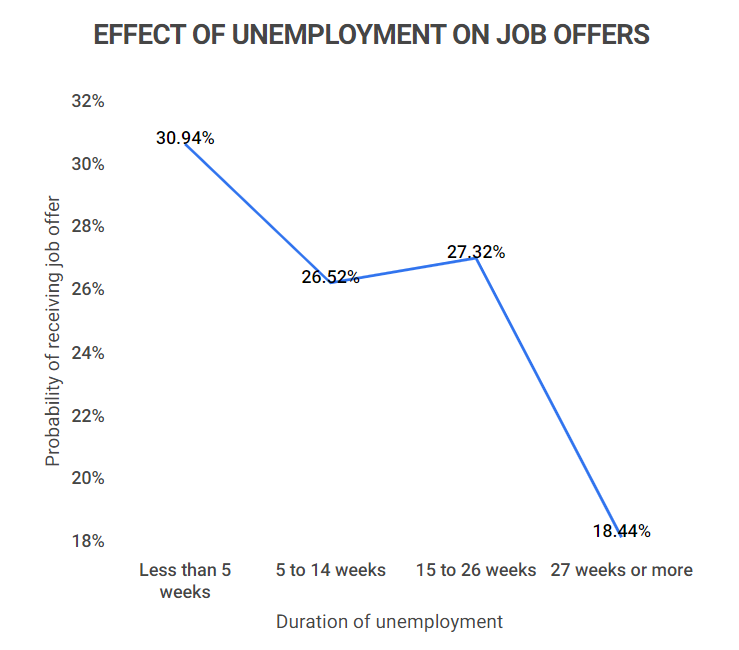
Unemployment can hinder interview opportunities.
The likelihood of being called for an interview and receiving an offer decreases with longer unemployment. Candidates unemployed for less than five weeks have a 30.94% chance of getting hired, while those unemployed for over 27 weeks see their chances drop to 18.44%.
-
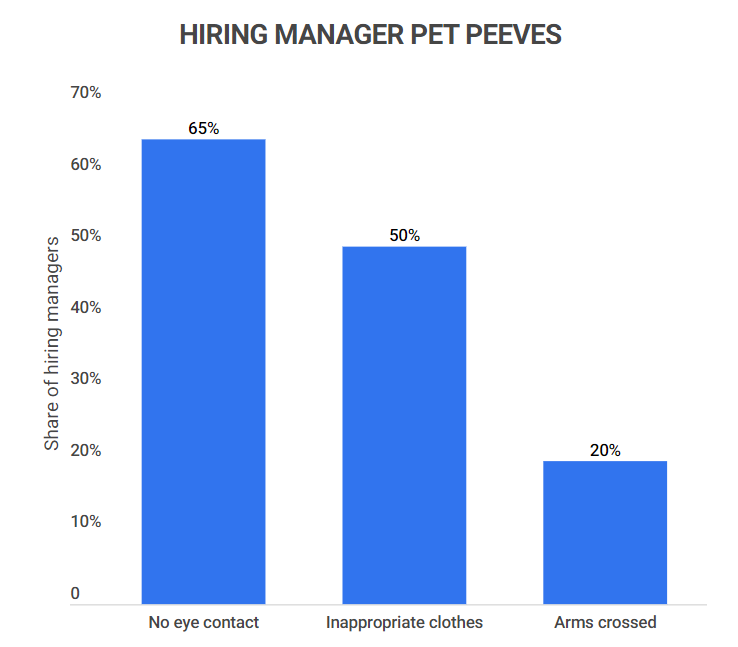
50% of hiring managers consider presentation critical.
About 20% of managers would eliminate candidates who sit with crossed arms, while 65% value eye contact highly.
-
Confidence is key—40% of recruiters prefer self-assured candidates.
Almost half of recruiters view a lack of a smile as sufficient reason to dismiss an otherwise qualified candidate, and 40% consider candidates’ vocal quality during interviews.
Additionally, 47% of HR managers report that candidates often fail because they lack knowledge about the company.
Video and phone interview frequency and other statistics
With the rise of remote work, video and phone interviews have become increasingly prevalent. These methods can streamline the interview process but come with their own challenges. Here are key insights:
-
Phone interviews can extend the hiring timeline by eight days.
While the interview process typically takes about a month, phone interviews often delay that process.
-
Video interviews are increasingly common.
About 60% of recruiters utilize video technology for remote interviews, with 81% stating that virtual recruitment will persist beyond the pandemic. Additionally, 74% of recruiters find video interviews beneficial.
-
Initial phone interviews typically last around 15 minutes.
These interviews serve mainly as screening tools before more comprehensive interviews are arranged.
-
Structured evaluation approaches are common among recruiters.
Human Resources professionals use structured interviews 74% of the time, with behavioral interviews following closely at 73%.
Job interview statistics by age
Age can significantly influence interview outcomes. Here are notable statistics regarding age-related interview dynamics:
-
Applicants aged 55 and older are three times less likely to be invited for interviews compared to younger candidates.
-
Research shows that 95% of individuals attempt to appear younger during interviews to enhance their chances of being hired.
-
Age discrimination is prevalent, especially in finance, advertising, and digital marketing roles.
-
Approximately 75% of older job seekers report experiencing age discrimination during interviews.
Job interview statistics by race
Race can also impact interview outcomes, reflecting ongoing disparities. Here are key statistics:
-
Young white men are 1.8 times more likely to receive interview invitations than older white men.
-
They are 2.3 times more likely to be interviewed than white women in their 50s.
-
Young white men are 2.6 times more likely to be invited compared to black men in their 50s.
-
They also have a threefold advantage over black women in their 50s when it comes to interview invitations.
-
77% of hiring managers consider diversity a crucial aspect of the recruitment process.
Job interview statistics by gender
Gender disparities continue to affect interview outcomes. Here are some significant statistics:
-
Men are 33% more confident in their interview performance compared to women.
-
Women without children face a 23.5% lower likelihood of being selected for interviews compared to their male counterparts.
-
Female applicants with children are 35.9% less likely to be invited for interviews than male applicants with children.
Job interview statistics by education
Educational qualifications play a significant role in interview selection. Here are relevant statistics:
-
Roughly 35% of job postings require a bachelor’s degree, while an additional 30% demand an associate’s degree or some level of college education for interview consideration.
-
Many job seekers must complete assessments before being invited for interviews, with about 25% of businesses implementing such requirements.
Job interview statistics by industry
Interview processes vary significantly by industry. Here are some critical insights:
-
Recruiters typically take around six seconds to scan a resume and decide on interview invitations.
-
The average corporate job attracts 250 applicants, with only four to six candidates invited for interviews.
-
94% of sales professionals consider salary discussions vital during interviews.
-
For blue and white-collar roles, 36% of recruiters assess multitasking ability during interviews, while 31% look for initiative, and 21% evaluate creative thinking.
Job interview FAQ
-
How many candidates make it to the final interview?
Only three candidates, on average, reach the final interview stage. With intense competition, 98% of applicants do not progress to the interview phase.
Fortunately, 75% of applicants lack the qualifications for the job, so if you meet the job description requirements, you’re already ahead of most competitors.
-
What are the chances of getting a job after the second interview?
Your chances of securing a job after the second interview range from 25% to 50%. With only three candidates typically at this stage, your odds improve significantly, but remember that your competition will also be highly qualified, so prepare thoroughly for your second interview.
-
How many interviews does it take to get a job?
The consensus among recruiters is that it takes an average of three interviews to secure a job. Additionally, 22% of recruiters believe the average is four, while 9% think it may take five or more interviews.
-
What is the average interview process length in 2026?
The average interview lasts about 45 minutes, and candidates typically wait five days to hear back from employers. However, the process can be longer, with 40% of recruiters indicating it takes more than two weeks.
Conclusion
For those navigating the job market today, grasping key job interview statistics—such as the fact that women are 30% less likely to be selected for interviews than men—can significantly enhance your chances of success and help you land your dream job within 20 to 40 days after your initial interview.
While only 20% of applicants progress to the interview phase of the hiring process, increasing your applications can lead to more interview opportunities, particularly for video interviews, which have shown improved hiring probabilities.
Regardless of where you are in your job search, it’s crucial to keep in mind that the average person spends 24 weeks applying within their field, participating in interviews, and ultimately securing a position.
Job offers typically follow within 24 hours to two weeks post-interview, while rejections are often communicated five to eight weeks later.
References
U.S. Bureau of Labor and Statistics. How Do Job Seekers Search For Jobs? New Data On Applications, Interviews, And Job Offers. Accessed 6/22/23.
Zety. 2021 HR Statistics: Job Search, Hiring, Recruiting Interviews. Accessed 6/22/23.
Forbes. New Study Shows Age, Race And Gender Bias In The Interview Process. Accessed 6/22/23.
SHRM. Have You Seen These Gender Biases During Job Interviews? Accessed 6/22/23.
Phys.org. Women Are 30% Less Likely To Be Considered For A Hiring Process Than Men. Accessed 6/22/23.
Twain Employment. 8 Surprising Statistics About Interviews. Accessed 6/22/23.
Ladders. 95% Of People Try To Look Younger During Interviews — And Other Findings Of Ageism. Accessed 6/22/23.
Simplilearn. Job Interview Statistics And Trends For 2021. Accessed 6/22/23.
The Washington Post. With A Degree No Longer Enough, Job Candidates Are Told To Prove Their Skills In Tests. Accessed 6/22/23.
Job Adder. The Top Video Interview Tips Recruiters Need To Know. Accessed 6/22/23.
- Job Seeker Statistics
- Career Change statistics
- Internship Statistics
- Job Search Statistics
- Average Number Of Jobs Applied
- Average Salary Increase When Changing Jobs
- Part Time Job Statistics
- Age Discrimination Statistics
- Networking Statistics
- Interview Statistics
- Average Number of Jobs In A Lifetime
- Resume Statistics
- Side Hustle Statistics
- Teacher Statistics

Author

Elsie is an experienced writer, reporter, and content creator. As a leader in her field, Elsie is best known for her work as a Reporter for The Southampton Press, but she can also be credited with contributions to Long Island Pulse Magazine and Hamptons Online. She holds a Bachelor of Arts degree in journalism from Stony Brook University and currently resides in Franklin, Tennessee.