- Workplace Statistics
- Time Management Statistics
- Employee Wellness Statistics
- Employment Discrimination Statistics
- Employee Recognition Statistics
- Employee Referral Statistics
- Workplace Violence Statistics
- Gamification Statistics
- Employee Feedback Statistics
- Agile Statistics
- Productivity Statistics
- Meeting Statistics
- Cell Phones At Work Statistics
- Social Media At Work Statistics
- Workplace Injury Statistics
- Workplace Stress Statistics
- Leadership Statistics
- Workplace Collaboration Statistics
- Job Satisfaction Statistics
- Paid Holiday Statistics
- Communication In The Workplace Statistics
- Wasting Time At Work Statistics
- 4-day Workweek Statistics
40+ Worrisome Workplace Stress Statistics [2026]: Facts, Causes, And Trends
Research Summary. Workplace stress remains a significant challenge for employees across all industries. Understanding the extent and impact of stress on workers is crucial for creating healthier work environments. This article explores the various dimensions of workplace stress, its causes, and its implications for both individuals and organizations.
To delve deeper into how stress affects American workers, our analysis has revealed:
-
83% of U.S. workers experience work-related stress, with 25% identifying their job as the primary source of stress in their lives.
-
Approximately one million Americans miss work daily due to stress.
-
76% of U.S. workers report that workplace stress negatively impacts their personal relationships.
-
Depression-related absenteeism costs U.S. businesses $51 billion annually, alongside an additional $26 billion in treatment expenses.
-
Middle-aged individuals have seen a 27% increase in the belief that stress will affect their financial status compared to previous decades.
-
Over 50% of workers report feeling disengaged at work due to stress, resulting in decreased productivity.
-
Employers spend around 75% of an employee’s annual salary to compensate for lost productivity or to replace workers.
-
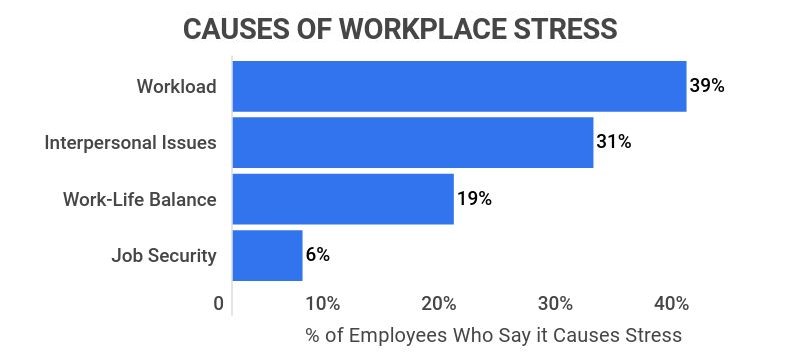
The primary sources of workplace stress include workload (39% of workers), interpersonal conflicts (31%), work-life balance issues (19%), and job security concerns (6%).
For further insights, we’ve categorized the data in the following sections:
Top Causes | Productivity | Coping | Job + Industry | Gender + Age | Trends | Health Effects
General Workplace Stress Statistics
Stress is a common experience for a significant number of employees, regardless of their industry or role.
The concerning statistics surrounding workplace stress continue to escalate, highlighting the urgent need for organizational changes regarding expectations, mental health support, and work-life balance. Our research shows:
-
55% of Americans report feeling stressed throughout the day.
-
57% of U.S. and Canadian workers experience daily stress, an increase of 8% year-over-year, compared to 43% globally.
-
A mere 6% of workers claim not to feel stressed at work. Among them, 23% describe their stress levels as high, while 6% label them as unreasonably high.
-
30% of respondents indicated that their job is a regular source of stress, with the figure rising to 44% among Millennials and Gen Z, underscoring the growing concern among younger generations.
-
48% of employees feel more emotionally distant from others since starting their jobs.
-
65% of workers acknowledge that workplace stress has led to difficulties in their lives, with over 10% reporting significant adverse effects.
-
42% of employees witness verbal abuse, with 29% admitting to having yelled at colleagues due to stress.
-
On a scale from one to ten, the average American rates their stress level at 4.9.

Top Causes of Workplace Stress Statistics
While job responsibilities vary widely, many stressors are commonly experienced across roles. These often stem from work-life imbalance, communication challenges, and strained relationships with management.
-
80% of workers report that changes in leadership influence their stress levels.
Leadership choices significantly affect team morale, workload, and responsibilities. According to Zippia research, over 60% of workers have left or would leave a job due to poor management. A separate study revealed that 31% of U.S. workers find lack of clarity in expectations from supervisors the most stressful aspect of workplace changes.
-
39% of workers cite workload as their primary source of stress.
Other notable stressors include interpersonal conflicts (31%), balancing work with personal life (19%), and job security (6%). Additional common factors include low wages, limited growth opportunities, unrealistic expectations, and extended hours.
-
80% of U.S. workers experience stress due to ineffective company communication.
Poor communication can obscure boundaries for both employees and management. One in four employees disagreed strongly that their supervisor provides the emotional support needed to manage stress effectively.
A third of employees feel that their employer prioritizes work over family life, and many believe their boss expects them to be available around the clock.
-
Over 65% of employees find it challenging to concentrate due to their work environment, an increase from 46% in 2018.
The work environment significantly affects productivity, morale, and mental health. Employees report that stress and anxiety hinder workplace productivity (56%) and relationships with peers (51%). Furthermore, 58% have left or considered leaving a job due to negative workplace politics, according to ADAA statistics.
Workplace Stress Statistics and Productivity
While stress can sometimes serve as motivation, negative stress can adversely affect both employees and their organizations. The following statistics illustrate the substantial impact of workplace stress on individual and organizational outcomes:
-
U.S. businesses lose up to $300 billion annually due to workplace stress.
-
Daily stress causes roughly one million workers to miss work.
-
63% of U.S. workers are inclined to quit their jobs due to stress, with 16% having already left a job for the same reason.
-
More than 56% of employees reported actively searching for new positions, compared to 40% in 2018.
-
Workers taking sick days for mental health issues are seven times more likely to have additional absences than those with physical health conditions.
-
Only 40% of employees dealing with stress have spoken to their employer about it; 34% feel unsafe reporting stress due to potential negative perceptions.
-
Work-related stress is linked to 120,000 deaths and incurs $190 billion in annual healthcare costs.
-
More than a third of stressed office workers anticipate burning out within the next year.
Workplace Stress Statistics and Coping
Employees facing stress at work often need to develop coping mechanisms that extend into their personal lives. The following statistics highlight the significant effects of workplace stress on individuals outside of their jobs:
-
76% of U.S. workers indicated that workplace stress impacts their personal relationships.
Over 20% of workers spend more than five hours weekly at work worrying about their stressors.
-
85% of respondents agreed that workplace stress affects their mental health.
Nearly 83% reported feeling emotionally drained by their work, with over 40% strongly agreeing with this sentiment.
-
Both men and women cope with workplace stress through increased caffeine consumption (31%), smoking (27%), and more frequent exercise (25%).
However, coping methods can differ by gender; for instance, women are more likely to eat (46% vs. 27% of men) and socialize with friends and family (44% vs. 21% of men), while men may engage in sexual activity more frequently (19% vs. 10%) and use illicit drugs (12% vs. 2% of women).

Workplace Stress Statistics by Job and Industry
Workplace stress varies significantly across different jobs and industries, with those in healthcare or public safety often facing higher stress levels than others.
Below, we present the most stressful and least stressful jobs along with their median salaries, offering insights for those planning their career paths.
The most stressful jobs and their median salaries:
-
Enlisted military personnel (3-4 years): $26,802
-
Firefighter: $49,080
-
Airline pilot: $111,930
-
Police officer: $62,960
-
Broadcaster: $62,960
-
Event coordinator: $48,290
-
News reporter: $39,370
-
Public relations executive: $111,280
The least stressful jobs and their median salaries:
-
Diagnostic medical sonographer: $71,410
-
Compliance officer: $67,870
-
Hair stylist: $25,850
-
Audiologist: $75,920
-
University professor: $76,000
-
Medical records technician: $67,870
-
Jeweler: $37,960
-
Operations research analyst: $81,390
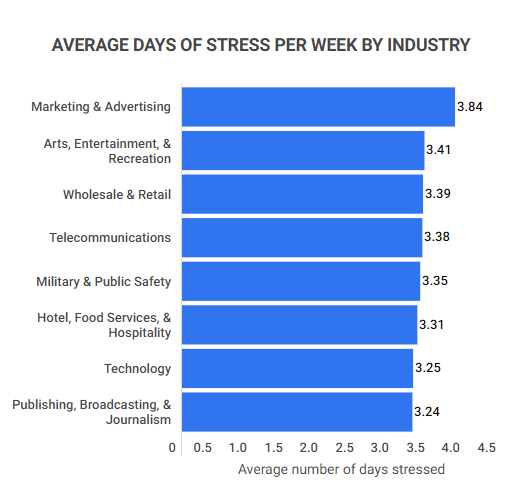
The industries with the highest stress levels include:
Average Days of Stress Per Week by Industry
| Industry | Average Days of Stress |
|---|---|
| Marketing & Advertising | 3.84 |
| Arts, Entertainment, & Recreation | 3.41 |
| Wholesale & Retail | 3.39 |
| Telecommunications | 3.38 |
| Military & Public Safety | 3.35 |
| Hotel, Food Services, & Hospitality | 3.31 |
| Technology | 3.25 |
| Publishing, Broadcasting, & Journalism | 3.24 |
Workplace Stress Statistics by Gender and Age
Workplace stress can vary significantly based on gender, race, age, and other factors. Despite progress in many areas, challenges remain. The following statistics highlight the disparities:
-
On a stress scale of one to ten, women report an average stress level of 5.1, while men average 4.4, according to the latest APA Stress in America survey.
-
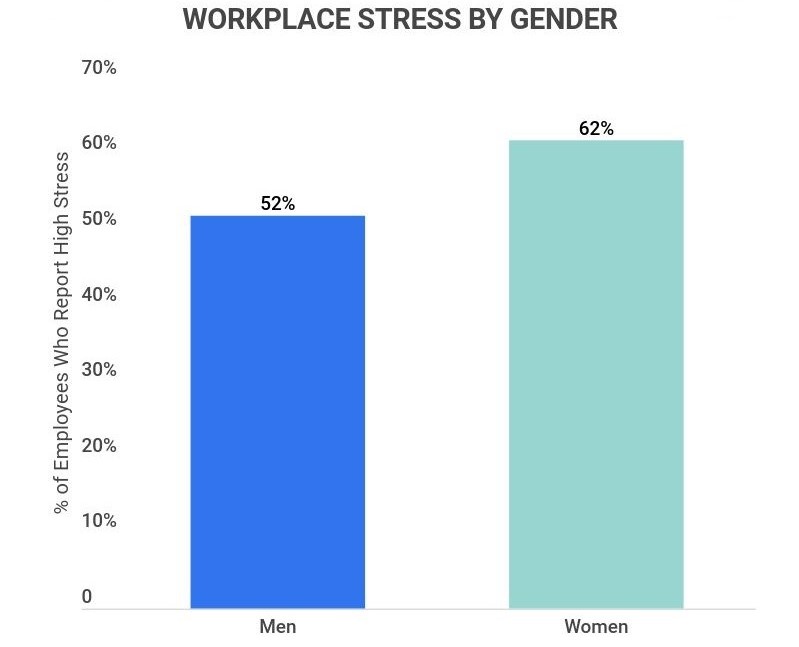
62% of working women in the U.S. and Canada report experiencing daily stress, compared to 52% of men.
-
Half of all LGBTQ+ employees conceal their identities at work, with nearly 43% of gay individuals and 90% of transgender individuals experiencing harassment or mistreatment at their jobs.
-
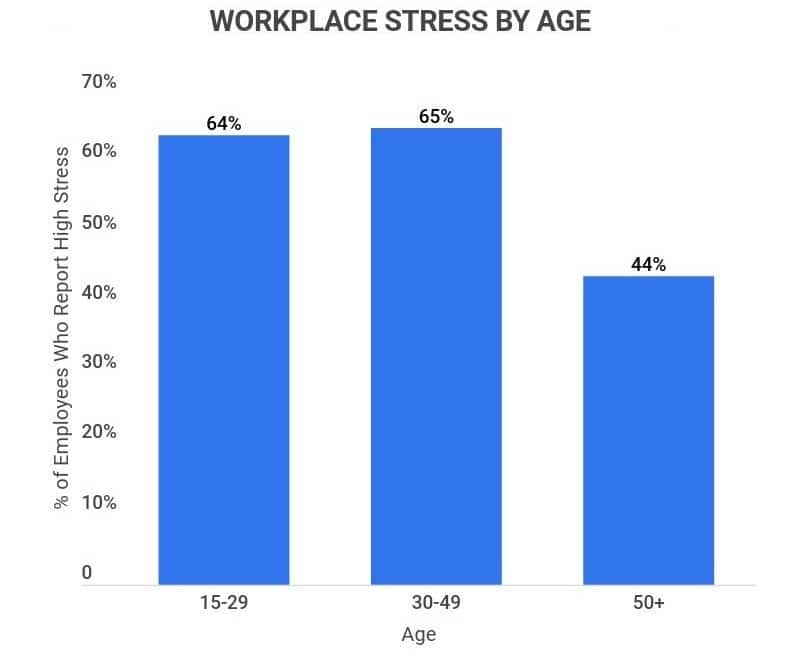
Americans aged 30-49 report the highest stress levels, with 65% indicating they experience significant workplace stress, followed closely by 64% of those aged 15-29. In contrast, 44% of individuals over 50 report high stress levels.
Workplace Stress Statistics Over Time
Workplace stress levels have been steadily rising, likely due to increased expectations, heightened competition, and resource limitations. Current professionals are approaching a burnout crisis, as indicated by our research:
-
75% of workers believe they face more stress than previous generations.
-
Middle-aged survey participants have exhibited a 17% increase in the belief that stress will impact their future plans, alongside a 27% increase regarding its potential impact on financial status compared to previous decades.
Workplace Stress Statistics: Effect on Health
While workplace stress affects organizational outcomes, it also significantly impacts employees’ health. The following statistics shed light on the health ramifications of workplace stress:
-
66% of American workers reported sleep deprivation linked to stress.
Over half of respondents often endure 12-hour workdays, and many frequently skip lunch due to job demands. Additionally, 62% report neck pain, 44% experience eye strain, and 34% have difficulty sleeping as a result of stress.
-
80% of workers feel stressed on the job, with nearly half seeking assistance in managing it.
Organizations that implement effective stress management strategies can reduce sick leave costs by up to 20%, with one million workers missing work daily due to stress.
-
Excessive workplace stress contributes to 120,000 deaths and incurs nearly $190 billion in yearly healthcare costs.
Depression-related absenteeism costs $51 billion, with an additional $26 billion in treatment expenses. Stressed workers have healthcare costs twice that of their less-stressed counterparts.
-
The impact of stress-related illnesses costs businesses between $200 and $300 billion annually in lost productivity.
Companies spend approximately 75% of an employee’s annual salary to address productivity losses or employee turnover.
Workplace Stress Statistics FAQ
-
How do I know if I’m experiencing workplace stress?
You may notice overwhelming negative emotions. Common indicators of workplace stress include feelings of inadequacy, irritability, withdrawal, anxiety, apathy, insomnia, fatigue, difficulty focusing, headaches, muscle tension, digestive issues, and social withdrawal.
-
How can I manage stress at work?
Effective stress management revolves around establishing boundaries. This includes utilizing time-off when necessary and clearly communicating needs with your supervisor. Understanding your limits is also crucial. Depending on your stressors, consider prioritizing tasks and taking regular breaks.
-
How can I manage workload stress outside of work?
Separating your professional and personal life is key. Setting boundaries with your work, supervisor, and colleagues can help. Block out time after work hours for personal activities, and avoid checking emails during weekends.
-
What percentage of stress is caused by the workplace?
25% of Americans indicate that work-related stress is their primary source of stress. Overall, 83% of Americans experience work-related stress, suggesting that over half of stress originates from the workplace.
-
Are there organizational measures to cope with workplace stress?
Yes, several organizational strategies can help mitigate workplace stress. Effective hiring practices ensure that employees are well-suited for their roles. Additionally, providing clear instructions, objective performance metrics, and consistent feedback can alleviate common stressors.
Encouraging breaks and fostering a supportive corporate culture can also make a significant difference. If feasible, consider offering company-sponsored counseling programs to support employee mental health.
-
Is stress beneficial to employees?
No, stress is detrimental to employees. It can lead to errors, reduced work quality, and increased burnout rates. Over time, this results in disengaged employees, higher absenteeism, and costly turnover. While some pressure is natural in the workplace, excessive stress is counterproductive.
Conclusion
Workplace stress can pose challenges for many individuals. The positive aspect is that awareness can lead to habit changes. Regularly reflect on your accomplishments, identify stressors, and strategize for the upcoming week.
However, it’s essential to recognize that work-related stress is a common issue for many. When stress begins to infiltrate other life areas, it becomes problematic. Prolonged stress can lead to burnout and adversely impact health, as illustrated by the statistics above.
Understanding the root causes of your stress can empower you to address them effectively. If you’re feeling overwhelmed, remember that you’re not alone. Don’t hesitate to reach out to your leadership team, human resources, or a supportive colleague for assistance.
References
-
Stress.org. “42 Worrying Workplace Stress Statistics.” Accessed on August 6, 2021
-
CNBC. “U.S. workers are among the most stressed in the world, the new Gallup report finds.” Accessed on August 6, 2021
-
MHA National. 2021 Mind the Workplace Report. Accessed on August 6, 2021.
-
Shortlister. “55 Troubling Workplace Stress Statistics for 2021.” Accessed on August 6, 2021
-
Mindshare Partners. “Workplace Mental Health for LGBTQ+ Professionals.” Accessed on August 6, 2021.
-
APA Foundation. “Workplace Stress Center for Workplace Mental Health.” Accessed August 6, 2021.
-
CBS News. “The ten most and least stressful jobs in America.” Accessed on August 6, 2021.
-
Moneytalk News. “The 10 Most Stressful Industries and 5 Ways We Cope.” Accessed August 6, 2021.
-
Healthline. “Why Americans Are More Stressed Today Than They Were in the 1990s.” Accessed August 6, 2021.
- Workplace Statistics
- Time Management Statistics
- Employee Wellness Statistics
- Employment Discrimination Statistics
- Employee Recognition Statistics
- Employee Referral Statistics
- Workplace Violence Statistics
- Gamification Statistics
- Employee Feedback Statistics
- Agile Statistics
- Productivity Statistics
- Meeting Statistics
- Cell Phones At Work Statistics
- Social Media At Work Statistics
- Workplace Injury Statistics
- Workplace Stress Statistics
- Leadership Statistics
- Workplace Collaboration Statistics
- Job Satisfaction Statistics
- Paid Holiday Statistics
- Communication In The Workplace Statistics
- Wasting Time At Work Statistics
- 4-day Workweek Statistics

Author

Caitlin Mazur is a freelance writer at Zippia. Caitlin is passionate about helping Zippia’s readers land the jobs of their dreams by offering content that discusses job-seeking advice based on experience and extensive research. Caitlin holds a degree in English from Saint Joseph’s University in Philadelphia, PA.