- HR Statistics
- Average Labor Cost Percent Of Sales
- Average Time to Reach Profitability At A Startup
- Office Space Per Employee
- Recruitment Statistics
- Employee Engagement Statistics
- Work-Life Balance Statistics
- BYOD Statistics
- Paternity Leave Statistics
- Onboarding Statistics
- Average Paid Maternity Leave In Us
- Average Cost Of A Bad Hire
- Employee Theft Statistics
- Paid Family Leave Statistics
- Cost Of Hiring Statistics
- Employee Turnover Statistics
- Average Cost Of Employer Sponsored Health Insurance Statistics
- Sexual Harassment In The Workplace Statistics
- HR Statistics
- PTO Statistics
- Social Media Recruitment Statistics
- Hiring Statistics
- Out Of Prison Employment Statistics
17 Disturbing Sexual Harassment Statistics [2026]: Understanding Sexual Harassment in the Workplace
Overview of Sexual Harassment Research. Sexual harassment in the workplace remains a significant issue in the U.S., with over 80% in certain sectors reporting experiences of harassment. Alarmingly, many individuals choose not to report these incidents, and even among those who do, a significant number report a lack of consequences for the offenders. Based on in-depth analysis, our data team has identified the following key insights:
-
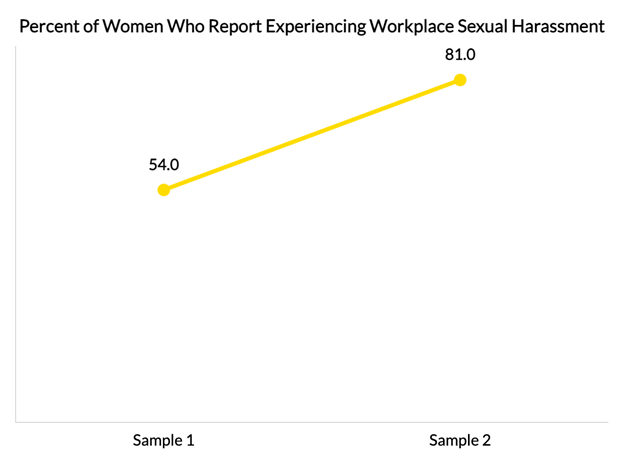
Between 54% and 81% of women report experiencing some form of sexual harassment at work.
-
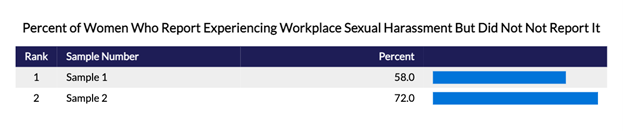
Despite the prevalence of these incidents, between 58% and 72% of victims refrain from reporting workplace sexual harassment.
-
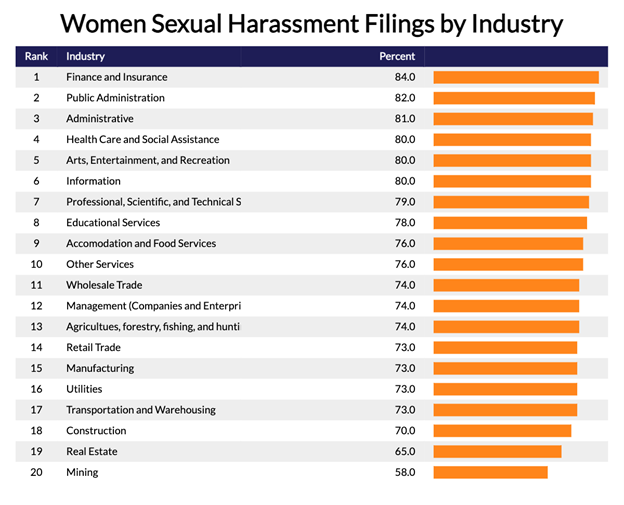
Workers in the accommodation and food services sector represent 14% of harassment complaints. In academia, 50% of female faculty and staff, along with 20% to 50% of female students, report experiencing sexual harassment.
-
Workplace sexual harassment incurs costs of approximately $2.6 billion in lost productivity and $0.9 billion in other expenses.
-
Half of the women (50%) who have been victims of sexual harassment report that it negatively impacted their careers.
-
While 74% of adults believe their companies take sexual harassment seriously, only 30% of women strongly agree that their employer effectively addresses harassment incidents.
For a more detailed analysis, we have categorized the data as follows:
General Sexual Harassment in the Workplace
General Sexual Harassment in the Workplace Statistics
Sexual harassment is a critical issue that employers must proactively address. However, identifying and addressing sexual harassment can be complex. Below are some essential facts about sexual harassment in the workplace:
-
54% of women experience workplace harassment.
Sexual harassment is defined as “behavior characterized by unwelcome and inappropriate sexual remarks or physical advances in a workplace or other professional or social setting.” Examples include:
-
Unwelcome sexual advances.
-
Unwanted touching.
-
Requests for sexual favors.
-
Sexually suggestive gestures.
-
Offensive jokes about women.
-
Catcalling.
Reports indicate that the number of women experiencing sexual harassment can be as high as 81%. Notably, nearly three-quarters of these women report being harassed by someone in a senior position within their organization, with 28% indicating their supervisor was the offender.
-
-
Two types of sexual harassment exist: quid pro quo and hostile work environment.
Quid pro quo harassment involves a demand for sexual favors in exchange for benefits or to avoid negative consequences, while a hostile work environment creates an intimidating or abusive workplace for the victim.
-
Between 58% and 72% of workplace sexual harassment victims do not report it.
Despite the high prevalence of sexual harassment, the majority of victims choose not to report incidents or confront the perpetrators. Reasons for this include fear of retaliation, concerns about being labeled a troublemaker, distrust in the HR department’s ability to handle claims effectively, and the absence of witnesses (i.e., it becomes a he-said-she-said situation).
-
Certain industries have higher rates of sexual harassment, particularly accommodation and food services.
Workers in accommodation and food services make up 14% of sexual harassment charges. Notably, women reliant on tips as their primary income source are twice as likely to experience sexual harassment, including from customers, compared to those receiving standard wages.
Moreover, many workers report that management was aware of the harassment yet took no action to intervene or were complicit in the behavior.
Other High-Risk Sectors
Additional at-risk groups include women working in isolated environments (such as janitorial roles, home care, hotel services, and agriculture), those lacking legal immigration status or with only temporary work permits, women in male-dominated fields, and those in settings characterized by significant power imbalances.
Academia is also affected, with over 50% of female faculty and staff and between 20% and 50% of female students reporting experiences of sexual harassment. Additionally, nearly one in four undergraduate women report experiencing sexual assault or misconduct, based on studies from major universities.
-
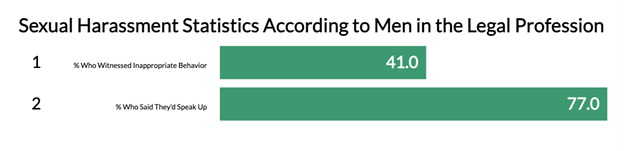
67% of women in the legal profession report frequent occurrences of sexual assault.
Instances of sexual assault—including harassment—are particularly prevalent among younger women (under 50) in the legal sector. Notably, 41% of men in this field admit to witnessing inappropriate conduct directed at younger women, while 77% of men across industries claim they would likely intervene if they witnessed mistreatment of women.
-
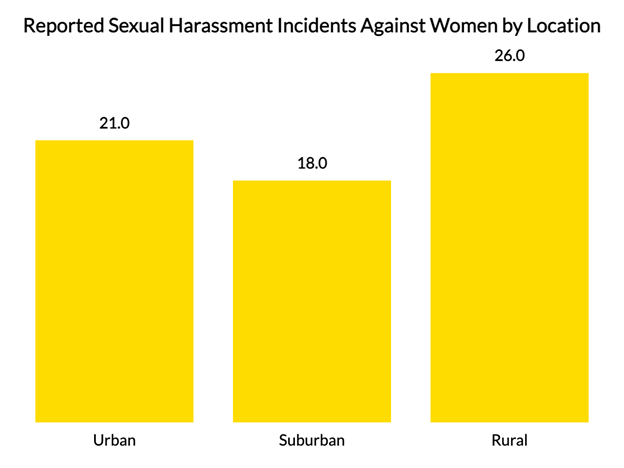
26% of women in rural areas report being sexually harassed at work, compared to 21% in urban settings and 18% in suburban areas.
The likelihood of experiencing sexual harassment can vary significantly based on geographical location. Rural workers are over 40% more likely to report incidents than their suburban counterparts.
-
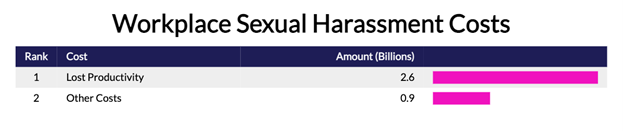
Workplace sexual harassment costs companies about $2.6 billion in lost productivity and an additional $0.9 billion in other expenses (averaging $1,053 and $375 per victim, respectively).
Factors influencing these costs include legal fees, employee turnover (including victims, perpetrators, and witnesses), increased employee absences (due to sick leave, annual leave, and unpaid leave), reduced productivity, and management time spent addressing complaints of sexual harassment.
-
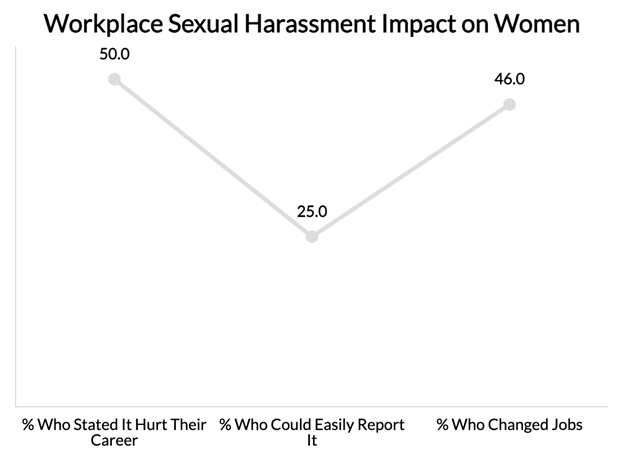
50% of women who experience sexual harassment report negative impacts on their careers.
Only 25% of these women feel comfortable reporting the incidents to their employers, leading many to remain silent and suppress their experiences, which often results in leaving their jobs. Notably, 46% of women have changed jobs due to sexual harassment.
-
The consequences of sexual harassment extend beyond career impacts.
Women who face workplace sexual harassment are more likely to experience financial stress, lower job satisfaction, higher turnover rates, and increased quit rates. Research shows that experiences of sexual harassment can lead to significant reductions in professional, psychological, and physical well-being, even when controlling for other stressors and demographic factors.
-
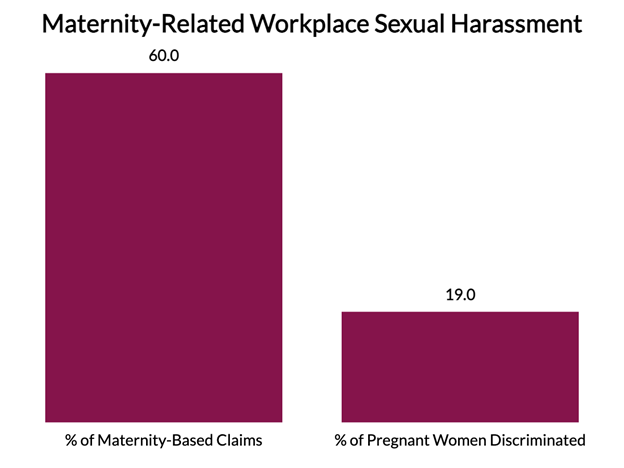
60% of sex discrimination complaints related to maternity are gender-based.
19% of pregnant women report experiencing incidents of discrimination related to pregnancy or maternity leave, including:
-
Being overlooked for promotions or professional development.
-
Being terminated due to pregnancy or after returning from maternity leave.
-
Experiencing verbal harassment from management.
-
Changes to job responsibilities without consultation.
-
-
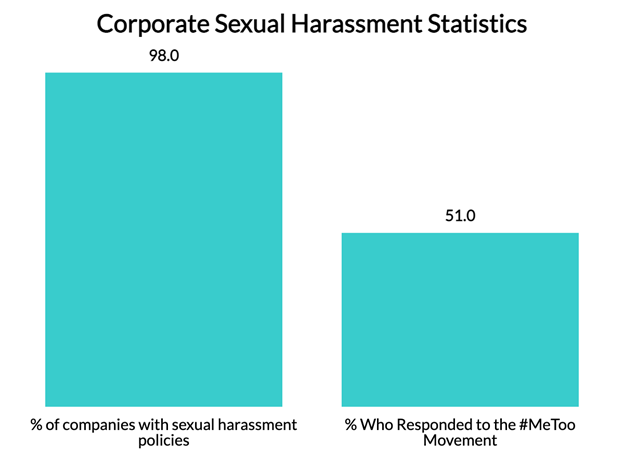
74% of adults believe their companies take sexual harassment seriously.
Despite this perception, while 98% of organizations have a sexual harassment policy, only 51% have implemented new training or policies in response to societal movements like #MeToo. Furthermore, only 30% of women who reported harassment believe their employer handled the situation appropriately, and 56% of men think reported harassment often goes unpunished.
Frequently Asked Questions about Sexual Harassment in the Workplace
-
What percentage of sexual assaults occur in the workplace?
Approximately 15% of reported assaults happen in the workplace. Research indicates that, between 1987 and 1992, around 1 million individuals were assaulted at work annually, accounting for 15% of total violence during that period.
-
How many people are sexually harassed in the workplace each year?
In 2017, the EEOC received 12,428 claims of sex-based harassment. More than half of all harassment claims reported to the EEOC in that year were sex-based.
-
What percentage of U.S. businesses have a sexual harassment policy?
98% of U.S. businesses have a formal sexual harassment policy in place. Nonetheless, sexual harassment remains a significant issue in the workplace, and many companies fail to regularly update their policies or provide necessary training.
Conclusion
While significant progress has been made, there is still a considerable gap in ensuring that women feel safe and supported when reporting sexual harassment in the workplace. Building a culture of accountability and responsiveness is crucial for mitigating the emotional and financial ramifications of sexual harassment for both victims and employers.
Sources:
-
Inc. 54% of Women Report Workplace Harassment. How Is Your Company Responding? Accessed 7/28/21.
-
I-Sight.com. Guide to Workplace Sexual Harassment Infographic. Accessed 7/28/21.
-
NPR.org. A New Survey Finds 81 % Of Women Have Experienced Sexual Harassment. Accessed 7/28/21.
-
CareerBuilder. New CareerBuilder Survey Finds 72% of Workers Who Experience Sexual Harassment at Work Do Not Report it. Accessed 7/28/21.
-
KatzMelinger. 4 Reasons Women Don’t Report Sexual Harassment. Accessed 7/28/21.
-
Institute for Women’s Policy Research. Sexual Harassment and Assault at Work: Understanding the Costs. Accessed 7/28/21.
-
Deloitte. The economic costs of sexual harassment in the workplace. Accessed 7/28/21.
-
National Sexual Violence Resource Center. Sexual Violence and the Workplace: Annotated Bibliography. Accessed 7/28/21.
-
What to Become. Sexual Harassment in the Workplace Statistics — What You Need to Know. Accessed 7/28/21.
-
Edison Research. Sexual harassment in the workplace 2018. Accessed 7/28/21.
-
Catalyst. Sex Discrimination and Sexual Harassment (Quick Take). Accessed 7/28/21.
-
Center for American Progress. Gender Matters. Accessed 7/28/21.
-
The National Academies of Sciences, Engineering, and Medicine. Job and Health Outcomes of Sexual Harassment and How Women Respond to Sexual Harassment. Accessed 7/28/21.
-
National Sexual Violence Resource Center. Statistics. Accessed 7/30/21.
- HR Statistics
- Average Labor Cost Percent Of Sales
- Average Time to Reach Profitability At A Startup
- Office Space Per Employee
- Recruitment Statistics
- Employee Engagement Statistics
- Work-Life Balance Statistics
- BYOD Statistics
- Paternity Leave Statistics
- Onboarding Statistics
- Average Paid Maternity Leave In Us
- Average Cost Of A Bad Hire
- Employee Theft Statistics
- Paid Family Leave Statistics
- Cost Of Hiring Statistics
- Employee Turnover Statistics
- Average Cost Of Employer Sponsored Health Insurance Statistics
- Sexual Harassment In The Workplace Statistics
- HR Statistics
- PTO Statistics
- Social Media Recruitment Statistics
- Hiring Statistics
- Out Of Prison Employment Statistics

Author

Chris Kolmar is a co-founder of Zippia and the editor-in-chief of the Zippia career advice blog. He has hired over 50 people in his career, been hired five times, and wants to help you land your next job. His research has been featured on the New York Times, Thrillist, VOX, The Atlantic, and a host of local news. More recently, he's been quoted on USA Today, BusinessInsider, and CNBC.