Mothers returning to work after maternity leave: A 2026 Perspective – In the United States, maternity leave remains a complex issue, with many mothers navigating their choices post-birth amidst evolving workplace dynamics and financial pressures.
Many mothers desire to savor every moment with their newborns, yet others face guilt over their professional commitments or financial necessities, prompting a return to work.
Our comprehensive analysis explores the current landscape of mothers returning to work after maternity leave and presents the following findings:
Key Takeaways:
-
55% of mothers return to work after taking maternity leave.
-
26% of U.S. women who take maternity leave are back to work in less than two months post-birth.
-
Only 70% of women in the U.S. utilize any form of maternity leave.
-
26.5% of new mothers report their mental health as “fair” or “poor” during their first month back at work.
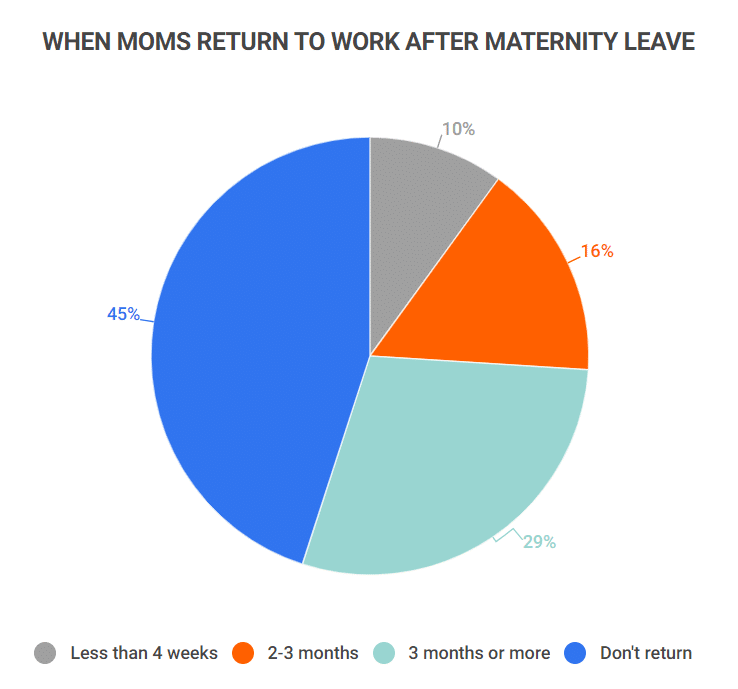
Most Common Times for Mothers to Return to Work After Maternity Leave
In the U.S., mothers typically return to work around 2-3 months after taking maternity leave. However, nearly half of those returning opt for less than two months of leave.
When Do Moms Return to Work After Maternity Leave?
| Amount of Maternity Leave Before Work Reentry | Share of Mothers |
|---|---|
| Less than 4 weeks | 10% |
| 2-3 months | 16% |
| 3 months or more | 29% |
Among the 55% of mothers who return to work after maternity leave, 29% take three months or more, while 26% return in less than two months.
Mothers Who Don’t Take Maternity Leave
Approximately 30% of mothers in the U.S. do not take any maternity leave. Reasons for this decision include:
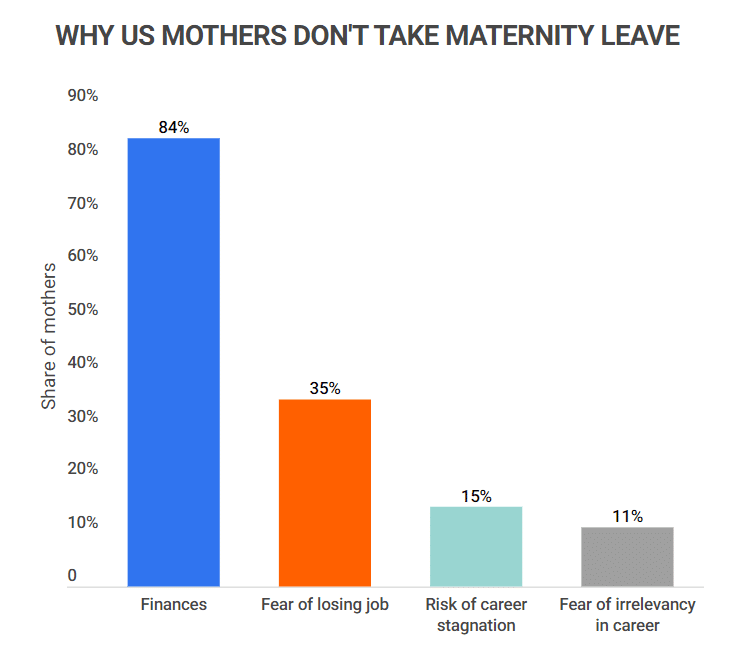
Reasons U.S. Mothers Don’t Take Maternity Leave
| Reason for Not Taking Maternity Leave | Share of Mothers |
|---|---|
| Finances | 84% |
| Fear of Losing Job | 35% |
| Risk of Career Stagnation | 15% |
| Fear of Irrelevancy in Career | 11% |
These reasons apply not only to mothers choosing to forgo maternity leave entirely but also to those returning to work within 1-2 months. The reality remains that paid maternity leave is not guaranteed in the U.S., prompting many mothers to prioritize financial security.
Returning to Work After Maternity Leave: FAQs
-
How many mothers return to work after taking maternity leave?
55% of mothers return to work after maternity leave. Specifically, 10% return in less than 4 weeks, 16% within 2-3 months, and 29% after three months or more.
-
Is maternity leave paid in the U.S.?
No, maternity leave is typically not paid in the U.S. As of now, only 23% of those in private industries have access to paid maternity leave. The Family and Medical Leave Act (FMLA) mandates only 12 weeks of unpaid leave.
This contributes to 30% of mothers opting out of maternity leave for financial reasons and 26% returning to work in less than two months.
-
What am I entitled to if I don’t return to work after maternity leave?
If you choose not to return to work after maternity leave, you are entitled to payment for any unused paid time off and COBRA benefits. If you’re among the 45% who do not return, you may face specific financial options and obligations.
While you can collect unused PTO and benefits, you may also need to repay health insurance premiums if they were utilized during your maternity leave.
It’s important to adhere to company policies and give adequate notice regarding your decision not to return.
-
Why do mothers not return to work?
45% of mothers choose not to return to work due to a desire to spend more time with their children or challenges in securing childcare. Survey data indicates that 28% of mothers wish to stay home, while 15% cite the lack of childcare options.
Research shows that 64% of new mothers would be willing to return to work if flexible scheduling options were available.
Conclusion
In conclusion, 55% of mothers return to work after maternity leave, most taking 2-3 months off, while some feel compelled to return within two months. Notably, 30% of mothers do not take any maternity leave.
While some mothers make the choice to forgo maternity leave or return quickly, many are pressured by financial constraints. To support working mothers, U.S. companies need to enhance paid maternity leave offerings and provide flexible scheduling options.
References

Author

Jack Flynn is a writer for Zippia. In his professional career he’s written over 100 research papers, articles and blog posts. Some of his most popular published works include his writing about economic terms and research into job classifications. Jack received his BS from Hampshire College.