Understanding Manager-to-Employee Ratios in 2026 – Just as teachers may struggle with large classrooms, the right manager-to-employee ratio is essential for any organization. When optimized, this ratio promotes effective communication and enhances productivity.
Whether you are an employer or an aspiring job seeker interested in workplace dynamics, this article delves into the average and ideal manager-to-employee ratios. Our findings highlight:
Key Takeaways:
-
The average manager-to-employee ratio in the service industry stands at 15:1.
-
For small businesses, this ratio averages around 6:1.
-
Research indicates that an ideal manager-to-employee ratio falls between 6 to 10 employees per manager.
Manager-to-Employee Ratios by Industry
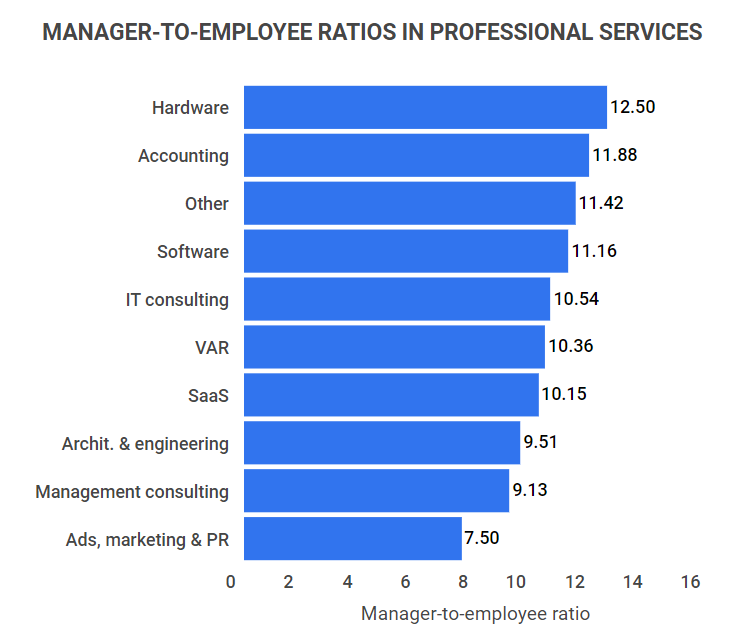
Manager-to-employee ratios vary significantly across industries. This section focuses on the professional services sector, showcasing notable disparities.
Manager-to-Employee Ratios in Professional Services
| Industry | Manager-to-Employee Ratio |
|---|---|
| Advertising, Marketing & Public Relations | 7.50 |
| Management Consulting | 9.13 |
| Architecture & Engineering | 9.51 |
| SaaS Services | 10.15 |
| Value-Added Resellers (VAR) | 10.36 |
| IT Consulting | 10.54 |
| Software Services | 11.16 |
| Other Professional Services | 11.42 |
| Accounting | 11.88 |
| Hardware Services | 12.50 |
While none of these ratios exceed the 15:1 average in the service industry, the 12.5:1 ratio for Hardware Services is nearly double that of Advertising, Marketing & Public Relations (7.5:1).
Only the Advertising, Marketing & Public Relations, Management Consulting, and Architecture & Engineering industries fall within the ideal range of 6 to 10 employees per manager.
Advantages of an Optimal Manager-to-Employee Ratio
Research from LinkedIn shows that a favorable manager-to-employee ratio of 7:1 can boost employee retention rates by 12%. When employees feel acknowledged and supported by their managers, they are more likely to remain with the organization. A lower ratio allows managers to dedicate more time to each employee.
Disengagement among managers is a significant concern, with only 35% actively engaged in their roles. Improved manager-to-employee ratios enhance engagement levels. Why is this crucial?
According to Gallup, teams led by engaged managers are 59% more likely to have engaged employees, leading to an average productivity increase of 17%. These positive outcomes stem from maintaining a healthy manager-to-employee ratio.
In summary, maintaining a manager-to-employee ratio between 6 to 10 employees per manager can:
-
Lower turnover rates
-
Enhance employee engagement
-
Boost productivity
Manager-to-Employee Ratio FAQ
-
What is the ideal number of employees per manager?
The optimal range is between 4 to 10 employees per manager, with 6-7 being the sweet spot. This allows managers to recognize employees effectively while managing their workload, leading to better retention and productivity.
-
What issues arise from having too many managers?
Excessive managers can create confusion and hinder prioritization. For instance, a 2:1 manager-to-employee ratio can result in bureaucratic obstacles that complicate communication.
Managers may end up overseeing employees outside their intended scope, leading to unclear responsibilities and accountability, which can result in decision-making delays and poor communication.
-
What challenges emerge from having too few managers?
Too few managers can overwhelm existing ones with excessive responsibilities, leading to errors and communication breakdowns. This can cause burnout, inadequate supervision, decreased morale, and difficulties in coordinating tasks, ultimately harming productivity and increasing turnover.
-
How can you effectively manage a team of 10 people?
Here are some strategies for managing a team of 10 effectively:
-
Set clear goals and expectations. Define roles, responsibilities, and objectives so that everyone understands how to achieve their targets.
-
Maintain open communication. Schedule regular check-ins to discuss progress and concerns, ensuring employees feel comfortable sharing their thoughts.
-
Recognize achievements. Celebrate team successes to enhance morale and motivation.
-
Foster flexibility. Be prepared to adapt plans as needed to accommodate changes smoothly.
-
Practice empathy. Acknowledge the individual needs and challenges of your team members.
-
Resolve conflicts swiftly. Address issues promptly to find solutions that benefit the team.
-
Encourage professional development. Support your team’s growth through training and skill-building opportunities.
-
Promote team-building. Organize activities that encourage collaboration and foster a positive team culture.
-
Conclusion
Maintaining an effective manager-to-employee ratio is vital for workplace success. The ideal range is between 6 and 10 employees per manager, with lower ratios yielding the best outcomes.
This insight reveals that larger organizations can learn from smaller businesses. A manager-to-employee ratio of 6:1 can significantly lower turnover while enhancing recognition and productivity. By optimizing their management structures, larger companies can unlock numerous benefits.
References

Author

Jack Flynn is a writer for Zippia. In his professional career he’s written over 100 research papers, articles and blog posts. Some of his most popular published works include his writing about economic terms and research into job classifications. Jack received his BS from Hampshire College.