- Business Statistics
- Startup Statistics
- Cloud Adoption Statistics
- Customer Loyalty Statistics
- Nonprofit Statistics
- Affiliate Marketing Statistics
- Cart Abandonment Rate Statistics
- Ridesharing Statistics
- Call Center Statistics
- eLearning statistics
- Customer Service Statistics
- Customer Experience statistics
- Entrepreneur Statistics
- Outsourcing Statistics
- Gross Revenue for Marketing and Advertising
- Sales Statistics
- MBA Statistics
- Average Small Business Revenue + Profit Margin
- How Much Do Employee Benefits Cost?
Research Summary. Exceptional customer service remains a cornerstone of business success in 2026, influencing consumer choices and brand loyalty. Below are key statistics that highlight the critical role of customer service in shaping customer experiences and business outcomes:
-
61% of customers have switched to a competitor after a disappointing customer service experience.
-
Customers share their positive customer service experiences with an average of 9 people, but they will inform 16 people about a negative experience.
-
52% of Americans are willing to pay more for excellent customer service.
-
93% of customers are likely to make repeat purchases from a company after experiencing outstanding customer service.
-
91% of customers are open to switching brands after just one negative customer service experience.
For further insights, we have categorized the data as follows:
Negative Customer Service Effects | Positive Customer Service Effects | Experience Sharing | Bad Service Impact | Good Service Benefits | Trends and Future Outlook

General Customer Service Statistics
-
94% of customers consider customer service a crucial factor in their brand preferences and purchasing decisions.
Specifically, 38% find it somewhat important, while 56% deem it very important.
-
58% of customers have reached out to a customer service department within the last month.
These respondents confirmed they contacted customer service for any reason in the last month.
-
According to the American Customer Satisfaction Index (ACSI), Chewy is recognized for providing the best customer service.
The company achieved an ACSI score of 85, showcasing employees rated as the most polite in their industry.
Other top companies and their ACSI scores include:
Top 10 Companies and Their ACSI Score (2022-2023)
Company American Customer Satisfaction Index (ACSI) Chewy 85 Trader Joe’s 85 Amazon 84 Lexus (Toyota) 84 American Eagle Outfitters 83 Chick-fil-A 83 Clorox 83 Hershey’s 83 New York Life 83 Procter & Gamble 82
Customer Opinions on Bad Customer Service
-
It can take up to 12 positive customer service interactions to offset 1 negative experience.
-
39% of customers cite a customer service agent’s lack of knowledge as the most frustrating aspect of poor service, with 28% expressing frustration over having to repeat information.
-
53% of customers feel that companies do not act on customer feedback.
Customer Opinions on Good Customer Service
-
42% of customers prefer resolving issues over the phone.
In contrast, 38% favor digital channels like instant messaging or social media, while 20% prefer email.
-
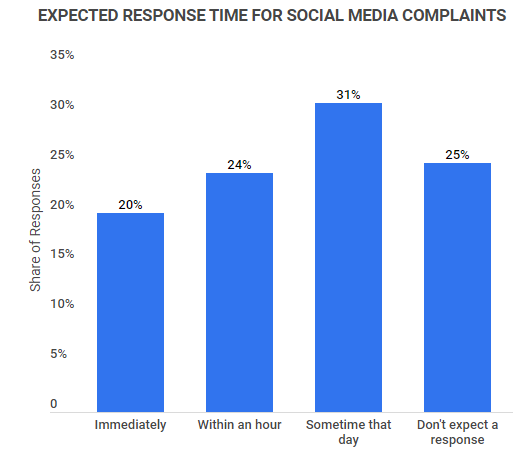
31% of customers who contact a company with service requests via social media expect a response the same day.
Comparatively, 25% do not expect a response, 24% anticipate a reply within an hour, and 20% expect an immediate response.
-
79% of customers believe the experience a company provides is equally important as its products or services.
This sentiment is even stronger among millennials, with 83% emphasizing that a positive experience is as crucial as the product or service they are purchasing.
-
83% of customers expect immediate assistance when contacting a company.
This expectation has risen from 78% in 2019, reflecting the growing demand for high service standards post-2020.
-
76% of customers expect consistent interactions with a company, regardless of the departments they contact.
However, 54% feel they are communicating with separate departments instead of a cohesive organization, and 65% often have to repeat their information to different teams.
-
40% of customers believe resolving issues in one interaction is crucial for a positive experience.
Meanwhile, 38% prioritize speaking with knowledgeable agents, 13% value not having to repeat their queries, and 7% prefer self-service options.
Sharing Customer Service Experiences Statistics
-
Customers typically share their positive customer service experiences with 9 people.
-
Customers usually inform an average of 16 people about a negative experience.
-
Only around 4% of dissatisfied customers actually communicate their complaints to the business.
The Effect of Bad Customer Service Statistics
-
91% of customers refuse to do business again with a company that has disappointed them.
-
78% of customers have abandoned a purchase due to a negative service experience.
-
Nearly 60% of customers would stop shopping with a brand they once loved after multiple poor service encounters.
-
Businesses lose approximately $75 billion annually due to inadequate customer service.
-
61% of customers have recently moved to a competitor after a negative service experience.
The Benefits of Good Customer Service Statistics
-
52% of customers are willing to pay more for excellent customer service.
Specifically, 25% of customers might pay up to 10% more across industries for guaranteed great service, with 31% in the hospitality sector willing to pay that much more.
-
91% of customers are more likely to make additional purchases after a positive customer service experience.
Additionally, 71% have made buying decisions based on the quality of customer service they received.
-
A loyal customer can generate ten times the revenue of their initial purchase.
Furthermore, acquiring a new customer is six to seven times more expensive than retaining an existing one, with a 60-70% chance of a current customer making a purchase compared to a mere 5-20% for a new customer.
Customer Service Trends and Projections
-
In 2015, 71% of surveyed customers reported contacting customer service in the past month.
This percentage steadily declined to 58% by 2020.
-
The percentage of customers ceasing business with a company due to poor service dropped from 54% in 2017 to 40% in 2020.
This trend shows a gradual decrease in customer attrition due to service issues since 2016.
-
Customer service interactions via voice channels decreased from 51% in 2015 to 34% in 2018.
However, this increased to 43% from 2018 to 2020.
Customer Service FAQ
-
What are the three Ps of customer service?
The three P’s of customer service are Product, Process, and People. All three are essential for creating a positive customer experience.
Ensuring that your product meets customer needs is the first step to providing great service. Otherwise, there’s no reason for customers to engage with your company.
After establishing a great product, having a smooth and enjoyable process for finding, purchasing, and receiving the product is crucial for attracting customers over competitors.
If customers face unnecessary obstacles, they are more likely to abandon their purchase or not return in the future.
The final piece of the customer experience puzzle is the people involved. Excellent service requires knowledgeable, professional, and competent salespeople and customer service representatives to assist customers in problem resolution.
-
How does customer service impact revenue?
Customer service significantly influences revenue by affecting the likelihood of repeat purchases. Providing excellent service fosters customer loyalty, leading to ten times the revenue compared to their initial purchase over time.
Conversely, poor customer service costs businesses $75 billion annually. Unhappy customers not only refrain from returning but also share their negative experiences with an average of 16 people, deterring potential customers.
-
How many customers actually complain?
Only about 4% of customers take the initiative to complain directly to companies. This indicates that organizations may not be aware of a significant number of dissatisfied customers who they have lost the chance to assist and win back.
-
How many people do customers tell about a good customer experience?
Customers share a positive experience with an average of nine people. Conversely, they communicate a negative experience to about 16 individuals.
-
What is the main role of customer service?
The primary role of customer service is to resolve complaints and issues effectively. For instance, a customer service representative may assist a customer reporting a missing or damaged product by offering options for return, refund, or exchange.
Regardless of the customer’s demeanor, maintaining a professional, helpful, and calm attitude is vital for conflict resolution.
Conclusion
Good customer service is undeniably critical for business success. Approximately 94% of customers indicate it is a major factor in their brand selection. Moreover, 52% of consumers would pay more for their purchases if they include exceptional service, with some willing to pay up to 10% more.
On the flip side, poor customer service results in a staggering $75 billion in losses for companies each year, driving away even loyal customers. About 60% of customers would abandon a brand they once loved after several negative service encounters.
This situation is manageable. For example, ensuring that customer issues are resolved in a single interaction could eliminate 40% of the top complaints from dissatisfied customers, while ensuring that customer service agents are knowledgeable can address another 38% of concerns.
References
-
Microsoft Dynamics 365. “Global State of Customer Service.” Accessed on October 19, 2021. ;
-
Statista. “Share of Customers in the United States Who Have Contacted Customer Service for Any Reason in the Past Month From 2015 to 2020.” Accessed on October 19, 2021.
-
Forbes. “These Companies Have the Best Customer Service.” Accessed on October 19, 2021.
-
Glance. “Counting the Customer: The Complete Guide to Dynamite Customer Care.” Accessed on October 19, 2021.
-
Statista. “Communication Channels Customers Prefer To Use To Resolve Customer Service Issues in the United States in 2019.” Accessed on October 19, 2021.
-
Statista. “What is Your Expected Response Time for Social Media Questions or Complaints?” Accessed on October 19, 2021.
-
Salesforce. “State of the Connected Customer.” Accessed on October 19, 2021.
-
Sharpen. “Customer Service Statistics That Prove You Need To Invest in Customer Happiness.” Accessed on October 19, 2021.
-
PWC. “Experience is Everything: Here’s How To Get it Right.” Accessed on October 19, 2021.
-
Bloomfire. “What is the True Cost of Poor Customer Service?” Accessed on October 19, 2021.
-
Microsoft Dynamics 365. “State of Global Customer Service Report.” Accessed on October 19, 2021.
-
Forbes. “Customers Will Pay for This.” Accessed on October 19, 2021.
-
Statista. “Share of Customers in the United States Who Stopped Doing Business with a Company Due to Poor Customer Service From 2016 to 2020.” Accessed on October 19, 2021.
-
Statista. “Use of Voice in Customer Service in the United States From 2015 to 2020.” Accessed on October 19, 2021.
-
MDM. “The 3 Ps of Outstanding Customer Experience.” Accessed on October 19, 2021.
-
ACSI. “Win on Customer Satisfaction; Win in the Market. Top Ten ACSI Companies.” Accessed on April 2, 2023.
- Business Statistics
- Startup Statistics
- Cloud Adoption Statistics
- Customer Loyalty Statistics
- Nonprofit Statistics
- Affiliate Marketing Statistics
- Cart Abandonment Rate Statistics
- Ridesharing Statistics
- Call Center Statistics
- eLearning statistics
- Customer Service Statistics
- Customer Experience statistics
- Entrepreneur Statistics
- Outsourcing Statistics
- Gross Revenue for Marketing and Advertising
- Sales Statistics
- MBA Statistics
- Average Small Business Revenue + Profit Margin
- How Much Do Employee Benefits Cost?

Author

Abby is a writer who is passionate about the power of story. Whether it’s communicating complicated topics in a clear way or helping readers connect with another person or place from the comfort of their couch. Abby attended Oral Roberts University in Tulsa, Oklahoma, where she earned a degree in writing with concentrations in journalism and business.