- Tech Industry Statistics
- MFA Statistics
- Streaming Services Statistics
- Mobile Vs. Desktop Usage Statistics
- AI Statistics
- Live Streaming Statistics
- Zoom Meeting Statistics
- Cord Cutting Statistics
- Digital Transformation Statistics
- Virtual Reality Statistics
- How Fast Is Technology Advancing
- Mobile Commerce Statistics
- SaaS Statistics
- Machine Learning Statistics
- Diversity In High Tech
- Cyber Security Statistics
- Ecommerce Statistics
- Tech Industry
- Gaming Industry
- Renewable Energy Job Creation
- Smartphone Industry
- Cybercrime Statistics
- Amazon Statistics
- Personalization Statistics
25+ Telling Diversity In High Tech Statistics [2026]: Tech Demographics + Trends
Research Summary. The tech industry has long faced challenges related to diversity and inclusivity, with women and people of color significantly underrepresented in this rapidly expanding field. Despite ongoing efforts from major tech companies to enhance diversity, meaningful progress has been limited.
-
7.7% of the total US labor force works in tech as of 2026
-
30% of tech jobs are held by women, while men hold 70%
-
In the US tech sector, 58% of jobs are held by white Americans. Black Americans hold 7% of jobs, Latinx Americans hold 9%, and Asian Americans account for 22%
-
82% of tech executives are white
-
As of 2021, Black Americans represented 14% of the national population but occupied just 7% of tech jobs
-
On average, women in tech are offered a salary of 5% less than men for the same role, at the same company, with similar experience
-
Compared with other industries, the high-tech sector employs more white workers (68.5% versus 63.5%), Asian Americans (14% versus 5.8%), and men (64% versus 52%)
-
Conversely, the high-tech industry employs a smaller proportion of Black Americans (7.4% versus 14.4%), Latinx Americans (8% versus 13.9%), and women (36% versus 48%)
For further analysis, we broke down the data in the following ways:
Race and Ethnic | Gender | Over Time | Major Companies
Race and Ethnic Diversity in Tech Statistics
-
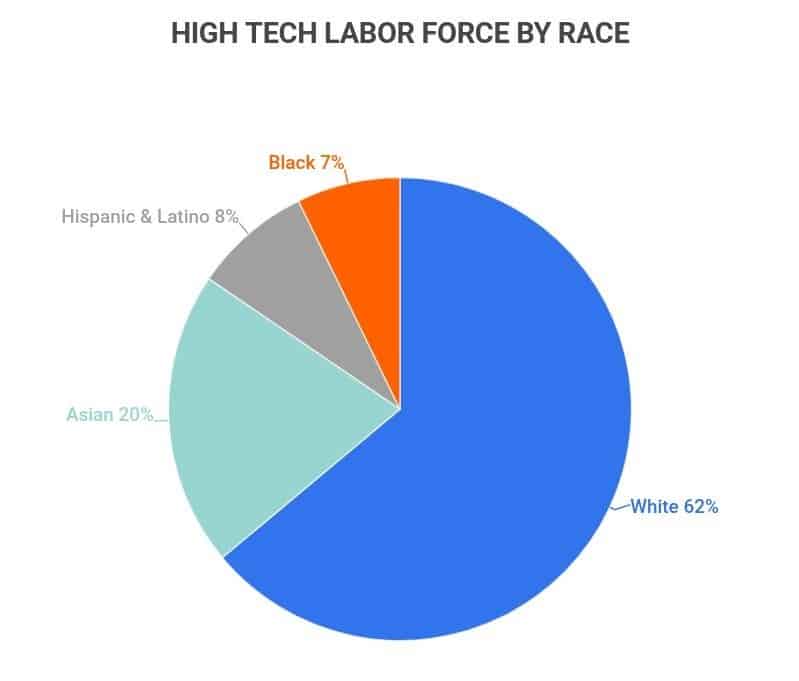
White employees account for 58% of the tech industry labor force.
In comparison, Black Americans represent 7% of tech employees, 9% of tech jobs are held by Latinx Americans, and Asian Americans account for 22% of the technology field.
-
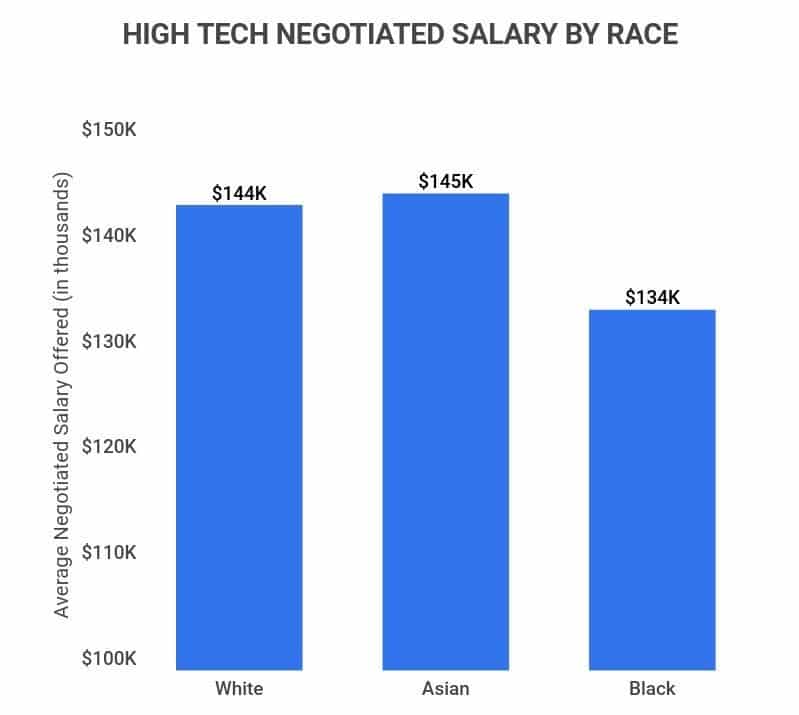
According to recent studies, Black job candidates in tech typically receive an average salary offer of $136,000, while white candidates are offered $144,000 for the same position.
This reflects a wage gap difference of approximately 5.56% in favor of white employees. Asian American job candidates in tech are usually offered around $145,000 after negotiations.
-
As of 2026, 68% of tech companies have less than 5% Black employees.
Despite numerous commitments from major tech firms to address these disparities, significant change remains elusive.
Gender Diversity in Tech Statistics
-
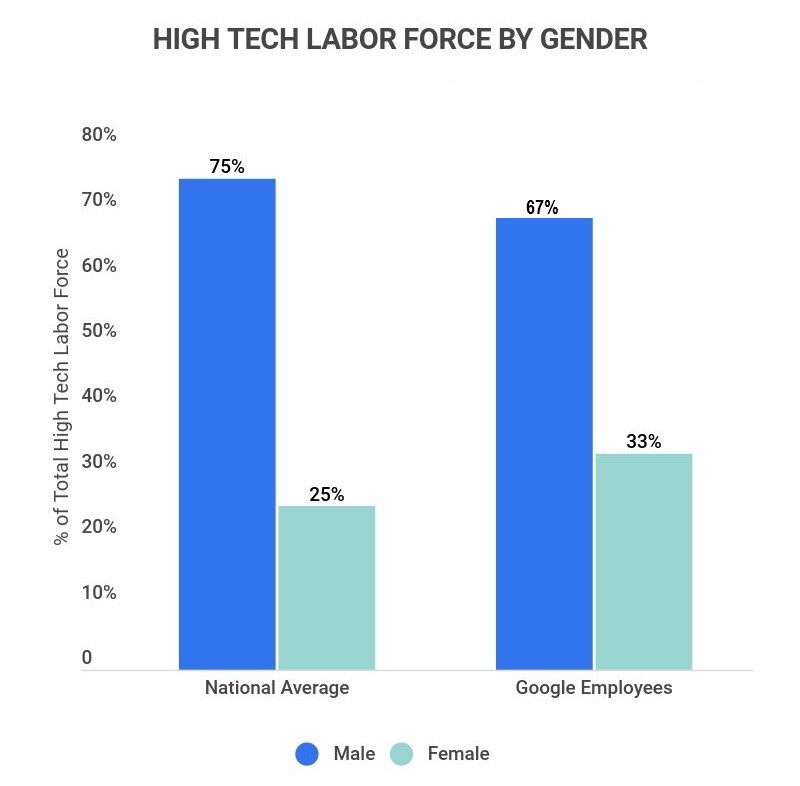
Men hold approximately 70% of all tech jobs.
This leaves women with 30% of tech positions. Furthermore, women entering the tech field often face a significant pay gap, with men in Silicon Valley earning, on average, 61% more than their female counterparts.
-
In leadership roles, men account for 79% of all executive positions in tech.
Women occupy only 32% of director positions, 28% of supervisory roles, and 32% of individual contributor roles in the industry.
-
A significant study indicated that the lack of mentors is a primary reason for women’s underrepresentation in tech.
Other cited reasons included the absence of female role models (42%), gender bias in the workplace (39%), unequal growth opportunities compared to men (36%), and wage disparities for equivalent skills (35%).
-
Research from 2022 revealed that men were offered higher salaries than their female counterparts 59% of the time.
In the San Francisco Bay area, men typically received offers 5% higher than women in similar roles, while in New York, this gap reached 7%.
-
Women hold 5% of the leadership jobs in tech.
Moreover, women own only 5% of all tech start-ups in the United States.
| Year | Male | Female |
|---|---|---|
| 2026 | 70% | 30% |
| 2025 | 69% | 31% |
| 2024 | 72% | 28% |
| 2023 | 74% | 26% |
| 2022 | 73% | 27% |
| 2021 | 73% | 27% |
| 2020 | 75% | 25% |
| 2019 | 75.98% | 24.02% |
Diversity in Tech Over Time Statistics
-
The percentage of women in tech roles at Facebook has increased from 23% in 2019 to 30% in 2026
-
In the same period, Facebook has boosted the hiring of Black women by 25% and Black men by 15%
-
Between 2019 and 2026, the number of technical employees at Google who are Black or Latinx has risen by only 2%
Major Companies in Tech Diversity Statistics
-
From 2019 to 2026, the percentage of women in technical positions at ten leading tech companies has only grown by 2%.
Despite acknowledging diversity deficits, many firms have made minimal progress, as reflected in their annual diversity reports that highlight slight improvements.
-
In 2025, 34% of new hires at Google were women, marking a 1% increase from the previous year.
-
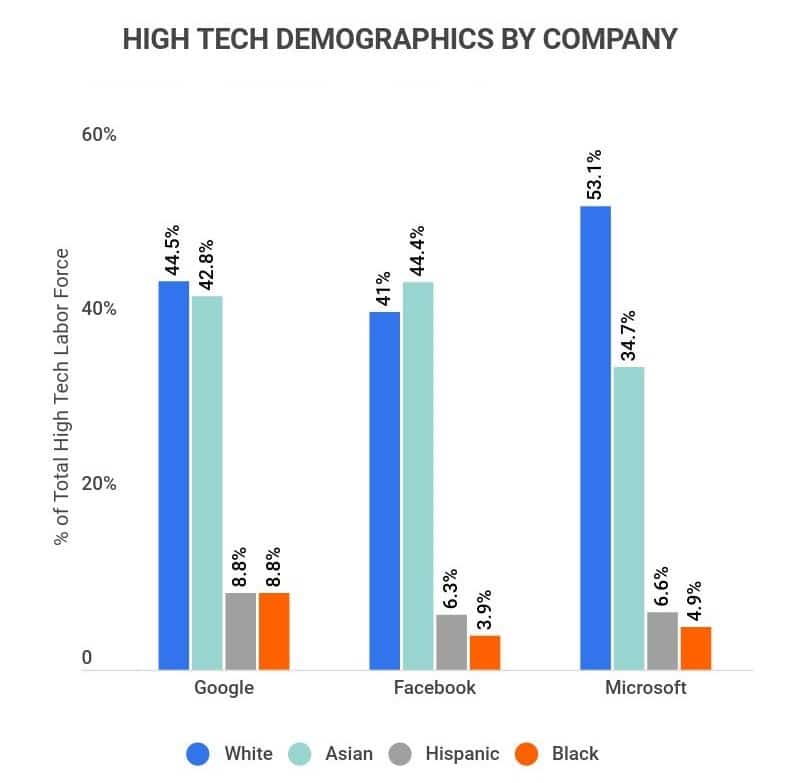
In 2025, 44% of new hires at Google were white.
In comparison, 42% were Asian, 9% were Black, 9% were Latinx, and 1% were Native American.
-
Between 2020 and 2026, the number of employees from underrepresented communities at Apple has increased by 70%.
This increase represents about 20,000 individuals entering roles at Apple, with people from underrepresented communities making up nearly half of the workforce.
-
As of 2026, only 4.1% of Facebook employees are Black.
In the same time frame, 6.5% of employees at Facebook were Latinx, 45% were Asian American, and 44% were white.
-
In 2026, 5% of Microsoft employees were Black or African American in the United States.
In comparison, 7% of the Microsoft workforce was Latinx, 1% was Native American, 34% was Asian, and 53% was white.
Diversity In High Tech FAQ
-
How diverse is the tech industry?
The tech industry remains limited in diversity. Major tech firms continue to show a preference for hiring white and Asian men, perpetuating a long-standing issue. While some companies began acknowledging diversity shortfalls in 2014, the pace of substantial change has been slow.
-
Is Big Tech still struggling with diversity?
Yes, the tech industry continues to face challenges in diversity. Despite publishing diversity reports, many tech companies have shown minimal improvement in their workforce demographics, often treating these reports as mere formalities without substantial action.
-
Why is diversity in tech important?
Diversity is crucial in tech as it fosters inclusivity and enhances problem-solving capabilities. A homogenous team can lead to limited perspectives, hindering innovation and progress within the tech industry.
-
Is the tech industry worse than other industries in terms of diversity?
The tech industry has one of the lowest diversity rates. Within STEM fields, tech and computer science have the smallest representation of women and minorities. Though women comprise 57% of the U.S. workforce, only 30% of tech roles are held by women.
-
Why is there a lack of diversity in tech?
The lack of diversity stems from recruitment practices that favor traditional pools and a shortage of role models. To improve representation, tech companies must broaden their recruitment strategies and actively promote diverse talent pipelines.
-
What are underrepresented minorities in tech?
Underrepresented minorities include Black, Latino and Hispanic, Native American, and female employees. White workers make up 58% of the high-tech industry, Asian employees account for 22%, and together, Black and Hispanic workers constitute only 16% of the workforce.
-
What percentage of Black Americans work in high tech?
Black workers account for 7% of the tech workforce. In contrast, they represent 13% of the overall U.S. workforce, indicating a significant underrepresentation in the tech sector.
Conclusion
Diversity and inclusion are critical topics in today’s industries, with the tech sector gradually recognizing their importance.
As a significant component of the U.S. labor force, comprising 7.7% of overall employment, tech’s history of exclusivity regarding gender and racial representation is concerning.
Since 2014, major tech companies like Google and Facebook have begun to disclose their diversity statistics, promising improvement. However, the anticipated progress has been slow and insufficient.
While there have been some advancements for women in tech, such as an increase from 23% to 30% in Facebook’s female workforce, the overall growth in female representation across top tech companies remains stagnant.
The industry also exhibits a pronounced racial pay gap, with Black candidates typically receiving lower salary offers compared to their white peers.
In conclusion, while the tech industry is beginning to address its diversity challenges, substantial and sustained efforts are crucial to foster a truly inclusive environment.
References
-
Cision. “US Tech Employment Surpasses 12 Million Workers, Accounts for 10% of Nation’s Economy.” Accessed on November 16, 2026
-
Pew Research Center. “STEM Jobs See Uneven Progress in Increasing Gender, Racial and Ethnic Diversity.” Accessed on November 16, 2026
-
EEOC. “DIVERSITY IN HIGH TECH.” Accessed on November 16, 2026
-
Pew Research Center. “The Growing Diversity of Black America.” Accessed on November 16, 2026
-
Business Insider. “How men and women’s salaries compare at Facebook, Google, Apple, and other top tech companies.” Accessed on November 16, 2026
-
The Wall Street Journal. “Black and Hispanic Job Seekers Still Face Wage Gap in Tech.” Accessed on November 16, 2026
-
Beam Jobs. “Racial Diversity In Tech By The Numbers.” Accessed on November 16, 2026
-
CNBC. “Tech companies say they value diversity, but reports show little change in last six years.” Accessed on November 16, 2026
-
Adeva. “The State of Women in Tech.” Accessed on November 16, 2026
-
Bloomberg. “Men Got Higher Pay Than Women 59% of the Time for Same Tech Jobs.” Accessed on November 16, 2026
-
Tech Target. “Women in tech statistics: The latest research and trends.” Accessed on November 16, 2026
-
CNBC. “Tech companies have made big promises, and small gains, for diversity and inclusion.” Accessed on November 16, 2026
-
Google. “Hiring changes drove our best year yet for women in tech globally and Black+ and Latinx+ people in the U.S.” Accessed on November 16, 2026
-
Apple. “Inclusion & Diversity.” Accessed on November 16, 2026
-
Statistica. “Distribution of Facebook employees in the United States from 2014 to 2020, by ethnicity.” Accessed on November 16, 2026
-
Microsoft. “Microsoft’s 2020 Diversity & Inclusion report: A commitment to accelerate progress amidst global change.” Accessed on November 16, 2026
-
Wired. “Five Years of Tech Diversity Reports—and Little Progress.” Accessed on November 16, 2026
-
Built-In. “Tech Shows Progress on Diversity, but There’s Still a Long Way to Go.” Accessed on November 16, 2026
-
SD Times. “There’s a diversity problem in the tech industry, and it’s not getting any better.” Accessed on November 16, 2026
- Tech Industry Statistics
- MFA Statistics
- Streaming Services Statistics
- Mobile Vs. Desktop Usage Statistics
- AI Statistics
- Live Streaming Statistics
- Zoom Meeting Statistics
- Cord Cutting Statistics
- Digital Transformation Statistics
- Virtual Reality Statistics
- How Fast Is Technology Advancing
- Mobile Commerce Statistics
- SaaS Statistics
- Machine Learning Statistics
- Diversity In High Tech
- Cyber Security Statistics
- Ecommerce Statistics
- Tech Industry
- Gaming Industry
- Renewable Energy Job Creation
- Smartphone Industry
- Cybercrime Statistics
- Amazon Statistics
- Personalization Statistics

Author

Sky Ariella is a professional freelance writer, originally from New York. She has been featured on websites and online magazines covering topics in career, travel, and lifestyle. She received her BA in psychology from Hunter College.