Find a Job You Really Want In
Cover letters may not be mandatory for every job application, but most hiring managers give preference to candidates who include one. This is particularly true if you customize your letter to align with the specific job. It’s essential to go beyond merely changing names and job titles; you should illustrate how your professional background connects with the position.
A well-crafted cover letter significantly enhances your chances of landing an interview. Whether you’re starting from scratch or revising an existing letter, this guide will provide you with the necessary information.
Key Takeaways:
-
A cover letter should be no longer than one page, typically consisting of three to five paragraphs.
-
Prior to writing, carefully review the job description and incorporate relevant keywords.
-
Research to find the appropriate recipient for your letter, and use a gender-neutral greeting if necessary.
-
Customizing your resume for each application can help distinguish you from other candidates.
What is a cover letter?
A cover letter is a concise document that outlines your professional experiences, qualifications for the role, and interest in the company. It serves as a more engaging introduction to hiring managers compared to a resume.
While your resume details the factual elements of your experience, a cover letter conveys the rationale behind your career choices and showcases your personality. An effective cover letter not only elaborates on your achievements but also highlights the soft skills that make you a desirable colleague.
Though there are no strict formatting rules for cover letters, hiring managers and recruiters expect certain standards regarding structure, length, and content.
Why cover letters are important
Crafting a compelling cover letter is crucial as it provides you with the opportunity to differentiate yourself from other applicants. Your personality, combined with a tone that resonates with the company culture, helps recruiters envision how you would fit into the role.
Simply submitting a cover letter is not sufficient; each letter must be tailored specifically to the job you’re applying for (just as you would with your resume). Demonstrate to the reader that you have done your research and understand the specific contributions you will make if hired by providing relevant examples from your past experiences.
How to write a cover letter
Cover letters are inherently unique based on the writer and the position; however, as a form of business correspondence, they follow an expected format. This structure is vital because you want the hiring manager to quickly grasp your qualifications and interest in the position.
Here’s a standard format for a cover letter along with essential elements to include:
-
The header. The header should include your contact information as well as that of the hiring manager. Aim to address it directly to the person reading the letter—typically, the hiring or HR manager.
While traditional cover letters include both your address and the employer’s, many applications are now submitted online, so the employer’s address is often left off. A classic cover letter header would look like this:
Header example:Page Roman
444 Frog Rd.
Marigold, TX, 10987August 27th, 2026
Chris Morgan
Marketing Manager
New Media Company
833 Rune Rd.
Marigold, TX, 10987If emailing your cover letter, include your name, phone number, and email address, along with reduced address details (just your city and state are adequate). You can also include a zip code if relevant.
Jessica Dancer
jessica.dancer@email.email | (555)-444-3333 | Columbus, OH 43110
Be sure to use a professional email address that isn’t linked to your current or past employer. Using a personal email shows respect for both your current employer and the company you’re applying to, enhancing your chances of securing an interview.
-
The greeting or salutation. The preferred salutation is to use “Dear Mr./Ms. [Last Name].” Ensure you know the person’s gender to avoid misgendering the hiring manager. Using “Dear [First Name] [Last Name]” is increasingly accepted, especially among younger professionals.
Greeting for a specific person examples:-
Dear Mr. Morgan,
-
Dear Mrs. Smith
-
Dear Ms. Conner
Avoid generic greetings like “To whom it may concern”, as it indicates a lack of personalization (even if you did your research). If you cannot find the hiring manager’s name, consider using alternatives like:
-
Dear Hiring Manager
-
Dear [Department] Manager
-
Dear [Title of the Person You’d Report to if Hired]
-
Dear [Department] Hiring Team
-
-
Opening paragraph. The opening of your cover letter should immediately capture the reader’s attention. Start with one of your most relevant and impressive achievements.
-
Open strong. Begin with an impactful statement that highlights your experience or accomplishment directly related to the position.
-
Convey your personal value. Many candidates will have similar qualifications, so it’s crucial to articulate what unique value you bring to the organization. Provide specific details about your contributions in previous roles and how they relate to the new position.
-
Show your enthusiasm. Employers seek candidates who are excited about the role. Express your passion for the position and share a relevant personal story if applicable.
-
Keep it brief. Aim for a concise introduction; each point should only be a sentence or two. You want the reader to quickly digest the information.
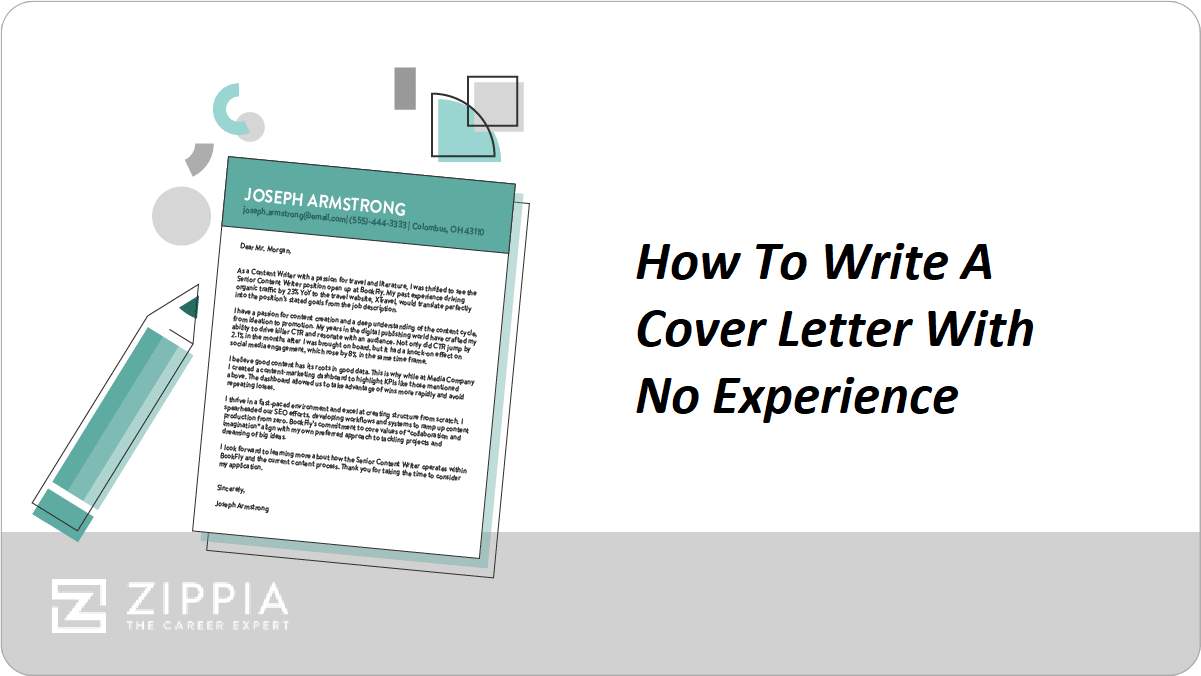
Example opening paragraphAs a Content Writer passionate about travel and literature, I was excited to see the Senior Content Writer position available at BookFly. My previous experience driving organic traffic by 23% YoY to XTravel would align perfectly with the goals outlined in the job description.
-
-
First body paragraph. This section is where you can truly sell yourself. Highlight personality traits that make you a good fit for the role.
-
Emphasize transferable skills. Discuss how your developed skills make you an ideal candidate for the role. This could include collaborative projects, leadership roles, or interpersonal skills.
-
Refer back to the job description. Incorporate relevant skills mentioned in the job description into your cover letter. Hiring managers will be looking for candidates who possess these skills, and it also assists applicant tracking systems in filtering candidates based on keywords.
-
Highlight personality traits. This aspect is especially crucial if you have limited experience. Attributes like ambition, dedication, and the ability to meet deadlines are valuable, regardless of your career level.
ExampleI have a strong affinity for content creation and a comprehensive understanding of the content cycle from ideation to promotion. My time in digital publishing has honed my ability to achieve outstanding CTR and engage with audiences effectively. For example, CTR improved by 2.1% in the months following my arrival, with social media engagement increasing by 8% during the same period.
I believe that effective content is rooted in data. At Media Company, I developed a content-marketing dashboard that highlighted KPIs, enabling our team to capitalize on successes rapidly and avoid repeating mistakes.
-
-
Second body paragraph. Employers want to know why you want to work at their company. Conduct research to understand the company’s core values and discuss how they align with your own.
Explore the company’s website and LinkedIn for insights. Employers seek candidates who fit within their culture, so consider how you align with their values. Explain to the recruiter why you believe you would thrive in their environment and how the company would also benefit from your contributions.
ExampleI excel in fast-paced environments and thrive on creating structures from scratch. I led our SEO initiatives, establishing workflows and systems that significantly increased content production. BookFly’s dedication to “collaboration and imagination” resonates with my approach to projects and my passion for innovative ideas.
-
Closing. Your closing paragraph is your final opportunity to make an impression on the hiring manager, so express your eagerness for the position. There’s no need to repeat your accomplishments; instead, focus on your intent.
Start by thanking them for considering your application. Quickly remind them of the value you can bring to the role and the company.
Finally, include a clear call-to-action, inviting the recruiter to contact you for an interview. Being confident and direct in your closing helps seal the deal.
ExampleI look forward to learning more about the role of Senior Content Writer at BookFly and how I can contribute to the current content process. Thank you for considering my application.
Sincerely,
Jessica Dancer
Cover letter examples
With countless cover letter templates online, it’s crucial to select one that fits your needs. Here’s a basic format for an effective cover letter:
Jessica Dancer
jessica.dancer@email.email | (555)-444-3333 | Columbus, OH 43110
Dear Mr. Morgan,
As a Content Writer with a passion for travel and literature, I was excited to see the Senior Content Writer position open at BookFly. My previous experience driving organic traffic by 23% YoY to XTravel aligns perfectly with the goals outlined in the job description.
I have a strong affinity for content creation and a comprehensive understanding of the content cycle from ideation to promotion. My time in digital publishing has honed my ability to achieve outstanding CTR and engage with audiences effectively. For example, CTR improved by 2.1% in the months following my arrival, with social media engagement increasing by 8% during the same period.
I believe that effective content is rooted in data. At Media Company, I developed a content-marketing dashboard that highlighted KPIs, enabling our team to capitalize on successes rapidly and avoid repeating mistakes.
I excel in fast-paced environments and thrive on creating structures from scratch. I led our SEO initiatives, establishing workflows and systems that significantly increased content production. BookFly’s dedication to “collaboration and imagination” resonates with my approach to projects and my passion for innovative ideas.
I look forward to learning more about the role of Senior Content Writer at BookFly and how I can contribute to the current content process. Thank you for considering my application.
Sincerely,
Jessica Dancer
If emailing your cover letter, you can omit the contact information at the top and instead include it below your signature. Be sure to include your name, phone number, LinkedIn profile, and a link to your professional portfolio, if applicable.
Dear Hiring Manager:
I am writing to express my interest in the position of veterinary receptionist at Pet Care Clinic, as advertised on Indeed.com. I am a certified dog trainer with experience at both Petsmart and Petco, giving me valuable insight into animal behavior. Additionally, I am an aspiring novelist, which has made me a fast and proficient typist with expertise in Microsoft Word and Apple Pages.
Having worked in pet stores for several years, I am familiar with various types of animals and their care, as well as building rapport with pet owners. While I enjoy working with animals and my colleagues, I am eager to transition into a veterinary setting where I can continue to expand my knowledge and experience.
Veterinary medicine has always intrigued me, and I am enthusiastic about learning more to help customers make informed decisions for their pets.
Having grown up with dogs and cats, I am comfortable with their behavior. As a pet owner myself, I understand what customers seek in a veterinary clinic and can tailor the experience to meet their needs.
Thank you for your time, and I look forward to your response.
Sincerely,
Michelle Bolivar
Email: mbolivar@email.com
Phone: (555) 545-9706
Cover letter template
[Your Contact Information]
[Date]
Dear [Hiring Manager],
I’m writing to apply for the [Position] at [Company] that you posted on [Job Ad Source]. I believe my [Relevant Experience] makes me an excellent fit for [Company Name].
I have long been interested in [Specific Industry/Department], particularly because [Why You’re Interested in the Company/Awards/Accomplishments]. The experience and [Relevant Skills] I’ve developed as a [Current Position] for [Duration] will be valuable as I aim to [Specific Contribution You Can Make].
The [Responsibilities in Job Description] will be an [Interesting Challenge], and I look forward to applying my [Relevant Skills]. I excel at [Teamwork/Independent Work], and I want to leverage my expertise to further [Company’s] success.
I am excited about the opportunities this position presents, and I believe my qualifications will make me a valuable asset to your team. I look forward to discussing the position and my qualifications with you in an interview. Please let me know if you need any further information.
Thank you for your time, and I look forward to your reply.
Sincerely,
[Your Name]
[Your Contact Information (if in Email)]
Do’s and Don’ts for a Cover Letter
Understanding the correct format of a cover letter is crucial, but adhering to additional dos and don’ts can enhance your letter. During the editing process, ensure you avoid common mistakes that could hurt your chances.
Here are ten dos and don’ts to consider when writing a cover letter:
Do’s:
-
Do start by scanning the original job posting for keywords to incorporate into your letter.
-
Do take pride in your accomplishments and ensure they are prominently featured.
-
Do clearly articulate why you would be an asset to the organization.
-
Do tailor your cover letter for each hiring manager and position you apply for.
-
Do highlight unique experiences while emphasizing measurable and relevant results.
Don’ts:
-
Don’t feel compelled to exaggerate your skills or accomplishments. Being caught in a lie is one of the worst mistakes you can make.
-
Don’t simply copy and paste a template and only change your name and job titles. Recruiters will see through a generic cover letter used by multiple applicants.
-
Don’t forget to be direct and include a call to action.
-
Don’t make your cover letter overly lengthy; similar to your resume, your letter should provide a quick overview of who you are and why you’re a good fit.
-
Don’t overlook proofreading. Grammatical errors in a cover letter and resume can quickly land your application in the “no” pile.
Cover Letter FAQ
-
What do you write in a cover letter?
You should focus on notable accomplishments from previous jobs or academic experiences that relate to the position you’re applying for.
-
What is the purpose of a cover letter?
The purpose of a cover letter is to help a hiring manager understand why your background makes you suitable for the role. While a resume lists your achievements, educational history, and skills, it doesn’t convey your actual expertise or personality.
A cover letter allows you to express your work approach and show your ability to communicate your value effectively. A compelling cover letter makes it easy for a reader to think, “I can imagine this person working for us.”
-
How do you write a simple cover letter?
Begin with the header and greeting as outlined above. Then state your interest in the position (using the exact job title from the job description) and your years of experience in the industry or job role.
Keep your cover letter straightforward by mentioning in 1-2 sentences or 3-4 bullet points the most relevant parts of your background for the hiring manager.
Conclude with a thank you for considering your application, and sign off as usual (e.g., “Sincerely, [full name]”).
-
What is the best way to start a cover letter?
The best way to start a cover letter is with an accomplishment that demonstrates your ability to provide value to the company. Other effective strategies include discussing your long-standing passion for the field, mentioning a significant reference at the company, or addressing challenges the company is currently facing.
-
Do you introduce yourself in a cover letter?
No, you do not introduce yourself in a cover letter. Avoid starting with “My name is…”; instead, dive straight into your background and interest in the position.
Your name will appear at the end of the cover letter, as well as in the header, your email address, and your resume, making an awkward introduction unnecessary.
-
How do you end a cover letter?
To conclude a cover letter, thank the reader for their time and consideration, express enthusiasm for further discussion, and sign off with a standard closing like “Sincerely.”
-
How long should a cover letter be?
A cover letter should be a maximum of one page long, typically consisting of three to five paragraphs. A half-page is the minimum length you should aim for.
References
Expert Opinion
What’s a quick cover letter tip?

Michael Akbar
Vice President
Certified Professional Career Coach
Use your first six seconds to show the employer in a tailored cover letter and resume that you understand their challenges and how you can provide solutions.

Author

Chris Kolmar is a co-founder of Zippia and the editor-in-chief of the Zippia career advice blog. He has hired over 50 people in his career, been hired five times, and wants to help you land your next job. His research has been featured on the New York Times, Thrillist, VOX, The Atlantic, and a host of local news. More recently, he's been quoted on USA Today, BusinessInsider, and CNBC.
Expert
Matt Warzel a President of a resume writing firm (MJW Careers, LLC) with 15+ years of recruitment, outplacement, career coaching and resume writing experience. Matt is also a Certified Professional Resume Writer (CPRW) and Certified Internet Recruiter (CIR) with a Bachelor of Science in Business Administration (Marketing Focus) from John Carroll University.