- HR Statistics
- Average Labor Cost Percent Of Sales
- Average Time to Reach Profitability At A Startup
- Office Space Per Employee
- Recruitment Statistics
- Employee Engagement Statistics
- Work-Life Balance Statistics
- BYOD Statistics
- Paternity Leave Statistics
- Onboarding Statistics
- Average Paid Maternity Leave In Us
- Average Cost Of A Bad Hire
- Employee Theft Statistics
- Paid Family Leave Statistics
- Cost Of Hiring Statistics
- Employee Turnover Statistics
- Average Cost Of Employer Sponsored Health Insurance Statistics
- Sexual Harassment In The Workplace Statistics
- HR Statistics
- PTO Statistics
- Social Media Recruitment Statistics
- Hiring Statistics
- Out Of Prison Employment Statistics
75+ Essential Human Resources Statistics [2026]: Figures, Salaries, and Stats
Research Summary. The demand for human resources professionals remains strong, as recruitment evolves into a more candidate-centric market. To provide insight into this dynamic field, we have compiled the most essential statistics related to human resources in 2026:
-
The average corporate job opening attracts 250 resumes.
-
77% of job seekers visit a company’s website directly to search for job openings.
-
53% of HR professionals believe that enhancing onboarding processes significantly boosts employee engagement.
-
47% of HR teams identify employee retention and turnover as their primary challenge.
-
While 72% of hiring managers assert they create clear job descriptions, only 36% of candidates concur with this assessment.
-
By 2025, 47% of HR departments in the U.S. are anticipated to incorporate artificial intelligence into their operations.
-
70% of the global workforce consists of passive job seekers, whereas 30% are actively seeking new opportunities.
-
48% of businesses report that their best hires come from employee referrals.
-
According to 86% of recruiters, the market remains candidate-driven.
For further analysis, we broke down the data in the following ways:
Technology | Hiring | Candidate | Employer/Job Attributes | Onboarding | Hiring Source | Retention and Recognition | Job Search | Diversity

Human Resources Technology Statistics
Technology, particularly artificial intelligence, is increasingly vital in recruiting and human resources. While many businesses plan to implement these technologies in the coming years, a significant number of HR professionals feel unprepared to adapt.
-
80% of U.S. small businesses currently use or plan to adopt HR software within the next one to two years.
-
6% of companies utilize AI for recruiting at a high level, while 24% expect to do so by 2025.
-
A significant majority of recruiters (75%) employ applicant tracking software, and 79% use social media in their recruitment efforts.
-
97% of employers plan to increase their investment in recruiting technology.
-
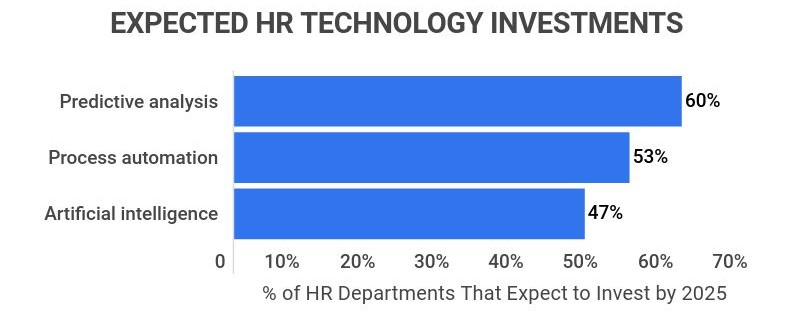
In the next few years, 60% of HR departments are expected to invest in predictive analysis, 53% in process automation, and 47% in artificial intelligence.
-
Among recruiters, 76% believe that artificial intelligence will play a fundamental role in the coming years.
-
Virtual recruitment has become the dominant method in the hiring process.
-
However, only 16% of HR professionals in the U.S. feel prepared for a fully virtual recruiting and hiring process.
-
Only 37% of human resources managers are confident in their ability to manage necessary changes and integrate technology such as artificial intelligence.
-
Furthermore, two-thirds of human resources managers acknowledge that the sector is undergoing a digital transformation, yet only 40% have a strategic plan to navigate this transition.
Human Resources Hiring Statistics
Employer culture and candidate experience are increasingly important to prospective employees, yet many employers fall short in these areas. Candidates are looking for a solid work-life balance, constructive interview feedback, competitive compensation, and opportunities for professional development. Without these elements, they may choose a different employer.
-
On average, each corporate job offer attracts 250 resumes.
-
Each employee vacancy costs the average company $500 a day.
-
A negative review on Glassdoor results in more than 50% of candidates opting against accepting a job offer.
-
Nearly 30% of new hires resign within their first three months of employment.
-
84% of recruiters report that culture fit has become a crucial factor when hiring.
-
Yet, 61% of new hires do not receive any training related to company culture.
-
94% of candidates desire interview feedback, but only 41% have received it previously.
-
Candidates are 4x more likely to consider your company for future opportunities when provided with constructive feedback.
-
The median salary for an HR specialist was $62,290 in 2021, while the salary for human resources managers was $126,230.
-
Demand for recruiting professionals has surged by 63% since 2016, a trend expected to continue.
Human Resources Candidate Statistics
-
83% of employers believe that attracting and retaining talent is becoming increasingly challenging.
-
Companies that prioritize the candidate experience can enhance the quality of new recruits by 70%.
-
However, only 22% of HR managers feel they have established a distinctive hiring experience.
-
Employer branding significantly influences the talent selection process, according to 75% of industry professionals.
-
Half of job seekers report having a negative experience during the hiring process, and 50% have declined a job offer due to poor experiences.
-
Candidates indicate that clear and regular communication (58%), clear expectations (53%), and feedback after rejection (51%) are essential for a positive application experience.
Human Resources Statistics by Employer/Job Attributes
-
The most valued employer attributes among job seekers include salary and employee benefits, job security, and a positive work environment.
-
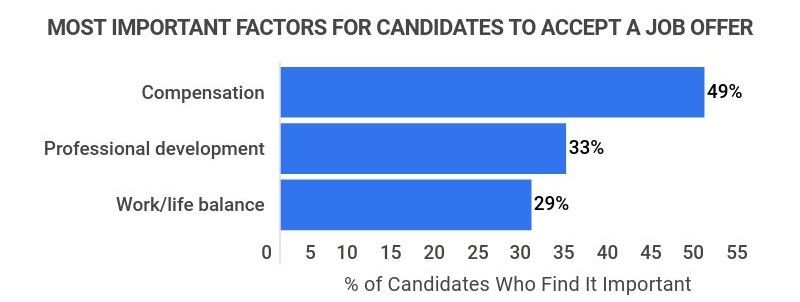
Key factors influencing job acceptance include compensation (49%), opportunities for professional development (33%), and better work-life balance (29%).
-
89% of candidates say being contacted by their recruiter can expedite their decision to accept a job offer.
-
52% of surveyed candidates indicate that competitive compensation packages are the most attractive aspect of a job.
Employee Onboarding Statistics
-
Only about one in ten employees strongly agree that their organization excels at onboarding new hires.
-
Negative onboarding experiences increase the likelihood of new hires seeking other opportunities by 2x.
-
53% of HR professionals believe that employee engagement improves with enhanced onboarding processes.
Hiring Source Statistics
-
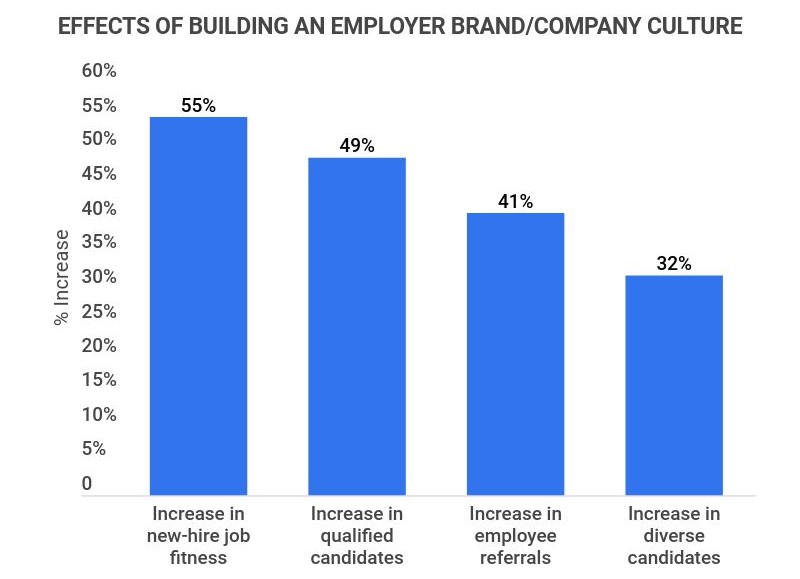
Building a strong employer brand and company culture aids in increasing qualified candidates (49%), attracting diverse candidates (32%), enhancing employee referrals (41%), and hiring the right individuals (55%).
-
Companies can expand their talent pool by 10x through employee network recruitment.
-
Employee referrals remain a top source of quality hires, alongside social networks and online job boards.
-
Social professional networks are the leading source of quality hires, followed by internet job boards and employee referrals.
-
48% of businesses state that their best hires originate from employee referrals.
-
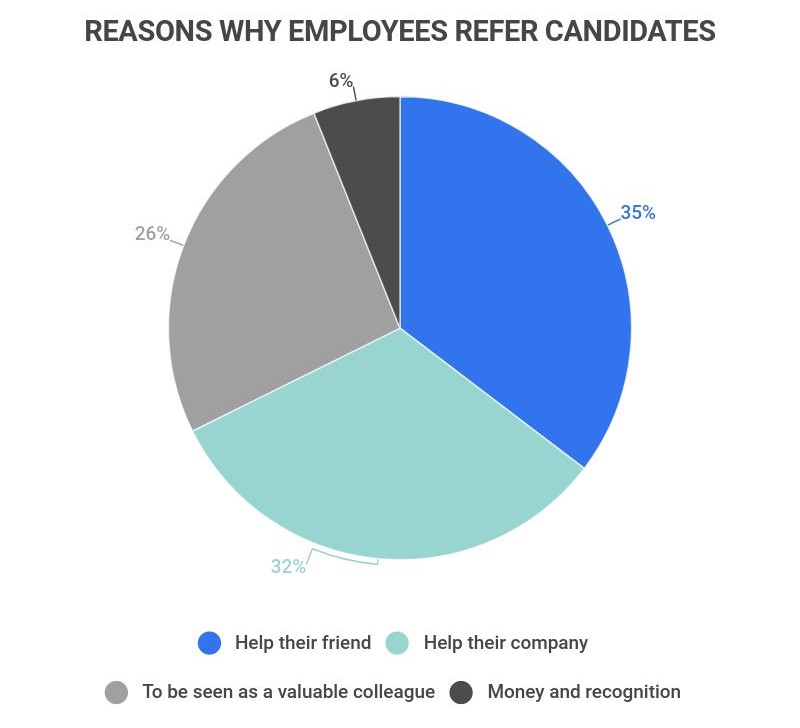
35% of employees refer candidates to assist their friends, 32% do it to support their company, 26% do it to enhance their reputation as a valuable colleague, while only 6% do it for financial incentives and recognition.
Human Resources Employee Retention and Recognition Statistics
Employee retention and turnover continue to be significant concerns for HR departments, as many employees leave for reasons such as the lack of career development, inadequate work-life balance, and insufficient engagement.
-
47% of HR leaders cite employee retention and turnover as their top workforce management challenge, followed by recruitment and corporate culture management.
-
Effective onboarding processes can enhance new hire retention by 82% and productivity by over 70%.
-
The primary reason individuals change jobs remains career advancement opportunities.
-
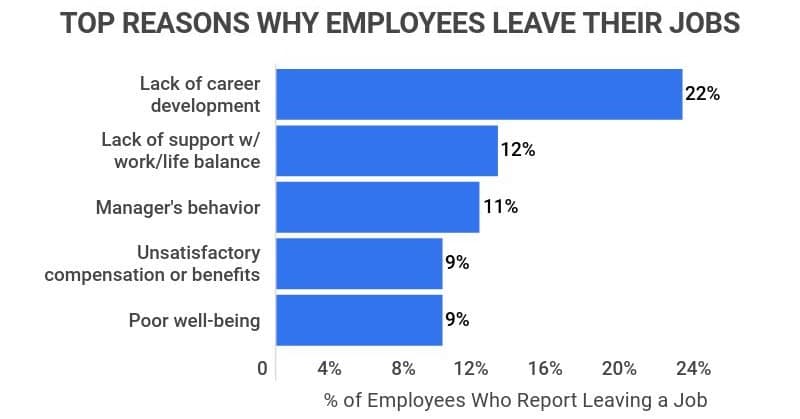
Top reasons employees give for leaving their jobs include lack of career development (22%), insufficient work-life balance support (12%), manager behavior (11%), unsatisfactory compensation and benefits (9%), and poor well-being (9%).
-
46% of HR leaders attribute employee burnout to up to 50% of annual turnover.
-
51% of employers anticipate that leveraging health and wellness benefits to enhance employee loyalty and retain talent will become increasingly important in the next three to five years.
-
66% of employees will first check for open positions within their current company before seeking opportunities elsewhere.
-
87% of employees desire employer assistance in maintaining work-life balance.
-
Most (81%) working parents prefer achieving a work-life balance over higher pay.
-
89% of HR leaders agree that continuous peer feedback and check-ins positively impact their organizations.
-
84% of HR professionals believe that employee recognition enhances engagement, and 82% assert it improves employee satisfaction and availability.
-
Only 34% of HR leaders invest in workforce learning and reskilling as part of their future work strategy.
-
40% of HR leaders are unaware of the skills possessed by their workforce.
Human Resources Job Search Statistics
Most job seekers are passive, meaning they are not actively looking for jobs but remain open to new opportunities. For active seekers, referrals, job boards, social media, and word-of-mouth are the most common methods for discovering job openings.
-
70% of the global workforce consists of passive talent, with the remaining 30% being active job seekers.
-
87% of both active and passive candidates are receptive to new job opportunities.
-
The leading channels for job searches are online job boards (60%), social professional networks (56%), and word of mouth (50%).
-
The primary method for discovering a new job is through referrals.
-
The most frequently searched keyword by candidates on Monster in recent months remains “work from home.”
Human Resources Diversity Statistics
Organizations that prioritize workplace diversity typically experience higher-than-average financial returns, alongside more engaged and satisfied employees.
-
78% of companies have initiated efforts to hire diversely.
-
Businesses that maintain a diverse workforce are 15-35% more likely to achieve above-average financial returns, while those lacking diversity tend to lag behind.
-
Over four in five (86%) candidates globally consider diversity, equity, and inclusion (DEI) in the workplace as essential.
-
Research shows that 62% of individuals would reject a job offer from a company that does not support a diverse workforce.
Human Resources Industry Statistics FAQ
-
Is human resources a growing or shrinking field?
Human resources is a growing field. Projections from the BLS estimate that job openings in HR will grow by about 8% from 2021-2031, which is faster than the average across all occupations.
-
Is human resources a stressful field?
Yes, human resources tends to be a stressful field. Tight deadlines are a constant feature of most HR jobs, as is the balancing act between employee advocacy and corporate strategy execution.
Given the continuous need to interview, hire, onboard, train, and separate candidates and employees — a high-pressure position with substantial stakes — it’s reasonable to assert that HR professionals encounter significant stress in their roles.
-
Yes, HR jobs generally offer competitive salaries. Human resources specialists earned a median annual salary of $63,490 in 2020, with other HR roles potentially offering higher compensation. The prevailing sentiment is that HR positions should be well-compensated, as they are responsible for establishing corporate pay scales.
-
How will HR change in the next 5 years?
Over the next 5 years, HR will continue to integrate more technology. Emerging technologies are likely to enable a focus on real-time performance reviews. Furthermore, HR will likely maintain an emphasis on diverse hiring practices, given the proven effectiveness of workplace diversity.
-
Is there a high demand for HR?
Yes, there is a significant demand for HR professionals. The BLS estimates that the number of human resource specialist jobs will grow by 8% from 2021 to 2031, faster than the overall average job growth rate, resulting in approximately 58,800 new HR specialist jobs.
Additionally, the BLS projects a job growth rate of 7% for human resources managers over the same decade, which is consistent with average growth rates.
References
-
RisePeople.com. Read ‘Em and Share: 25 Fascinating HR Statistics. Accessed 5/24/21.
-
U.S. Bureau of Labor Statistics. Human Resources Managers. Accessed 2/14/23.
-
U.S. Bureau of Labor Statistics. Human Resources Specialists. Accessed 2/14/23.
-
U.S. Bureau of Labor Statistics. The Employment Situation — April 2021. Accessed 5/24/21.
-
U.S. Bureau of Labor Statistics. The Employment Situation — January 2023. Accessed 2/14/23.
-
Kenjo Blog. 30 Human Resources Statistics. Accessed 5/24/21.
-
Paycor.com. HR Statistics You Need to Know for 2020. Accessed 5/24/21.
-
Shortlister.com. 80 Key Recruiting Statistics for Hiring Managers. Accessed 5/24/21.
-
LinkedIn Business. The Ultimate List of Hiring Statistics For Hiring Managers, HR Professionals, and Recruiters. Accessed 5/24/21.
-
HR Cloud. 8 Recruitment Stats You Need to Know. Accessed 5/24/21.
-
SHRM.org. 2021 Recruiting Trends Shaped by COVID-19. Accessed 5/24/21.
-
Finances Online. 101 Hiring Statistics You Must Read. Accessed 5/24/21.
-
Monster Hiring. 2021 Hiring Trends: Monster’s Predictions for the New Year. Accessed 5/24/21.
-
ZoomShift.com. 50 HR Statistics to Boost Hiring and Retention in 2021. Accessed 5/24/21.
-
PwC. PwC’s HR Technology Survey 2020. Accessed 1/25/22.
-
Work Institute. 2019 Retention Report. Accessed 1/25/22.
-
Kronos. New Hire Momentum: Driving the Onboarding Experience. Accessed 1/25/22.
-
HR Dive. Survey: Applicant quality continues to plague employers. Accessed 1/25/22.
- HR Statistics
- Average Labor Cost Percent Of Sales
- Average Time to Reach Profitability At A Startup
- Office Space Per Employee
- Recruitment Statistics
- Employee Engagement Statistics
- Work-Life Balance Statistics
- BYOD Statistics
- Paternity Leave Statistics
- Onboarding Statistics
- Average Paid Maternity Leave In Us
- Average Cost Of A Bad Hire
- Employee Theft Statistics
- Paid Family Leave Statistics
- Cost Of Hiring Statistics
- Employee Turnover Statistics
- Average Cost Of Employer Sponsored Health Insurance Statistics
- Sexual Harassment In The Workplace Statistics
- HR Statistics
- PTO Statistics
- Social Media Recruitment Statistics
- Hiring Statistics
- Out Of Prison Employment Statistics

Author

Chris Kolmar is a co-founder of Zippia and the editor-in-chief of the Zippia career advice blog. He has hired over 50 people in his career, been hired five times, and wants to help you land your next job. His research has been featured on the New York Times, Thrillist, VOX, The Atlantic, and a host of local news. More recently, he's been quoted on USA Today, BusinessInsider, and CNBC.