The 25 Jobs With the Highest Mortality Risks in Recent Years
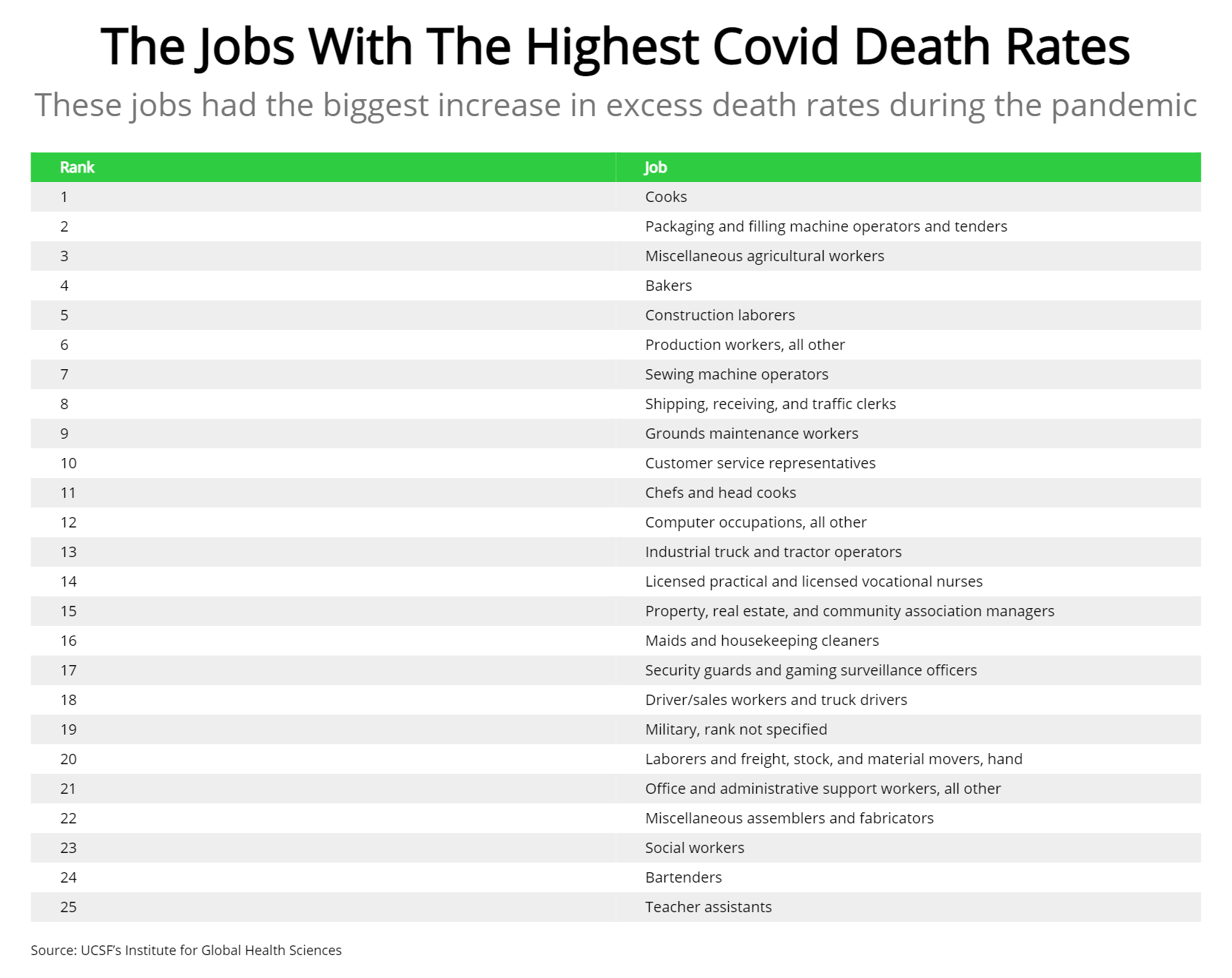
The COVID-19 pandemic reshaped the labor market, highlighting the crucial roles of essential workers while accelerating the shift towards remote work for many. However, not all professions had the luxury of telecommuting, exposing countless workers to heightened health risks.
According to a recent analysis by UCSF’s Institute for Global Health Sciences, we examine the occupations that witnessed the most significant increases in mortality rates during the pandemic and beyond.
The findings reaffirm the acknowledgment of essential workers as heroes during the pandemic, as they continued their duties despite considerable personal risks.
Key Insights
-
Cooks recorded the highest increase in excess deaths, with a 60% increase in mortality risk.
-
The average salary for a cook remains low at $27,996, below the median US income of $35,977.
-
Low-paying jobs dominated the list of those most affected by excess deaths during the pandemic.
-
Licensed Practical Nurses (LPNs), who were on the frontlines, faced mortality rate increases of over 40%.
-
Occupations in crowded environments, such as agricultural workers (39%) and transportation and logistics workers (28%), also saw significant increases in mortality rates.
Methodology
The analysis conducted by UCSF focused on excess death rates among Californians aged 18–65 by occupational sector and role, examining data from March to October 2020.
As of 2026, we have updated our analysis to cover mortality data across the United States from 2020 to 2023. It’s essential to recognize that these figures can vary significantly depending on state regulations, the prevalence of specific industries, and other contextual factors.
The Lowest-Paid Workers Paid the Price
Many of the jobs with the highest mortality risks are inherently non-remote, requiring physical presence in potentially hazardous environments.
While it was anticipated that essential workers, especially those in lower-wage positions, would experience elevated mortality risks, this study substantiates that assertion, highlighting the personal risks they undertook for the sake of societal functionality.
Nevertheless, the lack of stringent safety measures in some workplaces raises an important question: Could some of these fatalities have been preventable?
As we move forward, understanding the vulnerabilities faced by essential workers is crucial for shaping policies that prioritize their health and safety, ensuring that the lessons learned from this pandemic lead to meaningful changes in the labor market.

Author

Kathy is the head of content at Zippia with a knack for engaging audiences. Prior to joining Zippia, Kathy worked at Gateway Blend growing audiences across diverse brands. She graduated from Troy University with a degree in Social Science Education.