Find a Job You Really Want In
Investing in higher education can significantly impact your career and earning potential. However, with rising student debt and an evolving job market, the critical question remains: “Is pursuing a master’s degree worth it?”
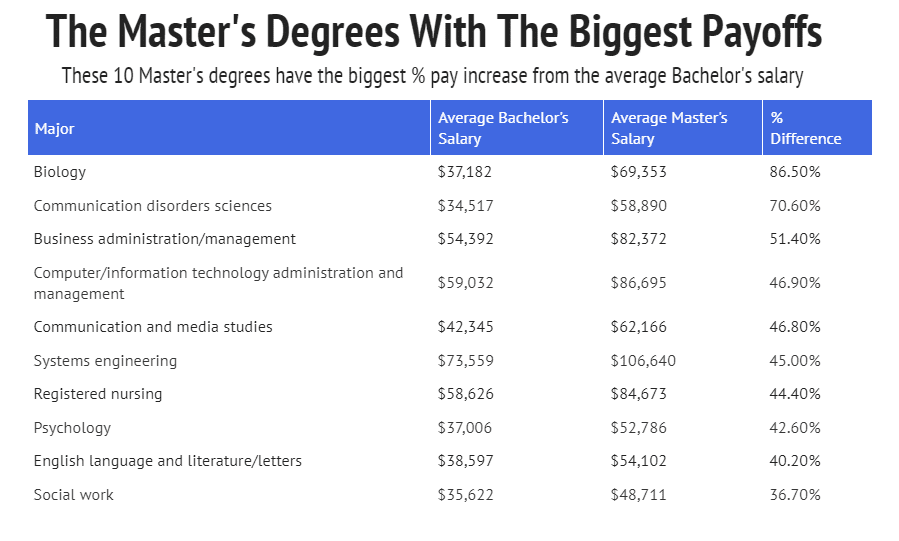
As of 2026, graduate enrollment has continued to rise, reflecting a growing recognition of the value of advanced education. An analysis of recent data shows that for specific fields, obtaining a master’s degree can substantially enhance earning potential. Below, we’ve highlighted the majors that offer the most lucrative return on investment for master’s degree holders:
How We Determined This
Our analysis leverages data from the NACE Salary Survey, which provides insights into the master’s degrees associated with the highest starting salaries. We focused on the increase in pay from average starting salaries for bachelor’s degrees to identify the most rewarding master’s programs.
These figures represent base salaries only and exclude bonuses, commissions, fringe benefits, or overtime. The data was gathered from graduates of the Class of 2025, encompassing over 249 institutions that provided salary insights by specific program or major.
Before You Enroll…
While these ten master’s degrees show a significant increase in earning potential, it’s important to note that some bachelor’s degrees in these fields may still offer lower average starting salaries.
A crucial consideration is that while a master’s degree may enhance your salary, it might not guarantee a lifestyle of luxury or even cover substantial student loan debts. For instance, in social work, a master’s degree can boost the average starting salary from approximately $35,622 to around $48,711—a figure that remains below the starting salary for many other more lucrative careers.
Before making a decision based on potential earnings, it’s essential to conduct thorough research. Ensure that the career path aligns with your interests and values, and perform a personal cost-benefit analysis to determine its feasibility for you. Resources like Zippia can provide valuable guidance as you navigate your career choices and job search in your chosen field.

Author

Kathy is the head of content at Zippia with a knack for engaging audiences. Prior to joining Zippia, Kathy worked at Gateway Blend growing audiences across diverse brands. She graduated from Troy University with a degree in Social Science Education.