Research Summary: In today’s digital landscape, whether operating a large retail business or crafting handmade goods from a small apartment, entrepreneurs recognize the critical importance of establishing an online presence. An online business not only enhances visibility but also opens the door to a global customer base.
So, what drives the booming popularity of online business in 2026? We’ve compiled essential insights from our comprehensive research:
-
71% of small businesses now have their own websites.
-
81% of shoppers prefer to research a business online prior to making a purchase.
-
At least 70% of small to mid-sized businesses are increasing their investments in digital marketing and online presence.
-
By 2040, it is projected that 95% of all purchases will be facilitated through e-commerce channels.
-
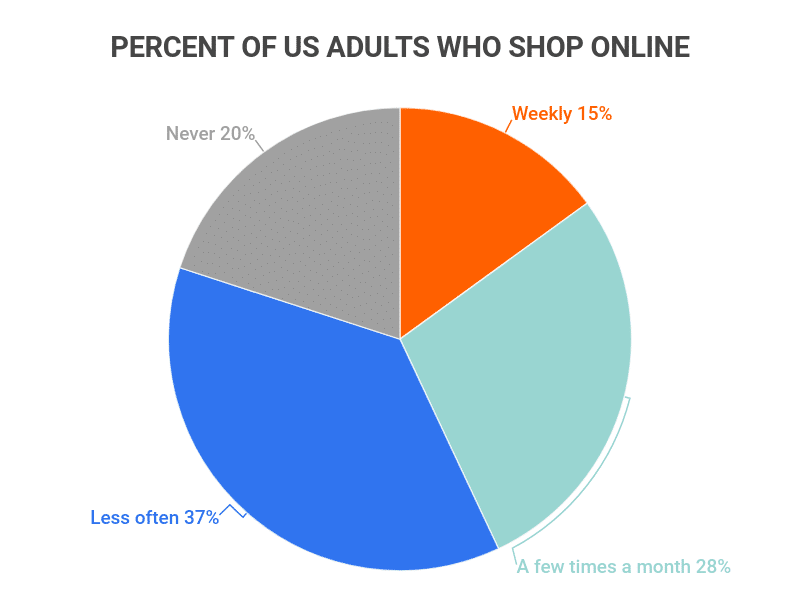
15% of Americans engage in online shopping on a weekly basis.
For a deeper understanding, we have categorized our findings as follows:
Statistics by Small Business Owners | E-commerce Sales Statistics | Consumer Behavior Statistics | Consumer Opinions Statistics
Online Business Statistics by Small Business Owners
Navigating SEO and digital marketing can be challenging, and many small business owners express concerns about whether the investment will yield sufficient returns. Here are key insights into small business attitudes towards online presence:
-
35% of small businesses believe their size does not justify having a website.
This perception often ties into concerns about costs, as many think that the expense of a new website won’t be offset by new customers. Instead, some businesses opt to rely on social media platforms.
-
79% of business owners with a website anticipate growth of 25% over the next three to five years.
This is significantly higher compared to the 64% of those without a website who share similar growth expectations, highlighting the confidence that comes with an online presence.
-
23% of small businesses refrain from investing in a website due to perceived costs.
However, the leading reason for not having a website is that 28% of owners feel a website isn’t relevant for their business.
-
85% of small businesses with websites employ staff to manage their online content.
This is crucial for maintaining regular updates, with popular content types including: Images and infographics (76%), Promotions and offers (58%), and Reviews and testimonials (52%).
E-commerce Sales Statistics
Achieving sales is vital for any online business, and there are numerous strategies to enhance sales performance. Our research indicates:
-
36% of small personal businesses are successfully making sales online.
This indicates significant potential for market expansion, especially as 28% of small businesses still lack a web presence.
-
18% of local mobile searches convert to a sale within a day.
This statistic illustrates the importance of mobile-friendly designs, as businesses that optimize for mobile are more likely to capture immediate sales.
-
Businesses with a blog experience 126% higher lead growth.
Blogs contribute to increased engagement, yielding benefits like: 55% more page visits, 97% more inbound links, and 434% more indexed pages.
-
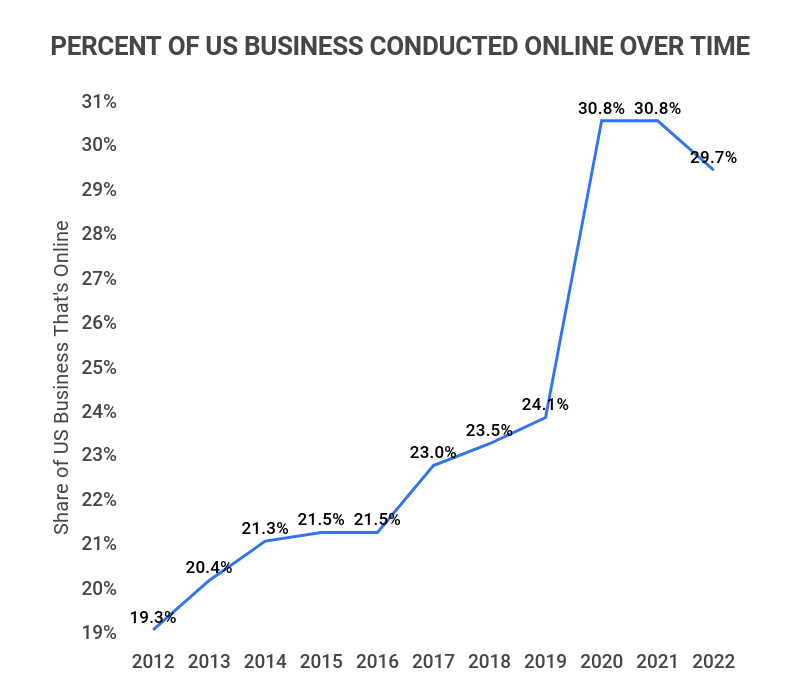
29.7% of business conducted in the US occurs online.
This marks a significant increase from just 19.3% a decade ago in 2012, and 9% two decades ago in 2002.
E-commerce Statistics by Consumer Behavior
Understanding consumer behavior is essential for shaping online businesses. Here are some critical insights:
-
92% of consumers first visit a business’ website for reasons other than purchasing.
-
60% of shoppers initiate their online product research using search engines.
-
62% of customers share online deals with friends.
-
69% of Americans now shop online, with 25% doing so at least once per month.
-
85.9% of Millennials make purchases online.
Online Business Statistics by Consumer Opinions
While online shopping has become prevalent, understanding consumer sentiments is equally important. Our findings reveal:
-
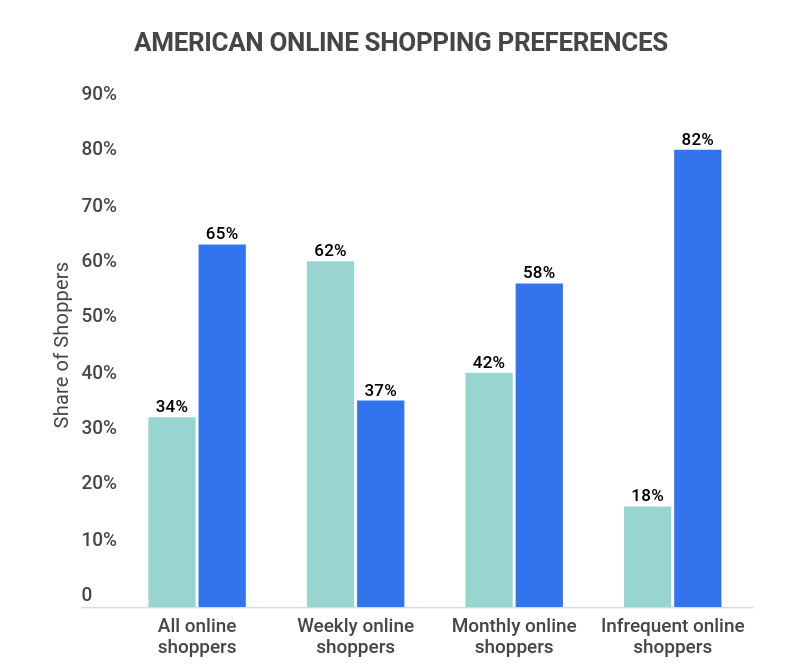
34% of online shoppers prefer shopping online to visiting physical stores.
This preference rises to 62% among frequent online shoppers, while 82% of occasional online shoppers favor physical stores.
-
47% of consumers prefer retailers to communicate via email.
This preference is even higher among Millennials, with 73% opting for email over other communication methods.
Online Business Statistics FAQ
-
What percentage of business is done online?
29.7% of American business is conducted online. Globally, this figure stands around 18%. This trend has shown a steady increase over the last two decades, growing from just 9% in 2002.
-
What is the success rate of online businesses?
The success rate for online businesses is around 10-20%. On average, only 10% of online businesses succeed, with many failing within the first 120 days. New businesses should focus on marketing and SEO to attract potential customers early on.
-
What percentage of e-commerce start-up businesses fail?
Up to 90% of e-commerce start-up businesses fail. To avoid joining this statistic, consider these common pitfalls:
-
Poor product displays (low-quality images, inadequate descriptions, etc.)
-
Complex shopping cart processes
-
Pricing issues (either too high or too low)
-
Unclear return policies
-
Neglecting mobile optimization
-
Inadequate marketing and SEO strategies
-
Failure to test and improve products
-
Operating in a saturated market
-
Poor website navigation
-
Intrusive pop-ups
-
Mandatory registration for purchases
-
Insufficient customer support
-
-
How many online businesses are there in 2026?
Approximately 12 to 24 million e-commerce sites exist globally, with around 2.5 million based in the U.S. The online business landscape continues to expand rapidly, thanks to improved internet access and advancements in technology that simplify website creation.
-
What are the top 3 online businesses?
The leading online business models are e-commerce, digital marketing services, and content creation. E-commerce encompasses businesses selling goods or services online; digital marketing includes agencies and consultants; and content creation ranges from blogging to video production.
Conclusion
With nearly a third of all American business transactions happening online, there has never been a more opportune moment to launch or expand an online business. Notably, 79% of business owners with a website anticipate achieving 25% growth in the next three to five years.
However, a well-thought-out strategy is essential before entering the online market. With a staggering 90% of online businesses failing, comprehending customer expectations and mastering the online landscape is vital for success.
Ultimately, perfecting your marketing and SEO approaches is a critical step in establishing a thriving online business.
References
-
The Manifest. “9 Risks and Rewards of Using Social Media Instead of a Website.” Accessed on August 16th, 2022.
-
Visual Objects. “Small Businesses Without Websites Survey.” Accessed on August 16th, 2022.
-
Agility. “Most small businesses manage social media in-house—but do they post often enough?” Accessed on August 16th, 2022.
-
Search Engine Land. “6 Local SEO Stats Every Online Marketer Needs To Know.” Accessed on August 16th, 2022.
-
Union Street Media. “Blogging Businesses Experience 126% Higher Lead Growth.” Accessed on August 16th, 2022.
-
IBISWorld. “Percentage of Business Conducted Online.” Accessed on August 16th, 2022.
-
Optimizely. “STUDY: 92 Percent of Consumers Visiting a Retailer’s Website for the First Time Aren’t There to Buy.” Accessed on August 17th, 2022.
-
Power Reviews. “Millennial Shoppers & Reviews: A Deep Dive.” Accessed on August 17th, 2022.
-
Pew Research Center. “Online shopping and purchasing preferences.” Accessed on August 17th, 2022.
-
RetailDive. “Study: 47% of consumers prefer email messages from retailers.” Accessed on August 17th, 2022.

Author

Jack Flynn is a writer for Zippia. In his professional career he’s written over 100 research papers, articles and blog posts. Some of his most popular published works include his writing about economic terms and research into job classifications. Jack received his BS from Hampshire College.