By clicking Download, you agree to Zippia’s Privacy Policy and Terms of Use.

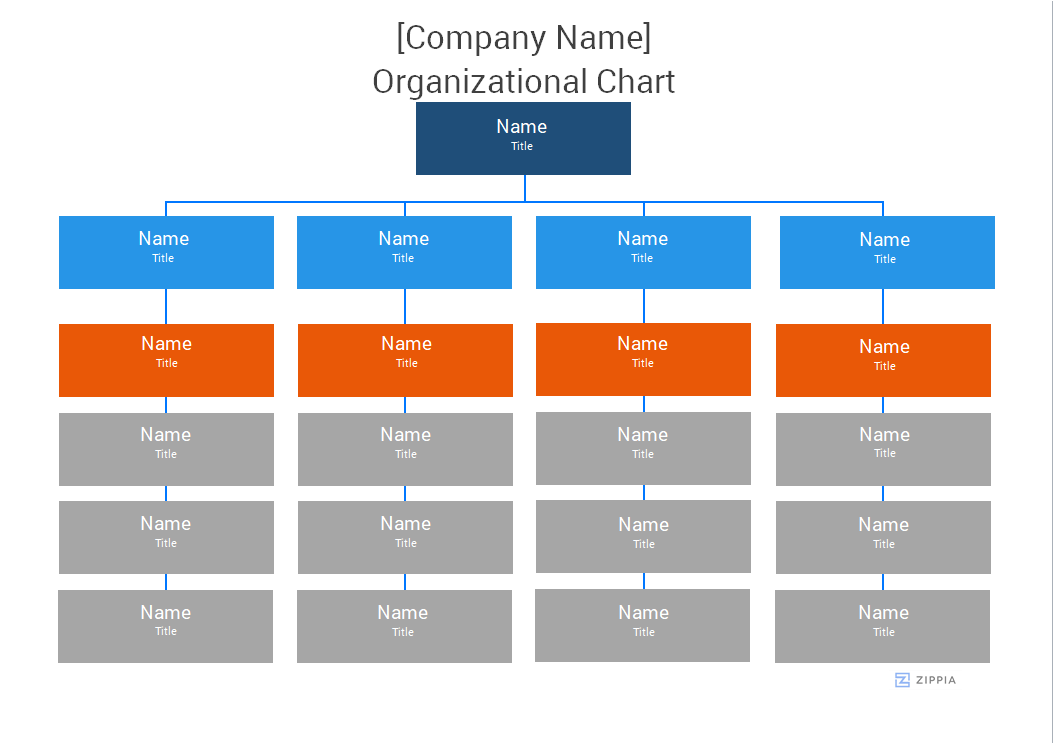
An organizational chart is a visual representation of an organization’s structure, illustrating roles and responsibilities within the company. It clarifies reporting relationships, delineates job functions, and enhances communication, making it an essential tool for effective management and strategic planning in today’s dynamic work environments.
How to Create an Organizational Chart for Your Business
-
Define the business structure.
-
Identify key positions, roles, and departments.
-
Establish lines of authority and communication.
-
Review and refine the chart for clarity and accuracy.
Types of Organizational Charts
Selecting the appropriate chart template largely depends on your organization’s structure. Here are three common types:
-
Small Business. This chart includes the owner or manager, their direct reports, and the various teams, showcasing a clear hierarchy.
-
Simple. Best suited for organizations with straightforward structures, this chart highlights only major roles and their relationships.
-
Horizontal. Ideal for flat organizations, this type of chart presents teams or departments at the same level within the organization.
Organizational Chart FAQ
-
What is the best layout for an org chart?
The optimal layout for an organizational chart varies based on the organization’s structure. Generally, a hierarchical layout that clearly indicates authority and communication lines is the most effective.
-
How do you create an organizational chart?
An organizational chart can be crafted using various software tools or through manual drawing. Key elements include defining the organizational structure, positions, relationships, and communication lines.
-
What is the best program to make an organizational chart?
Numerous software options are available for creating organizational charts. Popular choices include Microsoft PowerPoint, Microsoft Word, Google Slides, and Google Sheets. The best tool for you will depend on your familiarity with the software, the complexity of your organization, and the specific features you need.

Author

Matthew Zane is the lead editor of Zippia's How To Get A Job Guides. He is a teacher, writer, and world-traveler that wants to help people at every stage of the career life cycle. He completed his masters in American Literature from Trinity College Dublin and BA in English from the University of Connecticut.