SMART Goals Template for 2026
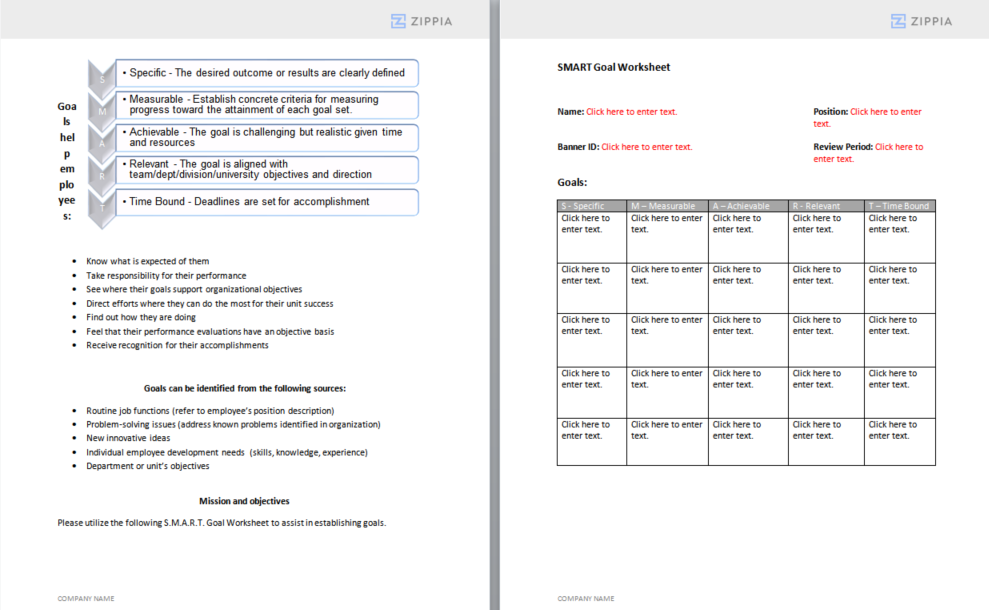
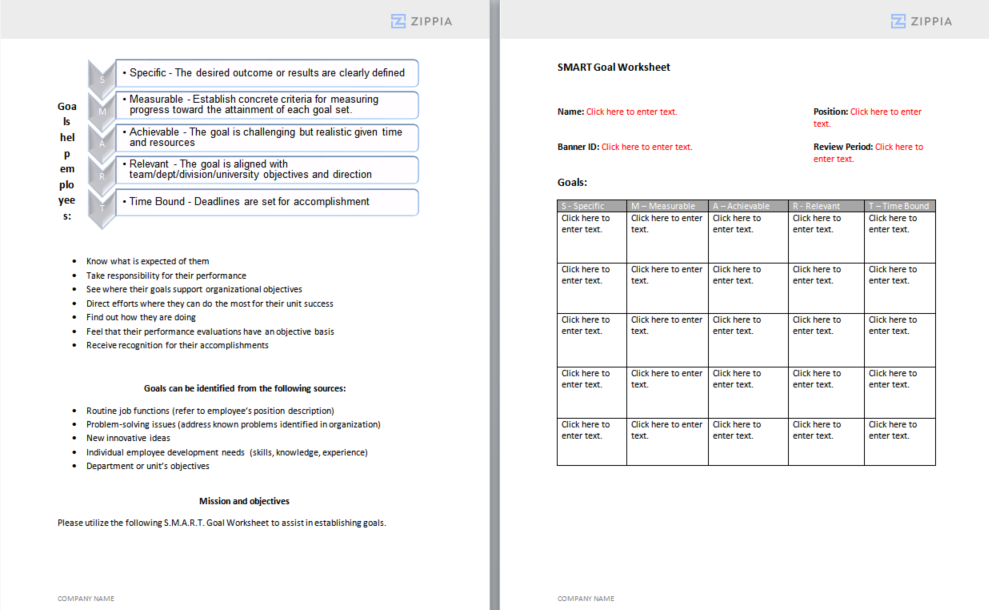
SMART goals are a strategic method for setting objectives that are Specific, Measurable, Achievable, Relevant, and Time-bound. This framework helps ensure that goals are clearly defined and pursued systematically, which is crucial in today’s dynamic workplace.
By clicking Download, you agree to Zippia’s Privacy Policy and Terms of Use.
How to Create SMART Goals
To effectively establish SMART goals, follow this structured approach:
-
Begin by ensuring your goal is specific, clearly defining what you want to achieve for better focus and direction.
-
Next, define how you will measure success. Use quantifiable metrics or observable actions to assess progress.
-
Make sure the goal is achievable by realistically evaluating your available resources and skills.
-
A goal should be relevant, aligning with your broader personal and professional objectives.
-
Finally, establish a timeline for your goal, which creates a sense of urgency and provides a clear deadline.
How to Use a SMART Goals Template
Employing a template can simplify the process of formulating SMART goals:
-
Select an appropriate SMART goals template from the numerous free options available online.
-
Review the template to ensure it aligns with your specific objectives and requirements.
-
Begin filling in the template, replacing placeholder text with your clear, specific, measurable, achievable, relevant, and time-bound goals.
-
Verify that the completed template outlines a clear path to your goal and is both understandable and feasible.
-
Lastly, proofread your template to ensure clarity and that the goal is well-articulated.
SMART Goals FAQ
-
What constitutes a SMART goal? A SMART goal is characterized by being Specific, Measurable, Achievable, Relevant, and Time-bound.
-
Why is it important to set SMART goals? Establishing SMART goals ensures clarity, realism, and measurability, significantly enhancing the probability of successful achievement.
-
Can SMART goals evolve over time? Absolutely! As circumstances change, your SMART goals can and should be adjusted accordingly.

Author

Matthew Zane is the lead editor of Zippia's How To Get A Job Guides. He is a teacher, writer, and world-traveler that wants to help people at every stage of the career life cycle. He completed his masters in American Literature from Trinity College Dublin and BA in English from the University of Connecticut.