Find a Job You Really Want In
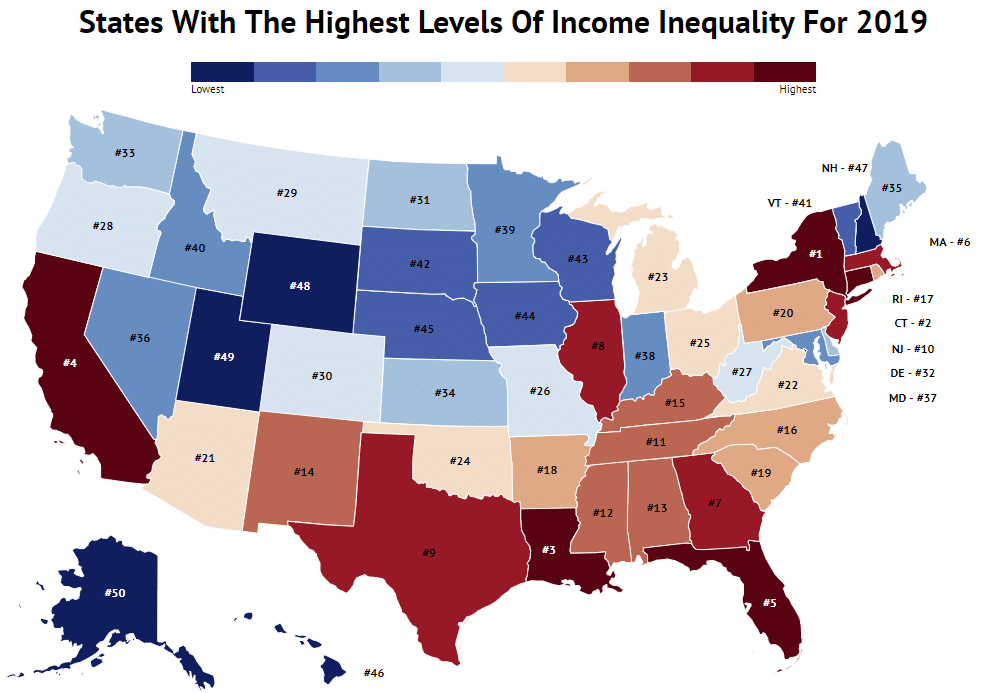
As we approach 2026, conversations surrounding the economy remain prevalent, with many pointing to signs of robust growth. However, income inequality continues to pose a significant challenge that remains unsolved.
Income inequality has been a focal point since the 2011 Occupy Wall Street movement, which brought widespread attention to the growing disparities in wealth across the United States over the past several decades.
In light of the recent economic climate, one might wonder if progress has been made in addressing income inequality.
Data from the latest American Community Survey indicates that the disparity persists. From 2010 to 2023, income inequality has continued to rise across all states, despite the efforts of numerous grassroots organizations striving for equity.
We conducted a detailed analysis of the American Community Survey data to uncover geographical trends over the past years. Here are the key findings:
Summary of Findings
- Income inequality either remained stable or increased in all 50 states from 2016 to 2023.
- Overall, income inequality has risen in all 50 states from 2010 to 2023.
- New York has consistently reported the highest levels of income inequality across both time periods.
- Alaska remains the state with the lowest income inequality.
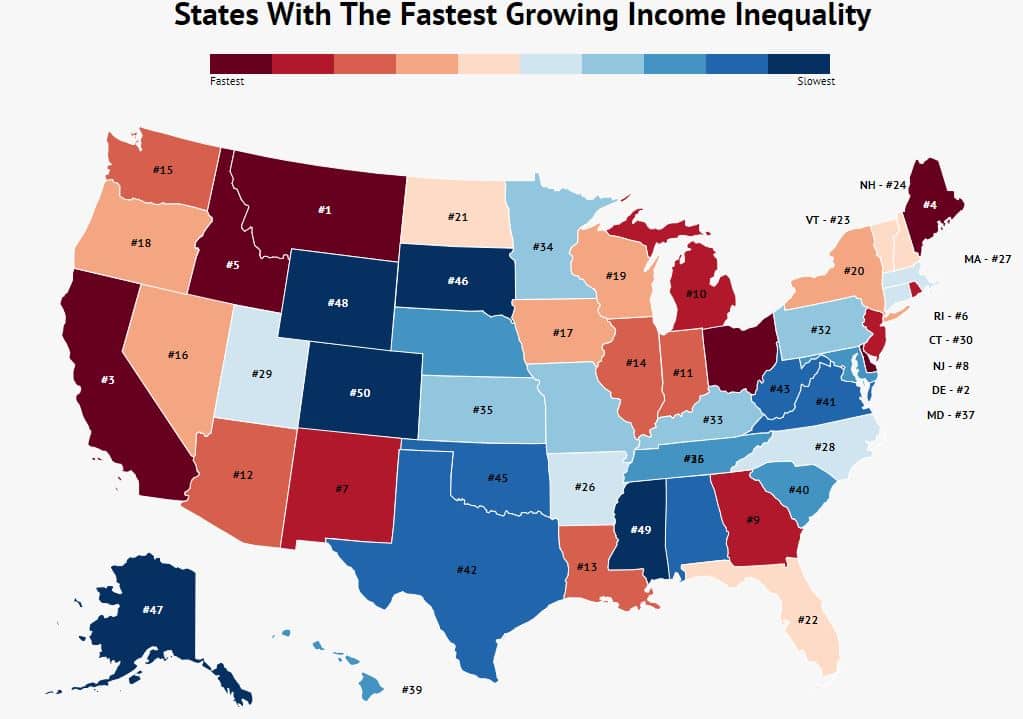
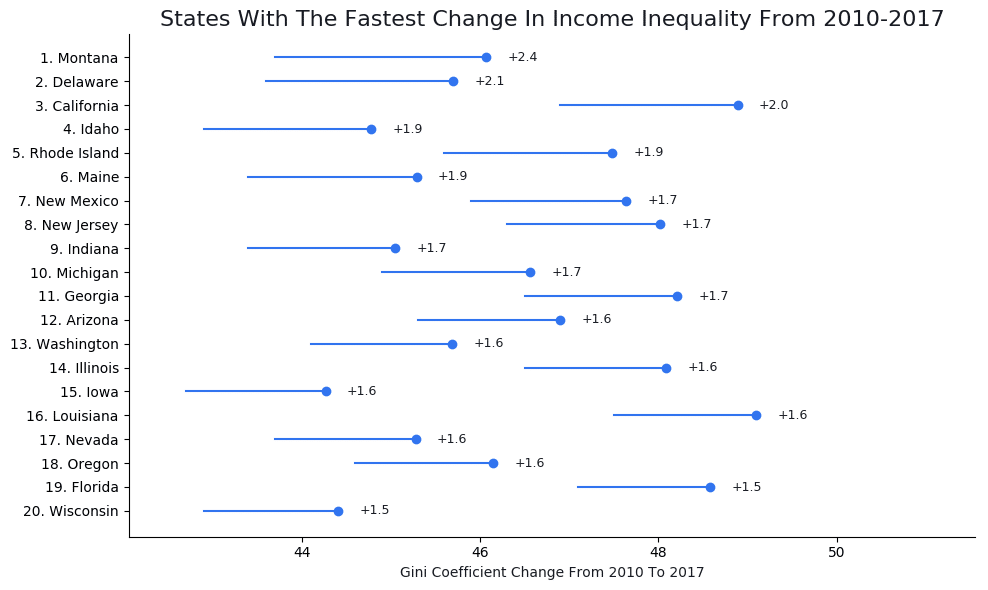
- Montana has experienced the most rapid increase in income inequality.
- Wyoming has seen the slowest growth in income inequality.
- No clear geographic patterns have emerged in the changes of income inequality; it has increased uniformly across the nation.
Methodology Overview
This report analyzes five-year datasets ending in 2010 and 2023 from the American Community Survey.
We examined the Gini coefficient for each state during both time periods. For more information on the Gini coefficient, you can read here. In brief, it is a normalized measure of inequality, scaled from 0 to 100 for clarity, where 0 indicates perfect equality.
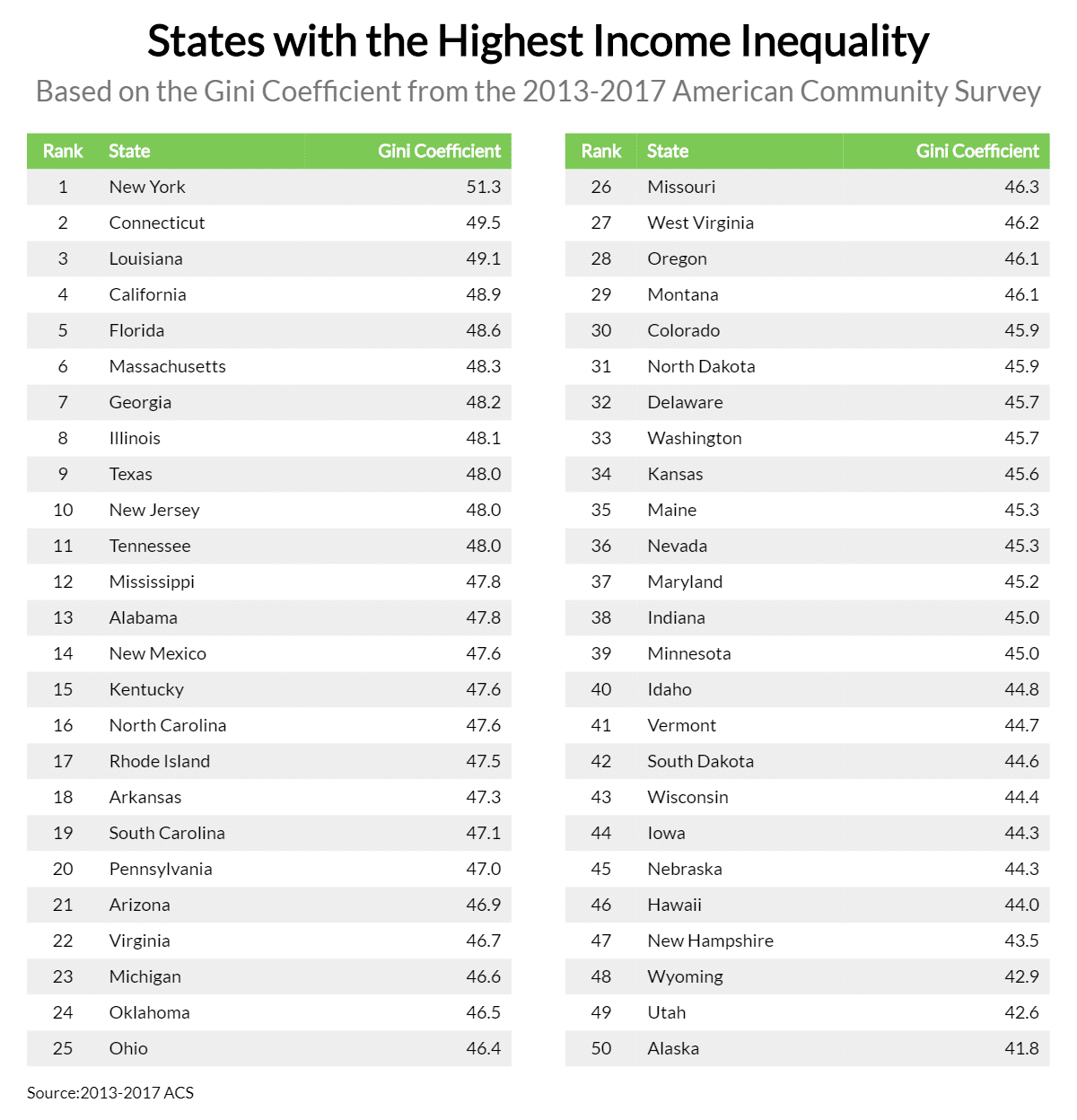
To provide a global perspective, we compared the U.S. and its states to other countries:
- South Africa (63) is the most unequal country worldwide.
- Namibia (61) and Botswana (61) follow closely behind.
- New York (51) exhibits inequality levels similar to Brazil, Colombia, Panama, and Guinea-Bissau.
- The overall U.S. (41) mirrors inequality levels found in Haiti, El Salvador, Morocco, Uganda, and Jamaica.
- Iceland (26) stands as the least unequal country globally.
Here’s another visual representation of the state data:
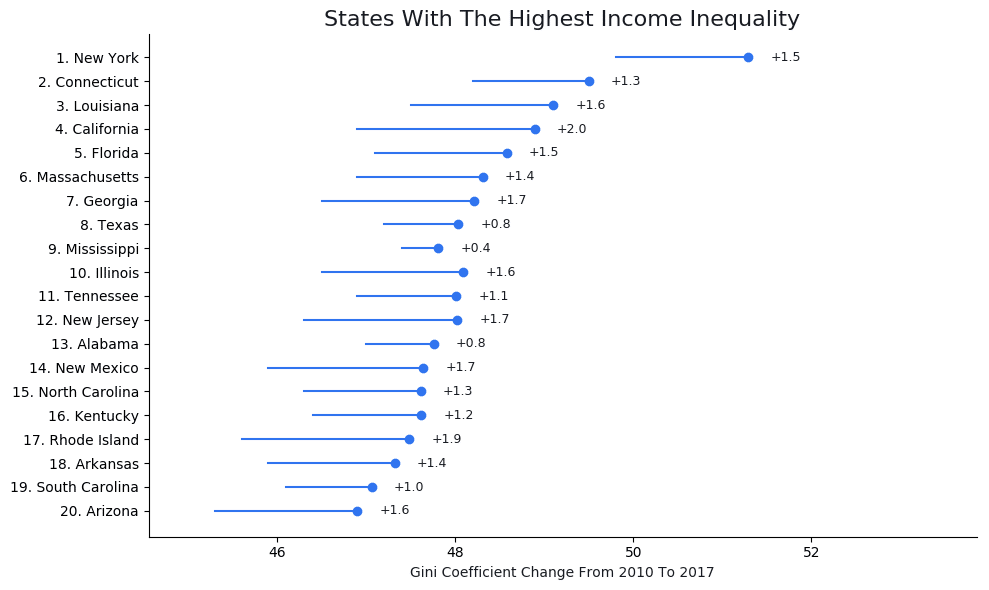
States With The Fastest Growing Income Inequality
Here’s another perspective on the data:

Author

Kavita Pillai is a former writer and researcher for the Zippia Career Advice blog. Her research and writing spanned understanding the relationship between income and age to reports on the gender pay gap and monthly BLS jobs report. Kavita graduated from the University of North Carolina at Charlotte with a BA in English and earned her PhD from the University of Missouri-Columbia in English Language and Literature.