- Industry Statistics
- Wedding Industry Statistics
- Yoga Industry Statistics
- Music Industry Statistics
- Landscaping Industry Statistics
- Bicycle Industry Statistics
- Coffee Industry Statistics
- Car Rental Industry Statistics
- Home Improvement Industry Statistics
- Insurance Industry Statistics
- Supplements Industry Statistics
- Golf Industry Statistics
- Fitness Industry Statistics
- US Media And Entertainment Industry Statistics
- Firearm Industry Statistics
- Financial Services Industry Statistics
- Health And Wellness Industry Statistics
- Trucking Industry Statistics
- Wine Industry Statistics
- Pet Industry Statistics
- Mobile App Industry Statistics
- Digital Marketing Industry Statistics
- Hotel Industry Statistics
- Retail Statistics
- Robotics Industry Statistics
- Jewelry Industry Statistics
- Appointment Scheduling statistics
- Restaurant Industry Statistics
- Food Delivery Statistics
- Food Truck Industry
- Fashion Industry
- Real Estate Industry
- US Film Industry
- US Beverage Industry
- USu202fFast Food Restaurants
- US Construction Industry
- US Book Industry
- Cosmetics Industry
- US Food Retail Industry
- US Pharmaceutical Industry
- US Healthcare Industry
- Airline Industry
- Automobile Industry
- Transportation Industry Statistics
- Event Industry Statistics
- Project Management Statistics
- Oil And Gas Industry Statistics
- Nursing Home Statistics
- Nursing Shortage Statistics
- Nursing Statistics
Research Summary. The trucking industry plays a crucial role in the U.S. economy, as nearly every essential and non-essential item relies on this sector for transportation. Here are some updated statistics about the trucking industry:
-
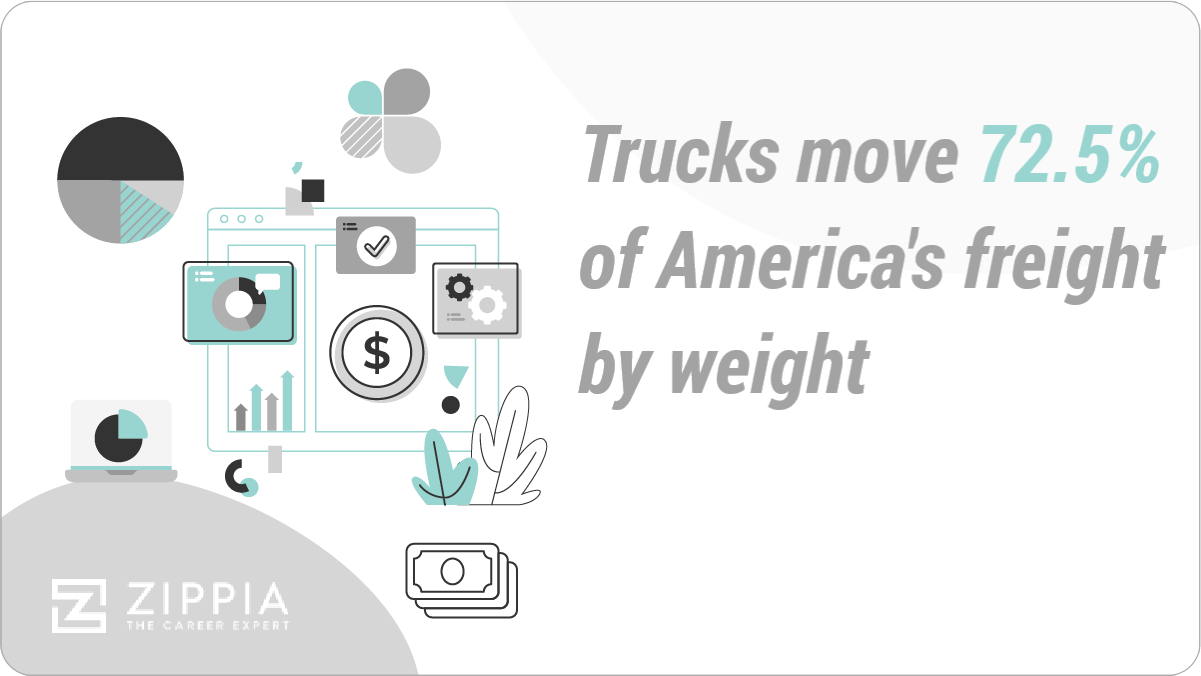
Trucks transport approximately 73% of America’s freight by weight.
-
The trucking industry generated $875.5 billion in revenue in 2021, with projections indicating continued growth.
-
As of 2023, there are about 3.5 million employed truck drivers in the U.S.
-
There are 1.9 million for-hire trucking carriers operating in the U.S.
-
U.S. trucks transported 11.84 billion tons of freight in 2021.
-
There are approximately 4.06 million semi-trucks actively operating in the U.S. as of 2023.
For further analysis, we have categorized the data in the following ways:
Demographics | Employment | Pay | Trends and Projections
General U.S. Trucking Industry Statistics
-
There are just over 2 million trucking carriers in the U.S.
This number is accurate as of early 2023, comprising 1,900,000 for-hire carriers and 718,594 private carriers.
-
91.5% of trucking carriers in the U.S. operate with six or fewer trucks.
Additionally, 97.4% operate with fewer than 20 trucks, indicating that the vast majority of U.S. trucking carriers are not owned by large companies.
-
Grocery stores would run out of stock in just three days if trucks halted operations.
Medical supplies, ATM cash, and fuel would also quickly deplete, causing widespread shortages across various sectors.
U.S. Trucking Industry Statistics by Trucker Demographics
-
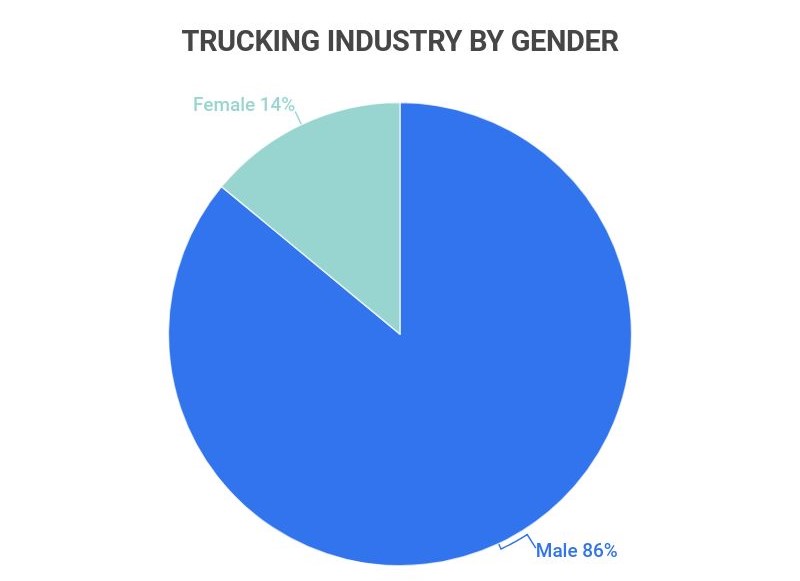
14% of truck drivers are female.
Comparatively, 17% of those interested in pursuing a career as truck drivers are women, indicating a slight reduction in gender bias for entry into this profession.
-
The majority of truck drivers are white.
The ethnic and racial demographic breakdown of the U.S. truck driving workforce is as follows:
Demographics of Truck Drivers
Race or Ethnicity Percentage White 72% Black or African American 12% Hispanic, Latino, or Spanish 8% Other 5% Native Hawaiian or Pacific Islander 1% South Asian 1% East Asian 1% 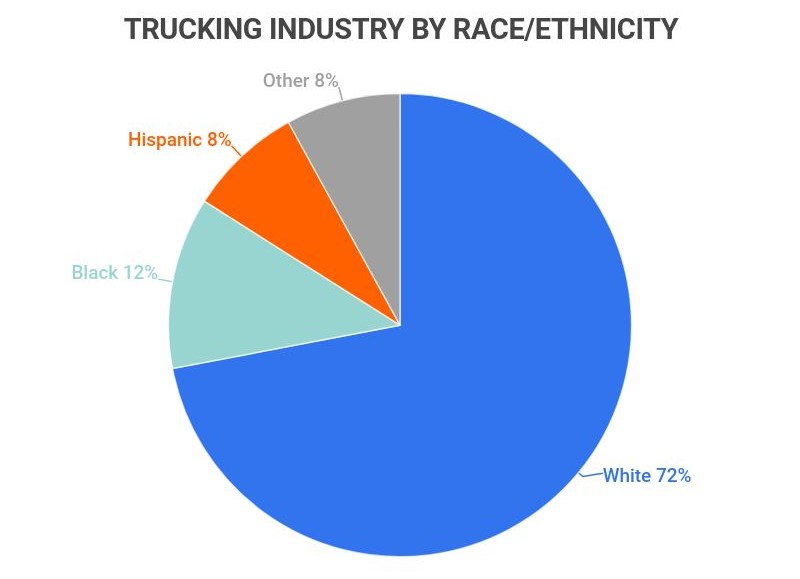
-
The majority of truckers are between 45 and 54 years old.
Here is the breakdown of U.S. truck drivers’ ages:
Truck Drivers By Age
Age Range Percentage 16-24 8% 25-34 17% 35-44 21% 45-54 26% 55-64 21% 65+ 7%
U.S. Trucking Industry Statistics by Employment
-
As of 2023, there are 2,094,700 trucking industry jobs in the U.S.
This includes drivers, mechanics, supervisors, laborers, and everyone else needed to keep the industry operational.
-
Approximately 3.5 million truck drivers are currently employed in the U.S.
This represents 61.4% of the total workforce in the trucking industry.
-
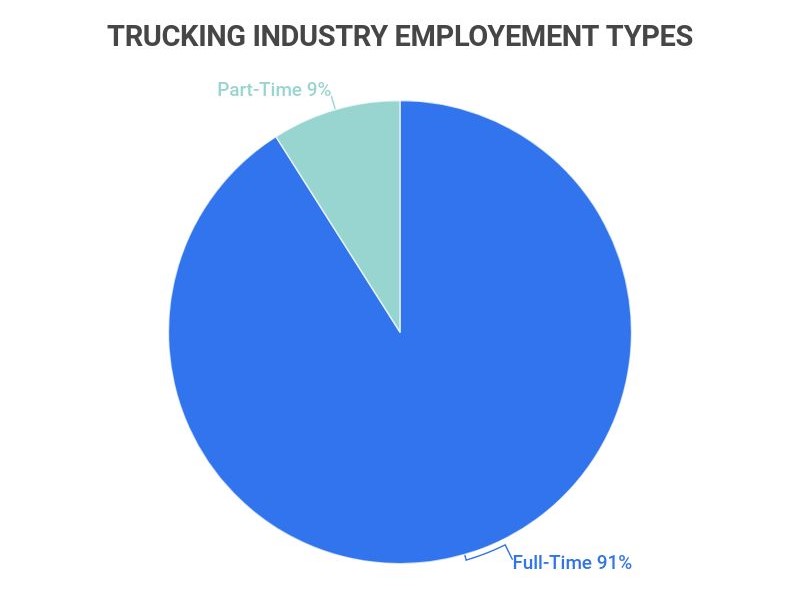
91% of truck drivers work full-time.
This indicates that nearly 10% of professional truck drivers are employed part-time.
U.S. Trucking Industry Statistics by Pay
-
34% of freight trucking expenses are allocated to driver wages.
-
Truck drivers earn a median salary of $47,130 per year.
-
The average hourly wage for truck drivers in the U.S. is $22.66.
U.S. Trucking Industry Statistics by Trends and Projections
-
U.S. trucks transported 11.84 billion tons of freight in 2021, the highest amount recorded in six years.
This number reflects a significant rebound from the decline experienced during the pandemic.
-
The job growth rate for heavy and tractor-trailer truck drivers from 2021 to 2031 is anticipated to be 4%.
This aligns with the growth rate of other U.S. occupations, with an estimated 259,900 truck driver job openings expected each year.
-
The U.S. trucking industry achieved $875.5 billion in revenue in 2021, marking a recovery from a dip in 2020.
This growth signifies a rebound from previous years, including a revenue of $732.3 billion in 2020.
Trucking Industry Statistics FAQ
-
How big is the U.S. trucking industry?
The U.S. trucking industry generated $875.5 billion in revenue in 2021. As of 2023, the industry continues to show signs of recovery and growth post-pandemic.
The trucking sector employs 1.9 million workers, including drivers, mechanics, supervisors, and other essential roles.
-
Is the trucking industry growing?
Yes, the trucking industry is experiencing growth. The projected job growth rate for truck drivers is around 4% from 2021 to 2031, reflecting a recovery trajectory.
-
How competitive is the trucking industry?
The trucking industry is highly competitive. With low entry barriers, numerous trucking companies operate, leading to significant competition for both customers and drivers.
-
Why do most trucking companies fail?
Most trucking companies fail due to operational costs exceeding income. High operational expenses coupled with challenges in acquiring profitable freight contribute to business failures.
-
Why is the trucking industry so fragmented?
The trucking industry remains fragmented due to low entry costs. Many small companies operate, and drivers often switch between employers, fostering competition.
-
What is the future of the trucking industry?
The future of the trucking industry looks steady with continued growth. The projected job growth rate remains at 4% from 2021 to 2031, although factors such as turnover and infrastructure improvements will impact overall progress.
Conclusion
The trucking industry is foundational to nearly every service and business in the U.S. Approximately 73% of the country’s freight (by weight) is transported via trucks. If trucking operations ceased, grocery stores would run out of stock within just three days.
In 2021, U.S. trucks moved over 11.84 billion tons of freight, rebounding from lower volumes during the pandemic. The 4.06 million trucks and 1.9 million carriers active today highlight the industry’s critical role in logistics and supply chain management.
References
-
American Trucking Associations. “Economics and Industry Data.” Accessed on March 29, 2022.
-
Statista. “Total Revenue of the Trucking Industry in the United States From 2014 to 2020.” Accessed on March 29, 2022.
-
U.S. Bureau of Labor Statistics. “Employment Projections: National Employment Matrix.” Accessed on March 29, 2022.
-
Insider. “Grocery Stores Would Run Out of Food in Just 3 Days if Long-Haul Truckers Stopped Working.” Accessed on March 29, 2022.
-
CareerExplorer. “Truck Driver Demographics in the United States.” Accessed on March 30, 2022.
-
United States Census Bureau. “Characteristics of Driver/Sales Workers and Truck Drivers.” Accessed on March 30, 2022.
-
Statista. “Distribution of Costs in Freight Trucking in the United States From 2008 to 2020, by Type.” Accessed on March 30, 2022.
-
U.S. Bureau of Labor Statistics. “Occupational Outlook Handbook: Heavy and Tractor-Trailer Truck Drivers.” Accessed on March 30, 2022.
-
Statista. “Volume of Freight Moved by Trucks in the United States From 2014 to 2020.” Accessed on March 30, 2022.
-
The White House. “Fact Sheet: The Biden-Harris Administration Trucking Action Plan to Strengthen America’s Trucking Workforce.” Accessed on March 30, 2022.
- Industry Statistics
- Wedding Industry Statistics
- Yoga Industry Statistics
- Music Industry Statistics
- Landscaping Industry Statistics
- Bicycle Industry Statistics
- Coffee Industry Statistics
- Car Rental Industry Statistics
- Home Improvement Industry Statistics
- Insurance Industry Statistics
- Supplements Industry Statistics
- Golf Industry Statistics
- Fitness Industry Statistics
- US Media And Entertainment Industry Statistics
- Firearm Industry Statistics
- Financial Services Industry Statistics
- Health And Wellness Industry Statistics
- Trucking Industry Statistics
- Wine Industry Statistics
- Pet Industry Statistics
- Mobile App Industry Statistics
- Digital Marketing Industry Statistics
- Hotel Industry Statistics
- Retail Statistics
- Robotics Industry Statistics
- Jewelry Industry Statistics
- Appointment Scheduling statistics
- Restaurant Industry Statistics
- Food Delivery Statistics
- Food Truck Industry
- Fashion Industry
- Real Estate Industry
- US Film Industry
- US Beverage Industry
- USu202fFast Food Restaurants
- US Construction Industry
- US Book Industry
- Cosmetics Industry
- US Food Retail Industry
- US Pharmaceutical Industry
- US Healthcare Industry
- Airline Industry
- Automobile Industry
- Transportation Industry Statistics
- Event Industry Statistics
- Project Management Statistics
- Oil And Gas Industry Statistics
- Nursing Home Statistics
- Nursing Shortage Statistics
- Nursing Statistics

Author

Abby is a writer who is passionate about the power of story. Whether it’s communicating complicated topics in a clear way or helping readers connect with another person or place from the comfort of their couch. Abby attended Oral Roberts University in Tulsa, Oklahoma, where she earned a degree in writing with concentrations in journalism and business.