Find a Job You Really Want In
Zippia Poll: Political Affiliation and Workplace Safety Attitudes in 2026
As we navigate 2026, the dynamics of workplace safety and employee sentiment have evolved significantly. Recent surveys reveal how political affiliation impacts perceptions of safety and willingness to adhere to health protocols in the workplace.
- Only 1-in-3 workers feel fully safe returning to work.
- 37% of workers report feeling “somewhat” safe, while 33% express feelings of insecurity.
- 21% of Democrats and 46% of Republicans feel completely safe returning to traditional work environments, highlighting a pronounced political divide.
- The majority of workers show willingness to comply with health measures, including wearing masks and undergoing temperature checks.
- Republicans are 20% less likely to agree to mask-wearing in the workplace.
Despite businesses reopening, the landscape of work is far from “business as usual.” Many workplaces have adopted new safety protocols, including physical barriers and reconfigured office layouts. These changes reflect a broader shift in how organizations prioritize health and safety.
To understand the current attitudes of American workers regarding their return to work and the associated health measures, we surveyed 1,000 individuals. This survey aimed to uncover how comfortable employees feel about returning to the workplace and which safety protocols they are willing to accept. The findings reveal a mixed response, with a significant portion of the workforce expressing uncertainty about returning to pre-pandemic norms.
Here are additional highlights from Zippia’s survey:
Additional Insights
- 74% of workers have reported coming into work while sick.
- Of those who admit to working while unwell, 49% cite financial reasons as their motivation.
- There is no significant difference in the likelihood of going to work sick between Democrats and Republicans.
- 17% of respondents express that temperature checks and COVID-19 antibody tests infringe on their privacy.
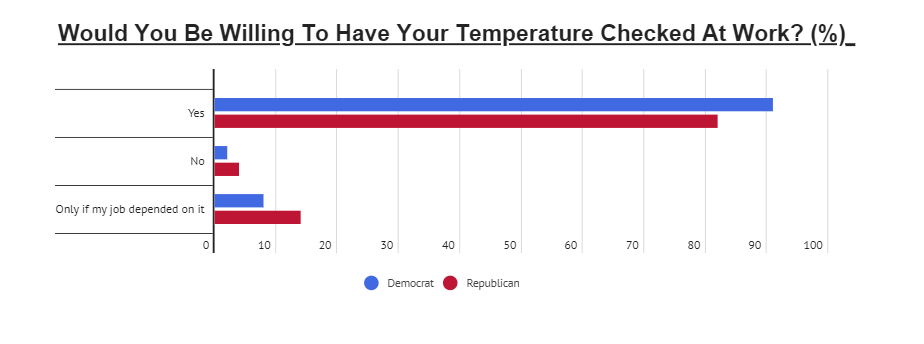
- Workers generally prefer temperature checks over masks—showing a 9% greater likelihood of agreeing to temperature checks.
Survey Methodology
Our survey involved 1,000 American workers who answered a consistent set of questions regarding their feelings about returning to work and the changes in workplace protocols. Below, you’ll find visual representations of our key findings.
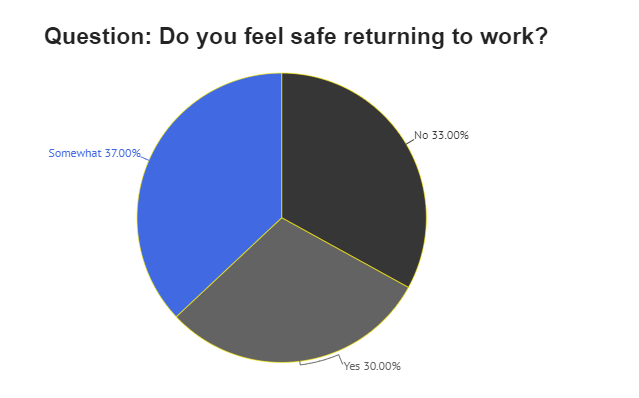
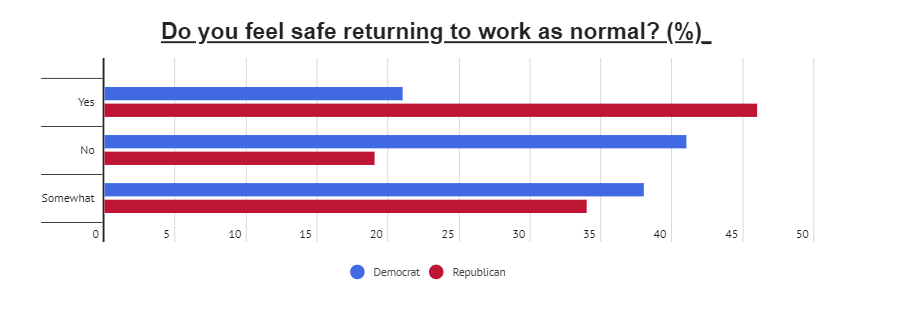
Only 30% of workers express confidence in returning to work. 33% outright state they feel unsafe, while the largest group—37%—feels “somewhat” safe but remains uncertain.
When analyzed by political affiliation, the divide is stark: Republicans are 20% more likely to feel secure about their return to work.
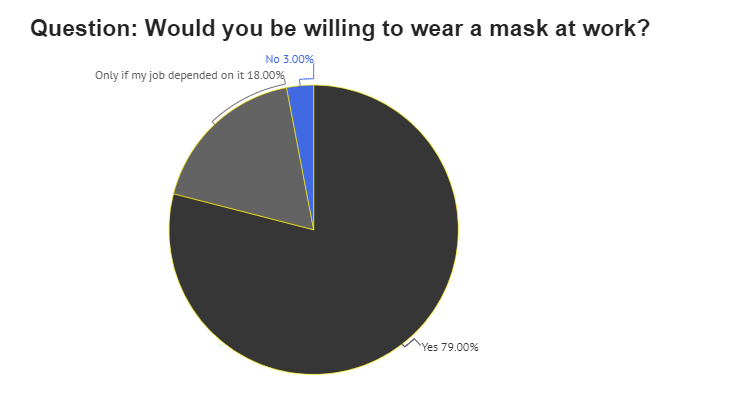
The willingness to wear masks in the workplace remains high, with 79% of workers indicating compliance—this figure jumps to 97% when considering workplace mandates.
Republicans are 20% less likely to agree to mask-wearing voluntarily. However, many workers who are hesitant about masks are still willing to comply to secure their employment.
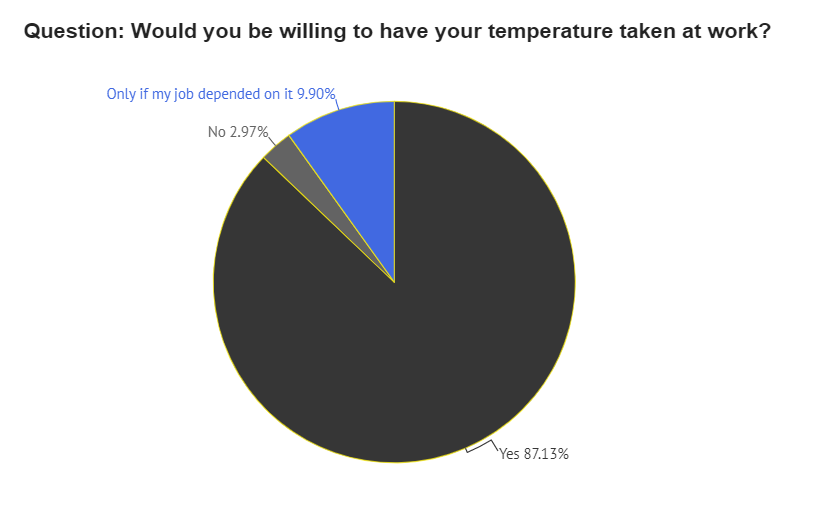
Interestingly, American workers are generally more accepting of temperature checks than mask mandates. This trend suggests that the discomfort associated with prolonged mask-wearing contributes significantly to resistance against such protocols.
Final Thoughts on the Evolution of Workplace Safety
As we adapt to life in 2026, it’s not surprising that many workers remain uncertain about resuming their usual routines. With only 30% of respondents feeling fully confident about returning to their workplaces, and an additional 37% feeling “somewhat” safe, the implementation of safety measures like masks and temperature checks may be crucial in easing anxieties.
Notably, 79% of workers express a willingness to wear masks, while an even larger 88% are amenable to undergoing temperature checks. Reflecting on how quickly these attitudes have shifted, we can see the profound changes in workplace culture.
As we move forward, it’s possible that those hesitant about returning to traditional workspaces may opt for the growing trend of remote work, which has now become a staple of the modern job market.

Author

Kathy is the head of content at Zippia with a knack for engaging audiences. Prior to joining Zippia, Kathy worked at Gateway Blend growing audiences across diverse brands. She graduated from Troy University with a degree in Social Science Education.