Explore jobs
Find specific jobs
Explore careers
Explore professions
Best companies
Explore companies
Job outlook for america reads tutors in the United States
America reads tutor job and salary trends over time
America reads tutor jobs over time
America reads tutor job growth rate over time
| Year | # of jobs | % of population |
|---|---|---|
| 2021 | 4,299 | 0.00% |
| 2020 | 29,830 | 0.01% |
| 2019 | 66,640 | 0.02% |
| 2018 | 23,571 | 0.01% |
| 2017 | 23,644 | 0.01% |
Average america reads tutor salary over time
America reads tutor salary by year
| Year | Avg. salary | Hourly rate | % Change |
|---|---|---|---|
| 2026 | $24,653 | $11.85 | +2.5% |
| 2025 | $24,051 | $11.56 | +0.3% |
| 2024 | $23,986 | $11.53 | +1.8% |
| 2023 | $23,557 | $11.33 | +1.7% |
| 2022 | $23,158 | $11.13 | +3.7% |
America reads tutor jobs by state
Most common states for america reads tutors
| Rank | State | Population | # of jobs | Employment/ 1000ppl |
|---|---|---|---|---|
| 1 | Minnesota | 5,576,606 | 1,050 | 19% |
| 2 | Vermont | 623,657 | 104 | 17% |
| 3 | Wyoming | 579,315 | 88 | 15% |
| 4 | Rhode Island | 1,059,639 | 148 | 14% |
| 5 | Delaware | 961,939 | 134 | 14% |
| 6 | South Dakota | 869,666 | 126 | 14% |
| 7 | New Hampshire | 1,342,795 | 169 | 13% |
| 8 | Montana | 1,050,493 | 138 | 13% |
| 9 | North Dakota | 755,393 | 100 | 13% |
| 10 | Connecticut | 3,588,184 | 345 | 10% |
| 11 | Nebraska | 1,920,076 | 189 | 10% |
| 12 | Idaho | 1,716,943 | 179 | 10% |
| 13 | Alaska | 739,795 | 76 | 10% |
| 14 | Maryland | 6,052,177 | 530 | 9% |
| 15 | New Mexico | 2,088,070 | 185 | 9% |
| 16 | Maine | 1,335,907 | 107 | 8% |
| 17 | Kansas | 2,913,123 | 217 | 7% |
| 18 | Nevada | 2,998,039 | 213 | 7% |
| 19 | Mississippi | 2,984,100 | 194 | 7% |
| 20 | West Virginia | 1,815,857 | 131 | 7% |
America Reads Tutor job outlook: Expert opinions
Our panel of america reads tutor experts
Southern Oregon University

Seattle Pacific University

Minnesota State University, Mankato

Oakland University
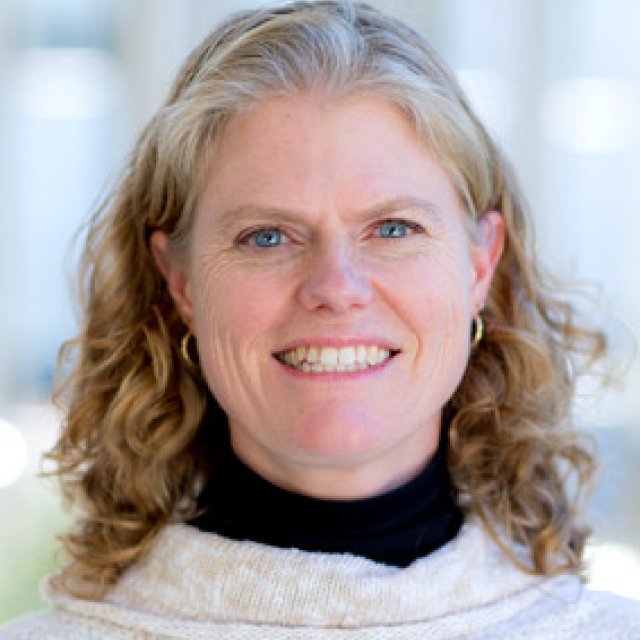
Point Loma Nazarene University

Indiana University Kokomo
Amy Belcastro Ph.D.
Professor of EducationSouthern Oregon University
Educational Administration And Supervision
What general advice would you give to an America Reads Tutor?
Amy Belcastro Ph.D.: First is to take the time to know what are your strengths and areas for improvement. You are intentionally crafting your professional reputation. Next, consider where you want to be in five years and what steps are needed to get there. It is the balancing act of long-term goals and short-time needs. Being intentional is key. Every step matters so step with intention. That said, there are many roads to Rome so explore, take risks, but be aware that you are crafting your professional reputation and self.
What America Reads Tutor skills would you recommend for someone trying to advance their career?
Amy Belcastro Ph.D.: First, focus on updating your current resume to clearly communicate and provide evidence of your transferable skills and cognitive competencies such as strong communication and technology skills; the ability to work well with others who may be different in backgrounds, beliefs, etc.; leadership skills, and problem solving and complex thinking. After you have done this, assess where you are lacking and create a plan to strengthen your resume by seeking experiences. A very popular method of doing this is by completing a digital badge or micro-credential at an institute of higher education. It is a way of acknowledging competencies and skills in much less time than a college degree would take. Some may only be a few credits. This is becoming very popular for the workforce and therefore more institutions of higher education are offering these, some in partnership with companies.
Christopher Hanson
Assistant Professor of Music, Director of Music Education and Orchestral ActivitiesSeattle Pacific University
Music Department
What are the biggest trends we'll see in the America Reads Tutor job market given the pandemic?
Christopher Hanson: I think we will see an amplified debate on school choice and school funding, which will directly affect the hiring and sustainability of school administrators, leaders, and teachers. The pandemic has exposed already obvious inequities to school access and the quality of education in different arenas, e.g., homeschool, charter school, private school, public school, etc. Students and schools in more affluent communities have the infrastructure (or the means to establish the infrastructure) to support online learning and have arguably not experienced any real setbacks in the progress of their learning (specifically in terms of content, whereas I believe everyone has been affected in terms of social and emotional learning).
Many private schools have offered in-person or hybrid instruction before the states have recommended since they are not dependent on tax dollars and not required to adhere to the same guidelines as the public and some charter schools that depend on government funding. With all of this, I believe we will see a somewhat superficial, and what I believe is misguided, shift to technology. This is reactionary rather than responsive. Many districts have already begun to hire staff, faculty, and administration that are more comfortable or experienced with Title IV funding and programming and the use of technology in teaching and learning (in school and at home).
"One-to-one" initiatives have been pushed to the top of budgetary requirements and instructional expectations and overshadowed other needs. This is not to say that technology isn't important, particularly in the extraordinary time we are living through. However, if we do not build and redesign all of our systems, conflating only one aspect of education will create a severe imbalance and perpetuate problems of equity, access, retention, and sustainability.
What general advice would you give to an America Reads Tutor?
Christopher Hanson: Keep asking questions and look for opportunities to engage in teaching and learning wherever you can. Connect with peers and future colleagues. Do not just wait. Now is the time to create and sustain dialog on educational change. Although there are endless numbers of variables to how, when, what, and with whom we learn, our genuine curiosity and sincere desire to engage others in the educative process is our greatest hope to see education in a better place than it was before the pandemic.
We must heed the call of innovation and encourage a transition from our current state of triage and survival. You, as a recent graduate, are the future of what education will be. Ask yourself, what will the world look like that you will help create? Is this a world that you and others can learn in? What more can you do to secure the possibilities and promise of education for all? These are the questions that will fuel change and secure growth through the inevitable vicissitudes of education.
Aaron Hoy Ph.D.
Assistant Professor of SociologyMinnesota State University, Mankato
Sociology Department
What type of skills will young America Reads Tutors need?
Aaron Hoy Ph.D.: It is good news for our society and for sociology majors that employers have already put an increased emphasis on hiring and retaining employees who have a solid understanding of issues of diversity and inclusion. This emphasis will likely continue for the foreseeable future, which is a good opportunity for sociology majors who are comfortable working in diverse environments and really understand and appreciate human diversity in terms of race, ethnicity, socioeconomic status, sex, gender identity or expression, and sexuality, among others. In fact, right now, diversity-related skills are those that recent sociology graduates say they are most likely to use and benefit from in the workplace, according to a 2015 report from the American Sociological Association.
I would also encourage sociology majors to prioritize rigorous methodological training to the extent that they can within their specific program. There are already many, many jobs available for college graduates with research skills, including in the private sector, and these are likely to grow in the coming years. However, sociology majors sometimes overlook these jobs or opt not to apply for them. As an advisor myself, I suspect that this is often because students do not feel confident in their research skills or because they assume that, say, a psychology or an economics major would be a better fit. But these are good-paying jobs with above-average levels of employee satisfaction, and sociology majors should not take themselves out of the running for them.
Although it may be scary or uncomfortable for some students, taking an extra research design or statistics class might be a good idea. And of course, writing up research results and presenting them in clear, logical ways is a key part of the research process, so as always, students should make a very concerted effort to improve their written and verbal communication skills as best they can. That may mean taking an extra composition or public speaking class if necessary.
What experience really stands out on America Reads Tutor resumes?
Aaron Hoy Ph.D.: Increasingly, I hear employers say that they look to see if recent college graduates, sociology majors included, have relevant "real-world" experience, especially internships. For this reason, many sociology programs (including my own) have recently moved to make internships a required component of the major. Sociology majors who are not required to complete an internship may consider doing one anyway. But given the specific industries that sociology majors typically work in, volunteering should not be discounted altogether.
For instance, the American Sociological Association's data has consistently shown that "Social Services/Counselor" is the job category sociology majors are most likely to work in immediately following graduation. And the specific places they work often include various non-profit organizations like shelters for victims of domestic violence or homeless youth, all of which rely on volunteers. Sociology majors who do volunteer work in college not only benefit their communities; they also show at least some potential employers that they understand why they do the work they do and what it looks like on the ground.
Dr. Cynthia Carver
Associate Professor & ChairOakland University
Department of Organizational Leadership
What America Reads Tutor skills would you recommend for someone trying to advance their career?
Dr. Cynthia Carver: Hone your teaching skills! Schools will continue to need substitute teachers and para-professionals. Child care facilitates and after-school programs will still need teachers. And it's likely that many families will be seeking tutors as their children catch up. To gain experience and build your resume, seek opportunities that mirror the work you do as a classroom teacher.
What experience really stands out on America Reads Tutor resumes?
Dr. Jennifer Lineback Ph.D.: Practical experience working with real learners/students! Whether that experience be through formal academic programs (i.e., through volunteering in a classroom or being hired as an academic tutor or aid), or informal programming (i.e., working with children during after school care, Sunday School, or summer camps), the more experience graduates have with children, the better!
Niki Weller Ph.D.
Associate Professor of Sociology, ChairIndiana University Kokomo
Department of Sociology
What type of skills will young America Reads Tutors need?
Niki Weller Ph.D.: Students need to demonstrate that they are versatile communicators, with strong written and oral communication skills. Students should take full advantage of any public speaking opportunities, such as conference presentations, to demonstrate evidence of this skill. Employers want to hire people who are personable, involved, and have potential leadership qualities. Students should be engaged in campus extracurricular activities, including student clubs, experiential learning events, or community engagements. Research skills, like data collection and analysis, are extremely important and can be applied in a variety of professions. Students should hone these skills through social science research.
What experience really stands out on America Reads Tutor resumes?
Niki Weller Ph.D.: Something critical to a successful resume is highlighting how your sociology degree has given you the skills, knowledge, and experience that employers want. For example, students with experience in social research should offer evidence of their experience with data collection (e.g., surveys, interviews, participant observation), data analysis (e.g., descriptive statistics, correlation, regression), and report writing based on original research and/or secondary data collection. Depending on the job you're seeking, students should highlight the various types of quantitative or qualitative research methods that they have been trained in. Sociologists study social change, diverse communities, and their interactions using scientific methods to find empirical answers to complex social questions. Students should highlight having a deeper understanding of diversity dimensions including race, class, and gender by possibly mentioning specific topics of papers written or projects completed, relative to the types of jobs they are pursuing.