Explore jobs
Find specific jobs
Explore careers
Explore professions
Best companies
Explore companies
Job outlook for chaplains assistants in the United States
Are chaplains assistant jobs in demand?
Chaplains assistant job and salary trends over time
Chaplains assistant jobs over time
Chaplains assistant job growth rate over time
| Year | # of jobs | % of population |
|---|---|---|
| 2021 | 1,332 | 0.00% |
| 2020 | 1,370 | 0.00% |
| 2019 | 1,394 | 0.00% |
| 2018 | 1,336 | 0.00% |
| 2017 | 1,307 | 0.00% |
Average chaplains assistant salary over time
Chaplains assistant salary by year
| Year | Avg. salary | Hourly rate | % Change |
|---|---|---|---|
| 2026 | $42,258 | $20.32 | +3.1% |
| 2025 | $41,005 | $19.71 | +2.9% |
| 2024 | $39,858 | $19.16 | +4.0% |
| 2023 | $38,320 | $18.42 | +3.0% |
| 2022 | $37,214 | $17.89 | +3.4% |
Chaplains assistant jobs by state
Most common states for chaplains assistants
| Rank | State | Population | # of jobs | Employment/ 1000ppl |
|---|---|---|---|---|
| 1 | North Dakota | 755,393 | 27 | 4% |
| 2 | Wyoming | 579,315 | 23 | 4% |
| 3 | Vermont | 623,657 | 23 | 4% |
| 4 | Delaware | 961,939 | 26 | 3% |
| 5 | Alaska | 739,795 | 22 | 3% |
| 6 | Nebraska | 1,920,076 | 29 | 2% |
| 7 | New Hampshire | 1,342,795 | 27 | 2% |
| 8 | Maine | 1,335,907 | 24 | 2% |
| 9 | Montana | 1,050,493 | 22 | 2% |
| 10 | Rhode Island | 1,059,639 | 21 | 2% |
| 11 | South Dakota | 869,666 | 21 | 2% |
| 12 | Wisconsin | 5,795,483 | 47 | 1% |
| 13 | Washington | 7,405,743 | 43 | 1% |
| 14 | Arizona | 7,016,270 | 42 | 1% |
| 15 | Oregon | 4,142,776 | 39 | 1% |
| 16 | Tennessee | 6,715,984 | 36 | 1% |
| 17 | Minnesota | 5,576,606 | 35 | 1% |
| 18 | West Virginia | 1,815,857 | 26 | 1% |
| 19 | Nevada | 2,998,039 | 24 | 1% |
| 20 | Idaho | 1,716,943 | 20 | 1% |
Most common cities for chaplains assistants
| Rank | City | # of jobs | Employment/ 1000ppl | Avg. salary |
|---|---|---|---|---|
| 1 | Laurel | 1 | 4% | $37,933 |
| 2 | Lewiston | 1 | 3% | $42,161 |
| 3 | Decatur | 1 | 2% | $33,460 |
| 4 | Grand Forks | 1 | 2% | $43,922 |
| 5 | North Little Rock | 1 | 2% | $31,515 |
| 6 | Pocatello | 1 | 2% | $42,113 |
| 7 | Syracuse | 1 | 1% | $37,521 |
| 8 | West Jordan | 1 | 1% | $38,378 |
| 9 | Long Beach | 1 | 0% | $50,427 |
| 10 | Rochester | 1 | 0% | $37,939 |
| 11 | Saint Paul | 1 | 0% | $43,351 |
| 12 | San Antonio | 1 | 0% | $39,352 |
Chaplains Assistant job outlook: Expert opinions
Our panel of chaplains assistant experts
Vanguard University of Southern California
Crowley's Ridge College

Pacific Christian College of Ministry and Biblical Studies
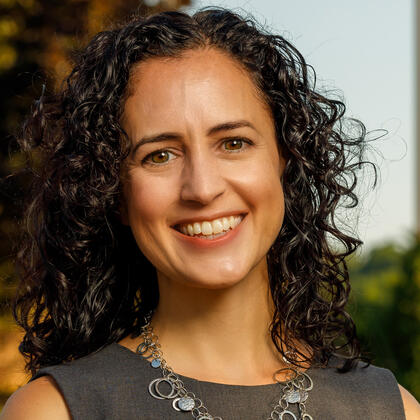
Anabaptist Mennonite Biblical Seminary
What general advice would you give to a Chaplains Assistant?
Rodolfo Estrada III: Students of theology have the opportunity to pursue careers beyond traditional parish or church ministry. They can find roles as chaplains, work within non-profit organizations, engage in community service, or enter any profession that involves interacting with individuals from various backgrounds and belief systems. I strongly advise acquiring a micro-credential, honing skills in writing and public speaking, or actively collaborating with community leaders to enhance their qualifications and impact.
What Chaplains Assistant skills would you recommend for someone trying to advance their career?
Rodolfo Estrada III: Remain receptive and open-minded, always ready to glean wisdom from those around you. It's essential to remember that a theology degree offers a starting point for engaging in a broader discourse spanning centuries of deliberation, dispute, and exchange. While we may not possess all the answers to people's inquiries, we've been equipped with the tools to find life's profoundest questions. Never lose one's love for people, and always have hope for a better future.
What general advice would you give to a Chaplains Assistant?
Josh Parnell: Public speaking skills have always been important in the religious field, and there is no sign that will change in the next 3-5 years. Conflict management is a skill that I believe will become more important and prevalent in the next 3-5 years as religious organizations, much like the society around them, become increasingly polarized.
What Chaplains Assistant skills would you recommend for someone trying to advance their career?
Josh Parnell: Networking is everything. Job opportunities in the religious field are primarily the result of good references from trusted individuals, not from objective qualifications. Network with as many respected individuals in the field as possible, beginning with your professors and college administrators. If possible, begin your career through an internship with a respected figure in the field, their endorsement will prove invaluable when you set out on your own.
What will help Chaplains Assistants increase their earning potential?
Josh Parnell: There are two common career paths for graduates in religious studies: Ministry (clergy) and academia. Although there are notable exceptions, neither of those career paths typically pay very well; they are 'calling' professions that you do because you are passionate about the job, not because you are looking for financial advancement. So, I strongly advise graduates to develop a second career that they can use to reliably supplement their income.
Dr. Robbie Phillips
Professor of Biblical Studies, Chair, Undergraduate Ministry ProgramPacific Christian College of Ministry and Biblical Studies
What hard/technical skills are most important for Chaplains Assistants?
Dr. Robbie Phillips: Administrative leadership. Administration might connect you to technology and also project management.
What skills will help Chaplains Assistants earn the most?
Dr. Robbie Phillips: Communication skills and leadership. (especially within the context of proven organizational leadership success).
What soft skills should all Chaplains Assistants possess?
Dr. Robbie Phillips: This would be dominated by relational skills, interpersonal communication skills, general people skills, and conflict resolution.
Leah Thomas Ph.D.
Assistant Professor of Pastoral Care and Contextual EducationAnabaptist Mennonite Biblical Seminary
Church and Ministry
What soft skills should all Chaplains Assistants possess?
Leah Thomas Ph.D.: In my students, I encourage the development of soft skills such as deep listening, empathy, authenticity, flexibility, integrity, trustworthiness, and a collaborative leadership style. These skills exist alongside commitments to ongoing spiritual formation, self and theological reflection and reflexivity, ongoing education and supervision, and care of the self's physical, emotional, intellectual, and spiritual parts.