Explore jobs
Find specific jobs
Explore careers
Explore professions
Best companies
Explore companies
Job outlook for chemistry research assistants in the United States
Are chemistry research assistant jobs in demand?
Chemistry research assistant job and salary trends over time
Chemistry research assistant jobs over time
Chemistry research assistant job growth rate over time
| Year | # of jobs | % of population |
|---|---|---|
| 2021 | 78 | 0.00% |
| 2020 | 96 | 0.00% |
| 2019 | 96 | 0.00% |
| 2018 | 94 | 0.00% |
| 2017 | 85 | 0.00% |
Average chemistry research assistant salary over time
Chemistry research assistant salary by year
| Year | Avg. salary | Hourly rate | % Change |
|---|---|---|---|
| 2026 | $55,140 | $26.51 | +3.6% |
| 2025 | $53,235 | $25.59 | +1.9% |
| 2024 | $52,260 | $25.13 | +1.4% |
| 2023 | $51,543 | $24.78 | +6.5% |
| 2022 | $48,394 | $23.27 | +1.7% |
Chemistry research assistant jobs by state
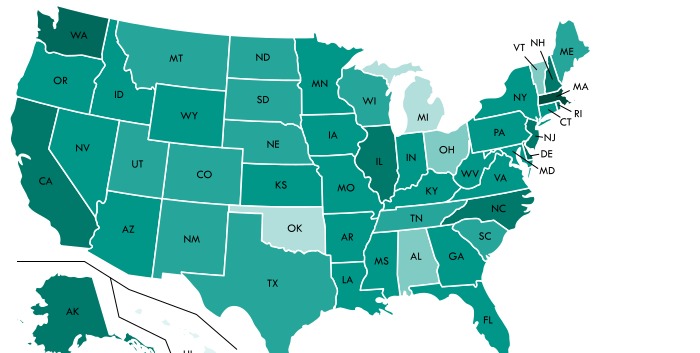
Most common states for chemistry research assistants
| Rank | State | Population | # of jobs | Employment/ 1000ppl |
|---|---|---|---|---|
| 1 | Massachusetts | 6,859,819 | 1,231 | 18% |
| 2 | District of Columbia | 693,972 | 108 | 16% |
| 3 | Vermont | 623,657 | 95 | 15% |
| 4 | Oregon | 4,142,776 | 519 | 13% |
| 5 | New Hampshire | 1,342,795 | 169 | 13% |
| 6 | Rhode Island | 1,059,639 | 136 | 13% |
| 7 | Colorado | 5,607,154 | 693 | 12% |
| 8 | Minnesota | 5,576,606 | 677 | 12% |
| 9 | Delaware | 961,939 | 109 | 11% |
| 10 | Wyoming | 579,315 | 61 | 11% |
| 11 | California | 39,536,653 | 3,965 | 10% |
| 12 | South Dakota | 869,666 | 86 | 10% |
| 13 | Alaska | 739,795 | 77 | 10% |
| 14 | Pennsylvania | 12,805,537 | 1,090 | 9% |
| 15 | New Jersey | 9,005,644 | 774 | 9% |
| 16 | Virginia | 8,470,020 | 760 | 9% |
| 17 | Missouri | 6,113,532 | 523 | 9% |
| 18 | Utah | 3,101,833 | 268 | 9% |
| 19 | New Mexico | 2,088,070 | 181 | 9% |
| 20 | Maine | 1,335,907 | 124 | 9% |
Most common cities for chemistry research assistants
| Rank | City | # of jobs | Employment/ 1000ppl | Avg. salary |
|---|---|---|---|---|
| 1 | Madison | 1 | 0% | $52,394 |
Chemistry Research Assistant job outlook: Expert opinions
Our panel of chemistry research assistant experts
University of Illinois at Springfield
College of Idaho
SUNY at Albany

Ohio University Southern
Wake Forest University

University of Utah
Meredith College
Adelphi University
Boston College
Saint Peter's University
Christopher Newport University
King University

Brandeis University

University of Minnesota, Morris

High Point University
Georgia College and State University

Maryville University
Cleveland Community College
Changqing Chen Ph.D.
Associate ProfessorWhat general advice would you give to a Chemistry Research Assistant?
Changqing Chen Ph.D.: 1. Analytical skills and communication skills will become more important since they are harder to be replaced by AI. 2. If interested, try to learn some information on AI and machine learning, which will be used more in chemistry in the near future on design and synthesis of new molecules/materials, environmental chemistry, green chemistry, and chemistry education.
What Chemistry Research Assistant skills would you recommend for someone trying to advance their career?
Changqing Chen Ph.D.: 1. A chemistry degree provides many opportunities for a wide variety of careers. Jobs can be found in big chemical or pharmaceutical companies, government agencies, small startup companies, as well as educational institutions. Sometimes, if you think outside the box, you can find other opportunities, such as some non-lab jobs (sales, technical support, consulting firms, etc.). If it is hard to find a permanent job you like, start with a temporary position, which might turn into a permanent position if your performance is excellent. 2. You do not need to match exactly what you learned in college with your job responsibilities. Be ready to apply the problem-solving skills you learned in new field/project. 3. Be curious, always eager to learn new skills/knowledge. 4. Be honest, learn from your mistakes.
Marc Klingshirn Ph.D.
Associate Professor of ChemistryUniversity of Illinois at Springfield
Chemistry
What general advice would you give to a Chemistry Research Assistant?
Marc Klingshirn Ph.D.: Science professions are strong, especially in the medical and environmental fields. The traditional areas of science including chemistry, biology and environmental science will continue to be relevant. That being said, with issues related to health and climate change becoming more and more prevalent and of concern, the need to understand how these traditional areas of science interplay with each other is becoming increasingly important. A single area of science is likely not going to solve the problem alone; the disciplines must work together.
What Chemistry Research Assistant skills would you recommend for someone trying to advance their career?
Marc Klingshirn Ph.D.: People are drawn to science for various reasons, but many enjoy science-related fields due to the discovery aspect. Science continually to leads to new questions and subsequent answers that help us understand the world around us, which can be exciting. At the same time, that discovery leads to constant change, which can lead to frustration. We tend to like clear-cut answers that are black and white. That doesn't always happen in science. That ambiguity then has tendencies to make those outside of the profession question the validity of science, which in turn is frustrating to those who are actively engaged because they feel their work is deemed false.
What will help Chemistry Research Assistants increase their earning potential?
Marc Klingshirn Ph.D.: This will obviously depend on the job itself, but if we consider a recent graduate with a bachelor's degree in chemistry, they will most likely be performing routine sample analysis using established protocols and procedures. Relevant data analysis will also most likely be required. Following necessary safety procedures and environmental guidelines will also be essential as some materials may be hazardous and because of relevant environmental regulations and handling needs.
What Chemistry Research Assistant skills would you recommend for someone trying to advance their career?
Bonnie Cantrell: When I ask students and faculty what they enjoy about being a chemist, their answers are
always related to enjoying the science. This includes getting to work with lasers, making drugs,
exploding things, setting things on fire, solving problems, explaining the unexplainable, and never
knowing what you are going to find out, but enjoying the adventure. There is a thrill to science that can
be coupled with any moral cause. Those that get to choose their research have even more freedom to
structure what they do to their passions. Making the world a better place and having fun while doing it
is a goal for a lot of scientists. Being a chemist allows thousands of people to do that every day making
chemistry a very rewarding career.
With any job it is usually the work load and/or regulations that make the job less enjoyable.
Working with chemicals can be exciting, but it can also be extremely dangerous to our health and those
around us. As worker safety became more of a focus for the government, the chemical industry changed
drastically with a focus on laboratory safety. This meant more regulations and documentation. Grants
are also extremely competitive and the review process on a manuscript is very time consuming. A
majority of advanced level chemists are forced into doing more paperwork and less hands-on laboratory
science as they gain more responsibilities. Essentially the whole reason they enjoyed doing science is
buried in paperwork.
While all chemists would like more time to do science, it is their mentees that really make it
worth it. There is a pride in being able to help someone else succeed that is seen on every professors'
face when their student gets into a great school, a great job, finally figures out that problem, etc. It is
the alumni coming back and talking about the professors that inspired them to be successful in some
way. This is what gets me out of bed in the morning. The feeling of being able to do more than I
physically can myself because I am in proxy mentoring hundreds of people every year to be the best
they can be. I can fail in my life, but still have a lasting legacy and positive impact through others. That is
what makes chemistry great.
What will help Chemistry Research Assistants increase their earning potential?
Bonnie Cantrell: When a chemist enters the job field, there is three main options for them: academia,
government, or industry. In academia, there are two types of careers: lecturers and researchers. A
lecturer position usually teaches the introductory level classes and one or two advanced level courses. A
majority of their days revolve around creating course content, setting up teaching laboratories,
mentoring students, and grading. Research professors typically teach the upper level courses in their
research specialty, but overall teach less courses than a lecturer to allow time for research. A majority of
a researcher's days include the same tasks as the lecturer, but they also work on writing grants to
continue to fund their research and edit manuscripts for journal publication of their research. Both
positions are also required to participate on committees that create the structure for the school's future
directions. Faculty entering academia all work towards becoming tenured. Those that have made it,
have job security and more confidence in their jobs.
Entry government positions and most of industry for a chemist would be a lot more directly
involved with laboratory work. The laboratory work you do though is almost always dictated by your
employer. This means you don't get to study what you are interested in, but you can focus more on the
chemistry as you don't have to teach and constantly apply for grants. Usually advancement in these
types of careers changes your day to day into more regulation and management responsibilities and less
hands-on involvement with chemicals.
What general advice would you give to a Chemistry Research Assistant?
Dr. Kevin Francis: I am a firm believer that if you love your job you will never work a day in your life, so feel this
should not be the primary goal. Many of those I was in school with make triple or even more
than my salary but have expressed dissatisfaction with their jobs. Some have switched jobs
multiple times due to this dissatisfaction. At the same time, if you have invested in your
education and training you should at least make a living wage.
In Chemistry at least a Master's degree is needed for most decent paying jobs. I encourage
students not to fear graduate schools and remain confident. Apply to those offering intership
opportunities or other on the job trainings. Many of our graduate students complete these during
the summer. Many of the internships lead to good jobs in those companies upon graduation.
It is more important to enjoy your job though than to get paid a lot to do it.
What Chemistry Research Assistant skills would you recommend for someone trying to advance their career?
Dr. Kevin Francis: The use of Artificial Intelligence. This is, in fact, bringing me some of the anxiety mentioned
above because at present I am almost completely ignorant of ChatGPT. I am therefore attending
workshops and trainings to learn more about AI. It is being clear that it will be increasingly used
and holds great potential for data mining and many of the "-omics" that are critical for
Biochemical research. Critical thinking will remain a tool that must be developed but I believe
the field will rely more and more on AI as time goes on.
What will help Chemistry Research Assistants increase their earning potential?
Dr. Kevin Francis: A lesson learned the hard way when starting my career is that we will always be a student in life
and therefore should continue asking questions to those who know more than we do. At the same
time we have learned many lessons already and these should be put to use with confidence so we
will progress in our careers.
I left my PhD as the most senior member of the research group. I knew the ends and outs of the
lab including its history, troubles some instruments gave us in the past and the work arounds
developed to overcome these struggles. When staring my postdoctoral work, I was suddenly in a
lab with its own history and skill sets that must be gained for success. Initially, I was quite
hesitant to ask for help thinking that since I was hired to advise people it would not be
appropriate to ask them for help. This mindset wasted my first year because many experiments
failed simply because of my unfamiliarity with the specific instrumentation used to carry them
out. Upon reaching out and asking the graduate students what I was doing wrong I found that
they were just as happy and proud to share their knowledge as I was as a senior PhD student.
Their help allowed me to cross the barriers that were inhibiting my research and development.
We are always students in life, and while starting a new chapter is intimidating, we should
always remember the challenges we have already overcome. I recall as an undergraduate being
terrified to take advanced Math or Physics courses because I heard so many nightmare stories
about them. They were challenging for sure, but with effort they actually were not that bad. The
same was true about the PhD qualifying exams. Or the almost complete lack of finical stability
resulting from the meager salary as a graduate student or a postdoctoral researcher. You humbly
seek advice from those who have gone through the struggles and eventually find yourself on the
other ide with new skill sets to rely upon. And even if you do not make it your career, you should
always be willing to teach and mentor others to honor those you did so for you.
Alan Chen Ph.D.
Associate Professor, Dept of Chemistry & the RNA Institute, University at AlbanySUNY at Albany
Chemistry
What general advice would you give to a Chemistry Research Assistant?
Alan Chen Ph.D.: For entry-level chemistry jobs, by far the best preparation you can get is to do as much hands-on lab research as you can during your undergraduate training. This includes summer REU programs, mentored thesis research, volunteering in labs, summer internships, co-ops, etc. Hiring managers universally want to see not only what skills/assays/instruments you are familiar with, but also that you have real-world, problem solving experience that goes beyond the classroom and textbooks.
What Chemistry Research Assistant skills would you recommend for someone trying to advance their career?
Alan Chen Ph.D.: Our most successful students start research no later than sophomore year and many opt for our 5-year combined BS/MS track. These students outcompete BS-level applicants for entry-level jobs, and start at higher salary and responsibility levels as many companies will count time in graduate school as "prior experience". The MS degree is particularly versatile as it can also be earned part-time by current employees looking to advance, and unlike the PhD does not over-qualify you for the vast majority of entry level chemist positions. MS degrees typically enable early-career chemists to move up the ranks into management or team-leader positions after a few years. They are also a possible way for recent grads who were unable to get a job due to lack of research experience in undergrad, to get that crucial research experience during their MS thesis, and possibly even upgrade-in-place to our PhD program if they are doing really well. Basically, there seems to be no drawback to getting an MS in Chemistry at a research-intensive university for the vast majority of scientific career tracks.
What will help Chemistry Research Assistants increase their earning potential?
Alan Chen Ph.D.: The core skills required for most chemistry positions will likely be unchanged (i.e. analytical chemistry for QA/QC roles) however desired auxiliary skills might include familiarity with data science, laboratory automation and AI/ML which are all becoming increasingly important in the scientific workplace)
Kyle Kemats Ph.D.
Assistant Professor of InstructionOhio University Southern
Chemistry Department
What hard/technical skills are most important for Chemistry Research Assistants?
Kyle Kemats Ph.D.: As I mentioned in question 1, training/experience on various instruments is the most important for industry/research jobs. For teaching positions, experience with different pedagogical/education techniques will be helpful for a potential candidate.
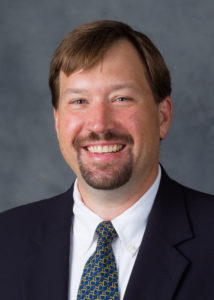
Brian Mendenhall
Associate Director and Career CoachWake Forest University
Office of Personal and Career Development
What skills stand out on Chemistry Research Assistant resumes?
Brian Mendenhall: Two things that stand out for me, regardless of whether the person is seeking employment in research or industry, are data analysis (Excel, Python, R) and presentation skills. Research specific skills would also include experimental design and specific relevant laboratory techniques & equipment experience.
What soft skills should all Chemistry Research Assistants possess?
Brian Mendenhall: In the past, the most important attributes have been leadership and problem-solving skills. If the pandemic has taught us anything, the most important attribute is the ability to work with others and get along in multiple virtual and in-person environments. The rest seem elementary and are all dependent on each other. To work well on a team, you need to problem-solve, both on the topic and on how to share information. To solve problems, you need to be analytical and quantitative. Certainly, to do this well, you need to communicate across diverse audiences and levels of understanding. The National Association of Colleges and Employers surveys employers on these priorities and updates the results frequently. (see below for your reference)
Ability to work in a team 81.0%
Problem-solving skills 79.0%
Analytical/quantitative skills 76.1%
Communication skills (verbal) 73.2%
Communication skills (written)
https://www.naceweb.org/about-us/press/the-key-attributes-employers-seek-on-college-graduates-resumes/
Shelley Minteer Ph.D.
Dale and Susan Poulter Endowed Chair in Biological Chemistry, Associate Chair of ChemistryUniversity of Utah
Department Of Chemistry
What skills stand out on Chemistry Research Assistant resumes?
Shelley Minteer Ph.D.: The skills that stand out are research experience, characterization instrumentation experience, and more recently, data science experience and coding experience, as machine learning and AI become more and more important in chemistry.
What soft skills should all Chemistry Research Assistants possess?
Shelley Minteer Ph.D.: The most important soft skills are communication and people management skills. It is critical to be strong in both oral and written communication.
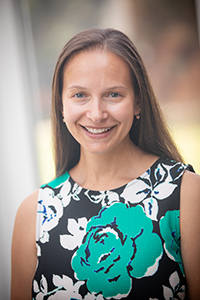
Alexandra (Sasha) Ormond Ph.D.
Associate Professor of Chemistry, Director of Dual Degree EngineeringMeredith College
Department of Chemistry, Physics, and Geoscience
What general advice would you give to a Chemistry Research Assistant?
Alexandra (Sasha) Ormond Ph.D.: Chemistry graduates should be open minded, and ready to absorb and use information. They should be confident in themselves, and since they're still learning, they should not hesitate to ask for help and advice. If students haven't learned how to fail, they should go into a career ready for potential failures, and they will need to be ready to handle failures and move on.
What Chemistry Research Assistant skills would you recommend for someone trying to advance their career?
Alexandra (Sasha) Ormond Ph.D.: Having hands-on experience through research, internships, and working with instruments can make a candidate more attractive to employers. Pursuing a Master's or Ph.D. degree can also lead to a higher starting salary, although the job opportunities may differ based on the level of education.
What will help Chemistry Research Assistants increase their earning potential?
Alexandra (Sasha) Ormond Ph.D.: Using automation and AI are becoming more important to do more with less people and less time. Working in interdisciplinary teams where you are the only expert in your field, and you will need to communicate to others who may not understand the content on the same level as you.
Lea Theodore Ph.D.
Director, School PsychologyAdelphi University
School Psychology and Institute for Parenting and Postgraduate Certificates in Infant, Child, & Adolescent Psychotherapy
What soft skills should all Chemistry Research Assistants possess?
Lea Theodore Ph.D.: The ability to have respectful communication with people in all roles: directors, supervisors, research participants, peers, and project staff. A 360-degree evaluation would show that everyone agrees that the candidate can be a good fit.
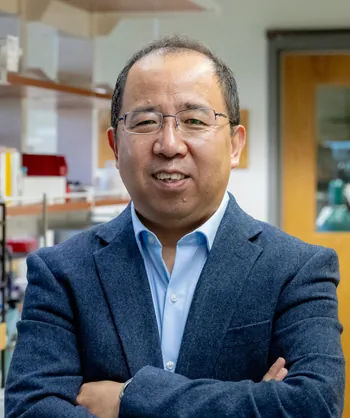
Dunwei Wang Ph.D.
Margaret A & Thomas A Vanderslice Chair in Chemistry, Professor of Chemistry, Chairperson of Chemistry DepartmentBoston College
Chemistry Department
What soft skills should all Chemistry Research Assistants possess?
Dunwei Wang Ph.D.: Problem-solving skills. When presented with a problem, knowing where to go to find information to solve it.
What hard/technical skills are most important for Chemistry Research Assistants?
Dunwei Wang Ph.D.: Chemistry is a diverse field. As a foundational discipline, it enables several sub-fields and supports emerging new fields. As one example, our graduates become experts in medical research, health care, and scientists and engineers in many other fields. Depending on the different career goals, what is important can be drastically different. Generally speaking, doing bench work (either in the lab or on a computer) should be a good skill to have at graduation.
Dr. Katherine Wydner Ph.D.
Associate Professor of Biology and Health Careers AdvisorSaint Peter's University
Biology Department
What are the biggest trends we'll see in the Chemistry Research Assistant job market given the pandemic?
Dr. Katherine Wydner Ph.D.: COVID-19 has focused worldwide attention on the importance of public health, so jobs that relate to healthcare services and wellness will be on the rise. Even before the pandemic, employment in healthcare occupations was expected to experience greater job growth in the next decade than other occupations. There have been losses in healthcare jobs during the pandemic, but fewer losses than in jobs outside of healthcare. In the short term, many medical specialist practices and dentist offices that offer nonemergency services have taken a hit with losses of jobs and revenue.
Here are some examples of specific careers that should be in demand for the foreseeable future. Epidemiologists are public health scientists who investigate patterns and causes of disease. Mental Health Professionals include clinical and counselling psychologists and therapists. Public Health Educators are professionals who spread health information and counter misinformation. Public Health Policy Makers are people who work in government and make decisions toward healthcare goals in a community.
Jobs related to Food Services are also expected to grow faster compared to many other job sectors. These include Nutritionists and Dieticians as well as those involved in food safety and menu planning. This is part of the growing attention on wellness and preventative medicine.
Healthcare will remain an essential field. Physicians, physician assistants, nurse practitioners, physical therapists, occupational therapists, nurses, and medical laboratory scientists will continue to be very important in our workforce, especially due to the aging population in the US.
What certifications/licenses/courses can have the biggest impact for Chemistry Research Assistants?
Dr. Katherine Wydner Ph.D.: Because of current job shortages caused by the pandemic, many college graduates may find this to be a good time to go back to school for additional certifications, masters, or doctoral degrees. Many advanced degrees in healthcare and medicine at the masters or doctorate levels require courses such as Biochemistry, Anatomy and Physiology, Microbiology, Cell and Molecular Biology, and Psychology. Another useful course can be Nutrition if someone is interested in a career related to Food Services, a job sector that is anticipated to be in growing demand.
Job prospects for Medical Laboratory Scientists are also excellent. Graduates of bachelors of science and certificate programs who go on to earn their license from the American Society for Clinical Pathology (ASCP-BOC) typically find employment within weeks of graduation and licensure. This has held true for many years, as demand for these jobs exceeds the supply of qualified persons. Medical Laboratory Scientists are employed by hospitals, commercial and reference labs, and medical and veterinary offices.
Janet Steven Ph.D.
Associate ProfessorChristopher Newport University
Organismal and Environmental Biology
What certifications/licenses/courses can have the biggest impact for Chemistry Research Assistants?
Janet Steven Ph.D.: Some careers in biology do require specific certifications, but there are many fields where experience outside the classroom has the biggest impact on job prospects. Spending a summer or two working in the field you are interested in building both your resume and your network. Courses that apply subject matter to hands-on experiences and real-world decisions are also valuable.
Han Chuan Ong Ph.D., APR
Professor of BiologyKing University
College of Arts and Sciences
What are the biggest trends we'll see in the Chemistry Research Assistant job market given the pandemic?
Han Chuan Ong Ph.D., APR: With most college graduates lacking the requisite practical skills due to a lost year and summer due to COVID in 2020, I anticipate seeing new employees being placed in training camps for a sizeable duration to acquire practical skills. Because this is a pandemic, almost everyone is on a level playing field, so there is no worry of being surpassed in experiences by your fellow applicants. I am also seeing more applications among my students to graduate programs directly after their collegiate graduation; in fearing the greater unknown brought about by the pandemic, many have chosen to further equip themselves academically. Not as many are considering a "gap year" or working for pay for a year or two to earn back the monetary deficit they suffered from paying for school before they continue on to pursue a graduate degree.
What experience really stands out on Chemistry Research Assistant resumes?
Dwight Peavey Ph.D.: Hands-on experience through an internship(s) and summer employment/research in the environment field puts that student ahead of others. Many students receive job offers from firms at which they have been employed or interned.
Will there be an enduring impact of the coronavirus pandemic on Chemistry Research Assistants?
Dwight Peavey Ph.D.: No --- once a vaccine is widely available, a new "normal" will be established. A turnover in older employees will give way for the "new generation" of environmental caretakers. Working remotely, alone and as part of a team, will be part of the "new normal."
How do you envision technology impacting Chemistry Research Assistants in the next 5 years?
Alyssa Pirinelli Ph.D.: I think we will have more opportunities to work remotely, so I believe graduates will need experience working in teams on documents and related software. Scheduling synchronous meetings may become more challenging due to outside work or personal commitments/responsibilities. It is currently unclear when things may return to "normal" concerning having people in one physical room for a meeting. Therefore Zoom experience (both as an attendee and someone who runs their sessions with at least a few other people present) or similar will be essential. I also believe there will be more emphasis on the written word and conceptual drawings/artistic expression. There is no requirement for everyone to be in the room simultaneously, and the "workshopping an idea" is nowhere near as quickly done over Zoom. Software for creating images (from basic chemical line structures to creating and manipulating 3D drawings of macromolecules) may help mitigate some of these problems. In some cases, additional seats/site licenses may be needed for some software, depending on the demand.
More of our instrumentation can likely be run remotely, or the software may need to be easily remotely monitored. Still, in many cases, the required tech is either expensive or not invented yet (this may be a promising avenue for students who are analytical minded!). However, much of the leading technology we use on a daily/weekly basis is pretty standard. There may be more influx of new/cutting edge things at larger institutions, but for now, students need to know the basics of how to understand/run/troubleshoot standard instruments. Fancier buttons do not necessarily make for fancier instrumentation.
Dr. Brian Augustine Ph.D.
Professor of Chemistry and ChairHigh Point University
Department of Chemistry
What type of skills will young Chemistry Research Assistants need?
Dr. Brian Augustine Ph.D.: Students always need foundational technical skills. In addition to skills specific to chemistry and biochemistry, strong communication and interpersonal skills such as writing, speaking, and collaboration are vital, as are quantitative reasoning skills such as data analytics, statistical analysis, and programming.
How do you envision technology impacting Chemistry Research Assistants in the next 5 years?
Dr. Brian Augustine Ph.D.: The rapid transition to online instruction, due to the COVID pandemic, has been a challenging adjustment for students in 2020 but could turn out to be a long-term benefit professionally. Students will be much more comfortable with online collaboration tools such as Microsoft Teams and Zoom, facilitating collaboration with colleagues around the globe. Cloud computing will be increasingly important as software for analytical instrumentation becomes cloud-enabled. Thus data analysis can be undertaken anywhere, and not just in the lab where the data is collected.
In the biochemistry field, CRISPR-Cas9 gene-editing technology will become much more widespread with the potential to impact therapeutics in the biomedical area significantly. Finally, looking a little further out than five years, quantum computing's development offers the prospect of computational modeling of too complex chemical, biological, and materials problems currently intractable with standard classical computational methods. Scientists who learn how to develop and use quantum computing to solve complex problems will be at a significant advantage in the coming decade.
What experience really stands out on Chemistry Research Assistant resumes?
Peter Rosado: A while ago, I was a manager in cosmetics manufacturing before I became a professor and was in charge of hiring some new personnel, so I can attest that hiring managers are looking for candidates that are well rounded. That meaning is not just content knowledgeable, but candidates who can hold a conversation and interact with customers, clients, and peers. Knowledge about the world is also a plus.
Our company would do business in many countries and even national companies. Every time I would see a resume from a candidate with these qualities, I would pay close attention to it. Being able to interact with others, have leadership skills, and follow-through is a big positive. Problem-solving skills are hopefully acquired by obtaining a chemistry degree, but these other soft skills are developed by being involved in situations outside of the classroom/lab.
I recommend aspiring candidates to be involved in local organizations that pertain to their fields, maybe hold officer positions, interact with the public, etc. I encourage them to be involved in their field of study rather than spectating it.
What technology do you think will become more important and prevalent for Chemistry Research Assistants in the next 3-5 years?
Peter Rosado: Right now, with COVID-19, I feel that the field of medicinal chemistry/biotechnology is going to see a boom. Materials science is also on the rise with alternative energies and new restorative therapies. The area of chemistry is not a more extended purist and more integrated/interdisciplinary. No longer can you call yourself an "inorganic chemist" or an "analytical chemist"? Graduates should be aware that flexibility and eagerness to learn new things is critical here. These are the skills obtained from a college degree, which is not the only subject matter. But the ability to think through and solve problems, be flexible, adaptable, etc.
How do you envision technology impacting Chemistry Research Assistants in the next 5 years?
Anuradha Vummenthala: Technology is going to have a significant impact on the field in the next five years. Artificial Intelligence, Deep learning, Data mining, and Data Analytics will play a massive role in Pharmaceuticals, Agrochemicals, and other chemistry-related areas. For instance, recently, IBM has announced the development of an AI/cloud-based chemistry lab named RoboRxn, which will help chemists deliver the products faster and efficiently and avoid the age-old approach of trial and error.
Will there be an enduring impact of the coronavirus pandemic on Chemistry Research Assistants?
Lynn Monteith: The pandemic is already impacting new graduates' ability to secure jobs. It is also affecting students who are currently enrolled in college courses. Some students choose to take a year off from school with hopes of returning to campus after the pandemic is over.