Explore jobs
Find specific jobs
Explore careers
Explore professions
Best companies
Explore companies
Job outlook for college program interns in the United States
College program internship job growth summary. After extensive research, interviews, and analysis, Zippia's data science team found that:
The projected college program internship job growth rate is 10% from 2018-2028.
About 32,400 new jobs for college program interns are projected over the next decade.
College program internship salaries have increased 7% for college program interns in the last 5 years.
There are over 7,929 college program interns currently employed in the United States.
There are 104,939 active college program internship job openings in the US.
The average college program internship salary is $34,803.
Are college program internship jobs in demand?
College program internship job and salary trends over time
College program internship jobs over time
College program internship job growth rate over time
| Year | # of jobs | % of population |
|---|---|---|
| 2021 | 7,929 | 0.00% |
| 2020 | 7,818 | 0.00% |
| 2019 | 7,931 | 0.00% |
| 2018 | 7,637 | 0.00% |
| 2017 | 7,259 | 0.00% |
Average college program internship salary over time
College program internship salary by year
| Year | Avg. salary | Hourly rate | % Change |
|---|---|---|---|
| 2026 | $34,803 | $16.73 | +1.9% |
| 2025 | $34,156 | $16.42 | +1.3% |
| 2024 | $33,719 | $16.21 | +1.6% |
| 2023 | $33,180 | $15.95 | +1.6% |
| 2022 | $32,671 | $15.71 | +1.7% |
College program internship jobs by state
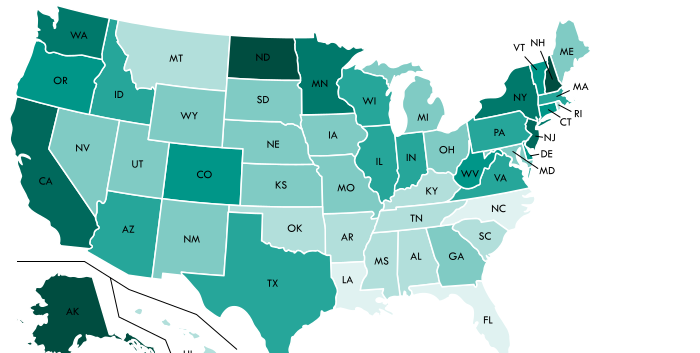
Most common states for college program interns
| Rank | State | Population | # of jobs | Employment/ 1000ppl |
|---|---|---|---|---|
| 1 | North Dakota | 755,393 | 164 | 22% |
| 2 | Delaware | 961,939 | 164 | 17% |
| 3 | New Hampshire | 1,342,795 | 221 | 16% |
| 4 | Rhode Island | 1,059,639 | 165 | 16% |
| 5 | Montana | 1,050,493 | 156 | 15% |
| 6 | Colorado | 5,607,154 | 732 | 13% |
| 7 | Oregon | 4,142,776 | 522 | 13% |
| 8 | Utah | 3,101,833 | 390 | 13% |
| 9 | South Dakota | 869,666 | 112 | 13% |
| 10 | Minnesota | 5,576,606 | 690 | 12% |
| 11 | Connecticut | 3,588,184 | 422 | 12% |
| 12 | Nebraska | 1,920,076 | 236 | 12% |
| 13 | Idaho | 1,716,943 | 187 | 11% |
| 14 | Maine | 1,335,907 | 148 | 11% |
| 15 | Arizona | 7,016,270 | 682 | 10% |
| 16 | New Mexico | 2,088,070 | 213 | 10% |
| 17 | Illinois | 12,802,023 | 1,120 | 9% |
| 18 | New Jersey | 9,005,644 | 817 | 9% |
| 19 | Iowa | 3,145,711 | 274 | 9% |
| 20 | West Virginia | 1,815,857 | 159 | 9% |
Most common cities for college program interns
| Rank | City | # of jobs | Employment/ 1000ppl | Avg. salary |
|---|---|---|---|---|
| 1 | West Palm Beach | 6 | 6% | $28,115 |
| 2 | Grand Rapids | 6 | 3% | $33,741 |
| 3 | Bay City | 1 | 3% | $34,255 |
| 4 | Dearborn | 2 | 2% | $33,440 |
| 5 | Miami Gardens | 2 | 2% | $27,978 |
| 6 | OFallon | 2 | 2% | $32,396 |
| 7 | Bradenton | 1 | 2% | $28,477 |
| 8 | Atlanta | 4 | 1% | $31,439 |
| 9 | Miami | 3 | 1% | $27,946 |
| 10 | Richmond | 2 | 1% | $34,642 |
| 11 | Boca Raton | 1 | 1% | $28,045 |
| 12 | Detroit | 3 | 0% | $33,511 |
| 13 | Washington | 3 | 0% | $42,382 |
| 14 | Chicago | 2 | 0% | $34,227 |
| 15 | New York | 2 | 0% | $40,102 |
| 16 | Phoenix | 2 | 0% | $34,928 |
| 17 | Sacramento | 2 | 0% | $44,551 |
| 18 | San Jose | 2 | 0% | $44,797 |
College Program Internship job outlook: Expert opinions
Our panel of college program internship experts

Brigham Young University

Seattle University
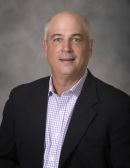
East Tennessee State University

Committee on the Status of Women in Astronomy - CSWA

The USA Hockey Foundation

Hartwick College
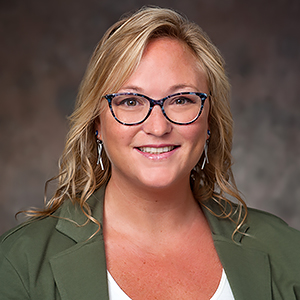
American University
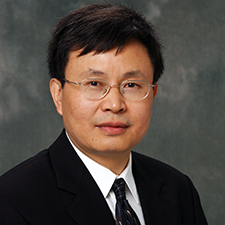
Pace University
What soft skills should all College Program Interns possess?
Dr. Stephen Duncan Ph.D.: Graduates should know how to get along collaboratively, having strong interpersonal skills, empathy for others' circumstances. In the School of Family Life, we not only stress thinking, writing, and numeracy skills and data organization, but interpersonal skills of clear speaking and listening, engaging with others, and working collaboratively on a team.
How have salaries changed over time for College Program Interns?
Dr. Stephen Duncan Ph.D.: The human sciences continue to be at the lower salary ranges of professional positions. Never will they rival our friends in engineering and other technical fields. Starting salaries at the bachelor's level are similar to elementary and secondary school teachers, and have followed their pattern over a number of years.
Theresa Earenfight Ph.D.
Professor of History, Director, Women, Gender, and Sexuality Studies ProgramSeattle University
History Department
Will there be an enduring impact of the coronavirus pandemic on College Program Interns?
Theresa Earenfight Ph.D.: As a historian of the European Middle Ages, I'm struck by how students this past year have acquired something scarce: historical empathy. The past can seem so remote, so very different from our lived experiences today, and this can make history seem irrelevant. But this fall, I was teaching a section on the bubonic plague, which historians of medicine now know was a global pandemic, not just an epidemic in Europe. Usually, students are fascinated by the gruesome medical details, but not this group.
They did not need or want to look death in the eyes. They wanted to know how did people react? How did they get back to normal? When we ticked off the list of reactions--fear, distrust of science (such as it was in 1348), xenophobia, scapegoating, economic collapse, hoarding supplies, turn to religion, gallows humor about worms crawling about corpses--they got it. When we talked about the aftermath--eat, drink, be merry, and protest the inequality--they got it. That is historical empathy, and I'm sad that this was how it had to be learned, but it will give them broader compassion that can encompass people alive today.
Will there be an enduring impact of the coronavirus pandemic on College Program Interns?
Dr. Frederick Gordon Ph.D.: Graduate students will need to refocus on the changing institutional role, being both remote and in-person, and impacting agency goals and performance.
Nicolle Zellner (on behalf of members of the CSWA)
ChairCommittee on the Status of Women in Astronomy - CSWA
What type of skills will young College Program Interns need?
Nicolle Zellner (on behalf of members of the CSWA): I believe (hope) that the effects of the pandemic will be short-lived and that there will be a surge in job opportunities once a vaccine is available. Nevertheless, greater flexibility and versatility in skills are always useful. For example, astronomers who have analyzed large data sets or worked with machine learning algorithms will be in significant demand.
Interdisciplinary studies are also on the rise. New fields like astrobiology are rapidly growing, and there are ripe potentials for researchers with unique combinations of expertise or who can work with broad collaborations spanning disciplines.
With the growth of data, especially from large astronomical surveys, technical skills like computer programming and experience with data science tools and machine learning is increasingly useful. The ability to communicate complex ideas to a range of audiences is a necessity in most fields, and astronomers generally have great relevant experience with community outreach.
What general advice would you give to a College Program Internship?
Tamara Tranter: Take risks, go outside of your comfort zone, and don't go into interviews with big expectations. Many qualified people have been impacted and are going to get many of the jobs because they have past experience. So be realistic, be positive, and be a team player.
Namita Sugandhi Ph.D.
Assistant Professor of AnthropologyHartwick College
Anthropology Department
Will there be an increase or decrease in demand for College Program Interns in the next 5 years?
Namita Sugandhi Ph.D.: There is an absolute need for employees who can think anthropologically, but this is probably not where most jobs will lie in the next five years. There is no perceived "demand" for Anthropology graduates in most circumstances; this is not new, but it is to our detriment as a society when most people no longer have the capacity to critically understand the social and historical circumstances of the labor market. This will continue to erode at safe and fair conditions for many working people in America and worldwide. That being said, new candidates will have to be adept at doing new things in new ways - not just replicating the same old things in new ways. I do not think the training for this will come from the professional fields of medicine, law, or business, which are traditionally more conservative. I suspect there will continue to be a declining demand for professional Anthropologists but increasing demand for skilled graduates with an anthropology background. They can apply the social and historical insights of these subjects to whatever field they practice.
How do you envision technology impacting College Program Interns in the next 5 years?
Dr. Adelaide Kelly-Massoud: Well, every teacher and teacher candidate was thrust into distance learning. Misguided attempts to foster understanding often leaned our adult distant learning pedagogy. Teachers, and those who prepare teachers, found their job to research, define, design, and implement meaningful teaching and learning using a virtual platform. Words such as synchronous and asynchronous are now a part of our everyday vernacular. But there is a much more optimistic change on the horizon that we can thank coronavirus for.
Communication and collaboration have been forced to change. Parents and Teachers are more connected and have been put in a position to leverage technology to build networks of support and consistent dialog. I urge teachers to leverage this in their future as we work to reopening schools; we should learn from this experience to leverage technology to keep us connected.
Dr. Sheying Chen Ph.D.
Professor of Public Administration/Social PolicyPace University
Department of Public Administration
Will there be an increase or decrease in demand for College Program Interns in the next 5 years?
Dr. Sheying Chen Ph.D.: State and local governments re-evaluate their current capacities and plan for reduced revenues in the coming fiscal years. This will result in a shift in hiring in the public sector that may last for some time; thus, graduates should be better prepared for finding job opportunities, networking, etc. There is likely a decrease in demand for graduates in the next couple of years, although the trend is not unique to this field. It's an excellent time to go back to school and get a degree in active pursuit of new skills for the changing work environment. Active learners may demand more creative programming and increased networking that may also help to advance the field of public administration.