Explore jobs
Find specific jobs
Explore careers
Explore professions
Best companies
Explore companies
Job outlook for computer field engineers in the United States
Are computer field engineer jobs in demand?
Computer field engineer job and salary trends over time
Computer field engineer jobs over time
Computer field engineer job growth rate over time
| Year | # of jobs | % of population |
|---|---|---|
| 2021 | 1,754 | 0.00% |
| 2020 | 3,985 | 0.00% |
| 2019 | 2,516 | 0.00% |
| 2018 | 1,243 | 0.00% |
| 2017 | 1,210 | 0.00% |
Average computer field engineer salary over time
Computer field engineer salary by year
| Year | Avg. salary | Hourly rate | % Change |
|---|---|---|---|
| 2026 | $127,066 | $61.09 | +3.4% |
| 2025 | $122,879 | $59.08 | +2.3% |
| 2024 | $120,097 | $57.74 | +1.5% |
| 2023 | $118,283 | $56.87 | +1.7% |
| 2022 | $116,351 | $55.94 | +1.6% |
Computer field engineer jobs by state
Most common states for computer field engineers
| Rank | State | Population | # of jobs | Employment/ 1000ppl |
|---|---|---|---|---|
| 1 | District of Columbia | 693,972 | 489 | 70% |
| 2 | North Dakota | 755,393 | 203 | 27% |
| 3 | Virginia | 8,470,020 | 2,069 | 24% |
| 4 | Maryland | 6,052,177 | 1,446 | 24% |
| 5 | Vermont | 623,657 | 150 | 24% |
| 6 | Massachusetts | 6,859,819 | 1,587 | 23% |
| 7 | New Hampshire | 1,342,795 | 307 | 23% |
| 8 | Oregon | 4,142,776 | 909 | 22% |
| 9 | Utah | 3,101,833 | 663 | 21% |
| 10 | Montana | 1,050,493 | 221 | 21% |
| 11 | Wyoming | 579,315 | 121 | 21% |
| 12 | Delaware | 961,939 | 197 | 20% |
| 13 | Minnesota | 5,576,606 | 1,085 | 19% |
| 14 | Colorado | 5,607,154 | 1,078 | 19% |
| 15 | Alaska | 739,795 | 142 | 19% |
| 16 | Rhode Island | 1,059,639 | 192 | 18% |
| 17 | Nebraska | 1,920,076 | 322 | 17% |
| 18 | New Mexico | 2,088,070 | 341 | 16% |
| 19 | Maine | 1,335,907 | 215 | 16% |
| 20 | Arizona | 7,016,270 | 1,046 | 15% |
Computer Field Engineer job outlook: Expert opinions
Our panel of computer field engineer experts
Hampton University
University of Colorado at Colorado Springs

Fairfield University
Texas A&M University San Antonio

University of West Florida

University of Washington

American University
Wayne State University
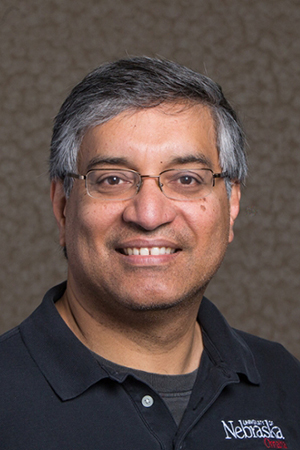
University of Nebraska at Omaha
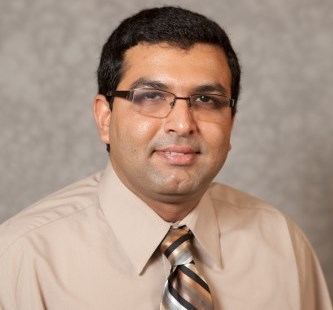
Grand Valley State University
Tiffin University

Grantham University
Utah Valley University

Governors State University

Carleton College
Tufts University
University of North Texas
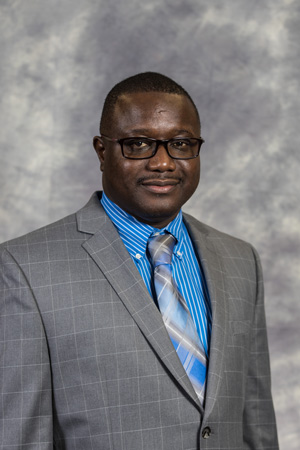
Slippery Rock University

Stetson University

Saint Peter's University
What general advice would you give to a Computer Field Engineer?
Dr. Yohannes Bekele: By entering the computer engineering profession now, individuals can take advantage of the high skilled-power demand in the field, diverse career paths broadly classified under hardware and software sub-areas, lucrative salaries as compared to other fields, continuous learning opportunities, and the potential for entrepreneurship in changing ideas into startup businesses easily. It is a field that offers long-term growth prospects and the chance to contribute to the development of cutting-edge technologies.
What Computer Field Engineer skills would you recommend for someone trying to advance their career?
Dr. Yohannes Bekele: A computer engineer's daily tasks can be in the hardware or in the software areas. Some common responsibilities in hardware include designing and developing computer hardware components like processors, circuits and memory devices and creating prototypes and testing hardware products to ensure they meet specifications. In addition, analyzing test data and modifying hardware designs as needed is also the responsibility of a computer engineer. For software side, a computer engineer can do writing code and developing software especially focusing on the underlying hardware and interfacing with it such as kernel level programming and debugging existing software programs and ensuring systems run smoothly. Additionally, a computer engineer is responsible for designing and developing electrical systems and components required for computing systems and modification of electrical circuits based on function assessments. For someone entering the field as a junior or new computer engineer, typical daily activities may involve assisting senior engineers, writing code, testing products, attending training sessions focusing on the above mentioned concentration areas, and participating in meetings to learn about ongoing projects.
What will help Computer Field Engineers increase their earning potential?
Dr. Yohannes Bekele: In being a computer engineer, people like all the advantages in the field including attractive compensation packages and lucrative salaries, the intellectual satisfaction of solving complex problems, opportunities for continuous learning and innovation as technology rapidly evolves, ability to work on cutting-edge technologies and contribute to their development and the diverse career paths across hardware, software, embedded systems, and various industries. The main struggle most people have in becoming a computer engineer is its steep learning curve especially when it comes to hardware design and related areas. It takes years to become proficient in the field as compared to other fields such as software programming where a relatively shorter amount of time is enough to join the workforce. In addition, the ever evolving environment with constantly changing technologies, standards, and the need to keep learning new things makes it difficult to achieve the epitome in the field.
Dr. Darshika Perera Ph.D.
Associate ProfessorUniversity of Colorado at Colorado Springs
Computer Engineering
What general advice would you give to a Computer Field Engineer?
Dr. Darshika Perera Ph.D.: One of my main advice for Computer Engineering students is that they should get hands-on experience as much as possible through various courses comprising labs and projects. In order to excel in this field, it is imperative for the students not only to learn the fundamentals but also to get hands-on experience. Also, as professors and educators, we are here to help students to get through their coursework and degree program successfully. Therefore, I would encourage students to have an open dialogue with their professors/instructors, and not to hesitate on approaching them with any concerns/problems encountered during the courses or degree program. My advice is not to get deterred by the years that you have to spend or some of the difficult courses that you have to take, instead consider this as a journey that you are taking to enhance your life and career.
What Computer Field Engineer skills would you recommend for someone trying to advance their career?
Dr. Darshika Perera Ph.D.: Most of our computer engineering students at UCCS get job offers before they graduate with salaries ranging from $80k to $110k. Students should go for industry internships before graduating to familiarize themselves with industry settings and boost their career as well as salary potential. Students should emphasize their technical skills and know-how gained throughout their computer engineering degree program, demonstrate how those skills differentiate from other degree programs (such as computer science) and match with the expertise that companies are looking for, and highlight how they can be a valuable asset to the company to maximize their salary potential when seeking careers in this field.
What will help Computer Field Engineers increase their earning potential?
Dr. Darshika Perera Ph.D.: In the realm of computer engineering, embedded systems design and digital systems design will become more important and prevalent. Students have to learn the state-of-the-art techniques to design embedded systems, which includes programming the embedded microprocessor/microcontrollers using embedded programming such as embedded C, in order to interface with the associated hardware such as sensors and actuators, and also to design corresponding hardware circuits. It is also imperative for the students to learn the state-of-the-art techniques and skills to design digital circuits, using hardware-description languages (HDL) such as Verilog and VHDL. Digital circuit designs, including programmable logic such as FPGAs (Field Programmable Gate Arrays), are becoming very popular among the industry for various applications.
What skills stand out on Computer Field Engineer resumes?
Dr. Harvey Hoffman: The United States Department of Labor, Bureau of Labor Statistics forecasts outstanding and lucrative career opportunities whether graduates specialize in computer engineering, which emphasizes computer design and development, or computer science, which focuses on computing theory, data analysis, cybersecurity, algorithms, and computer networks.
I could predict that the future trends lay solely in the technologies associated with artificial intelligence, robotics, cybersecurity, bioinformatics, embedded systems, and big data, but I would probably be incorrect. The engineering profession faces a whirlwind of technology and social change. It has been said that the half-life of an engineer is about five years, perhaps less. The key to survival is adaptation to a dynamic profession and world. Today's engineers must constantly be aware of technology's changing expectations and learn new skills and competencies.
Newly minted engineers must take ownership of their careers, whether mastering a new computer language or tool or becoming proficient in a totally different discipline. Engineers should consider improving their communication skills to improve interactions with their team, clients, and management. They need to clearly communicate complex ideas and technical project plans. Good writing, listening, and presentation skills are imperative. Today's workforce must take personal initiative to maintain their relevance.
The key to remaining highly employable, successful engineers is to constantly learn, upgrade skills, and constantly adapt to new situations.
Robert Vinaja Ph.D.
Assistant Professor of Computer Information SystemsTexas A&M University San Antonio
Computer Information Systems Department
What soft skills should all Computer Field Engineers possess?
Robert Vinaja Ph.D.: -Ability to work as part of a team.
-Attention to detail.
-Problem-solving and analytical skills.
Dr. Thomas Gilbar Ph.D.
Chair and LecturerUniversity of West Florida
Electrical and Computer Engineering
What hard/technical skills are most important for Computer Field Engineers?
Dr. Thomas Gilbar Ph.D.: There are quite a few hard/technical skills that are important for Computer Engineers. We've found a lot of managers are looking for comfort in a variety of programming languages, including C++, C#, Java, Python, etc. Also, try to have a background in a variety of operating systems (certainly windows and mac, but also having experience on Apple iOS, Android, and even Linux will give you a leg up on the competition). Having at least some experience in data/cyber security is also important these days. On the hardware side, programming and applying microcontrollers and VHDL/Verilog programming are extremely important. VLSI design is also a nice addition to skill sets, though in most cases, not a deal-breaker. Circuit and electronic design are also very important skills to supplement your microcontroller skills.
What skills will help Computer Field Engineers earn the most?
Dr. Thomas Gilbar Ph.D.: Selling yourself is absolutely vital. Technical skills are certainly critical to success as a computer engineer, but the employers we work with are also looking for students who are a good "fit" with their organization. Fit differs by organization, so do your research, so you know what they do and what they're looking for before submitting that resume/cover letter and going into an interview. Show that you don't just want any job, but you want this job and what you can bring to their organization and its goals. Most often, your fit will be determined by showcasing soft skills like communication, leadership, critical thinking, professionalism, teamwork, and other related skills. UWF's Office of Career Development & Community Engagement has developed the Argo2Pro Career Readiness Program, which is designed to provide students with vital career readiness skills and assist them in providing evidence to employers that they are both academically prepared and career-ready. Take advantage of these types of programs. They, like most other Universities, also offer mock interviews, resume reviews and even help students review job offers.
What skills stand out on Computer Field Engineer resumes?
Dr. Thomas Gilbar Ph.D.: Resumes can be tricky things. You want to introduce yourself without overloading the reviewer. Note that this doesn't mean just listing technical skills. I heard from one of our alumni that grammar and misspellings will land a resume into the discard pile almost immediately. I can't emphasize how important it is to proofread resumes and cover letters before submitting them. Keep it neat and easy to follow. It is their first (and possibly only) impression of you, so make it good.
Aside from that, anything that emphasizes your leadership, teamwork, and problem-solving skills is always a plus. Any examples of seeing a project from beginning to end (including budgeting, planning, and design) are good. From a technical standpoint, being up to date on hot programming languages is pretty much required. Knowledge and comfort with a variety of operating systems are also important. Since we are talking about Computer Engineers and not Computer Scientists, make sure to emphasize hardware/software integration skills. Any experience you have with microcontroller design and applications is a huge plus, and don't leave out knowledge of PLD/FPGA design, programming, and testing.
What soft skills should all Computer Field Engineers possess?
Dr. Thomas Gilbar Ph.D.: Communication skills, as I mentioned before, are absolutely vital. Note this means not only written but also verbal skills. I have had some excellent students struggle to find a job because their interview and communication skills are lacking. If you are given an opportunity to do a mock interview with the career services department at your University, take it.
Besides that, the soft skills mentioned most often by employers are time and project management. Plan to enthusiastically discuss any projects you worked on from start to finish. If you have no experience, those capstone projects required in just about every engineering program become absolutely vital. Don't skimp just to get it done. Choose a project that you can be proud of and that showcases your abilities. Emphasize any leadership roles you have had and your experience with working on a team.
Don't forget to show that you are willing and able to learn. Computer Engineers work in a very large variety of companies. The chances of your BSCE program covering everything you need are slim to none. Be ready to discuss things that you picked up on your own and emphasize your openness and excitement to learn more.
Rania Hussein Ph.D.
Associate Teaching ProfessorUniversity of Washington
Department of Electrical and Computer Engineering
What skills stand out on Computer Field Engineer resumes?
Rania Hussein Ph.D.: Familiarity with embedded systems design and firmware programming. IoT came to the spotlight because of COVID-19 and the need to work on projects remotely. This will likely tend to grow post-pandemic.
What hard/technical skills are most important for Computer Field Engineers?
Rania Hussein Ph.D.: C language and hardware description language, such as Verilog, microcontrollers and FPGA programming, computer organization, and low-level programming in assembly.
What soft skills should all Computer Field Engineers possess?
Rania Hussein Ph.D.: Being coachable, know how to learn and figure things out, effective communication skills, continuous self-development.
What skills will help Computer Field Engineers earn the most?
Rania Hussein Ph.D.: Continuous professional development and working on side projects to learn new technical and marketable skills.
Anthony Baron
Teaching Assistant, Associate Software EngineerAmerican University
What skills will help Computer Field Engineers earn the most?
Anthony Baron: By earning, do you mean financially, career-wise, or most growth? Career-wise, it really depends on what the final goal is. For web developers, learning the programming languages and frameworks for web development would be the way to go. In general, any experience with programming and knowing a little about a lot will be helpful. Having top-level theory knowledge (some but not in-depth) is also very helpful. It will help you better understand what is happening under the hood and determine which methods are more efficient than others. Financially, it really depends on what skills are most in-demand today. Also, getting a Masters opens doors to more job opportunities, and in some companies, allows for a pay increase. However, this is not the case everywhere.
Dr. Nabil Sarhan Ph.D.
Associate ProfessorWayne State University
Department of Electrical & Computer Engineering
Will there be an enduring impact of the coronavirus pandemic on Computer Field Engineers?
Dr. Nabil Sarhan Ph.D.: It seems that companies will continue to embrace or allow remote work at least for certain jobs, such as those related to software development, computer/system architecture, and VLSI. Therefore, employees may be required to work in geographically distributed teams and should have excellent communication and teamwork skills. In this case of the remote work environment, companies will select future employees primarily based on their skills regardless of their locations, and thus U.S. graduates will likely find themselves in even greater competition against a global workforce.
What certifications/licenses/courses can have the biggest impact for Computer Field Engineers?
Dr. Nabil Sarhan Ph.D.: As graduates will find themselves in even greater competition against a global workforce, they will need to differentiate themselves by enhancing their problem-solving, design, communication, and teamwork skills. Graduates can further enhance their job prospects by obtaining graduate degrees. The industry also appreciates certifications and/or courses in AI, machine learning, embedded systems, cloud computing, VLSI, and security, web development, and software engineering. Collaborating in open-source software and having experience in state-of-the-art tools will be appreciated. If none of these is possible, the student should at least invest the time and effort in completing an impressive graduation or capstone project and should do his/her best in the senior course projects as they will demonstrate having the necessary practical experience.
What will help Computer Field Engineers increase their earning potential?
Dr. Nabil Sarhan Ph.D.: The graduates can increase their earning potential by obtaining master's degrees or certificates based on the current market needs. These qualifications are expected to become increasingly more important because of the rising competition in the marketplace.
Deepak Khazanchi Ph.D.
Associate Dean for Academic Affairs, Community Engagement & Internationalization Officer, Professor of Information Systems & Quantitative Analysis, Director, Executive Master’s of Science in Information Technology (EMIT) Program, Executive Director, Center for Management of IT (CMIT), Fulbright Grantee (Specialist 2014; Core 2020-21)University of Nebraska at Omaha
College of Information Science & Technology
What's a good job out of college for Computer Field Engineers?
Deepak Khazanchi Ph.D.: I think the "best" and "interesting" jobs in my view will be those that leverage emerging technical skills such as AI/ML, data analytics, cybersecurity and medical informatics, with the nontechnical capabilities mentioned above.
What technical skills for a Computer Field Engineer stand out to employers?
Chirag Parikh Ph.D.: If you ask me, I consider valuable experience over good paycheck. Once you have gained that experience the paycheck will follow. As soon as you are out of college, the knowledge gained is very fresh and raring to go. If put into the right place can enhance your technical skills and you can do wonders.
As a Computer Engineering professor, I would say the job opportunities are tremendous for students out of college as they can venture into hardware field (technical support, hardware engineer, test engineer and much more) as well as software field (software engineer, software developer, software tester and much more). The possibilities are endless.
With COVID and employees working remotely there is still ample opportunity to enhance your technical and interpersonal skills as I believe remote working might stay for a while till things get back to normal.
What type of skills will young Computer Field Engineers need?
George Miller: Many organizations realize graduates cannot learn everything in college about their major but want the graduate to have a solid foundation on their field of study. The organization wants to mold the graduate to their company environment with how they do things related to the field of study. Most companies want college graduates to have good communication skills (both oral and written), critical thinking skills and be able to work well in teams. These skills have been a staple for graduates since I can remember. This is why a college graduate takes many general education courses related to these skills and many of their major courses emphasize these skills.
Going back to the previous answer I believe graduates in all fields of study will need a better knowledge of technology and easier adaptability to changing technology. Again, an IS degree is already preparing students for this.
What experience really stands out on Computer Field Engineer resumes?
Lisa Sietstra: The job seeker's experiences will stand out when they've described previous accomplishments and shown a potential employer the value they have added in the past. Students/recent graduates (or really any job seeker at all) need to include quantifiable data in their statements; clearly painting a picture of achieved results. Connect the dots for the recruiter or hiring manager and really show that you have the potential to join the team and immediately contribute in positive ways.
Add details about academic projects if you do not yet have work experience in your field. Include a section of highlights from your coursework that applies to what the company is asking for in the job description.
Curtis Welborn
ProfessorUtah Valley University
Computer Science Department
Will there be an enduring impact of the coronavirus pandemic on Computer Field Engineers?
Curtis Welborn: Not that I can see. The high tech sector and jobs for CS students remains very strong, and as the economy recovers, these areas will continue to grow as they have over the past 40 years.
What type of skills will young Computer Field Engineers need?
Curtis Welborn: First, they need a strong fundamental understanding of Computer Science. People think they have to learn language X or environment Y or this thing or that thing because it is hot. Well, the thing to know about Computer Science jobs is there is always some new thing, always some new language better than the last, always something that is hot. Learning the hottest new thing might get you a job today, but it will not keep you a job tomorrow.
Having strong fundamental skills in Computer Science will equip you to learn ANY new thing. A good fundamental education in CS includes knowledge of programming languages, data structures, database, computer architecture, internet programming and networking, incremental design and development, and some advanced topic, which can vary based on a person's interest. Beyond this, everyone should have a basic understanding of math and the ability to write clearly because you always have to write something.
What experience really stands out on Computer Field Engineer resumes?
Curtis Welborn: That can really depend upon the company. Some companies want people with a strong background in machine learning right now. But I've met people who shy away from hiring people with too much machine learning on their resume even when the company wants someone to do machine learning because too many of these people only want to, or only can, do machine learning. They don't have a strong fundamental understanding of Computer Science (see No. 2). Our students who complete the Compiler course get jobs, not because companies are building a compiler but because companies know that someone who can build a compiler can most likely do anything they would want done. So people should not focus on finding that thing that makes their resume look good today. Just be great at everything you do. Take hard classes, and excel at them. Learn EVERYTHING you can, and companies will want you.
What are the biggest trends we'll see in the Computer Field Engineer job market given the pandemic?
Stephen Hyzny: Security, as more people need online services, the protection behind that technology will be needed.
What technology do you think will become more important and prevalent for Computer Field Engineers in the next 3-5 years?
Stephen Hyzny: IoT having small devices connected to networks that control everything in our lives will become more integrated into our lives.
Will there be an increase or decrease in demand for Computer Field Engineers in the next 5 years?
Stephen Hyzny: As everything involves technology, more educated people will need it in the future. As our cars, houses, and lives connect, people will be required to make it all work.
How do you envision technology impacting Computer Field Engineers in the next 5 years?
Joshua Davis Ph.D.: Electronic communication has enabled new collaborative projects in academic math, sometimes involving tens of mathematicians, spontaneously organizing around new problems. In industrial math, computers' ever-increasing power is getting more and more math turned into practical technology. Many of today's biggest buzzwords --- machine learning, self-driving cars, etc. --- are based on sophisticated math and statistics. I expect that math will only grow in importance as these technologies become more prevalent in society.
Are there any particularly good places in the United States for Computer Field Engineers to find work opportunities?
Joshua Davis Ph.D.: Math is arguably the highest of high-tech, in the sense that it leads to other high-tech fields. For example, differential geometry and complex analysis were developed in the early 1800s; they became central to the language of physics in the early 1900s; those physics led to consumer products such as GPS and electronics in the present day. So it's unsurprising that companies in technology centers with research and development divisions often employ mathematicians. But I also have friends in the financial industry, the video game industry, the federal government, etc.
What type of skills will young Computer Field Engineers need?
Joshua Davis Ph.D.: Studying mathematics is good practice for rigorous thinking and problem solving, which are valued across the workforce. For science and engineering applications, it is often also helpful to have R, Python, Matlab, or another popular programming language. But technical abilities get the graduate-only so far. They need interpersonal communication skills so that they can understand the needs of stakeholders and cooperate with colleagues. For this reason, many faculty at my school emphasize writing, speaking, listening, and teamwork skills.
Will there be an increase or decrease in demand for Computer Field Engineers in the next 5 years?
Ming Chow: On the one hand, there are many opportunities in tech currently. On the other hand, new college hires will be competing with crowds of people with real experience who were laid off during COVID. Five years is too far ahead to predict.
What are the biggest trends we'll see in the Computer Field Engineer job market given the pandemic?
Ming Chow: -Need to hit the ground running as many employees and companies don't have the time, energy, and training infrastructure.
-The soft skills, including communications, how to deal with change and the basics are becoming more critical-things like using a calendar, following-up, etc.
What technology do you think will become more important and prevalent for Computer Field Engineers in the next 3-5 years?
Ming Chow: Infrastructure, including cloud and networking, Security, Machine Learning, and Data Science.
References:
1. cybersecurity
2. cybersecurity
What experience really stands out on Computer Field Engineer resumes?
Mark Albert Ph.D.: Projects. For resumes, it needs to be beyond a standard course final project. This can include a capstone team effort, a consistent theme among course projects, or engaging with faculty as a part of multi-year research pursuits. Also, we encourage our students to engage in the local community and seek internships to validate further their ability to work as part of a team.
How do you envision technology impacting Computer Field Engineers in the next 5 years?
Mark Albert Ph.D.: AI is impacting everything we do, and the Biomedical Engineering program is integrating both human-based decision making and moral, well-validated, artificial intelligence into research and development. We also engage students in the MS in AI program and Data Engineering, both of which have Biomedical Engineering concentrations as part of the course sequence.
Will there be an enduring impact of the coronavirus pandemic on Computer Field Engineers?
Mark Albert Ph.D.: They are now better at working remotely than ever before! It sure did accelerate the transition. Interestingly, our students are now more engaged beyond our academic borders than before, given remote collaboration capabilities.
Abdou Karim Jallow Ph.D.
Associate ProfessorSlippery Rock University
Department of Information Systems
Will there be an enduring impact of the coronavirus pandemic on Computer Field Engineers?
Abdou Karim Jallow Ph.D.: It is obvious that the COVID-19 pandemic has impacted and transformed the lives of many people, including students all over the world. A major effect is requiring students to stay and learn from home because of the closure of educational institutions as a precautionary measure. Missing saying the traditional goodbye to friends, fraternities, and sororities, and having to watch commencement ceremonies in bedrooms online will leave an indelible mark in graduates.
This means a great U-shift in memories of college life, including physical interaction and learning environment, and systems adopting a new way of doing things. Graduates will enter the job market with uncertainties of availability of traditional jobs and how to work in a new normal. Many graduates will find themselves having to search for jobs virtually and having to start working remotely from the beginning in most cases and in most industries. What would have been a new beginning, along with the excitement of stepping through the doors of the new office and career, will not be there physically. This will have an impact on these graduates because of the transformation of society as a result of the pandemic.
How do you envision technology impacting Computer Field Engineers in the next 5 years?
Abdou Karim Jallow Ph.D.: The trend we have witnessed in the past two decades in terms of development in technology is unprecedented. This has a ripple effect on the field of information sciences and systems. Most traditional jobs have changed or rebranded. For example, consider how information and data processing and management (IDPM) has revolutionized into what is today information management or management information systems; business intelligence is almost transformed into business analytics, data science; high-performance computing, and grid computing is today predominantly engulfed by cloud computing services.
These are changing how data and information are managed. The decision-making process is changing in various information and knowledge-intensive and process-oriented industries such as healthcare, banking, transportation, engineering, education, security, just to name a few, despite the fact that roles and services still remain. New and emerging disciplines and services are added, driven by the advancement and greater capabilities of technology. Without a doubt, in the next few years, data and information services will be revolutionized by technology hugely. Consider the development in artificial intelligence, data science, blockchain, 5G, and broadband networks, all of which have huge potential to impact the discipline. This means that information sciences and information systems courses must adapt to take into consideration the emerging skills required by the professionals and businesses of the future. The education and training of professionals in this domain have to be continuously changing to prepare graduates adequately.
Are there any particularly good places in the United States for Computer Field Engineers to find work opportunities?
Abdou Karim Jallow Ph.D.: Sometimes new graduates from college can find it hard to get the perfect or preferred job location. This may be different for those with information sciences or information systems and related degrees. Luckily there are big companies, multinational companies as well as some-sized enterprises who need skills in that discipline. Most of these can be found in some of the big cities beyond Silicon Valley such as NY, San Francisco, Seattle, Los Angeles, Pittsburgh, Atlanta, Denver, Colorado, Philadelphia, Chicago, DC, Charlotte, Houston, Boston, Dallas, and Minneapolis, just to name a few.
Some of these locations are where some of the big tech companies reside, such as Google, Microsoft, Apple, Amazon, Facebook, Twitter, IBM, HP, SAP, etc. The advantage of this degree is that graduates not only can work for tech companies but any company because of the need to manage data, information, process, and technology. Companies all over have or are putting together strategies to harness the potential of big data, and graduates with information sciences, information systems, and related degrees are sought after continuously.
Will there be an enduring impact of the coronavirus pandemic on Computer Field Engineers?
Dr. Hala ElAarag: I didn't see any negative impact of coronavirus on our graduates. Our graduates did not have any problem finding internships and jobs during the pandemic. After the pandemic, there will be even more demand and opportunities for our graduates.
Are there any particularly good places in the United States for Computer Field Engineers to find work opportunities?
Dr. Hala ElAarag: Not really. With the increasing shift of working remotely, the jobs now are not tied to a specific location in the US or anywhere in the world.
How do you envision technology impacting Computer Field Engineers in the next 5 years?
Dr. Hala ElAarag: In our field, it might be more appropriate the other way around. I would like to rephrase the question as to how does the computer science field impact technology in the next five years? The answer is tremendous. With fields like quantum computing, artificial intelligence, visual, and augmented reality making great strides, there is no doubt that we will witness a revolution in technology in the next five years.
Will there be an enduring impact of the coronavirus pandemic on Computer Field Engineers?
Edward Moskal: While it's unclear how the pandemic will play-out, it will, without a doubt, change the landscape on how companies conduct business and the type of college graduates they will be looking to hire. Graduating into a bad economy can affect everything from obtaining that first full-time position to short- and long-term earnings. Recent college graduates and entry-level workers are being hit especially hard, as I see companies rescinding offers for jobs and internships as they navigate their recovery during the recession. As companies have shifted to remote work and phased returns, with furloughs and job eliminations, look for those graduates that can differentiate themselves from others to make the cut.
So internships, apprenticeships, certifications from professional organizations, acquiring skills, and on-the-job-training (above and beyond the related technical instruction acquired while in college), will be of paramount importance to have in your portfolio. However, it's not all doom and gloom for graduates who are having some challenges landing that first job. Graduate schools could be a prime pivot. While graduate school could result in additional student loans, it could also provide a career pathway by acquiring additional skills and a lever to start building a network of professionals that could provide the conduit to the job market.
Are there any particularly good places in the United States for Computer Field Engineers to find work opportunities?
Edward Moskal: Top places for graduates to find work opportunities would be in areas surrounding these cities: New York, Los Angeles, San Francisco, Chicago, Seattle, Dallas, and Boston. So look at a 50-mile radius surrounding these cities, and those areas would be prime. These cities and their surrounding geographic areas will provide job connections to major financial services, manufacturing, tech, and logistics companies. According to cyberseek.org, just for cybersecurity job openings, New York has 15,000 openings, California has 68,000, Illinois has 18,000, Washington has 10,000, Texas has 47,000, and Massachusetts has 15,000.
How do you envision technology impacting Computer Field Engineers in the next 5 years?
Edward Moskal: Technology will have a significant impact over the next five years. While technology associated with the software, databases, blockchain, cloud computing, and cybersecurity will still have an impact, we are likely to see significant changes and advancements in fields such as artificial intelligence, combinations of augmented and mixed reality, and quantum computing. Industry and business will be driving these advancements, in particular, the healthcare industry and large tech companies like Google and Facebook that have already started establishing a strong presence in these fields.