Explore jobs
Find specific jobs
Explore careers
Explore professions
Best companies
Explore companies
Job outlook for curriculum facilitators in the United States
Curriculum facilitator job growth summary. After extensive research, interviews, and analysis, Zippia's data science team found that:
The projected curriculum facilitator job growth rate is 7% from 2018-2028.
About 15,000 new jobs for curriculum facilitators are projected over the next decade.
Curriculum facilitator salaries have increased 7% for curriculum facilitators in the last 5 years.
There are over 5,448 curriculum facilitators currently employed in the United States.
There are 3,074 active curriculum facilitator job openings in the US.
The average curriculum facilitator salary is $46,343.
Are curriculum facilitator jobs in demand?
Curriculum facilitator job and salary trends over time
Curriculum facilitator jobs over time
Curriculum facilitator job growth rate over time
| Year | # of jobs | % of population |
|---|---|---|
| 2021 | 5,448 | 0.00% |
| 2020 | 5,158 | 0.00% |
| 2019 | 5,211 | 0.00% |
| 2018 | 4,834 | 0.00% |
| 2017 | 4,645 | 0.00% |
Average curriculum facilitator salary over time
Curriculum facilitator salary by year
| Year | Avg. salary | Hourly rate | % Change |
|---|---|---|---|
| 2025 | $46,343 | $22.28 | +1.0% |
| 2024 | $45,872 | $22.05 | +2.9% |
| 2023 | $44,599 | $21.44 | +1.1% |
| 2022 | $44,114 | $21.21 | +2.1% |
| 2021 | $43,222 | $20.78 | +0.3% |
Curriculum facilitator jobs by state
Most common states for curriculum facilitators
| Rank | State | Population | # of jobs | Employment/ 1000ppl |
|---|---|---|---|---|
| 1 | District of Columbia | 693,972 | 12 | 2% |
| 2 | Massachusetts | 6,859,819 | 46 | 1% |
| 3 | Kentucky | 4,454,189 | 34 | 1% |
| 4 | Maryland | 6,052,177 | 33 | 1% |
| 5 | Nevada | 2,998,039 | 30 | 1% |
| 6 | Colorado | 5,607,154 | 30 | 1% |
| 7 | Oregon | 4,142,776 | 23 | 1% |
| 8 | Idaho | 1,716,943 | 18 | 1% |
| 9 | Utah | 3,101,833 | 16 | 1% |
| 10 | Vermont | 623,657 | 5 | 1% |
| 11 | Alaska | 739,795 | 4 | 1% |
| 12 | New York | 19,849,399 | 52 | 0% |
| 13 | Virginia | 8,470,020 | 41 | 0% |
| 14 | Washington | 7,405,743 | 37 | 0% |
| 15 | Michigan | 9,962,311 | 26 | 0% |
| 16 | New Jersey | 9,005,644 | 22 | 0% |
| 17 | Connecticut | 3,588,184 | 16 | 0% |
| 18 | Minnesota | 5,576,606 | 14 | 0% |
| 19 | New Hampshire | 1,342,795 | 5 | 0% |
| 20 | Delaware | 961,939 | 3 | 0% |
Curriculum Facilitator job outlook: Expert opinions
Our panel of curriculum facilitator experts

East Carolina University
Wayne State University
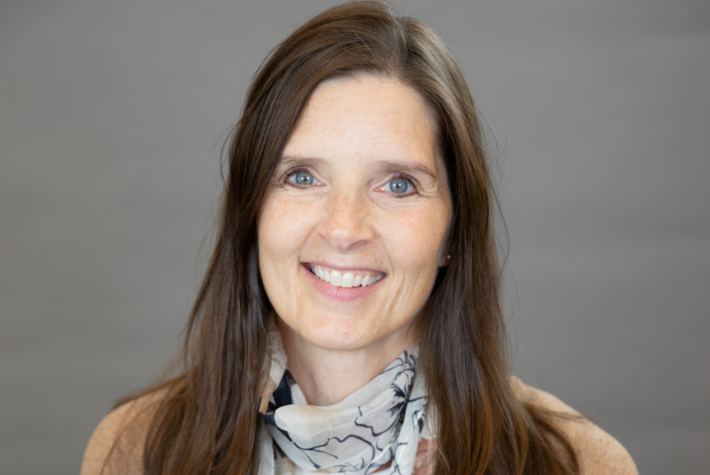
Concordia University, St. Paul
University of Denver
What general advice would you give to a Curriculum Facilitator?
Debbie Azevedo Ed.D.: Curriculum and Instruction graduates should embrace technology and stay current with educational trends. The educational field is constantly changing, and graduates can keep up with the latest research and educational technology by attending conferences, subscribing to journals, and attending professional development. Being up to date on the latest educational technology can support graduates in enhancing their learning and streamlining curriculum development.
What Curriculum Facilitator skills would you recommend for someone trying to advance their career?
Debbie Azevedo Ed.D.: Graduates can pursue additional certifications, such as special education or bilingual authorizations. Another idea would be to seek opportunities in the private sector such as working with an edtech company or as an educational specialist, supporting school districts with curriculum and instructional practices.
What will help Curriculum Facilitators increase their earning potential?
Debbie Azevedo Ed.D.: 1. Collaboration with Colleagues and the Community - Graduates will need skills in teamwork and collaborating on curriculum design to create educational experiences supportive and inclusive of all students. 2. Digital Integration - Graduates will integrate digital tools, including artificial intelligence, into their curriculum to enhance student learning. 3. Data Analysis - The skill of collecting and analyzing student data to inform instruction will be essential in improving student outcomes. 4. Personalized Learning Design - The skill of designing curricula to fit students' needs, including adaptive learning technologies and individualized learning paths, will be critical in the next 3-5 years as learning becomes more student-centered.
What soft skills should all Curriculum Facilitators possess?
Todd Finley Ph.D.: Being able to read the social contexts of different schools and classrooms is critical for curriculum specialists. With strong interpersonal skills, they should be able to critique classroom instruction without causing the teacher to feel threatened. They should also be able to read when students are simply being compliant instead of actually engaged by a rich curriculum. Finally, a spirit of generosity needs to be the curriculum specialist's ethos instead of applying a deficit mindset to a teacher's abilities.
Dr. Leah Ketcheson
Assistant Professor, Health and Physical Education Teaching (H-PET)Wayne State University
Kinesiology, Health and Sport Studies
What skills will help Curriculum Facilitators earn the most?
Dr. Leah Ketcheson: Hard work, resiliency, and creativity.
What soft skills should all Curriculum Facilitators possess?
Dr. Leah Ketcheson: Listening to feedback from students and building relationships with community partners.
Dr. Barbara Wissink
Associate Professor of Education, Program Chair: Master of Education: with an Emphasis in Literacy with the additional MN K-12 Reading EndorsementConcordia University, St. Paul
Graduate Teacher Education
What skills will help Curriculum Facilitators earn the most?
Dr. Barbara Wissink: A candidate's resume must demonstrate that they have the correct credentials (master's degree and an endorsement/license in a specialized field) for a curriculum and instructional specialist position. Without the correct credentials, the candidate may be considered for a lower-paying "instructional support" position within a school district.
What's a day at work look like for a Curriculum Facilitator?
Maria Salazar Ph.D.: This is a great unknown. Their experience will be dependent on the ever-changing work force and their ability to adapt and innovate.