Explore jobs
Find specific jobs
Explore careers
Explore professions
Best companies
Explore companies
Job outlook for directors of communications and outreach in the United States
Are director of communications and outreach jobs in demand?
Director of communications and outreach job and salary trends over time
Director of communications and outreach jobs over time
Director of communications and outreach job growth rate over time
| Year | # of jobs | % of population |
|---|---|---|
| 2021 | 3,086 | 0.00% |
| 2020 | 3,074 | 0.00% |
| 2019 | 3,087 | 0.00% |
| 2018 | 2,957 | 0.00% |
| 2017 | 2,799 | 0.00% |
Average director of communications and outreach salary over time
Director of communications and outreach salary by year
| Year | Avg. salary | Hourly rate | % Change |
|---|---|---|---|
| 2026 | $75,152 | $36.13 | +3.6% |
| 2025 | $72,506 | $34.86 | +2.8% |
| 2024 | $70,530 | $33.91 | +1.9% |
| 2023 | $69,213 | $33.28 | --0.9% |
| 2022 | $69,839 | $33.58 | +1.8% |
Director of communications and outreach jobs by state
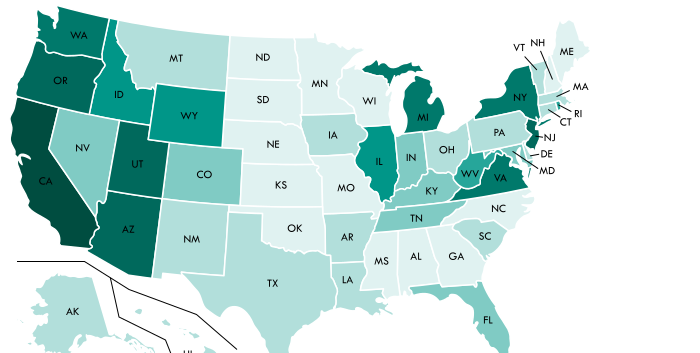
Most common states for directors of communications and outreach
| Rank | State | Population | # of jobs | Employment/ 1000ppl |
|---|---|---|---|---|
| 1 | District of Columbia | 693,972 | 292 | 42% |
| 2 | South Dakota | 869,666 | 227 | 26% |
| 3 | West Virginia | 1,815,857 | 323 | 18% |
| 4 | Alabama | 4,874,747 | 634 | 13% |
| 5 | Louisiana | 4,684,333 | 615 | 13% |
| 6 | Oklahoma | 3,930,864 | 497 | 13% |
| 7 | Delaware | 961,939 | 118 | 12% |
| 8 | Vermont | 623,657 | 74 | 12% |
| 9 | Massachusetts | 6,859,819 | 702 | 10% |
| 10 | Wyoming | 579,315 | 54 | 9% |
| 11 | North Dakota | 755,393 | 63 | 8% |
| 12 | Alaska | 739,795 | 61 | 8% |
| 13 | Virginia | 8,470,020 | 614 | 7% |
| 14 | Maryland | 6,052,177 | 427 | 7% |
| 15 | New Hampshire | 1,342,795 | 94 | 7% |
| 16 | Montana | 1,050,493 | 75 | 7% |
| 17 | Rhode Island | 1,059,639 | 72 | 7% |
| 18 | Washington | 7,405,743 | 450 | 6% |
| 19 | Utah | 3,101,833 | 176 | 6% |
| 20 | Idaho | 1,716,943 | 96 | 6% |
Most common cities for directors of communications and outreach
| Rank | City | # of jobs | Employment/ 1000ppl | Avg. salary |
|---|---|---|---|---|
| 1 | Dover | 1 | 3% | $68,895 |
| 2 | San Francisco | 1 | 0% | $105,234 |
Director Of Communications And Outreach job outlook: Expert opinions
Our panel of director of communications and outreach experts
University of Missouri-St. Louis
Luther College

Morehouse College
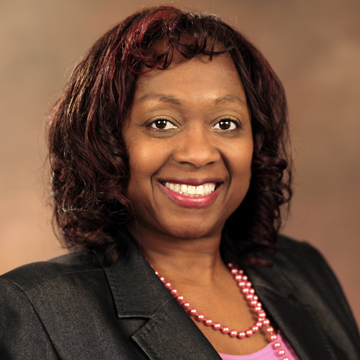
Indiana University Northwest

University of the Incarnate Word
Calvin University

University of Wisconsin-Madison
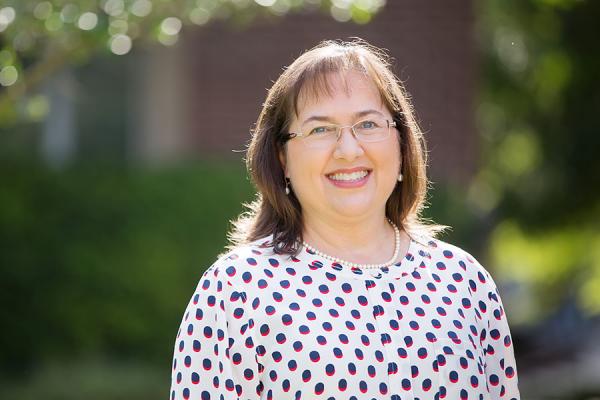
Mississippi College
Vicki Sauter Ph.D.
Professor of Information Systems and TechnologyUniversity of Missouri-St. Louis
Information Systems Department
What are the biggest trends we'll see in the Director Of Communications And Outreach job market given the pandemic?
Vicki Sauter Ph.D.: The most important trend is that we are all going to have problems going back to work. We are accustomed to the flexibility, the clothing trends, etc. If that is true, employers need to look for self-starters and self-motivators who can be productive home workers.
In terms of disciplines, I think the new hot jobs will be in supply chains and cybersecurity. We have certainly seen the impact of breaks in the supply chains and breaks into our computing files. We will all need to think along these lines: "How can we be sure our computers are safe when many people are not very good at keeping passwords and other security mechanisms? Is your system secure?"
What soft skills should all Directors Of Communications And Outreach possess?
Vicki Sauter Ph.D.: The major soft skill needed by all graduates is communication, and net etiquette (netiquette), especially by younger workers. These workers are on the computer or the phone at all times. They don't distinguish between professional communication and personal communication. That combined with most communication happening in text, in Zoom, etc. They need to understand that you cannot rely upon emoticons and abbreviations to get your points across to the boss or the customer.
Associated with this is a need for comfort with computers, software, and fast changes in both.
Sarah Wilder Ph.D.
Associate ProfessorLuther College
Communication Studies Department
Will there be an enduring impact of the coronavirus pandemic on Directors Of Communications And Outreach?
Sarah Wilder Ph.D.: I don't see how there won't be some sort of enduring impact. If you're asking about the individuals or the career field or all of the above, I suspect the impact of the pandemic will be far-reaching. This has been a life-altering experience on many levels. That being said, I believe humanity continues to show its resilience and that as we navigate the changes, sometimes traumas, of this experience, we also learn and grow from it. Individuals now have a better sense of themselves, their needs, and their goals having had to navigate a pandemic. Further, graduates have been forced to become more adaptable in every way and this will likely carry over into various careers. That these individuals know how to shift quickly between modes of communication may be an expectation and a benefit for them that they can. These graduates can interact face-to-face but have also learned how to interact via mediated channels of communication. Being able to do this, and do it competently, changes the expanse of the workforce. So, from personal to professional facets of their lives, I suspect there will be some lasting impact.
What certifications/licenses/courses can have the biggest impact for Directors Of Communications And Outreach?
Sarah Wilder Ph.D.: That's an interesting question for a degree like Communication Studies that doesn't have a designated career like other fields. Some positions of our recent graduates include anchor, producer, occupational therapist, director of career development, attorney at law, librarian, graduate student, social worker, marketing manager, and director of training, to name a few. So really what certifications or licenses are helpful will be position/career specific. As far as courses, I recommend a breadth of courses that prepare individuals to interact and communicate competently as well as think critically. This could mean taking an interpersonal communication course to better understand the nuances of truly empathic, competent communication with others, particularly in a diverse workforce, to taking a course on argumentation to better understand how to effectively present ideas and critically interact with a larger society's positions on complicated ideologies.
What certifications/licenses/courses can have the biggest impact for Directors Of Communications And Outreach?
Matthew Lange Ph.D.: Specific credentials are often a prerequisite to a particular career path. In the field of education, primary- and secondary-school teachers need licensure in their state of employment to teach in public schools, and those requirements are covered in the undergraduate education program. If one moves to another state, however, the new state's Department of Education (or Public Instruction) has to grant new licensure in its state. In contrast, professors and instructors at the post-secondary level require no teaching credentials. Instead, the college or university stipulates a PhD, MA or even simply BA.
The vast majority of German majors/minors learn the language and culture to apply that knowledge to their primary field of study, most often in business or the sciences, to expand their work, study, and research options. Some opportunities have minimum language proficiency expectations, however. Instead of taking applicants self-evaluations of language proficiency (the term "fluent" means different things to different people), employers can rely on standardized tests such as the Oral Proficiency Interview (OPI) or Writing Proficiency Test (WPT), which were developed by the American Council on the Teaching of Foreign Languages (ACTFL). German language programs aim to produce graduates with proficiency at the intermediate-high or advanced-low on the ACTFL scale, which ranges from novice-low to distinguished, since that is simultaneously the expected minimum set by the respective state Department of Education for teaching licensure. One can also look beyond the US border to various tests at the Goethe Institut, which evaluate the four modalities of listening, reading, speaking, and writing. These tests evaluate according to the Common European Reference Framework (CERF) that ranges from A1 to C2. German universities require B1 on the CERF scale to enroll directly in university.
Most important for a well-rounded education, of course, is a study abroad experience. By being "a stranger in a strange land" one develops negotiation techniques and problem-solving skills when dealing with linguistically- and culturally-ambiguous situations. Studies have shown that study and work abroad increases creativity and flexibility, which are crucial for personal and professional growth.
What will help Directors Of Communications And Outreach increase their earning potential?
Matthew Lange Ph.D.: Several articles over the past few years have noted the salary bump for employees with second-language skills. A 2014 report in The Economist entitled "What is a language worth?" indicated, for example, that German proficiency can add a 3.8% bump to your earnings, as calculated by MIT economist Albert Saiz. This increase can come directly from employers who pay a premium for language skills, or the employee can benefit from a larger pool of opportunities that are simply inaccessible to monolingual speakers.
But while many graduates increasingly like to consider return-on-investment (ROI) of a course of study or set of skills, let us not forget that quality of life is important as well, even if it is difficult to quantify. Learning another language and its culture exposes one to another value system that might prefer, for example, more vacation time over increased salary.
Dorothy Ige Campbell
Professor of Communication Emeritus, Founder & Former ChairIndiana University Northwest
Department of Communication
What are the biggest trends we'll see in the Director Of Communications And Outreach job market given the pandemic?
Dorothy Ige Campbell: The emphases on graphic design and emerging media are in demand more than ever in an increasingly virtual world. New workers who have some Public Relations and persuasive communication backgrounds will have an edge. Those who work or go to school in diverse environments and have cross-cultural training during this time of civil rights demands are also suited for the new era. Jobs in Communication have decreased a bit (see below).
What certifications/licenses/courses can have the biggest impact for Directors Of Communications And Outreach?
Dorothy Ige Campbell: A bachelor's degree in Communication is considered ideal for non-academic jobs. For undergraduate degrees, a Communication degree paired with a Minor (such as Business) can be ideal, and that has not changed. Those who wish to teach Communication in secondary schools often complete a four-year degree with a major in Education which stresses teaching methods and childhood development, with an emphasis in Communication. Courses in Drama and English also help secondary teacher preparation in Communication.
For graduate education and academic faculty positions in higher education, a Masters in Communication or a related field for part-time teaching for Junior College teaching of Communication courses is usually required. A Ph. D. is usually required for tenure-track, full-time faculty positions in Communication. Courses in statistical research, theory, then specialty Communication courses (such as Health, Religious or Strategic Communication, and so on) are usually required. At all levels, there is an increased emphasis on diversity in the curriculum.
What are the biggest trends we'll see in the Director Of Communications And Outreach job market given the pandemic?
Taylor Collins Ph.D.: The pandemic has largely accelerated and amplified many labor market trends that were already
underway. We're seeing markets consolidating, more remote work settings, and more automated
processes. Moving forward, there are likely to be fewer small business job openings while corporate
positions should significantly grow. Graduates should also expect that they will no longer be competing
solely with other local graduates for entry-level jobs. Labor market competition is going to continue to
become more national, or even international.
The pandemic also seems to have accelerated the rate of AI investment, with research by Stanford's
2021 AI Index Report finding that total global investment in artificial intelligence increased by 40% in
2020. This doesn't necessarily mean that jobs for business economics students will disappear however,
as strong job growth over the next decade is projected in many fields hiring our graduates. But it does
mean that much of the work may look different. Employers will be looking for more than just plug and
run data junkies. Workers who can support the power of automation are likely to find stable job
prospects, and that requires competence in creative problem solving, the capacity to critically analyze
and interpret data outputs, and a social skillset that will facilitate large scale collaboration and
teamwork.
What soft skills should all Directors Of Communications And Outreach possess?
Taylor Collins Ph.D.: One thing I've heard from several managers recently is a frustration with the lengths they've had to take
to maintain engagement from their employees in this new work-from-home reality. Many workers who
were reliably plugging away when in the office quickly lost their drive without a direct supervisor looking
over their shoulder, and this change has been one of the biggest challenges of efficient remote work.
Moving forward, I expect firms to correct for this frustration by placing a premium on self-starters.
Individuals who can be reliably counted on to complete their tasks, even when they are not kept under
the direct watchful eye of a manager, will be particularly valued. To meet this demand, students need to
use their college experience as an opportunity to build and craft a sense of self-motivation.
What are the biggest trends we'll see in the Director Of Communications And Outreach job market given the pandemic?
LaShone Manuel: Some skills graduates should possess will be excellent communication skills (written, verbal). Persistence, relating to determination and hard work ethic. And lastly, I recommend students expand on their technical skills.
Will there be an enduring impact of the coronavirus pandemic on Directors Of Communications And Outreach?
Dr. Derek Johnson Ph.D.: Departments like ours are aware of the added challenges created by the pandemic and we've been taking steps to help our students find opportunities while also helping employers to overcome the challenges of continuing to provide needed experience. Given the uncertainty around in-person work, we've been trying to generate online internships that allow students to connect with employers in safer ways. At the same time as we address the current crisis, we are also working to address long-standing barriers to access that have limited work opportunities based on social status, geography, the ability to support one's self, and more. Virtual internships can help with that, but there's more work to do to make sure everyone has equal opportunity to succeed and to manage the crises we face.
What Director Of Communications And Outreach skills would you recommend for someone trying to advance their career?
Dr. Phyllis Seawright: A gap year is only as adventurous as the budget allows. An up-to-date resume, thorough research of job websites in the desired area, and the ability to Zoom or Skype for interviews will help a fledgling fly farther from the nest. Having excellent presentation skills will secure that job over the Zoom universe.
What general advice would you give to a Director Of Communications And Outreach?
Dr. Phyllis Seawright: General advice: Practice professionalism while you are still in classes. When it's time for the BIG interview, you will feel more confident in how you present yourself to a potential employer. Keep a friend handy who can review your resume and other materials. It's too easy to miss an error when you have the INTERVIEW on your mind. And keep your interview suit READY to wear.