Explore jobs
Find specific jobs
Explore careers
Explore professions
Best companies
Explore companies
Job outlook for firmware developers in the United States
Are firmware developer jobs in demand?
Firmware developer job and salary trends over time
Firmware developer jobs over time
Firmware developer job growth rate over time
| Year | # of jobs | % of population |
|---|---|---|
| 2021 | 161 | 0.00% |
| 2020 | 2,823 | 0.00% |
| 2019 | 346 | 0.00% |
| 2018 | 2,789 | 0.00% |
| 2017 | 2,715 | 0.00% |
Average firmware developer salary over time
Firmware developer salary by year
| Year | Avg. salary | Hourly rate | % Change |
|---|---|---|---|
| 2026 | $87,481 | $42.06 | +3.4% |
| 2025 | $84,599 | $40.67 | +2.3% |
| 2024 | $82,684 | $39.75 | +2.2% |
| 2023 | $80,880 | $38.88 | +0.7% |
| 2022 | $80,323 | $38.62 | +1.2% |
Firmware developer jobs by state

Most common states for firmware developers
| Rank | State | Population | # of jobs | Employment/ 1000ppl |
|---|---|---|---|---|
| 1 | District of Columbia | 693,972 | 527 | 76% |
| 2 | Washington | 7,405,743 | 3,619 | 49% |
| 3 | Minnesota | 5,576,606 | 1,579 | 28% |
| 4 | Colorado | 5,607,154 | 1,570 | 28% |
| 5 | Virginia | 8,470,020 | 2,166 | 26% |
| 6 | Massachusetts | 6,859,819 | 1,759 | 26% |
| 7 | North Dakota | 755,393 | 188 | 25% |
| 8 | Vermont | 623,657 | 156 | 25% |
| 9 | Wyoming | 579,315 | 144 | 25% |
| 10 | Nebraska | 1,920,076 | 451 | 23% |
| 11 | Maryland | 6,052,177 | 1,306 | 22% |
| 12 | Utah | 3,101,833 | 642 | 21% |
| 13 | Delaware | 961,939 | 206 | 21% |
| 14 | California | 39,536,653 | 7,723 | 20% |
| 15 | Georgia | 10,429,379 | 2,121 | 20% |
| 16 | Oregon | 4,142,776 | 822 | 20% |
| 17 | Kansas | 2,913,123 | 596 | 20% |
| 18 | New Mexico | 2,088,070 | 403 | 19% |
| 19 | New Hampshire | 1,342,795 | 259 | 19% |
| 20 | Rhode Island | 1,059,639 | 206 | 19% |
Most common cities for firmware developers
| Rank | City | # of jobs | Employment/ 1000ppl | Avg. salary |
|---|---|---|---|---|
| 1 | Annapolis | 2 | 5% | $80,942 |
| 2 | Santa Clara | 2 | 2% | $112,998 |
| 3 | Severn | 1 | 2% | $80,829 |
| 4 | Folsom | 1 | 1% | $113,072 |
| 5 | Mountain View | 1 | 1% | $113,185 |
| 6 | Denver | 1 | 0% | $69,845 |
| 7 | Indianapolis | 1 | 0% | $68,795 |
| 8 | Los Angeles | 1 | 0% | $98,793 |
| 9 | San Francisco | 1 | 0% | $114,128 |
| 10 | Seattle | 1 | 0% | $102,672 |
| 11 | Tucson | 1 | 0% | $78,144 |
Firmware Developer job outlook: Expert opinions
Our panel of firmware developer experts
Nova Southeastern University
Mount St. Joseph University

Furman University

Murray State University
Washington University in St. Louis
What will help Firmware Developers increase their earning potential?
Dr. Frank Mitropoulos Ph.D.: As we look toward the future of careers in Computer Applications, several skills stand out for their growing importance. These skills revolve around specific technologies that are expected to continue to grow and evolve. Technologies related to Cloud Computing, Artificial Intelligence (AI), Cybersecurity, and Data Science are quickly evolving and being applied across the technology sector. Cloud Computing: Given the widespread adoption of Cloud services, Cloud computing expertise is indispensable. Understanding how to leverage platforms like Azure, AWS, and Google Cloud is crucial to developing scalable, efficient solutions that meet business needs. Artificial Intelligence: AI and Machine Learning are transforming the world. Skills in these areas to solve real-world problems will be even more critical in the future. Cybersecurity: Digital threats are becoming more sophisticated. Safeguarding data, networks, and systems will require encryption, intrusion detection, development, and regulation skills. Data Science: Skills in Data Science will be increasingly sought after as businesses embrace data-driven decision-making. Extracting meaningful insights from extensive datasets and effectively communicating these findings will be essential. Soft skills: Finally, soft skills such as teamwork, problem-solving, and effective communication cannot be overlooked. Adapting, communicating, and leading will be essential for success.
Rebecca Allen
Mount St. Joseph University
Special Education And Teaching
What general advice would you give to a Firmware Developer?
Rebecca Allen: AI, for sure. I have heard it said that AI might not replace humans, rather humans who know how to use AI well may replace humans who don't.
What certifications/licenses/courses can have the biggest impact for Firmware Developers?
Kevin Treu Ph.D.: Seek out courses that have a major project component, ideally with students working together in teams. And as paradoxical as it may sound - the best experiences are those where the teacher is less of a teacher and more of a facilitator. That is, they create an environment where the onus is on you to go and find the tools that you need to produce the required outcome. At Furman, we have several such courses in topics such as Web-Based App Development, Game Design and Development, Systems Analysis, and Human-Computer Interaction. Sometimes it can be disconcerting - for both student and teacher - when a project-based, "just in time" learning paradigm is used. It's so different from what we're used to! But time and time again, our alums have reported to us that these experiences most closely mirror the actual work experience and thus have the greatest impact on job success.
Dr. Matthew Tennyson Ph.D.
Associate Professor of Computer ScienceMurray State University
Computer Science and Information Systems
What certifications/licenses/courses can have the biggest impact for Firmware Developers?
Dr. Matthew Tennyson Ph.D.: A bachelor's degree in computer science is extremely valuable. It has been and continues to be one of the most valuable college degrees a student can pursue. I really think all areas of computing are in demand, but web and mobile computing might be one of the strongest. Some employers do like to see extra certifications in addition to the bachelor's degree. There are literally hundreds of certifications available in the computing industry. They all vary in the required amount of time, effort, and money. I think anything that can set a candidate apart from other candidates is valuable, and that includes any certification. I would not recommend investing thousands of dollars into additional certifications after completing a bachelor's degree, but I don't think it's a bad idea for students to pursue one of the free or lower-cost certifications that are available - especially those students who might not have strong internship experience, extracurricular activities, projects, etc. to put on their resumes. I think anything DevOps related or cloud-based like Amazon's AWS or Microsoft's Azure are especially valuable right now.
What are the biggest trends we'll see in the Firmware Developer job market given the pandemic?
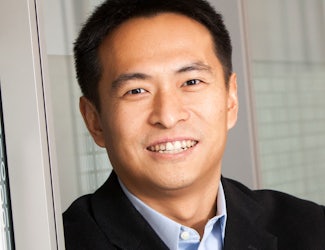
Dr. Tao Ju: History has proven that engineers have fared well in the most challenging job markets; the aftermath of this pandemic will be no different. If anything, we may see some industries pull back on hiring while other industries pick up (health care, technology, consumer products, etc.). As the global economy remains a bit turbulent, it's likely that we'll see more just-in-time hiring. Companies may be cautious to hire new grads 6-9 months prior to graduation like we've seen in recent years, but it will only be temporary. Until things stabilize a bit more, companies may turn to hiring more interns or contractors to fill gaps. However, the overall demand for engineers will not slow for a significant period of time. We'll see companies use more virtual recruiting strategies because they have seen the success they can have with multi-school virtual sessions, online job fairs and video interviewing. More and more companies will integrate artificial intelligence to standardize and simplify their recruiting process. We'll also see an upward trend in diversity, equity and inclusive (DEI) hiring practices as more candidates seek out diverse and inclusive employers and more attention is drawn to ongoing challenges.