Explore jobs
Find specific jobs
Explore careers
Explore professions
Best companies
Explore companies
Job outlook for high school counselors in the United States
High school counselor job growth summary. After extensive research, interviews, and analysis, Zippia's data science team found that:
The projected high school counselor job growth rate is 10% from 2018-2028.
About 32,400 new jobs for high school counselors are projected over the next decade.
High school counselor salaries have increased 7% for high school counselors in the last 5 years.
There are over 21,328 high school counselors currently employed in the United States.
There are 93,675 active high school counselor job openings in the US.
The average high school counselor salary is $48,361.
Are high school counselor jobs in demand?
High school counselor job and salary trends over time
High school counselor jobs over time
High school counselor job growth rate over time
| Year | # of jobs | % of population |
|---|---|---|
| 2021 | 21,328 | 0.01% |
| 2020 | 21,030 | 0.01% |
| 2019 | 21,334 | 0.01% |
| 2018 | 20,542 | 0.01% |
| 2017 | 19,527 | 0.01% |
Average high school counselor salary over time
High school counselor salary by year
| Year | Avg. salary | Hourly rate | % Change |
|---|---|---|---|
| 2026 | $48,361 | $23.25 | +1.9% |
| 2025 | $47,462 | $22.82 | +1.3% |
| 2024 | $46,855 | $22.53 | +1.6% |
| 2023 | $46,106 | $22.17 | +1.6% |
| 2022 | $45,399 | $21.83 | +1.7% |
High school counselor jobs by state
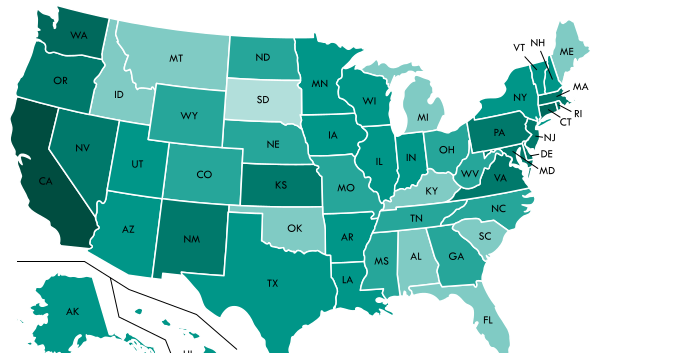
Most common states for high school counselors
| Rank | State | Population | # of jobs | Employment/ 1000ppl |
|---|---|---|---|---|
| 1 | District of Columbia | 693,972 | 136 | 20% |
| 2 | Montana | 1,050,493 | 152 | 14% |
| 3 | Connecticut | 3,588,184 | 481 | 13% |
| 4 | New Hampshire | 1,342,795 | 161 | 12% |
| 5 | Alaska | 739,795 | 86 | 12% |
| 6 | Delaware | 961,939 | 106 | 11% |
| 7 | Illinois | 12,802,023 | 1,316 | 10% |
| 8 | Rhode Island | 1,059,639 | 101 | 10% |
| 9 | Arizona | 7,016,270 | 614 | 9% |
| 10 | Minnesota | 5,576,606 | 492 | 9% |
| 11 | Oregon | 4,142,776 | 377 | 9% |
| 12 | Wyoming | 579,315 | 51 | 9% |
| 13 | Pennsylvania | 12,805,537 | 1,058 | 8% |
| 14 | New Jersey | 9,005,644 | 738 | 8% |
| 15 | Maryland | 6,052,177 | 510 | 8% |
| 16 | Colorado | 5,607,154 | 473 | 8% |
| 17 | Vermont | 623,657 | 52 | 8% |
| 18 | Nevada | 2,998,039 | 197 | 7% |
| 19 | Kansas | 2,913,123 | 193 | 7% |
| 20 | New Mexico | 2,088,070 | 141 | 7% |
Most common cities for high school counselors
| Rank | City | # of jobs | Employment/ 1000ppl | Avg. salary |
|---|---|---|---|---|
| 1 | Burlington | 1 | 4% | $42,260 |
| 2 | Mountain View | 1 | 1% | $61,739 |
| 3 | Topeka | 1 | 1% | $47,656 |
| 4 | Philadelphia | 1 | 0% | $49,673 |
| 5 | Riverside | 1 | 0% | $58,696 |
| 6 | Washington | 1 | 0% | $58,853 |
High School Counselor job outlook: Expert opinions
Our panel of high school counselor experts
Sonoma State University
Indiana Wesleyan University
Jackson State University
University of Nevada - Las Vegas
Adelphi University
Governors State University
Saint Xavier University
Western Illinois University

Lewis University

Texas Woman's University
Louisiana State University at Shreveport
Hiram College

Monmouth University

Peak to Peak Charter School
George Fox University
What general advice would you give to a High School Counselor?
Dr. Adam Zagelbaum: I believe that trauma-informed care services are going to be quite necessary since there have been a rising number of students impacted by traumatic events. The COVID-19 pandemic itself was a global trauma that contributed to the current situation where schools are seeing an increase in mental health needs. Schools are needing to provide more Section 504 Accommodation Plans where access to the school counselor might be listed as an accommodation and school counselors need to step into that space. Further, although there has always been a need for bilingual school counselors, with increased migrancy to the United States, I also believe learning a second language is becoming more valuable and critical within many schools. English-only school counselors ought to attempt to maximize their knowledge regarding a) counseling migrant students b) working with multicultural families, and c) the particular mental health needs of English language learner students so that they can not only help the student, but also advise school-site teammates accordingly.
What High School Counselor skills would you recommend for someone trying to advance their career?
Dr. Adam Zagelbaum: Though the word 'maximize' is a tough one for me to define, I believe people should take the time to look up the public salary schedules available to places where they are applying to be sure that they can position themselves to have as reasonable and comfortable a starting position as possible. Asking questions during the job interview about how raises and salary increases occur can also give people a sense of how easy or possible it is to obtain these things. Early career school counselors may not want to be short-sighted but rather, look for employers that provide longevity increases or simply do not have a cap/have extended step increases for those counselors who remain in the same position a number of years. Of course, having bilingual skills naturally lends itself to marketability, but so does possessing various trauma certifications or certifications/experience regarding specific populations, such as working with students with autism.
What will help High School Counselors increase their earning potential?
Dr. Adam Zagelbaum: I recommend that school counselors enter the field with as much open mindedness as possible, meaning that they would consider as many grade levels and school districts possible when choosing a job. This provides the school counselor the possibility of having various options, including the choice to work with a team or to have an independent position. I also believe that it is important to assess how many forms of support the early career counselor will have, whether this be amongst coworkers, the school district administration, or even the PTA because working in isolation can be draining. Support for a school counselor is important as it can be difficult for anyone first starting a counseling-focused position to learn the role, manage their time, and self-support their mental health while supporting student needs. It can be helpful to have access to consultation between district coworkers for not only case support but also for emotional support. It would also be beneficial to inquire about whether districts provide the school counselor ongoing training and professional development, including conference/workshop participation. It is important for entry-career school counselors to have support to grow as much as possible so that they can expand their skills.
What general advice would you give to a High School Counselor?
Judith Justice EdD, PSC, LMHC: Based on the American School Counseling Association (ASCA Model), SCs assist students in academic, social/emotional, and college/career counseling. Daily they support students in individual and group counseling, provide proactive classroom instruction, consult and collaborate with faculty, families, and staff, and work to provide a safe and secure school environment.
What High School Counselor skills would you recommend for someone trying to advance their career?
Judith Justice EdD, PSC, LMHC: Mental health across the nation is at an all-time low. School counselors are well-equipped to help with this need, as they see the students in social and academic situations throughout the school year. They get to know the students year after year and assist them in need or refer them to outside counseling within the community. Because of this, most states are in strong need for SC at this time.
What will help High School Counselors increase their earning potential?
Judith Justice EdD, PSC, LMHC: I believe that most SC would say that they love to assist youth in their growth and into their futures. Most would likely say they dislike the duties they may be expected to do that take away time with their students. Oftentimes, they are expected to do tasks such as scheduling, recess/lunch/or bus duties (which can be nice as they get to see students, BUT they want to be able to assist students in their major needs).
Jie Ke
Associate Professor of Human Resource DevelopmentJackson State University
Student Counseling And Personnel Services
What general advice would you give to a High School Counselor?
Jie Ke: - Familiarize yourself with school systems and policies: Take the time to familiarize yourself with the specific educational system, policies, and regulations of the school or district you'll be working in. Understanding the administrative processes and procedures will help you navigate the system more effectively. Collaborate with teachers and parents: Establish strong relationships with teachers and parents to foster a collaborative approach in supporting students. Regular communication and collaboration with these stakeholders can enhance your ability to address students' academic, social, and emotional needs. Practice self-reflection: Take time for self-reflection to enhance your self-awareness and improve your counseling skills. Regularly review your interactions, techniques, and personal biases to ensure that you are providing the best possible support to students.
What High School Counselor skills would you recommend for someone trying to advance their career?
Jie Ke: - Technology skills: With the increasing integration of technology in educational settings, school counselors will need to be proficient in using technology tools and platforms for counseling, data analysis, and communication. - Data analysis skills: School counselors will need to have strong skills in collecting, analyzing, and interpreting data to inform their counseling interventions and measure their effectiveness.- Collaboration and interdisciplinary teamwork skills: School counselors will increasingly collaborate with other professionals, including teachers, administrators, psychologists, and community organizations. - Crisis intervention skills: The ability to provide immediate, short-term help to individuals who experience an event that produces emotional, mental, physical, and behavioral distress or problems.
What will help High School Counselors increase their earning potential?
Jie Ke: - Collaborate with professionals in the field and build up a network in the specific areas that you are interested in. Seek professional development opportunities: Engage in professional development activities such as attending conferences, workshops, or webinars specific to school counseling. These opportunities will help you stay current with the latest research, enhance your skills, and connect with other professionals in the field. Stay informed about educational trends: Stay up to date with current trends and research in education and counseling. This includes being aware of new intervention strategies, evidence-based practices, and developments in the field of school counseling. Continuous learning will help you provide the most effective support to students.
Dr. Leonard Harsy
Assistant ProfessorWhat general advice would you give to a High School Counselor?
Dr. Leonard Harsy: Here are some skills and knowledge that would be useful:
Excellent counseling skills
Knowledge of post-secondary admissions and financial aid information
Knowledge of working with undocumented students.
How to coach first-generation college bound students who now make up more that half of the 4-year college population
Second language skill
Data collection and interpretation skills
What High School Counselor skills would you recommend for someone trying to advance their career?
Dr. Leonard Harsy: Some schools pay more to school counselors who have completed hours beyond their master's degree. In Illinois High School counselors are paid more than grade school counselors unless it is a unit (k-12) district. In Illinois, district with the largest tax base in their community usually pay more.
What will help High School Counselors increase their earning potential?
Dr. Leonard Harsy: In Illinois school counselors do not need teaching experience in order to become a school counselor. However, teachers have the advantage of demonstrated experience of working with kids in a school environment. They often have a better understanding of school culture. It can put non-licensed teachers at a disadvantage in the job market. Prospective candidates without teaching experience should be able to point to other non-teaching experience where they have worked with children. They can also bring other desirable credentials. For instance, if they have taken the courses to become a licensed professional counselor or classes in addiction, or though ASCA U, they may have some background that teachers do not. I've taught and hired a number of non-teachers that brought with them other skills and talents.
Wendy Hoskins Ph.D.
Associate Professor and Associate Department ChairUniversity of Nevada - Las Vegas
Student Counseling And Personnel Services
What general advice would you give to a High School Counselor?
Wendy Hoskins Ph.D.: Counselors working in schools need to utilize all their skills and advocate to provide counseling services to their students. Child and adolescent social emotional needs are rising due to a variety of factors (COVID-19 long term effects, racialized trauma, higher pressures in the home and environment). Counselors working in schools over the next 3-5 years need to help students reduce barriers that manifest in the student's daily life (anxiety, trauma, neglect) and help students build protective factors (support system, coping skills, social emotional support) so that they can refocus on their academic and career goals.
What High School Counselor skills would you recommend for someone trying to advance their career?
Wendy Hoskins Ph.D.: Get excited! Everyday will be different, new and challenging. But the work you do is invaluable to the individuals you will help. Counselors who choose to work in schools are on the front lines in assisting K-12 students in a variety of ways in the areas of Social Emotional, Academic, and Career. Students may be in a school environment, but they bring all their human issues in with them. Counselors need to find ways to be available to students before, during, and after school and be prepared for anything. Every day at a school can be different and plans can change. Counselors need to be flexible, and be ready to assess the needs of the student population in their school to best attend to varying needs. Counselors also need to make sure to practice self care and maintain a healthy lifestyle. We must take care of ourselves in order to best be available to our students and their families. This is vital.
What will help High School Counselors increase their earning potential?
Wendy Hoskins Ph.D.: Counselors working in schools can maximize their salaries in a few ways. After graduation, make sure to move from a provisional license to a permanent professional school counseling license in your state as soon as you qualify. This may involve taking an exam such as the Praxis. Consider additional certifications (National Certified School Counselor) and education (Advanced Graduate Certificate, Ph.D.) that can result in a pay raise. Counselors who stay within the same district can also maximize pay and move across a pay scale based on how many years plus education invested after hire.
What general advice would you give to a High School Counselor?
Katherine Stavrianopoulos Ph.D.: Education and Credentials: Invest in obtaining advanced degrees and relevant certifications that enhance your qualifications and marketability. A master's or doctoral degree in counseling psychology, along with licensure or certification in your jurisdiction, can significantly increase your earning potential. Specialization and Niche Expertise: Develop expertise in specialized areas of counseling psychology that are in demand or command higher fees. Consider focusing on niche populations, such as children and adolescents, trauma survivors, couples therapy, family therapy and acquire specialized training or certifications to differentiate yourself in the market. Clinical Experience and Internships: Gain diverse clinical experience through internships, practicum placements, and supervised training opportunities. Continuing Education and Professional Development: Stay abreast of emerging trends, research findings, and evidence-based practices in counseling psychology through continuing education, workshops, and professional development opportunities.
What High School Counselor skills would you recommend for someone trying to advance their career?
Katherine Stavrianopoulos Ph.D.: Digital Literacy and Teletherapy Skills: With the continued integration of technology in mental health care, counselors will need to enhance their proficiency in digital platforms and teletherapy modalities. This includes utilizing secure video conferencing tools, managing electronic health records (EHR), and maintaining ethical standards in online therapy settings. Cultural Competence and Diversity Awareness: As awareness of cultural diversity and social justice issues grows, counselors must deepen their understanding of intersectionality and cultural humility. Competence in working with diverse populations and addressing systemic barriers to mental health care will from an antiracism lens will be essential for providing inclusive and culturally responsive services. Trauma-Informed Care: Given the prevalence of trauma and its impact on mental health, counselors will need to adopt trauma-informed approaches across various settings. This includes recognizing the signs of trauma, creating safe environments for disclosure, and integrating trauma-sensitive interventions into counseling practice. Resilience-Building and Positive Psychology: In addition to addressing mental health challenges, there will be a greater emphasis on promoting resilience and well-being. Counselors will incorporate positive psychology principles, such as strengths-based interventions and mindfulness techniques, to empower clients and enhance their coping skills. Collaborative and Interdisciplinary Care: With the recognition of the interconnectedness of physical and mental health, counselors will collaborate more closely with other healthcare professionals in integrated care settings. Strong communication skills and the ability to work collaboratively within multidisciplinary teams will be essential for providing holistic and comprehensive care to clients. Data Literacy and Outcome Measurement: Increasing emphasis on evidence-based practice and outcome measurement will require counselors to develop skills in data collection, analysis, and outcome evaluation. Ethical Decision-Making in Complex Situations: As counseling scenarios become increasingly complex, counselors will face ethical dilemmas that require nuanced decision-making. Strengthening skills in ethical reasoning, consultation, and ethical sensitivity will enable counselors to navigate challenging ethical issues with integrity and professionalism.
What will help High School Counselors increase their earning potential?
Katherine Stavrianopoulos Ph.D.: Continued Learning and Development: Stay committed to lifelong learning by attending workshops, pursuing advanced certifications, and staying updated on the latest research and therapeutic techniques. Supervision and Mentorship: Seek out supervision and mentorship opportunities from experienced professionals in the field. Consider participating in a peer supervision group where you can support one another and be open to constructive criticism as part of your development. Engage in regular self-reflection for personal growth. Prioritize Self-Care: Establish healthy boundaries between work and personal life, engage in activities that recharge you and help prevent burn out. Cultural Competence and Diversity: Cultivate cultural humility and strive to understand the diverse backgrounds and perspectives of your clients. Continuously educate yourself on multiculturalism and antiracism to provide competent and inclusive counseling services. Ethical Practice: Adhere to ethical guidelines and professional standards in your practice. Strive to Build Strong Therapeutic Relationships: Establish rapport, demonstrate empathy, and create a safe and trusting environment where clients feel comfortable exploring their thoughts and feelings. Evidence-Based Practice: Stay informed about research findings and utilize interventions that have been empirically validated for specific client populations and presenting issues. Networking and Collaboration: Build professional connections within the counseling community. Attend conferences, join professional organizations, and participate in networking events to expand your professional network. Collaboration with colleagues can lead to referrals, consultation opportunities, and mutual support. Consider doing some pro bono work: Pro bono services help bridge the gap to access mental health services for individuals who cannot afford them.
Jennifer Cipollone MA
Director of School Counseling & Af. Professor of Counseling Psychology, Ph.D. Student, Organizational LeadershipWhat general advice would you give to a High School Counselor?
Jennifer Cipollone MA: I think I would say to be flexible and kind in the face of adversity. Strong, thoughtful communication and organizational skills are necessary to be successful and are needed to last a long time in the field. It is important to take additional educational credits and professional development not only to increase your salary but also to stay current with trends and issues facing students.
What High School Counselor skills would you recommend for someone trying to advance their career?
Jennifer Cipollone MA: Taking additional educational credits and professional development can help increase your salary potential and stay current with trends and issues facing students.
Errol Rodriguez Ph.D., MAC, CRC
Assistant Dean & Program Director, Master's programs in General Psychology and Mental Health CounselingAdelphi University
Mental And Social Health Services And Allied Professions
What general advice would you give to a High School Counselor?
Errol Rodriguez Ph.D., MAC, CRC: In the next few years, counselors will benefit from developing skills in emerging technology such as artificial intelligence (AI) and how such technology is being used by clients through various social media applications that might lead to clinical concerns (.e.g., dating, gambling, pornography). Integrating some of these new technologies into therapeutically sound interventions will be one way to address these concerns both in traditional therapy settings, as well as virtually (e.g., avatar therapy).
What High School Counselor skills would you recommend for someone trying to advance their career?
Errol Rodriguez Ph.D., MAC, CRC: Given the complexities of the world today, emerging counseling professionals must be flexible in their treatment approach, inclusive in their understanding of diverse cultures and sub-cultures, and mature professionally through humility, self-reflection, and self-care.
What will help High School Counselors increase their earning potential?
Errol Rodriguez Ph.D., MAC, CRC: One way to maximize your earning potential when starting your career is to develop a focus, not just a specialization. A focus requires a broader lens when it comes to earnings. For example, specializing in clinical treatments for addiction is important and will generate referrals. However, having a focus in addiction treatments extends your reach into other adjacent areas such as business applications and services offered outside of the therapy office. It might start with the question, 'what other groups or organizations might benefit from my focus area?' This might lead to a consultation opportunity at a business that is interested in reducing burnout for its employees and by extension the sequelae of problems associated with burnout (e.g., depression, addiction). One opportunity often leads to another. The second way to maximize income early in your career is to consider ways to translate what you do into a public-facing profile. Whether using LinkedIn or your own website, it is crucial for the public to become acquainted with you professionally. Investing in this process will pay off quickly.
Leonis Wright Ph.D., LPC, NCC
Associate ProfessorGovernors State University
Student Counseling And Personnel Services
What High School Counselor skills would you recommend for someone trying to advance their career?
Leonis Wright Ph.D., LPC, NCC: Launching a career in school counseling can be exciting and rewarding, but also very
challenging. As you enter the field, you will discover that school counselors wear may
hats; and based on your work setting (i.e., elementary, middle, or high school), the
expectations and responsibilities may vary. However, here are a few tips that should
help you to become competent school counselor regardless of your location. First,
although you have learned a lot from your program, please continue to seek
professional development. Lifelong learning is vital to remain current with the latest
practices and trends of this profession. Second, you now have an ethical responsibility
to ensure the welfare of all students, and to promote their academic, social/emotional,
and career development. Therefore, I encourage you to stay on your "culturally
competent" journey. By accepting and valuing inclusion and diversity, you will be a
major component in ensuring equity and access for all students. Third, don't try to do it
solo, rather be sure to collaborate with others and build strong relationships. As a
school counselor you are expected to create and implement a data-informed school
counseling program, thus, to do so. you will need support from all educational partners.
Forth, practice self-care. Unfortunately, being a school counselor can be emotionally
draining at times. Thus, it is vital that you maintain your own physical, mental, and
emotional health to prevent burnout. Remember, you can't help anyone else, if you are
not taking care of yourself. Lastly, you are a School Counselor! Simply, put, your job is to
lead, advocate, and collaborate to promote systemic change!
What will help High School Counselors increase their earning potential?
Leonis Wright Ph.D., LPC, NCC: School counselors' salaries are usually depended upon the district/school in which they
are employed as well as any years of experience in the field of education. However, here
are a few ways that school counselors may be able to maximize the salary potential.
First, if offered a job, negotiate your salary and benefits. This can be scary as a new
employee, however, knowing your worth, and not being afraid to highlight your skills
and expertise could possibility lead to a higher starting pay. Secondly, as a new MA
degree graduate, it is not too soon to consider advanced education (i.e., pursuing a
doctorate). Doing so could lead to higher-paying opportunities. Additionally, look for
positions of advancement outside of a k-12 school setting as they may also offer higher
salary potential. For example, after a few years as a practicing school counselor,
consider exploring leadership roles within district offices (i.e. counseling director, career
coordinator, etc.).
In considering these approaches, it is possible you can maximize your salary potential
while maintaining a rewarding career.
What general advice would you give to a High School Counselor?
Leonis Wright Ph.D., LPC, NCC: School counselors are expected to promote the academic, social/emotional, and career
development of all students via the creation and implementation of a data-informed
school counseling program. As a result, skills that are vital now and will be even more
prevalent in the next 3 -5 years, include, but are not limited to the following:
Leadership
Advocacy
Collaboration
Data Comprehension
Technology
Cultural Competency
Trama-Informed Care and Social-Emotional Learning (SEL)
If school counselors work at sharpening these skills, they will be better able to
effectively support the evolving needs of their students.
What High School Counselor skills would you recommend for someone trying to advance their career?
Dr. Jessica Lane Ph.D.: School Counselors are school leaders who are trained to work with ALL students in the areas of academic, career, and social-emotional domains. School counselors are prepared to provide proactive, data driven, developmentally appropriate comprehensive P-12 programming via classroom lessons, small group, and individual counseling to support student success. Skills such as: time management, study habits, communication, collaboration, cooperation, and conflict resolution are taught to build healthy behaviors, mindsets, and goals, and aid in student attendance, achievement, and behavior.
What will help High School Counselors increase their earning potential?
Dr. Jessica Lane Ph.D.: Every child deserves and needs supportive adults and student advocates, and school counselors serve in that capacity. The opportunity to help develop and support the whole student through academic, career, and social-emotional opportunities is very gratifying. A challenge of today's school counselors is the ability to have enough school counselors in schools and buildings to keep the number of students to school counselor ratio at an optimal level for student support and impact. Additionally, communicating to stakeholders how the role and training of school counselors has evolved to meet the needs of today's students is an important and necessary consideration for school counselors.
What general advice would you give to a High School Counselor?
Kristen Toole: Remember that this is a marathon, not a sprint. Personal and professional development are
lifelong processes that are never really finished. So, it is essential to pace yourself and establish a
foundation of healthy practices from the outset. Creating habits and routines in the beginning
with the end in mind can be a good strategy for success and sustainability.
Keep work-life balance and boundaries in mind from the start because breaking bad habits can
be tricky once established. Think about where you ultimately want to be and build toward that
future one step at a time. Also, it is okay if plans change! You never know where open-
mindedness and willingness to learn may take you.
What will help High School Counselors increase their earning potential?
Kristen Toole: Post-pandemic disparities have highlighted the necessity of prioritizing mental health and the
need for more mental health providers (Fink-Samnick, 2023; Health Resources & Services
Administration, 2023). The counseling field is expected to outpace the national average for
occupational growth six-fold over the next ten years (U.S. Department of Labor, 2022). There is
no question that counselors are in demand, but there are still a few strategies for new
professionals to maximize their salary potential.
A growing number of students are entering counseling graduate programs, having completed
undergraduate minors and focus areas in related fields. This is fantastic conceptually and can be
a vital strategy for enhancing their counseling work. Skill building is one way to optimize
success and salary.
Some graduate programs, like Xavier's, offer options for obtaining additional certifications along
the way to a master's degree. In Xavier's counseling program, students can choose courses that
allow them to get certificates in addiction counseling and medical trauma-informed care. For
clinical mental health counselors, this is an excellent way to demonstrate skill mastery, and for
school counselors, it provides a unique opportunity to broaden their scope of practice. Either
way, additional certifications exhibit a commitment that potential employers can appreciate.
Counselors who are well-informed about their market value and earning potential can engage in
informed offer negotiations. Additional skills are one way beginning professionals can increase
their starting salary. However, it is important to remember that total earnings include several
elements, and salary is just one piece of that puzzle.
Counselors are immensely versatile and can find work in various settings, so they need to
understand their options in addition to their earning potential. Benefits, schedule, and location
are other things that can impact the earnings bottom line and are essential to consider. Finally,
counselors must know themselves: personality, interests, work values, and abilities impact job fit
and, ultimately, work satisfaction. These are crucial considerations for mitigating compassion
fatigue (Stamm, 2010), which can limit counselors' longevity.
New professionals must research and reflect as they enter the job market. There are many things
to consider when choosing a job, and it can feel overwhelming. Thankfully, various resources,
such as the Occupational Outlook Handbook, O*Net, Glassdoor, and Monster, offer
indispensable tools and information to job seekers.
What High School Counselor skills would you recommend for someone trying to advance their career?
Emily Yowell Ph.D.: There is a critical need for mental health care in our world. Many want to help with this need, making counseling a good profession to enter now.
What will help High School Counselors increase their earning potential?
Emily Yowell Ph.D.: Psychologists should be aware of what others in their field are making for similar positions. It is important to ask for what your work is worth in an initial position to assure raises are based on a solid starting salary. Newer psychologists may also consider asking for an early review that prompts an early conversation around potential raises, bonus, or other job benefits.
Leigh Ann Tipton-Fisler, PhD, BCBA
Associate Professor and Program Coordinator of Specialist in School Psychology and Clinical/ Community Mental Health Graduate ProgramsWestern Illinois University
Clinical, Counseling And Applied Psychology
What High School Counselor skills would you recommend for someone trying to advance their career?
Leigh Ann Tipton-Fisler, PhD, BCBA: - The best I can give to graduates is to focus on taking small steps at first. Often the first year in the field can be exciting and overwhelming at the same time. The system we work in (the helping profession broadly) often has a lot of challenges, and new professionals want to re-envision a path for changes. This is tangible, but at first, it is important to understand the roles and functions in the workplace before flipping everything upside down. I suggest taking one small change at a time in an area that is important to you and build relationships and trust with your professional colleagues before overloading yourself with the new job and new goals.
What general advice would you give to a High School Counselor?
Leigh Ann Tipton-Fisler, PhD, BCBA: - The best I can give to graduates is to focus on taking small steps at first. Often the first year in the field can be exciting and overwhelming at the same time. The system we work in (the helping profession broadly) often has a lot of challenges, and new professionals want to re-envision a path for changes. This is tangible, but at first, it is important to understand the roles and functions in the workplace before flipping everything upside down. I suggest taking one small change at a time in an area that is important to you and build relationships and trust with your professional colleagues before overloading yourself with the new job and new goals.
Lisa Brown
Assistant ProfessorLewis University
School Counseling Program
What skills stand out on High School Counselor resumes?
Lisa Brown: School counselors have always worked with issues beyond academic performance and college admission. School counselors may be the first to hear of child abuse in the home, deaths occurring in the family, parents struggling with a medical issue, and so forth. Today, school counselors address more social-emotional, mental health, and behavioral issues than ever before. Students are concerned about the socio-political climate, systemic racism, school shootings, bullying, and teen suicide. Therefore, a school counselor who has additional training in these areas would be an asset to a school. Our national professional organization, American School Counseling Association (ASCA), provides resources and training on these topics to ensure the school counselors remain competent to address these concerns. School counselors with knowledge and training on crisis and trauma response are especially helpful as many students have experienced various traumas due to COVID-19.
Diversity, Equity, and Inclusion (DEI) training and experiences are also highly sought after. School counselors are agents of change with an ethical obligation to serve as advocates and leaders in combatting systemic discrimination and education barriers. This is not restricted to race but does include other multicultural factors. During COVID-19, school counselors have seen an increase in the number of students identifying as non-binary. School counselors collaborate with parents, teachers, coaches, and administrators to ensure that these individuals are respected and a valued part of the school.
What soft skills should all High School Counselors possess?
Lisa Brown: School counselors must be efficient. They may have large caseloads of students for which they are responsible. Being able to prioritize, manage their time, and have a strong work ethic are necessary components to success. Attitude is also key. School counselors are to be empathic, approachable, and nonjudgmental. This means school counselors need to be open to learning from others and be willing to confront any bias or prejudice they may hold.
School counselors are collaborators within the school system and may work as part of a large team that may include the student, parents, teachers, coaches, deans, social workers, psychiatrists, and so forth. School counselors must understand and demonstrate teamwork and conflict resolution.
What hard/technical skills are most important for High School Counselors?
Lisa Brown: Because of the prevalence of social/emotional issues within K-12, especially in the last few years, school counselors need to have assessment skills. School counselors need to identify any red flags in their students that may indicate the student is struggling. This goes beyond academics and includes aspects such as interpersonal skills and self-worth.
Similar to assessment is data analysis. The gathering of data does not stop after a student is assessed but rather is just beginning. School counselors are held accountable to demonstrate the interventions they are utilizing are working. Data is also used to secure future funds. If an intervention used within the fall resulted in little change, a school district might not allocate funds to continue to use the same program. School counselors utilize data to demonstrate how effective they are and advocate for additional resources to address social/emotional issues within their student body.
As we learned during COVID-19, school counselors need to be tech-savvy. Many students are still learning remotely or are utilizing a hybrid format. While this has been quite helpful for some students, others are falling through the cracks. School counselors have had to get creative in checking in with their students and are doing so through technology.
What skills will help High School Counselors earn the most?
Lisa Brown: Earning potential for school counselors is not likely to vary based on skillset, but rather the state or school district. Salary may vary based on the type of degree (master's versus doctorate) and level of experience. I am unsure of what skills may increase one's salary. As a counselor educator, I advise my students to remain relevant. Part of being successful in our field understands how current events shape the lives and needs of our students. Currently, there is a great need for school counselors to understand trauma, LGBTQ+ identities, and how to establish an anti-racist school.
Gina Anderson
Associate Dean for Educator Preparation and PartnershipsTexas Woman's University
TWU College of Professional Education
What skills stand out on High School Counselor resumes?
Gina Anderson: Skills that would stand out on resumes include evidence of the ability to work with children from diverse backgrounds (students with disabilities, second language learners, students from a variety of different ethnic backgrounds, religions, sexual/gender orientations, and family structures); evidence of ability to work with children who have experienced grief, trauma, loss, and mental illness; knowledge and skills regarding child development, learning strategies, classroom management, and socio-emotional learning.
What skills will help High School Counselors earn the most?
Gina Anderson: Research skills may help school counselors earn more. Earning an advanced degree will result in additional knowledge and skills in conducting meaningful research. Texas requires school counselors to earn both a master's degree and counseling certification, but some school counselors may choose to pursue a doctoral degree as well. Finally, some school counseling programs, such as the one at Texas Woman's University, offer a school counseling track that leads to Licensed Professional Counselor (LPC) credentials. LPC credentials are not required to become a school counselor in Texas, but they will enable school counselors to engage in private practice and/or work as therapists, which could lead to increased earnings.
What soft skills should all High School Counselors possess?
Gina Anderson: Important soft skills include excellent communication skills, being collaborative, empathetic, and a good listener, being flexible and adaptable, respecting and appreciating cultural differences, being an advocate for students, being trustworthy, having the ability to build relationships.
What hard/technical skills are most important for High School Counselors?
Gina Anderson: These would include proficiency with technology tools that enhance communication, instruction, and assessment, critical analysis and/or problem-solving skills, and data analysis skills.
Kacie Blalock Ph.D.
Associate Professor; Director, Master of CounselingLouisiana State University at Shreveport
Department Of Psychology
What soft skills should all High School Counselors possess?
Kacie Blalock Ph.D.: Soft skills that are essential for counselors include emotional intelligence, empathy, multicultural competency, interpersonal abilities, and authenticity.
What hard/technical skills are most important for High School Counselors?
Kacie Blalock Ph.D.: It is important that counselors are able to effectively take notes and summarize progress, interpret assessments, memorize and recall information, and keep clear yet concise records.
What skills will help High School Counselors earn the most?
Kacie Blalock Ph.D.: Skills that will help you earn the most include teletherapy and trauma-informed care.
Amber Chenoweth Ph.D.
Associate Professor of PsychologyHiram College
Department of Psychology
What are the biggest trends we'll see in the High School Counselor job market given the pandemic?
Amber Chenoweth Ph.D.: In the field of psychology, and particularly counseling, the pandemic has highlighted the need for those trained in telehealth. As with many issues of access that the pandemic has brought to light, I see telehealth as continuing as a way to serve populations that may not have ready access to counseling, such as those living in rural areas or even in urban areas if they have limited access to reliable transportation. I would not be surprised if graduate programs in counseling add this to their curriculum if they haven't already and if existing mental health providers increase their training and availability of telehealth services for mental health.
Also, there is likely to be an increased need for mental health services in general related to the pandemic. Loneliness, depression, anxiety, substance abuse, grief from loss of loved ones - one would be hard pressed to find someone not affected by these issues, either personally or through someone close to them. Practitioners I've spoken to in the last few months have all agreed that the need for more trained mental health workers is only going to increase.
What High School Counselor skills would you recommend for someone trying to advance their career?
Amber Chenoweth Ph.D.: For a graduate who is interested in working in mental health and is considering taking time between undergraduate and graduate school, I strongly recommend getting involved in some way with the field. Internships can be difficult with the pandemic restrictions, but this might be an opportunity to connect with an organization that does remote mental health work, for example, working with a suicide hotline.
Also, depending on the program requirements, they may want to take this time to prepare for the GRE. I know some programs are waiving the GRE due to the pandemic but may still consider those scores.
Regardless, any graduate program is going to want students who are strong communicators. If your writing wasn't strong as an undergrad, use this time to enhance those skills. Take free online courses that have a writing emphasis. If you do land an internship or an entry-level position with your B.A., ask for writing or presentation assignments and for your supervisor to provide you with constructive criticism for ways to improve.
Lastly, and this is advice I give all of my students, schedule some informational interviews with professionals in your field(s) of interest. Graduate school is an investment, both in time and money, so you need to be informed about the realities of the career outcome - can you really see yourself doing this? What are the challenges, in addition to the rewards, of that career path? What advice would that professional give if they had it to do all over again? And these kinds of interviews have great networking potential - my students who have done these kinds of interviews have found them valuable, both in gaining excellent insights and advice and some in landing internship and even job interview opportunities.
What general advice would you give to a High School Counselor?
Amber Chenoweth Ph.D.: You don't have to have it all figured out right away. Heck, I've been employed in higher education for over a decade, and I'm still figuring things out! Take advantage of opportunities that will help you grow, both personally and professionally.
You are not your job, but it is possible to do meaningful work that allows you to engage with your calling, your sense of purpose.
Kathleen Grant Ph.D.
Assistant ProfessorMonmouth University
Educational Counseling and Leadership
What skills stand out on High School Counselor resumes?
Kathleen Grant Ph.D.: - Attendance in a CACREP-accredited program, experience developing and implementing a comprehensive school counseling program
- Understanding of multi-tiered systems of support and response-to-intervention
- Experience in college and career counseling
- Ability to use data to identify needs of community and to demonstrate effectiveness of programming
- Demonstrated ability to provide culturally-competent services
- An understanding of how schools have been impacted by the legacy of white supremacy and tools to dismantle racism within the school community
What are the biggest trends we'll see in the High School Counselor job market given the pandemic?
Kathleen Grant Ph.D.: During the pandemic, families are experiencing significant challenges, many of which impact youth in profound ways. Families are dealing with sickness and loss, economic hardship that can lead to hunger and housing insecurity, and high levels of stress and anxiety. Schools will need counselors who can utilize a trauma-informed approach to meet the needs of students and families. Additionally, school counselors can significantly impact the ability of students to grow and learn when they attend to the social and emotional functioning of all members of the school community. Targeted social and emotional interventions across all key stakeholders can dramatically impact a school's climate and increase academic outcomes.
Are there any particularly good places in the United States for High School Counselors to find work opportunities?
Kathleen Grant Ph.D.: School counseling positions are expected to rise across the U.S. in the coming years. States that will have a greater percentage of job openings include Arizona; Colorado; Washington, D.C.; Georgia; Nevada; New York; and Utah.
Macaela Holmes Fuller
Post Graduate CoordinatorPeak to Peak Charter School
College Counseling Department
What are the biggest trends we'll see in the High School Counselor job market given the pandemic?
Macaela Holmes Fuller: Those seeking temporary employment in the service industry are going to find it more difficult to secure positions. As restaurants and retail are not operating at full tilt, I imagine those employers will prioritize their more permanent employees. I expect enrollment at community colleges will increase although I'm not sure how distance learning will impact that trend. I also expect there to be changes in employment opportunities at colleges and universities; with many institutions facing slashed budgets, there may be faculty and staff layoffs unfortunately. For many institutions, both admissions and fundraising positions will be of higher importance. I anticipate many college students to be considering options that are closer to home to be able to more easily travel home if another shutdown happens or to be able to live at home for remote learning opportunities.
What High School Counselor skills would you recommend for someone trying to advance their career?
Macaela Holmes Fuller: While there are many reasons to consider a gap year, I highly encourage anyone considering one to have a set plan for what they'll do during that time away from academia. The more traditional options (e.g., traveling, serving their community, working to save money) are much harder to pursue during the pandemic. Having a plan with a set timeline will prevent the opportunity for procrastination because a year will certainly pass by quickly! Colleges also want students pursuing a gap year to have a set out plan so that the student doesn't spend the year sitting on their couch eating bon bons!
Some people should use a gap year to prepare themself for collegiate academics, which may include improving time management skills, working on reading speed and comprehension, and exploring their own passions and aptitudes. I encourage anyone to take advantage of the many free online courses but highly caution taking courses at a local college or university. If you take accredited classes, you may impact your admission status (first-year versus transfer) or even scholarships and financial aid. Others may want to use the gap year to figure out how to manage daily life without the constant presence of parents or guardians - perhaps that means learning how to cook or not relying on a parent to be their alarm clock. Other students may want to make sure they know how to do laundry, balance bills, and healthy eating habits. Those skills will better prepare for wherever their path after high school takes them.
What general advice would you give to a High School Counselor?
Macaela Holmes Fuller: You aren't going to start your career at the top of your field - you need to try new things and learn new skills to get there. Sometimes that means taking the job in the far away place and doing work you didn't think you'd ever enjoy. Reach out to people who have a job you're interested in to request an informational interview and learn how they got there. Don't be afraid to ask questions. And always, always send a thank you note.
Will there be an enduring impact of the coronavirus pandemic on High School Counselors?
Chris Koch Ph.D.: I could answer this question several different ways depending on the type of "enduring impact" you are referring to. In some ways, things will not change. Jobs will still exist. Job projections have not drastically changed in their make-up. How those jobs are delivered, on the other hand, will likely have long-term effects from the pandemic. Examples of this are fairly easy to think of. Consider retail sales. Amazon grew during the pandemic.
Similarly, Best Buy recently experienced one of its best quarters ever due to online sales. While online sales may have been convenient before, the pandemic has made them essential now. In my sector, education, COVID-19 had an immediate and massive impact on how we taught and engaged students. Many companies have found that employees can work effectively from home and are, therefore, reducing their facility costs by having employees work from home. So, jobs remain, but how jobs are done has changed. Different sectors will likely experience different amounts of change. In some cases, the change may be temporary and in others permanent.
Another way I thought about this question is more on a societal level. The pandemic has been particularly difficult on lower-income individuals. Unfortunately, this may widen the education gap and limit the job opportunities available for a segment of our population. Considering an education already existed before the pandemic, any widening due to the pandemic will take some time to narrow.
What type of skills will young High School Counselors need?
Chris Koch Ph.D.: Due to how jobs are changing, it is going to be important for graduates to be flexible and adaptable. Change will require training for new procedures. Consequently, understanding and using learning strategies will be very important. Change is based on ideas. Creativity and innovation may be valuable skills in this climate of change. One thing that can fuel change is data. Data literacy and critical thinking will help graduates use data properly.
One change from the pandemic that probably everyone has experienced is the use of Zoom or some other online conferencing tool. Although it has been extremely helpful, this type of communication is different for a variety of reasons. Having good communication skills, especially online, will be valuable. Likewise, emotional intelligence and being able to work effectively in groups will continue to be important skills.
Two other skills are time management and proactivity. If you are working from home, you do not have the typical office structure and environment, so it is important to be able to minimize distractions, monitor your time, and maintain priorities. Proactivity refers to your ability to work independently and to anticipate needs. This is especially important when working with a lesser degree of supervision, which is the case when you, your co-workers, and your boss are all working remotely.
What experience really stands out on High School Counselor resumes?
Chris Koch Ph.D.: A simple answer to this question is anything that allows you to demonstrate or, preferably, quantify any of the skills mentioned above.