Explore jobs
Find specific jobs
Explore careers
Explore professions
Best companies
Explore companies
Job outlook for lead residential counselors in the United States
Lead residential counselor job growth summary. After extensive research, interviews, and analysis, Zippia's data science team found that:
The projected lead residential counselor job growth rate is 10% from 2018-2028.
About 32,400 new jobs for lead residential counselors are projected over the next decade.
Lead residential counselor salaries have increased 10% for lead residential counselors in the last 5 years.
There are over 62,406 lead residential counselors currently employed in the United States.
There are 36,355 active lead residential counselor job openings in the US.
The average lead residential counselor salary is $36,902.
Are lead residential counselor jobs in demand?
Lead residential counselor job and salary trends over time
Lead residential counselor jobs over time
Lead residential counselor job growth rate over time
| Year | # of jobs | % of population |
|---|---|---|
| 2021 | 62,406 | 0.02% |
| 2020 | 62,849 | 0.02% |
| 2019 | 63,392 | 0.02% |
| 2018 | 60,862 | 0.02% |
| 2017 | 57,872 | 0.02% |
Average lead residential counselor salary over time
Lead residential counselor salary by year
| Year | Avg. salary | Hourly rate | % Change |
|---|---|---|---|
| 2026 | $36,902 | $17.74 | +3.1% |
| 2025 | $35,783 | $17.20 | +2.4% |
| 2024 | $34,929 | $16.79 | +2.5% |
| 2023 | $34,074 | $16.38 | +2.0% |
| 2022 | $33,422 | $16.07 | +2.3% |
Lead residential counselor jobs by state
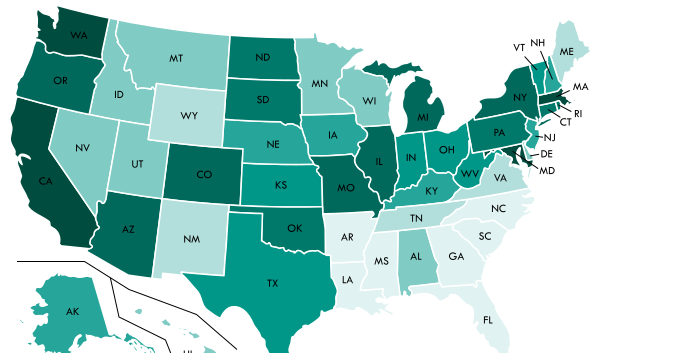
Most common states for lead residential counselors
| Rank | State | Population | # of jobs | Employment/ 1000ppl |
|---|---|---|---|---|
| 1 | New Hampshire | 1,342,795 | 296 | 22% |
| 2 | Wyoming | 579,315 | 113 | 20% |
| 3 | Rhode Island | 1,059,639 | 205 | 19% |
| 4 | Alaska | 739,795 | 143 | 19% |
| 5 | Massachusetts | 6,859,819 | 1,264 | 18% |
| 6 | Utah | 3,101,833 | 555 | 18% |
| 7 | Montana | 1,050,493 | 193 | 18% |
| 8 | Pennsylvania | 12,805,537 | 2,147 | 17% |
| 9 | South Dakota | 869,666 | 130 | 15% |
| 10 | Idaho | 1,716,943 | 245 | 14% |
| 11 | Ohio | 11,658,609 | 1,510 | 13% |
| 12 | Tennessee | 6,715,984 | 893 | 13% |
| 13 | Nebraska | 1,920,076 | 250 | 13% |
| 14 | District of Columbia | 693,972 | 91 | 13% |
| 15 | Missouri | 6,113,532 | 763 | 12% |
| 16 | Kentucky | 4,454,189 | 514 | 12% |
| 17 | Arkansas | 3,004,279 | 349 | 12% |
| 18 | Kansas | 2,913,123 | 344 | 12% |
| 19 | New Mexico | 2,088,070 | 251 | 12% |
| 20 | Michigan | 9,962,311 | 1,136 | 11% |
Most common cities for lead residential counselors
| Rank | City | # of jobs | Employment/ 1000ppl | Avg. salary |
|---|---|---|---|---|
| 1 | Birmingham | 1 | 0% | $34,538 |
Lead Residential Counselor job outlook: Expert opinions
Our panel of lead residential counselor experts
Northeastern Illinois University
SUNY College at Oswego
Adelphi University
Saint Xavier University
Western Illinois University
St. John Fisher College
Penn State College of Medicine
Louisiana State University at Shreveport
Boston College

Monmouth University

University of New Orleans
Concordia University Irvine
Nicholls State University
Presbyterian College

Augsburg University
University of Indianapolis

Lancaster Bible College
What general advice would you give to a Lead Residential Counselor?
Dr. Vanessa Alleyne: It will be important to network and utilize professional organizations of which you are a member, such as the ACA (American Counseling Association), or the ASGW (Association for Specialists in Group Work), for example. Meet people, attend training for advanced skills in key areas, and present there when possible. Whether locally or nationally, these are valuable connections to make when starting out, and will also enhance your knowledge base as you begin and grow. Another valuable connection to be made can be found through your alma mater. Find professional affinity groups from your undergraduate program, and certainly maintain or build ties with your graduate program alumni. Finally, many people turn to social media such as Linkedin, which is fine, but can also be a bit overwhelming. Be deliberate in your choices about who to connect with, and don't get fomo! It's ok not to connect with everyone that pops up in your feed. Stay with one social media site at a time until you feel it's working the way you'd like, and then go on to another.
What Lead Residential Counselor skills would you recommend for someone trying to advance their career?
Dr. Pamela Fullerton: Find a site with great supervision and a diverse range of clients. New clinicians really need to lean into competent and compassionate supervisory experiences that will help them not only increase their counseling competencies but also support in their growth around professional counseling identity, personal development, and multicultural and social justice advocacy. Additionally, working with a diverse range of clients at the beginning of a career will also support in increasing competencies in all the various areas of our field from skills and interventions to diagnosing and treatment planning.
What Lead Residential Counselor skills would you recommend for someone trying to advance their career?
Jodi Mullen PhD LMHC RPT-S: The bulk of the work a mental health counselor does is clinical, meaning you meet with clients and provide counseling. There is also record keeping, preparation, and administrative responsibilities. New and seasoned counselors alike spend some time in supervision and consultation with other counselors. Supervision is a time to discuss cases with a more experienced professional where there are opportunities for growth professionally and personally. Consultation involves either meeting with others connected to your clients, like parents of children clients, or with professionals in mental health and other fields that can help the counselor sort out a challenge. In that case it may be an attorney or a trauma specialist.
What will help Lead Residential Counselors increase their earning potential?
Jodi Mullen PhD LMHC RPT-S: There are so many opportunities for mental health counselors entering the field. The need for our services is at an all time high. Recently, there has been a great deal of focus on self-care for professional counselors to ward off compassion fatigue. There is much more being offered for counselor self-care than when I entered the field three decades ago.
What general advice would you give to a Lead Residential Counselor?
Katherine Stavrianopoulos Ph.D.: Education and Credentials: Invest in obtaining advanced degrees and relevant certifications that enhance your qualifications and marketability. A master's or doctoral degree in counseling psychology, along with licensure or certification in your jurisdiction, can significantly increase your earning potential. Specialization and Niche Expertise: Develop expertise in specialized areas of counseling psychology that are in demand or command higher fees. Consider focusing on niche populations, such as children and adolescents, trauma survivors, couples therapy, family therapy and acquire specialized training or certifications to differentiate yourself in the market. Clinical Experience and Internships: Gain diverse clinical experience through internships, practicum placements, and supervised training opportunities. Continuing Education and Professional Development: Stay abreast of emerging trends, research findings, and evidence-based practices in counseling psychology through continuing education, workshops, and professional development opportunities.
What Lead Residential Counselor skills would you recommend for someone trying to advance their career?
Katherine Stavrianopoulos Ph.D.: Digital Literacy and Teletherapy Skills: With the continued integration of technology in mental health care, counselors will need to enhance their proficiency in digital platforms and teletherapy modalities. This includes utilizing secure video conferencing tools, managing electronic health records (EHR), and maintaining ethical standards in online therapy settings. Cultural Competence and Diversity Awareness: As awareness of cultural diversity and social justice issues grows, counselors must deepen their understanding of intersectionality and cultural humility. Competence in working with diverse populations and addressing systemic barriers to mental health care will from an antiracism lens will be essential for providing inclusive and culturally responsive services. Trauma-Informed Care: Given the prevalence of trauma and its impact on mental health, counselors will need to adopt trauma-informed approaches across various settings. This includes recognizing the signs of trauma, creating safe environments for disclosure, and integrating trauma-sensitive interventions into counseling practice. Resilience-Building and Positive Psychology: In addition to addressing mental health challenges, there will be a greater emphasis on promoting resilience and well-being. Counselors will incorporate positive psychology principles, such as strengths-based interventions and mindfulness techniques, to empower clients and enhance their coping skills. Collaborative and Interdisciplinary Care: With the recognition of the interconnectedness of physical and mental health, counselors will collaborate more closely with other healthcare professionals in integrated care settings. Strong communication skills and the ability to work collaboratively within multidisciplinary teams will be essential for providing holistic and comprehensive care to clients. Data Literacy and Outcome Measurement: Increasing emphasis on evidence-based practice and outcome measurement will require counselors to develop skills in data collection, analysis, and outcome evaluation. Ethical Decision-Making in Complex Situations: As counseling scenarios become increasingly complex, counselors will face ethical dilemmas that require nuanced decision-making. Strengthening skills in ethical reasoning, consultation, and ethical sensitivity will enable counselors to navigate challenging ethical issues with integrity and professionalism.
What will help Lead Residential Counselors increase their earning potential?
Katherine Stavrianopoulos Ph.D.: Continued Learning and Development: Stay committed to lifelong learning by attending workshops, pursuing advanced certifications, and staying updated on the latest research and therapeutic techniques. Supervision and Mentorship: Seek out supervision and mentorship opportunities from experienced professionals in the field. Consider participating in a peer supervision group where you can support one another and be open to constructive criticism as part of your development. Engage in regular self-reflection for personal growth. Prioritize Self-Care: Establish healthy boundaries between work and personal life, engage in activities that recharge you and help prevent burn out. Cultural Competence and Diversity: Cultivate cultural humility and strive to understand the diverse backgrounds and perspectives of your clients. Continuously educate yourself on multiculturalism and antiracism to provide competent and inclusive counseling services. Ethical Practice: Adhere to ethical guidelines and professional standards in your practice. Strive to Build Strong Therapeutic Relationships: Establish rapport, demonstrate empathy, and create a safe and trusting environment where clients feel comfortable exploring their thoughts and feelings. Evidence-Based Practice: Stay informed about research findings and utilize interventions that have been empirically validated for specific client populations and presenting issues. Networking and Collaboration: Build professional connections within the counseling community. Attend conferences, join professional organizations, and participate in networking events to expand your professional network. Collaboration with colleagues can lead to referrals, consultation opportunities, and mutual support. Consider doing some pro bono work: Pro bono services help bridge the gap to access mental health services for individuals who cannot afford them.
Errol Rodriguez Ph.D., MAC, CRC
Assistant Dean & Program Director, Master's programs in General Psychology and Mental Health CounselingAdelphi University
Mental And Social Health Services And Allied Professions
What general advice would you give to a Lead Residential Counselor?
Errol Rodriguez Ph.D., MAC, CRC: In the next few years, counselors will benefit from developing skills in emerging technology such as artificial intelligence (AI) and how such technology is being used by clients through various social media applications that might lead to clinical concerns (.e.g., dating, gambling, pornography). Integrating some of these new technologies into therapeutically sound interventions will be one way to address these concerns both in traditional therapy settings, as well as virtually (e.g., avatar therapy).
What Lead Residential Counselor skills would you recommend for someone trying to advance their career?
Errol Rodriguez Ph.D., MAC, CRC: Given the complexities of the world today, emerging counseling professionals must be flexible in their treatment approach, inclusive in their understanding of diverse cultures and sub-cultures, and mature professionally through humility, self-reflection, and self-care.
What will help Lead Residential Counselors increase their earning potential?
Errol Rodriguez Ph.D., MAC, CRC: One way to maximize your earning potential when starting your career is to develop a focus, not just a specialization. A focus requires a broader lens when it comes to earnings. For example, specializing in clinical treatments for addiction is important and will generate referrals. However, having a focus in addiction treatments extends your reach into other adjacent areas such as business applications and services offered outside of the therapy office. It might start with the question, 'what other groups or organizations might benefit from my focus area?' This might lead to a consultation opportunity at a business that is interested in reducing burnout for its employees and by extension the sequelae of problems associated with burnout (e.g., depression, addiction). One opportunity often leads to another. The second way to maximize income early in your career is to consider ways to translate what you do into a public-facing profile. Whether using LinkedIn or your own website, it is crucial for the public to become acquainted with you professionally. Investing in this process will pay off quickly.
What general advice would you give to a Lead Residential Counselor?
Kristen Toole: Remember that this is a marathon, not a sprint. Personal and professional development are
lifelong processes that are never really finished. So, it is essential to pace yourself and establish a
foundation of healthy practices from the outset. Creating habits and routines in the beginning
with the end in mind can be a good strategy for success and sustainability.
Keep work-life balance and boundaries in mind from the start because breaking bad habits can
be tricky once established. Think about where you ultimately want to be and build toward that
future one step at a time. Also, it is okay if plans change! You never know where open-
mindedness and willingness to learn may take you.
What Lead Residential Counselor skills would you recommend for someone trying to advance their career?
Kristen Toole: This is an exciting time to be a counselor. It is a time for integration and inclusivity. With an
increasing focus on neuroscience and the advent of telehealth, incorporating science and
technology in counseling is increasingly relevant.
The use of technology is on the rise. As more people become familiar with telehealth, counselors
must become comfortable providing virtual care. Telehealth practices are also critical to
expanding our reach and improving the accessibility of our services.
Undeniable links between science and counseling continue to emerge. Findings in neuroscience
are shaping how we understand counseling and informing best practices (Cammisuli &
Castelnuovo, 2023). Furthermore, this supports incorporating knowledge and skills from other
disciplines to broaden the counseling field's horizons.
Mastering essential attending behaviors and the basic listening sequence (Ivey et al., 2018) is not
enough if we cannot successfully and accurately position our clients against a backdrop of broad
and complex contextual factors. Embracing diverse perspectives is crucial to supporting holistic
counseling practices. Integrating new information will be the key to achieving a more complete
and inclusive understanding of our clients and our work as we move forward.
What will help Lead Residential Counselors increase their earning potential?
Kristen Toole: Post-pandemic disparities have highlighted the necessity of prioritizing mental health and the
need for more mental health providers (Fink-Samnick, 2023; Health Resources & Services
Administration, 2023). The counseling field is expected to outpace the national average for
occupational growth six-fold over the next ten years (U.S. Department of Labor, 2022). There is
no question that counselors are in demand, but there are still a few strategies for new
professionals to maximize their salary potential.
A growing number of students are entering counseling graduate programs, having completed
undergraduate minors and focus areas in related fields. This is fantastic conceptually and can be
a vital strategy for enhancing their counseling work. Skill building is one way to optimize
success and salary.
Some graduate programs, like Xavier's, offer options for obtaining additional certifications along
the way to a master's degree. In Xavier's counseling program, students can choose courses that
allow them to get certificates in addiction counseling and medical trauma-informed care. For
clinical mental health counselors, this is an excellent way to demonstrate skill mastery, and for
school counselors, it provides a unique opportunity to broaden their scope of practice. Either
way, additional certifications exhibit a commitment that potential employers can appreciate.
Counselors who are well-informed about their market value and earning potential can engage in
informed offer negotiations. Additional skills are one way beginning professionals can increase
their starting salary. However, it is important to remember that total earnings include several
elements, and salary is just one piece of that puzzle.
Counselors are immensely versatile and can find work in various settings, so they need to
understand their options in addition to their earning potential. Benefits, schedule, and location
are other things that can impact the earnings bottom line and are essential to consider. Finally,
counselors must know themselves: personality, interests, work values, and abilities impact job fit
and, ultimately, work satisfaction. These are crucial considerations for mitigating compassion
fatigue (Stamm, 2010), which can limit counselors' longevity.
New professionals must research and reflect as they enter the job market. There are many things
to consider when choosing a job, and it can feel overwhelming. Thankfully, various resources,
such as the Occupational Outlook Handbook, O*Net, Glassdoor, and Monster, offer
indispensable tools and information to job seekers.
What general advice would you give to a Lead Residential Counselor?
Emily Yowell Ph.D.: A practicing counselor's day is often full of sessions with clients. These sessions may be individual therapy, couples/families, or groups of individuals with some shared presenting issue. Counselors also have to complete paperwork associated with these sessions throughout the day. Some counselors also provide supervision to newer practitioners as a part of their work roles.
What Lead Residential Counselor skills would you recommend for someone trying to advance their career?
Emily Yowell Ph.D.: There is a critical need for mental health care in our world. Many want to help with this need, making counseling a good profession to enter now.
What will help Lead Residential Counselors increase their earning potential?
Emily Yowell Ph.D.: Psychologists should be aware of what others in their field are making for similar positions. It is important to ask for what your work is worth in an initial position to assure raises are based on a solid starting salary. Newer psychologists may also consider asking for an early review that prompts an early conversation around potential raises, bonus, or other job benefits.
Leigh Ann Tipton-Fisler, PhD, BCBA
Associate Professor and Program Coordinator of Specialist in School Psychology and Clinical/ Community Mental Health Graduate ProgramsWestern Illinois University
Clinical, Counseling And Applied Psychology
What Lead Residential Counselor skills would you recommend for someone trying to advance their career?
Leigh Ann Tipton-Fisler, PhD, BCBA: - The best I can give to graduates is to focus on taking small steps at first. Often the first year in the field can be exciting and overwhelming at the same time. The system we work in (the helping profession broadly) often has a lot of challenges, and new professionals want to re-envision a path for changes. This is tangible, but at first, it is important to understand the roles and functions in the workplace before flipping everything upside down. I suggest taking one small change at a time in an area that is important to you and build relationships and trust with your professional colleagues before overloading yourself with the new job and new goals.
What general advice would you give to a Lead Residential Counselor?
Leigh Ann Tipton-Fisler, PhD, BCBA: - The best I can give to graduates is to focus on taking small steps at first. Often the first year in the field can be exciting and overwhelming at the same time. The system we work in (the helping profession broadly) often has a lot of challenges, and new professionals want to re-envision a path for changes. This is tangible, but at first, it is important to understand the roles and functions in the workplace before flipping everything upside down. I suggest taking one small change at a time in an area that is important to you and build relationships and trust with your professional colleagues before overloading yourself with the new job and new goals.
What will help Lead Residential Counselors increase their earning potential?
Leigh Ann Tipton-Fisler, PhD, BCBA: - I think skills in using and being familiar with artificial intelligence (AI) will be important in our field now and in the upcoming five years. The capabilities of the open AI sources has exponentially grown smarter in just the past year. The tools accessible are revolutionizing the way people write reports, generate recommendations, capture clinical notes, and even summarize and synthesize information. It is technology that we must learn to understand after the point of graduate training where we can apply our professional decision-making skills and theoretical knowledge to the information input/output of this great technology.
John Kiweewa Ph.D.
Associate ProfessorSt. John Fisher College
Wegmans School of Nursing
What soft skills should all Lead Residential Counselors possess?
John Kiweewa Ph.D.: Receptivity to Feedback: Openness to consistently accept feedback in a respectful way is a vital quality, especially for new graduates. Such openness is important not only to feedback from supervisors but from colleagues and clients. Agreeing to or feeling bound to act on the feedback received is not as important as communicating appreciation for the effort of others in giving feedback. In this case, display of behaviors such as anger, annoyance, frustration, defensiveness, excessive/exaggerated self-criticism, or withdrawal gets in the way of learning and/or being a member of a team.
Appropriate Self-Disclosure: The ability for mental health practitioners to 'use' themselves for the benefit of their clients is one of the cornerstones of effective counseling. Such a quality is most evident when one only shares information about themselves that fits the nature and purpose of the interaction with a particular client. When personal information is revealed, it is tasteful, relevant, and is not upsetting, distracting, or confusing to others. Prospective employers are keenly aware of the ways self-serving or self-aggrandizing disclosure of personal information can negatively impact the ability to provide meaningful services to clients.
Reliability and Follow Through: Mental health professionals work in a helping profession that requires the professional to be consistently dependable, reliable, and able to follow through with tasks and assignments in a timely and thorough manner. This includes meeting deadlines, being punctual to sessions with clients and for agency meetings, being prepared, and having a reputation as one who can be counted on to do their part when functioning as a team or project member.
Flexibility and Adaptability: This quality is most evident when a mental health counseling professional consistently demonstrates a willingness to change or compromise in the face of new information, circumstances, and contexts. Situations such as the COVID-19 pandemic, for instance, require mental health practitioners to have an openness to solutions that match the needs of their service recipients and organizations.
Sense of Humor: There is little to cheer about in the professional life of mental health professionals. We spend the majority of our working time listening to the most painful and vulnerable aspects of people's lives. This quality is most evident when a mental health counselor assumes an orientation to life that acknowledges to self and others the value of looking at the "lighter side" of life to maintain a balance; when they find enjoyment in laughing with others and recognize laughter as a way of reducing tension and as an important aspect of social discourse.
Confidence Balanced with Humility: Confidence in one's abilities (self-efficacy) is a general challenge for beginning mental health counselors. Some may appear over-confident as a way to compensate for lack of experience in the field and to project an image of competence. It is, therefore, important that new graduate is able to act with self-assurance by consistently expressing themselves in a clear, deliberate, and unassuming manner. It is not helpful to "put on airs" or flaunt knowledge or skills in order to bring attention to oneself. What is important is to convey appreciation for the privilege to partake in other people's life journeys and struggles.
Martha Peaslee Levine M.D.
Medical Director of the PHP and IOP, Director of the Office of Professional Mental HealthPenn State College of Medicine
Adolescent Medicine, Psychiatry
What soft skills should all Lead Residential Counselors possess?
Martha Peaslee Levine M.D.: Good communication skills are important. Working as a therapist involves interacting with someone. It will be important to demonstrate being able to listen effectively and being able to communicate clearly. Active listening is important in therapy and in an interview. Be engaged; listen to the interviewer so that you are clearly providing the information that they need. For example, I often ask interviewees to tell me about a case that they found rewarding or challenging. From this, I want to know how someone thinks through a clinical situation. I want to hear how they describe their client (anonymously, of course) and how they put together the important parts of the story. If it was challenging and they now recognize ways to handle it differently, that lets me know that they have thought about this. It also shows that they are willing to reflect on difficult situations and learn from them. If someone cannot relate a story or discuss a client with me, that makes me wonder about their skills as a therapist and their interest in their patients. These clinical interactions can come from your work in school, shadowing someone in training, or internships. It is recognizing and describing the important elements of the case. Another important skill is good written communication. Check your resumes for spelling mistakes. Reread any emails to make certain they are clear. Send thank-you notes. Keep things professional--use the interviewer's professional title when you write. Be on time and have a question or two to ask about the position or place of employment. Examples can be, what are they looking for in a counselor? What have they found the most rewarding working in this office? Find your own go-to question, but interviewers what to know that you are interested.
Kacie Blalock Ph.D.
Associate Professor; Director, Master of CounselingLouisiana State University at Shreveport
Department Of Psychology
What skills stand out on Lead Residential Counselor resumes?
Kacie Blalock Ph.D.: Skills that stand out on Counselor resumes include multilingual, critical thinking, conflict resolution, and leadership skills.
What soft skills should all Lead Residential Counselors possess?
Kacie Blalock Ph.D.: Soft skills that are essential for counselors include emotional intelligence, empathy, multicultural competency, interpersonal abilities, and authenticity.
What hard/technical skills are most important for Lead Residential Counselors?
Kacie Blalock Ph.D.: It is important that counselors are able to effectively take notes and summarize progress, interpret assessments, memorize and recall information, and keep clear yet concise records.
What skills will help Lead Residential Counselors earn the most?
Kacie Blalock Ph.D.: Skills that will help you earn the most include teletherapy and trauma-informed care.
Treniece Lewis Harris Ph.D.
Associate Professor of the Practice, Program Director, Master's Program in Mental Health CounselingBoston College
Department of Counseling, Developmental, and Educational Psychology
What soft skills should all Lead Residential Counselors possess?
Treniece Lewis Harris Ph.D.: -compassion
-active listening
-perspective-taking
-open-mindedness and respect for differences
-humility
-curiosity and critical observation
-problem recognition and analytical thinking
-creativity and flexibility
-presentation skills
What hard/technical skills are most important for Lead Residential Counselors?
Treniece Lewis Harris Ph.D.: -Differential diagnosis to determine whether a person is experiencing an adjustment problem related to everyday life stressors or mental illness
-Knowledge and application of developmental and personality theory to human behavior.
-Experience in using multiple evidence-based psychotherapy models
-Psychological assessment, especially in neuropsychological testing
-Research design and implementation to study
-Program development
-Curriculum design and teaching skills
What skills will help Lead Residential Counselors earn the most?
Alan Cavaiola Ph.D.: Most Clinical Mental Health Counselors who take the time to earn clinical supervision credentials (e.g., the ACS or CCS) to supervise counselors-in-training also become invaluable to treatment programs. Often these clinical supervisors are offered higher salaries and are also more likely to move into administrative positions (e.g., CEOs). Most graduate counseling programs do not offer courses in mental health administration, and many mental health counselors do not see themselves doing administrative work; however, these positions pay more than rank-and-file counselors, especially those working in mental health agencies. If that's an area of interest, it's important to find a mentor who has administrative experience and is willing to share that information.
Will there be an enduring impact of the coronavirus pandemic on Lead Residential Counselors?
Christopher Todd Belser Ph.D.: 100 percent, yes. The coronavirus pandemic has greatly impacted the training experiences that emerging graduates have received, especially those who have been working at practicum and internship sites in 2020 and 2021. Many students had to navigate school site closures and pivots to online learning both in their K-12 field site and their graduate coursework. On one hand, this has likely limited some of the experiences they were able to gain as a graduate student, and on the other hand, it forced them to become acquainted with new technologies and new real-world crises while working under a supportive network of university and site supervisors. In addition to the direct impacts on the graduates themselves, the coronavirus pandemic has also sparked conversations about what role school counselors will play in responding to student needs as we move toward a new normal. The events of 2020, including both the coronavirus pandemic and racial justice efforts, will likely be watershed moments for the current generations of K-12 students, and the impacts will be both immediate and long-term. School counselors will need to dive head first into helping K-12 students work through grief/loss, fears and anxieties, academic challenges, motivation loss, career and postsecondary concerns, and a myriad of other issues related to reintegrating into on-site school environments. And as K-12 employees whose identity bridges education and mental health, there will be a great need for school counselors to act as leaders, advocates, collaborators, and change agents in response efforts that are equitable and systems-oriented.
What's a day at work look like for a Lead Residential Counselor?
Christopher Todd Belser Ph.D.: I'm not sure there was a "typical day" before COVID-19 for school counselors and I don't think there will be after. Because the pandemic is ongoing, graduates going immediately into school settings may still need to be prepared for environments that are virtual at least to some degree. Even if schools are moving more toward on-site learning, some element of virtual learning will likely still be in place, and if there is an unfortunate need to return to virtual learning, school counselors will need to be prepared to organize their work in that way. More concretely, day-to-day tasks will involve checking-in with specific students, making referrals for long-term mental health care, going into classrooms to deliver counseling-related lessons, conducting small group interventions, meeting with parents and teachers, etc. And because of the magnitude of the COVID-19 impact, school counselors will need to avoid the trap of "random acts of guidance" and be prepared to gathering universal data on student needs and delivering multi-tiered services to students in response to these needs.
What will help Lead Residential Counselors increase their earning potential?
Christopher Todd Belser Ph.D.: In many states and districts, school counselor salaries are based on a set pay scale, so earning potential is more tied to getting a school counseling job and keeping that job. New graduates often face the dreaded critique of lacking work experience as compared to more seasoned job candidates. However, newer graduates are also more likely to have been trained to design and deliver multi-tiered interventions and more trained on how to utilize school data to drive school counseling programming. Job candidates looking to stand out will need to be able to concretely discuss how their training will help solve issues that the school is facing, which does involve doing a bit of research on the school to which one is applying. Additionally, graduates need to recognize the importance of ongoing professional development--trainings, workshops, and certifications that equip school counselors to address unique circumstances of the school can only increase a person's effectiveness and longevity as a school counselor. Although grants and other external funding typically don't increase salaries for school counselors, these funding opportunities can help purchase evidence-based programs, support interventions, and buy other necessary materials that can make a school counselor's work a little bit easier. Lastly, school counselors can consider pursuing a doctorate degree in a related field (e.g., counselor education and supervision, educational leadership) to enhance their skills and expertise, open doors for new work opportunities and promotions, and possibly move them up on a pay scale.
What are the biggest trends we'll see in the Lead Residential Counselor job market given the pandemic?
Michael Eschelbach Ph.D.: Any and every job that is either unaffected by a pandemic (essential workers) or jobs that flourish because of the pandemic; delivery people and methods, producers of packaging; disposable products, plexiglass production, and fabrication; whatever can provide people with as many choices as possible that can be delivered to their home.
What certifications/licenses/courses can have the biggest impact for Lead Residential Counselors?
Michael Eschelbach Ph.D.: Medically related, including counseling. Apart from Covid, certifications/licenses/courses that are in demand; health care always but also in the trades.
What's a good job out of college for Lead Residential Counselors?
Michael Eschelbach Ph.D.: A good job out of college is any job, some might argue. A better job would be one that employs what you studied in college because it asks you to do what you prepared to do. A still better job is one that offers the opportunity to use the whole college experience in problem-solving, creativity, interpersonal relationships - learning, thinking, and communication skills that allow you to see an opportunity, be inspired by it, and pursue it.
Dr. Stephanie Baran
Instructor, SociologyNicholls State University
Social Sciences Department
Will there be an enduring impact of the coronavirus pandemic on Lead Residential Counselors?
Dr. Stephanie Baran: I think there will be an impact, but I don't necessarily think graduates in the social sciences will find an issue getting jobs. If anything, at least what I've seen from my students is that they are resilient and are flexible to the changes that occur around them. So, the impact that the coronavirus had on graduates showed them ways they could innovate and be responsive to changes. I think those qualities are desirable for post-graduate work.
I also don't necessarily think sociology will "change"-the social impact of the coronavirus-how it continues to affect groups in varying intersections of race, class and gender are all the main threads of sociological inquiry. Students may find more opportunities post-graduation in organizations that address social stressors-like the impact on mental health services, social services and how the pandemic disparately impacted women, women of color, BIPOC and marginalized groups in different ways and how society directly feels the impact from inaction from governmental structures.
What type of skills will young Lead Residential Counselors need?
Dr. Stephanie Baran: I do not believe this has changed much-aside from the increase of distance learning. I know that in my teaching experience, the things students learn in class are directly relatable to their future endeavors. Sociology teaches its majors, minors and (other students simply taking the course for credit) how different social structures impact different lives, differently. Therefore, being able to be proactive, assess situations, understand different relationships are all still important. I think a skill we can as instructors instill in students is simply asking for help and knowing who to talk to/reaching out to others is imperative to mental health. I think employers are the ones that need to shift and provide access to different work/life balance resources, versus the graduate always being on alert.
What experience really stands out on Lead Residential Counselor resumes?
Dr. Stephanie Baran: For recently graduated students, or students about to graduate, because they may not have a lot of work experience, it is helpful to use the work they completed in their different courses, emphasizing their ability to think through complex issues, showing the ability to navigate/be flexible then things quickly change. They can also use some of the skills acquired from the pandemic-like more online/computer skills, which may be helpful to their coworkers.
What are the biggest trends we'll see in the Lead Residential Counselor job market given the pandemic?
Dr. Carla Alphonso: I expect more remote work options and also more jobs opening in health care and social services. Not only due to the pandemic but to the aging of the babyboomers. We will see a greater need for medical social workers, hospital administration, and non-profit administration (and especially in the nursing home/assisted living sector). Contact tracing and research on human social behaviors during the pandemic will continue to be important.
What skills stand out on Lead Residential Counselor resumes?
Dr. Carla Alphonso: Skills involving data collection and analysis remain important, and are one of the qualities that help sociology majors to stand out compared to their peers. Communication skills, especially strong writing skills but also confident, effective public speaking, are helpful in today's job market. Sociology students are also well-positioned in terms of problem solving and critical thinking skills. Many jobs that our students enter need applicants who are solutions-focused, and sociology helps students in that area.
Are there any particularly good places in the United States for Lead Residential Counselors to find work opportunities?
Dr. Carla Alphonso: Sociology students can easily find work wherever there are people and wherever there are social problems. In other words, just about anywhere! Again, due to the aging of the babyboom generation, I would recommend areas that have large proportions of elderly including Florida, Maine, and West Virginia. More jobs may be available in urban areas, but there are needs for workers with sociology skills in rural areas, too. More social services and non-profits are located in urban areas and especially in/around state capitals.
What are the biggest trends we'll see in the Lead Residential Counselor job market given the pandemic?
Christina Erickson Ph.D.: The market for social workers has remained high for several years. Social workers have become an important component of most health care settings and the pandemic has only increased this reality. I don't anticipate any shortages in medical social work in the years to come, only growth. Medical social work is particularly interesting for people who care about the connection between physical and mental health, like the idea of working in a health care setting, and appreciate a fast paced environment. However, the pandemic will likely impact other social workers, too. School social workers will likely assist in addressing back to school issues for families, and certainly social workers who care for elders, and those who assist with death and dying. Because social workers are found in so many different sectors of society, much of their work will be impacted by the pandemic.
What Lead Residential Counselor skills would you recommend for someone trying to advance their career?
Christina Erickson Ph.D.: Gap years are welcome for students. Generally, I see a great deal of maturity as students move through the four years of college and this is necessary to prepare them for the demands of being a professional social worker. A gap year often increases the maturity level of students and can provide rich experiences that prepare them for college. A good gap year for a social work student includes human interactions that require students to work across human differences. That difference can be in a variety of forms, age, culture, gender, faith tradition, experiences, or even ways of thinking. What matters most is the student's ability to describe their own growth as they worked across those differences. Not about how other people changed because of their interaction, but how they changed to meet their goals and learn from others. Experience solving problems is helpful, too. Even learning how to take the first steps to deal with a challenge and being able to describe the steps, grows critical thinking and evaluation skills important for the most successful social work practitioners.
What general advice would you give to a Lead Residential Counselor?
Christina Erickson Ph.D.: First, don't be afraid of informational interviews. You'll find social workers in many parts of society, and many of them will love to talk about their experiences. Draft up a few questions, three will suffice, and interview someone to see if the kind of work they do interests you.
Second, peruse the website of the National Association of Social Workers. As the professional organization for social workers, they house enormous amounts of information about careers, education, requirements for continuing education, and give you a sense of the direction social work is headed as a profession. Find out if you are comfortable with their information and how they discuss the profession and the future they suggest.
Finally, social work is a licensed profession, like teaching, nursing, law or medicine. Make sure you want to enter a profession in which you are required to be licensed by passing a test, follow a code of ethics, and commit to continuing education to maintain your license over many years. In most states there is a governing body that manages licensing. Look up the name of your state, the word license, and social work to learn more about what that would entail where you hope to work.
Dr. Charla Davis
Assistant Professor & Director of Clinical TrainingUniversity of Indianapolis
College of Applied Behavioral Sciences-Graduate Department of Clinical Psychology
Will there be an enduring impact of the coronavirus pandemic on Lead Residential Counselors?
Dr. Charla Davis: I think that there will be both positive and negative impacts due to the coronavirus pandemic. A positive component is that students will be well-versed in providing virtual therapy experiences as well as professional meetings, as we have been forced to engage on this platform to help us get through the pandemic. A negative component is that students may have some struggles with interpersonal professional engagement (i.e. learning to read the room/audience), as they have had lesser experiences with this in the classroom.
What experience really stands out on Lead Residential Counselor resumes?
Dr. Charla Davis: All practicum experiences really stand out and will tell a future employer the exact experiences the student has had and that is why it is important to keep a well-documented curriculum vitae rather than a resume.
Melissa Boas
Director of Professional School Counseling, Assistant ProfessorLancaster Bible College
Counseling & Social Work Department
What Lead Residential Counselor skills would you recommend for someone trying to advance their career?
Melissa Boas: I believe the most important skill to enhance if taking a gap year is self-awareness. Understanding oneself and why and how self-awareness directly relates to future career decision making is instrumental in ensuring the right decisions are made. Self-awareness is extremely beneficial in all areas of life not just in choosing a career pathway.