Explore jobs
Find specific jobs
Explore careers
Explore professions
Best companies
Explore companies
Job outlook for medical technologist-microbiologies in the United States
Are medical technologist-microbiology jobs in demand?
Medical technologist-microbiology job and salary trends over time
Medical technologist-microbiology jobs over time
Medical technologist-microbiology job growth rate over time
| Year | # of jobs | % of population |
|---|---|---|
| 2021 | 627 | 0.00% |
| 2020 | 641 | 0.00% |
| 2019 | 641 | 0.00% |
| 2018 | 632 | 0.00% |
| 2017 | 634 | 0.00% |
Average medical technologist-microbiology salary over time
Medical technologist-microbiology salary by year
| Year | Avg. salary | Hourly rate | % Change |
|---|---|---|---|
| 2026 | $55,441 | $26.65 | +2.8% |
| 2025 | $53,934 | $25.93 | --0.7% |
| 2024 | $54,323 | $26.12 | +2.5% |
| 2023 | $52,974 | $25.47 | +2.0% |
| 2022 | $51,953 | $24.98 | +0.9% |
Medical technologist-microbiology jobs by state
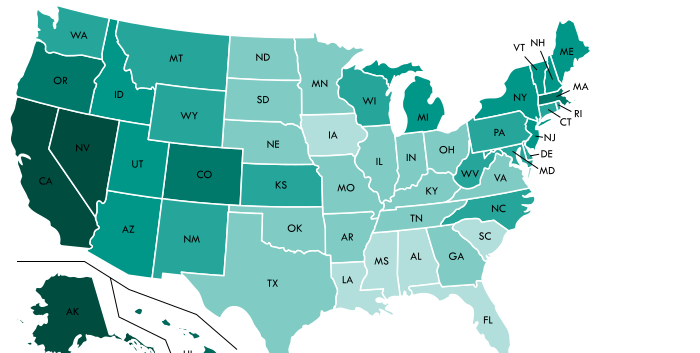
Most common states for medical technologist-microbiologies
| Rank | State | Population | # of jobs | Employment/ 1000ppl |
|---|---|---|---|---|
| 1 | Vermont | 623,657 | 269 | 43% |
| 2 | District of Columbia | 693,972 | 279 | 40% |
| 3 | New Hampshire | 1,342,795 | 383 | 29% |
| 4 | Delaware | 961,939 | 275 | 29% |
| 5 | Utah | 3,101,833 | 844 | 27% |
| 6 | South Dakota | 869,666 | 235 | 27% |
| 7 | Wyoming | 579,315 | 159 | 27% |
| 8 | Nebraska | 1,920,076 | 505 | 26% |
| 9 | West Virginia | 1,815,857 | 474 | 26% |
| 10 | Pennsylvania | 12,805,537 | 3,066 | 24% |
| 11 | Maryland | 6,052,177 | 1,478 | 24% |
| 12 | Massachusetts | 6,859,819 | 1,568 | 23% |
| 13 | Minnesota | 5,576,606 | 1,308 | 23% |
| 14 | Alaska | 739,795 | 171 | 23% |
| 15 | Ohio | 11,658,609 | 2,586 | 22% |
| 16 | Virginia | 8,470,020 | 1,833 | 22% |
| 17 | Tennessee | 6,715,984 | 1,501 | 22% |
| 18 | Arkansas | 3,004,279 | 651 | 22% |
| 19 | Idaho | 1,716,943 | 371 | 22% |
| 20 | Maine | 1,335,907 | 291 | 22% |
Most common cities for medical technologist-microbiologies
| Rank | City | # of jobs | Employment/ 1000ppl | Avg. salary |
|---|---|---|---|---|
| 1 | Lebanon | 2 | 6% | $48,429 |
| 2 | Flint | 4 | 4% | $60,278 |
| 3 | Burlington | 1 | 4% | $63,881 |
| 4 | Frankfort | 1 | 4% | $51,371 |
| 5 | Franklin | 2 | 3% | $48,384 |
| 6 | Silver Spring | 2 | 3% | $55,962 |
| 7 | Bangor | 1 | 3% | $56,409 |
| 8 | Jackson | 1 | 3% | $59,352 |
| 9 | Murfreesboro | 2 | 2% | $48,326 |
| 10 | Detroit | 4 | 1% | $60,193 |
| 11 | Tampa | 3 | 1% | $47,358 |
| 12 | Ann Arbor | 1 | 1% | $59,749 |
| 13 | Cape Coral | 1 | 1% | $47,280 |
| 14 | Kenner | 1 | 1% | $48,144 |
| 15 | Atlanta | 2 | 0% | $48,733 |
| 16 | Boston | 1 | 0% | $64,012 |
| 17 | Las Vegas | 1 | 0% | $70,257 |
Medical Technologist-Microbiology job outlook: Expert opinions
Our panel of medical technologist-microbiology experts
Bloomsburg University of Pennsylvania
University of Florida

Georgetown University Medical Center
University of Arkansas for Medical Sciences
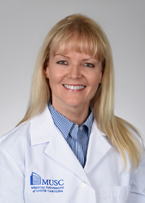
Medical University of South Carolina
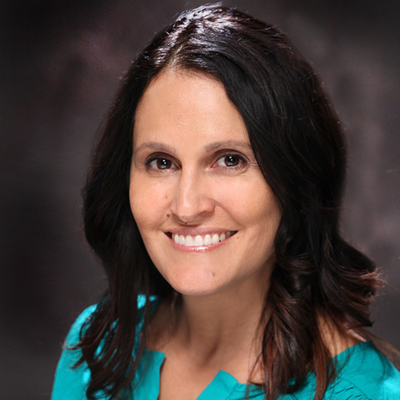
Weber State University

Saint Cloud State University

Saint Cloud State University
Wenatchee Valley College
Agnes Scott College
Siena College
Houston Baptist University

Rutgers, The State University of New Jersey
University of California - Davis
Kutztown University of Pennsylvania

Weber State University
University of Louisiana at Lafayette
What general advice would you give to a Medical Technologist-Microbiology?
Katherine Nelson MBA, MLS (ASCP): Skills that I foresee as becoming important in the 3-5 years include the ability to work with a variety of technology, strong communication skills between other laboratory and healthcare professionals and the ability adapt to change quickly.
What Medical Technologist-Microbiology skills would you recommend for someone trying to advance their career?
Katherine Nelson MBA, MLS (ASCP): The best way to maximize your salary potential within the MLS field is to gain experience. Take every opportunity to learn something and grow your skills within the field. Development of leadership and management skills will also be helpful to move up in the laboratory.
What will help Medical Technologist-Microbiologies increase their earning potential?
Katherine Nelson MBA, MLS (ASCP): My advice to a graduate beginning their career in the Medical Laboratory Science field, would be to take every opportunity to learn something new. Say yes to as much as possible and use every opportunity to amass a variety of different laboratory skills and experiences.
What will help Medical Technologist-Microbiologies increase their earning potential?
Huy Le M.P.H CLS,MLS(ASCP): Clinical laboratory science is expecting a significant decline in the workforce due to retiring baby boomers and the labor shortage caused by the COVID-19 pandemic. To address this shortage, there will be an increased demand for skilled medical laboratory professionals, particularly in areas such as molecular biology, microbiology, and core laboratory disciplines like chemistry and hematology. In addition, you will need to be competent at laboratory automation and emerging technologies, data analysis and interpretation skills to effectively manage the increasing volume of complex laboratory data generated by advanced testing methods.
Ethan Kentzel MS, MLS ASCPcm
Program Director, Medical Laboratory Science and Phlebotomy ProgramsBloomsburg University of Pennsylvania
Biology
What general advice would you give to a Medical Technologist-Microbiology?
Ethan Kentzel MS, MLS ASCPcm: You completed an MLS program and you have learned a ton of information in a short span of time. However, there is still so much to learn for Medical Laboratory Science! We recommend that you do your best to grow into the role, practice with a questioning attitude, participate and advocate for the field, consider joining our advocacy group - the American Society for Clinical Laboratory Science (ASCLS). If you have not taken your ASCP MLS BOC exam, we highly recommend that you do as a way to validate your learning experiences and to optimize your long term career growth.
What Medical Technologist-Microbiology skills would you recommend for someone trying to advance their career?
Ethan Kentzel MS, MLS ASCPcm: Obtaining your ASCP MLS certification is one way that you can increase your earning potential, as some hospitals pay more to people that have the certificate or license. Working in urban areas tend to pay more money, but may have higher costs of living. Some states require MLS to be licensed, and licensure states tend to pay more than certificate level states in the US. Students that work second or third shifts tend to have an increased likelihood of sign-on bonuses and shift differentials. If you communicate well, set clear expectations, and work well with your lab management team, you can always ask for additional tasks and responsibilities that would help you grow in your career. These extra responsibilities may help set you apart from your peers/colleagues when it comes time for promotions and raises.
What will help Medical Technologist-Microbiologies increase their earning potential?
Ethan Kentzel MS, MLS ASCPcm: Depending on the department that you work in, hands-on skills and dexterity with using pipettes will always be required. However, over the next 10-15 years, we anticipate molecular assays and artificial intelligence to help enhance our role in healthcare. Good MLS characteristics include being detail-oriented, communicative, organized, methodical, good lab/aseptic technique, etc., but in the future, we anticipate a greater need for computer software and instrumentation troubleshooting skills as technology advances!
Shelby McCarty MSNPA
Public Relations CoordinatorWhat general advice would you give to a Medical Technologist-Microbiology?
Shelby McCarty MSNPA: Maximizing salary potential as a medical laboratory scientist requires a combination of skill development, pursual of advanced education, and proactive career management. As a graduate prepares to enter the job market, it is important to research salary trends in various locations and understand that salary can vary depending on geographic location. Multiple factors play a role in influencing salary: experience, education level, cost-of-living, shift work, among others. MLS graduates should use that first job to gain experience, building a strong foundation of practical skills. They may search for positions in high-demand areas, such as molecular diagnostics, where they can acquire specialized skills. On the other hand, gaining experience in all departments of the laboratory, can make a MLS more well-rounded, which is desirable for many MLS positions. The experience gained in a variety of departments provides a MLS the opportunity to take on a travel position, which has a higher earning potential. A MLS may consider pursuing an advanced degree or certification relevant to medical laboratory science, such as a graduate degree or specialty certifications like molecular biology, hematology, or blood banking. It is also important to look for opportunities to advance your career with the profession, such as management positions, supervisor roles, or opportunities in Laboratory Informatics. Advancing to higher-level positions often comes with increased salary potential. Lastly, build professional relationships with others in the medical laboratory profession by joining professional organizations or attending industry events. This allows you to stay connected with potential job opportunities and gain insights regarding career advancement.
What will help Medical Technologist-Microbiologies increase their earning potential?
Shelby McCarty MSNPA: The medical laboratory science profession will remain a prevalent part of patient care. The advancement of interprofessional collaboration in universities helps emphasize multidisciplinary teamwork to provide comprehensive patient care. We are in a field that continues to evolve with new technologies and methodologies frequently emerging. It is important to remain proficient in the variety of high-complexity skills necessary for a medical laboratory scientist. Given the rapid pace of technological advancement and scientific discovery, lifelong learning and adaptability is essential.
Monika Oli Ph.D.
Master Lecturer and Undergraduate CoordinatorUniversity of Florida
Department of Microbiology and Cell Science
What hard/technical skills are most important for Medical Technologist-Microbiologies?
Monika Oli Ph.D.: -Good lab skills from pipetting to cloning
-Excellent computer skills are a must
-Data analysis, Excel and or R
-Programming
-Data management
-Bioinformatic programs, use, and application
-More and more experience with next-generation sequencing and associated data analysis is really important
Ivica Labuda
Professor and DirectorGeorgetown University Medical Center
Department of Biochemistry Molecular and Cell Biology
What are the biggest trends we'll see in the Medical Technologist-Microbiology job market given the pandemic?
Ivica Labuda: The biggest trends are undoubtedly public health, medicine, virology, and biotechnology. Recent graduates of our Georgetown Biotechnology program all landed a job, with some of them working closely on Covid-19 vaccine or test developments.
What general advice would you give to a Medical Technologist-Microbiology?
Ivica Labuda: You can find what is "you" in any profession. Love what you do and always learn new skills. Look for an opportunity where your personality and talents intersect.
Lindsey Clark
Assistant ProfessorUniversity of Arkansas for Medical Sciences
Department of Laboratory Sciences
What hard/technical skills are most important for Medical Technologist-Microbiologies?
Lindsey Clark: Nearly all clinical laboratory scientists will need to know how to use a microscope properly, operate various lab instruments or analyzers, and perform complex laboratory testing according to standard operating procedures. They may also be required to collect, process, or analyze specimens, maintain quality control records, prepare chemical reagents, investigate atypical or discrepant test results, determine causation, or communicate with other healthcare professionals.
Helen Martin
Associate Professor, Division DirectorMedical University of South Carolina
Division of Physician Assistant Studies
What skills stand out on Medical Technologist-Microbiology resumes?
Helen Martin: The degree must be from an accredited university.
What soft skills should all Medical Technologist-Microbiologies possess?
Helen Martin: Computer skills within a hospital system.
What skills will help Medical Technologist-Microbiologies earn the most?
Helen Martin: 4-year degree in laboratory science.
Dr. Janice Thomas
Professor and Program DirectorWeber State University
Department of Medical Laboratory Sciences
What skills stand out on Medical Technologist-Microbiology resumes?
Dr. Janice Thomas: National ASCP Certification, adaptability, ability to work independently.
What hard/technical skills are most important for Medical Technologist-Microbiologies?
Dr. Janice Thomas: Microscopy skills, ability to troubleshoot analyzers, general lab experience, and discipline-specific lab experience. Ability to perform high complexity testing in Microbiology and Blood banking.
Patricia Ellinger
Medical Laboratory Science FacultySaint Cloud State University
Medical Laboratory Science
What hard/technical skills are most important for Medical Technologist-Microbiologies?
Patricia Ellinger: -Careful work: Precision, accuracy, reproducibility
-Knowledge of quality control, ability to recognize when a test result looks wrong and what to do about it
Louise Millis
Medical Laboratory Science and Histotechnician Program Director, Associate Professor of BiologySaint Cloud State University
Medical Laboratory Science
What soft skills should all Medical Technologist-Microbiologies possess?
Louise Millis: Understanding that a patient's sample is from a loved one. Results matter. They need to be perfect
What hard/technical skills are most important for Medical Technologist-Microbiologies?
Louise Millis: -Careful work: Precision, accuracy, reproducibility
-Knowledge of quality control, ability to recognize when a test result looks wrong and what to do about it
What skills will help Medical Technologist-Microbiologies earn the most?
Louise Millis: -Problem solving gives you the ability to see opportunities, to take on additional tasks or projects
-Careful work: Precision, accuracy, reproducibility
-Ability to work with others
-Work experience with the above and also furthering your education
-Work experience which enhance base knowledge and technical skills
-Educational
-MBA for some positions (depends on the size of the hospital), management
-MS/Ph.D. for some positions
-Depends on the size of the hospital
-Also, needed for an academic position, MS for some, others require PhD
What skills stand out on Medical Technologist-Microbiology resumes?
Patrick Tracy: -Good critical-thinking skills
-Good problem-solving skills
-Able to prioritize tasks
-Pay attention to detail
-Take a process from beginning to end
-Maintain focus for periods
What soft skills should all Medical Technologist-Microbiologies possess?
Patrick Tracy: -Work well with a team
-Work well alone
-Communicate calmly and clearly
What hard/technical skills are most important for Medical Technologist-Microbiologies?
Patrick Tracy: -Ability to work with and repair instruments and machinery
What skills will help Medical Technologist-Microbiologies earn the most?
Patrick Tracy: -I tend to think technical jobs like this to be fairly pegged to a salary scale rather than negotiable.
-Experience in most, if not all, clinical lab areas, but especially in blood bank and microbiology
Jennifer Larimore Ph.D.
Associate ProfessorAgnes Scott College
Biology and Neuroscience Department
What skills stand out on Medical Technologist-Microbiology resumes?
Jennifer Larimore Ph.D.: Animal handling or work with animal model systems, science presentations at the symposium, internships or independent research projects, inquiry-given lab experiences
What soft skills should all Medical Technologist-Microbiologies possess?
Jennifer Larimore Ph.D.: Teamwork, leadership, working with a diverse team.
What hard/technical skills are most important for Medical Technologist-Microbiologies?
Jennifer Larimore Ph.D.: Ability to run PCRs, ability to run gel electrophoresis, statistical analysis
What skills will help Medical Technologist-Microbiologies earn the most?
Jennifer Larimore Ph.D.: A combination of the skills listed in 1-3.
Will there be an enduring impact of the coronavirus pandemic on Medical Technologist-Microbiologies?
Lucas Tucker Ph.D.: The coronavirus pandemic will almost certainly have some impact on student learning. Much of this gap will be closed in the first few years of employment if students work in fields directly using skills learned in the classes affected directly by the pandemic. This will affect skills, especially lab skills, from schools who stayed virtual. This is why we pushed for in-person lab experiences. Schools will work to close these gaps with students who are in the earlier parts of their education.
Matthew Blank Ph.D.
Assistant Professor of BiologyHouston Baptist University
College of Science & Engineering
Will there be an enduring impact of the coronavirus pandemic on Medical Technologist-Microbiologies?
Matthew Blank Ph.D.: The coronavirus pandemic will absolutely impact 2021 biology graduates and their potential to secure degree-related employment. However, the impact is oftentimes dependent on available resources in their prospective city. For instance, graduates of HBU are fortunate enough to be in a large city which includes a world-class medical center with significant research and biotech opportunities. If one of our students is hoping to go elsewhere, the number of positions that offer relocation assistance, signing bonuses, and travel expenses are cautiously dwindling during the pandemic. On a positive note, graduates have been forced to learn and master new virtual technologies that are now commonplace in all employment sectors which provide them with an increased professional edge that might have been weaker prior to the pandemic.
How do you envision technology impacting Medical Technologist-Microbiologies in the next 5 years?
Ronald Gilman: There will be more technology, but most detailed predictions will be wrong. It is always a little hard to know which recent developments are enduring advances and which are hype or fad or will get supplanted by something else soon.
What experience really stands out on Medical Technologist-Microbiology resumes?
Tonya Kuhl: Everyone who graduates has the degree, but it is a graduate's individual experience, their personality, and what they are passionate about that sets them apart. Looking for ways to contribute positively in their work experience from working fast food to internships, extracurricular clubs such as participating in their student chapter of the American Institute of Chemical Engineering, leadership, and community service. Given the increase in remote collaboration and hands-off operation, automation, process control and systems engineering skills will really standout. A link to a portfolio of their coding projects on GitHub would be a great way to demonstrate their coding skills.
Dr. Justin Smoyer Ph.D.
Associate Professor of Experimental Physics & EngineeringKutztown University of Pennsylvania
Department of Physical Sciences
What experience really stands out on Medical Technologist-Microbiology resumes?
Dr. Justin Smoyer Ph.D.: For physics students having additional skills such as proficiency in programming languages and/or research experience is a great way to stand out among their peers. If an employer is looking to hire someone with a physics degree, every applicant will have a physics degree. Where students can stand out is having additional sets of skills or experiences. Students should consider a question an employer may ask, "You have your physics degree and what?"
Will there be an enduring impact of the coronavirus pandemic on Medical Technologist-Microbiologies?
Dr. Justin Smoyer Ph.D.: Yes. Where I think graduates will see a lasting impact of the coronavirus pandemic will be in the expectation of employers. While not all meetings will take place over video after the pandemic, I think you will find that employers will have certain expectations in terms of the flexibility of their employees. Graduates will be expected to have the ability to work in a lab, work from home, work on the road, etc. This means that graduates will have to be versed in technology particularly in terms of communication tools. In general, the professional world will be smaller. Meetings, conferences, workshops, etc., will be able to take place without the need to travel. While this ability to share and gain knowledge without having to travel long distances will be a benefit to graduates, this also means that as employers look for job candidates, they will be able to consider applications from all over the world and the competition for jobs will be fierce.
Matthew Nicholaou
Associate Professor and ChairWeber State University
Department of Medical Laboratory Sciences
Will there be an enduring impact of the coronavirus pandemic on Medical Technologist-Microbiologies?
Matthew Nicholaou: That is a loaded question and to answer it we really need to be specific about what the "enduring impact" is to the students. Academically, we are not certain how the pandemic will affect their performance. Our program in particular has a lot of experience with remote online learning; we have been using a hybrid model for teaching since the pandemic began and we feel confident that our students are continuing to get a quality education.
They might not like online learning as much as in-person, it certainly requires more self discipline and motivation, but we haven't really seen it as a barrier to learning per se. More so, it seems the students are suffering, like the rest of us, from living in a global pandemic. Everyone has been stressed, almost constantly, for the past year and this is something humans are just not built to handle. Most of the issues we have seen are not related to the style/delivery of learning but more to overall burnout of the students. I really don't see this pandemic having a lasting impact academically to our graduates, but it certainly is going to leave a mark on all of us just as humans.
Dr. Mark Zappi Ph.D.
Professor of Chemical EngineeringUniversity of Louisiana at Lafayette
Department of Chemical Engineering
Will there be an enduring impact of the coronavirus pandemic on Medical Technologist-Microbiologies?
Dr. Mark Zappi Ph.D.: It is difficult to assess the enduring impacts at this time given that we are still in the middle of the pandemic. I do think that students will remember this event and keep planning and being prepared for the unknown at the forefront of their minds. It is interesting to ask professionals who were working in the late-sixties about the pandemic in 68 and 69 - very few remember the event. Albeit, the 1968/69 event was not as large, it was a serious event. Thus, I expect job opportunities will rebound and students will find employment.