Explore jobs
Find specific jobs
Explore careers
Explore professions
Best companies
Explore companies
Job outlook for mine environmental engineers in the United States
Are mine environmental engineer jobs in demand?
Mine environmental engineer job and salary trends over time
Mine environmental engineer jobs over time
Mine environmental engineer job growth rate over time
| Year | # of jobs | % of population |
|---|---|---|
| 2021 | 18 | 0.00% |
| 2020 | 21 | 0.00% |
| 2019 | 22 | 0.00% |
| 2018 | 22 | 0.00% |
| 2017 | 22 | 0.00% |
Average mine environmental engineer salary over time
Mine environmental engineer salary by year
| Year | Avg. salary | Hourly rate | % Change |
|---|---|---|---|
| 2026 | $39,766 | $19.12 | +3.7% |
| 2025 | $38,359 | $18.44 | +1.4% |
| 2024 | $37,824 | $18.18 | +0.9% |
| 2023 | $37,470 | $18.01 | +2.2% |
| 2022 | $36,645 | $17.62 | +0.4% |
Mine environmental engineer jobs by state
Most common states for mine environmental engineers
| Rank | State | Population | # of jobs | Employment/ 1000ppl |
|---|---|---|---|---|
| 1 | District of Columbia | 693,972 | 223 | 32% |
| 2 | Virginia | 8,470,020 | 759 | 9% |
| 3 | North Dakota | 755,393 | 70 | 9% |
| 4 | Alaska | 739,795 | 69 | 9% |
| 5 | Massachusetts | 6,859,819 | 520 | 8% |
| 6 | Maine | 1,335,907 | 105 | 8% |
| 7 | Washington | 7,405,743 | 532 | 7% |
| 8 | Maryland | 6,052,177 | 437 | 7% |
| 9 | Nebraska | 1,920,076 | 130 | 7% |
| 10 | Delaware | 961,939 | 71 | 7% |
| 11 | Minnesota | 5,576,606 | 322 | 6% |
| 12 | Colorado | 5,607,154 | 318 | 6% |
| 13 | Oregon | 4,142,776 | 240 | 6% |
| 14 | New Hampshire | 1,342,795 | 76 | 6% |
| 15 | Vermont | 623,657 | 36 | 6% |
| 16 | California | 39,536,653 | 2,062 | 5% |
| 17 | Wisconsin | 5,795,483 | 262 | 5% |
| 18 | Connecticut | 3,588,184 | 193 | 5% |
| 19 | Iowa | 3,145,711 | 164 | 5% |
| 20 | Wyoming | 579,315 | 30 | 5% |
Mine Environmental Engineer job outlook: Expert opinions
Our panel of mine environmental engineer experts
Southwestern Oklahoma State University
Slippery Rock University of Pennsylvania
American University
Washington State University
New Mexico State University
Utah State University
University of South Carolina - Columbia
Elon University

Tarleton State University

North Carolina State University
University of Delaware
Chatham University
Rutgers, The State University
University of Wisconsin - Milwaukee
Cape Code Community College

Villanova University
What general advice would you give to a Mine Environmental Engineer?
Virginia Charter PhD, PE, FSFPE: Our degree allows students to obtain their GSP as well as sit for a number of certification exams, like the Fundamentals of Engineering Exam. Having these credentials may set them apart from others as well as boost their salary potential from the start.
Stentor Danielson
Associate ProfessorSlippery Rock University of Pennsylvania
Natural Resources Conservation And Research
What Mine Environmental Engineer skills would you recommend for someone trying to advance their career?
Stentor Danielson: Technical skills (e.g. GIS) are always important, but I think students often overlook the importance of social skills – joining or leading a team, managing a project, communicating information effectively, community outreach, respecting diversity among coworkers and clients (I'm a big advocate of learning a second language). Good social skills will make your work more effective and open up new opportunities.
Dr. Karen Knee (she/her)
Associate Professor and Department ChairAmerican University
Natural Resources Conservation And Research
What Mine Environmental Engineer skills would you recommend for someone trying to advance their career?
Dr. Karen Knee (she/her): Think about your strengths, interests, and goals, and then evaluate the options available to you. No job is going to be perfect, especially right out of college. You want something that will meet your financial needs and provide you with an opportunity to grow and gain experience so you can be competitive for other opportunities down the line that may be an even better fit.
What will help Mine Environmental Engineers increase their earning potential?
Holly Henning: To maximize salary potential, an employee needs to first demonstrate a strong work ethic, a desire to learn and the ability to work on diverse teams. Employees that demonstrate their ability to contribute their unique expertise to a multi-disciplinary team are more likely to be involved with other learning opportunities. We encourage employees to continue their education by being involved in associations, working with our extension and research programs and field days and exploring ways to build their network and opportunities. In some careers, the ability to proactively represent an employer on social media and help others to see how great it is to work for their company can help them into higher paying positions.
Geno Picchioni
ProfessorNew Mexico State University
Applied Horticulture And Horticultural Business Services
What will help Mine Environmental Engineers increase their earning potential?
Geno Picchioni: ARTIFICIAL INTELLIGENCE. CONSERVATION AND SUSTAINABILITY PRACTICES. COMMUNITY BUILDING.
What Mine Environmental Engineer skills would you recommend for someone trying to advance their career?
Daniella Hirschfeld PhD: Humanity today faces tremendous environmental challenges - chemicals in our water and air are causing major health problems, climate change is leading to increased disaster events, and biodiversity loss is at an all time high. Being an environmental designer allows people to address these challenges head on. It also gives people a chance to make other people's lives more livable, healthier, and happier.
What will help Mine Environmental Engineers increase their earning potential?
Daniella Hirschfeld PhD: Environmental designers work at the intersection of natural processes and human systems. One key part of that job is to bring natural systems into cities and neighborhoods. For example, an environmental designer would be the on in charge of street trees for a city. Another key part of environmental design is making sure that natural processes such as flooding does not negatively impact people. This involves understanding how a river flows and what areas are dangerous for development. Enviornmental designers also need to ensure that when people build cities, homes, or infrastructure they do not negatively impact natural areas. This often involves designing stormwater infrastructure. Environmental design is a highly interdisciplinary area of work and requires collaboration with many other professionals. Environmental designers will often work with urban planners, architects, landscape architects, transportation planners, civil engineers, etc. Ultimately they stive to design and implements solutions that enhance the quality of a space for people while having minimal impacts on ecosystems.
Bryan Gentry
Director of CommunicationsUniversity of South Carolina - Columbia
Natural Resources Conservation And Research
What general advice would you give to a Mine Environmental Engineer?
Bryan Gentry: We've found we get better responses over email than the phone because it gives you some time to think about it.
What will help Mine Environmental Engineers increase their earning potential?
Bryan Gentry: My colleague Bryan Gentry can possibly connect you with someone in USC’s College of Arts and Sciences.
What Mine Environmental Engineer skills would you recommend for someone trying to advance their career?
Carol Boggs PhD: Human impacts on the environment are continuing to increase. The demand for professionals to mitigate the effects of climate change and land use impacts will continue to increase in response.
Reza Khanbilvardi Ph.D.
NOAA Chair Professor pf Civil and Environmental Engineering, Director of Earth System and Environmental Engineering at CUNY City CollegeWhat general advice would you give to a Mine Environmental Engineer?
Reza Khanbilvardi Ph.D.: Graduates entering today job market have to recognize ( and in fact expect) that the degree that they have earned has only prepared them for the job market at a very basic /fundamental level. Most of the actual learning comes in the job and they have to be ready and eager to learn new tools and skills. They should learn how to work as a team and be very positively engaged with every one in their job.
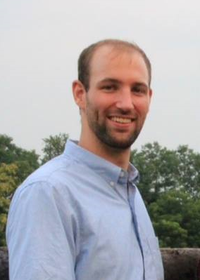
Will Pluer Ph.D.
Assistant Professor of EngineeringElon University
Physics & Engineering Department
What skills stand out on Mine Environmental Engineer resumes?
Will Pluer Ph.D.: Sampling, modeling, and/or designing skills indicate that you know how to apply what you've learned in the classroom to real work situations. Technical writing skills are also broadly applicable.
What soft skills should all Mine Environmental Engineers possess?
Will Pluer Ph.D.: Within the job, time management is probably the most important. An employer will be impressed if you're finishing work before your deadlines. To get the job in the first place, professionalism is very important. Submit a clean and attractive resume with your application and then show up to an interview dressed for the job.
What hard/technical skills are most important for Mine Environmental Engineers?
Will Pluer Ph.D.: Software skills are useful entering a new job. You may need to learn new software for the company, but it will be much easier once you know the basics of how coding, design, and spreadsheet programs work. These skills are also broadly applicable whether you seek a job in consulting, government, research, etc.
Kartik Venkataraman Ph.D.
Associate ProfessorTarleton State University
Department of Mechanical, Environmental and Civil Engineering
What hard/technical skills are most important for Mine Environmental Engineers?
Kartik Venkataraman Ph.D.: Familiarity with relevant regional, state, and federal regulations and compliance measures is critical for environmental engineers. Knowledge of environmental site assessments and remediation programs is a useful technical skill as well. On the project management side, skills such as preparing cost estimates and permit applications are important. Whereas earlier, many consulting firms would hire draftspersons to prepare design drawings and specifications, it is expected that the engineers perform these tasks these days - therefore, experience and proficiency with programs such as AutoCAD or Microstation or Civil 3D, and ArcGIS is imperative.
Michele Serrano
Recruiter and Program CoordinatorNorth Carolina State University
Department of Forest Biomaterials
What general advice would you give to a Mine Environmental Engineer?
Michele Serrano: General advice (straight from one of our valued employers - Mohawk Industries) for graduates beginning their career:
Your first job might not be your DREAM career, but more of a stepping stone. With each assignment, you are stacking skills and honing precisely what you like and dislike. So every opportunity is meaningful, in some way. We also advise that it's essential to find a good boss or mentor, even more than a "good" company.
Jack Puleo Ph.D.
Professor and ChairUniversity of Delaware
Department of Civil and Environmental Engineering
Will there be an increase or decrease in demand for Mine Environmental Engineers in the next 5 years?
Jack Puleo Ph.D.: I believe there will be an increase.
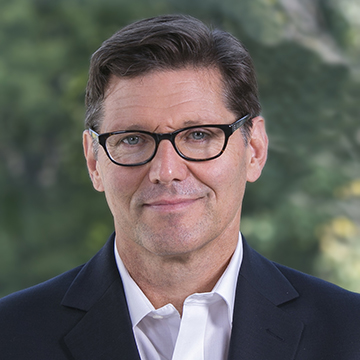
Dr. Thomas Macagno Ph.D.
Program Director of SustainabilityChatham University
Falk School of Sustainability and Environment
What experience really stands out on Mine Environmental Engineer resumes?
Dr. Thomas Macagno Ph.D.: Sustainability is like any other field. Prospective employers like to see students have hands-on experience. Practical experience means students can get up to speed more quickly in the job. Students engage in a wide range of hands-on activities at Chatham, including GIS, Product Management, and Field sampling.
Frank Gallagher Ph.D.
Associate Professor of Professional Practice Director, Environmental Planning ProgramRutgers, The State University
Department of Landscape Architecture
How do you envision technology impacting Mine Environmental Engineers in the next 5 years?
Frank Gallagher Ph.D.: The ability to integrate information from various disciplines at greater resolutions will lead to more effective planning and innovative design.
Are there any particularly good places in the United States for Mine Environmental Engineers to find work opportunities?
Frank Gallagher Ph.D.: Unfortunately, it is not a good time to be in the job market. However, as today's students have greater IT skills, and remote work has increased, perhaps the location will not be as important.
What general advice would you give to a Mine Environmental Engineer?
Neal O'Reilly Ph.D.: The long-term impacts of the coronavirus pandemic on graduates in the conservation science field are generally unknown. However, I hope that they will be short-lived, not long-term. Once the pandemic is under control, I hope things regarding job opportunities will improve. There is no shortage of environmental problems that need to be addressed. Past generations have disturbed the world enough to create job opportunities for several generations. Perhaps, larger than the pandemic's short-term impact on public health, will be the impact it will have on the economy, and will there be enough financial resources to fund natural resource management efforts in the future. Short-term, federal agencies like the U.S. Department of Agricultural and U.S. Department of Interior, have received money for conservation for the next few years, and this will open up job opportunities. A bigger question will be answered by this fall's elections and will the White House and Congress continue to support environmental protection and restoration efforts.
What Mine Environmental Engineer skills would you recommend for someone trying to advance their career?
Neal O'Reilly Ph.D.: Within the federal government agencies, like the Natural Resources Conservation Service, Forestry Service, National Parks, Bureau of Land Management, Fish and Wildlife Service and U.S. Geological Survey, and many state agencies such as the state's Departments of Natural Resources, there are many people of retirement age that will be leaving in the next few years. These retirements will open a lot of opportunities for qualified graduates. I believe that jobs will be available in all regions of the country. The key will be for graduates to build their resume, through internships and volunteer opportunities, to show they have the skills for these positions.
Will there be an enduring impact of the coronavirus pandemic on Mine Environmental Engineers?
Neal O'Reilly Ph.D.: Technology will be a major game-changer in the future. More conservation work will be done using advanced tools like remote sensing. Drones will allow for higher resolution data collection than past satellite or plane generated data. Multispectral data will be used more. More conservation work will be done using advanced statistical tools. New tools that incorporate artificial intelligence (AI) into data analysis will help us see things and patterns we cannot see today. New technologies will allow us to use raw materials and energy more efficiently. Like most fields of science, conservation will require more advanced skills than in the past. It will require universities to teach more advanced courses and graduates to keep up with technology through continuing education.
What general advice would you give to a Mine Environmental Engineer?
Catherine Etter Ph.D.: Networking is probably the best strategy to find out about the different types of jobs, such as town water and wastewater labs, biomedical, and research centers.
What general advice would you give to a Mine Environmental Engineer?
Andrea Welker Ph.D.: Be open to new experiences. Find a good mentor. Become a valued employee. Always remember that you are designing something for someone.
What technology do you think will become more important and prevalent for Mine Environmental Engineers in the next 3-5 years?
Andrea Welker Ph.D.: Virtual/augmented reality will play an increasingly important role in visualizing designs and interacting with them.