Explore jobs
Find specific jobs
Explore careers
Explore professions
Best companies
Explore companies
Job outlook for music professors in the United States
Are music professor jobs in demand?
Music professor job and salary trends over time
Music professor jobs over time
Music professor job growth rate over time
| Year | # of jobs | % of population |
|---|---|---|
| 2021 | 351 | 0.00% |
| 2020 | 337 | 0.00% |
| 2019 | 348 | 0.00% |
| 2018 | 349 | 0.00% |
| 2017 | 352 | 0.00% |
Average music professor salary over time
Music professor salary by year
| Year | Avg. salary | Hourly rate | % Change |
|---|---|---|---|
| 2025 | $52,399 | $25.19 | +0.2% |
| 2024 | $52,278 | $25.13 | --0.6% |
| 2023 | $52,602 | $25.29 | +4.5% |
| 2022 | $50,323 | $24.19 | --2.5% |
| 2021 | $51,617 | $24.82 | +5.1% |
Music professor jobs by state
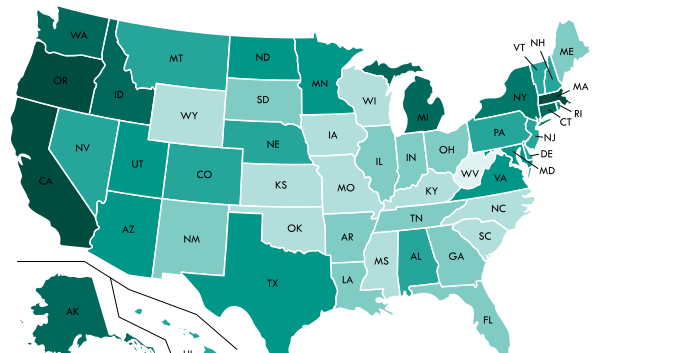
Most common states for music professors
| Rank | State | Population | # of jobs | Employment/ 1000ppl |
|---|---|---|---|---|
| 1 | District of Columbia | 693,972 | 77 | 11% |
| 2 | Vermont | 623,657 | 52 | 8% |
| 3 | West Virginia | 1,815,857 | 103 | 6% |
| 4 | Virginia | 8,470,020 | 388 | 5% |
| 5 | Colorado | 5,607,154 | 304 | 5% |
| 6 | Oregon | 4,142,776 | 221 | 5% |
| 7 | Utah | 3,101,833 | 140 | 5% |
| 8 | Nebraska | 1,920,076 | 88 | 5% |
| 9 | South Dakota | 869,666 | 46 | 5% |
| 10 | New York | 19,849,399 | 833 | 4% |
| 11 | Mississippi | 2,984,100 | 121 | 4% |
| 12 | Rhode Island | 1,059,639 | 39 | 4% |
| 13 | Alaska | 739,795 | 32 | 4% |
| 14 | Texas | 28,304,596 | 816 | 3% |
| 15 | Pennsylvania | 12,805,537 | 433 | 3% |
| 16 | New Jersey | 9,005,644 | 271 | 3% |
| 17 | Massachusetts | 6,859,819 | 172 | 3% |
| 18 | Alabama | 4,874,747 | 155 | 3% |
| 19 | Minnesota | 5,576,606 | 145 | 3% |
| 20 | Montana | 1,050,493 | 33 | 3% |
Music Professor job outlook: Expert opinions
Our panel of music professor experts
North Carolina State University
Skidmore College
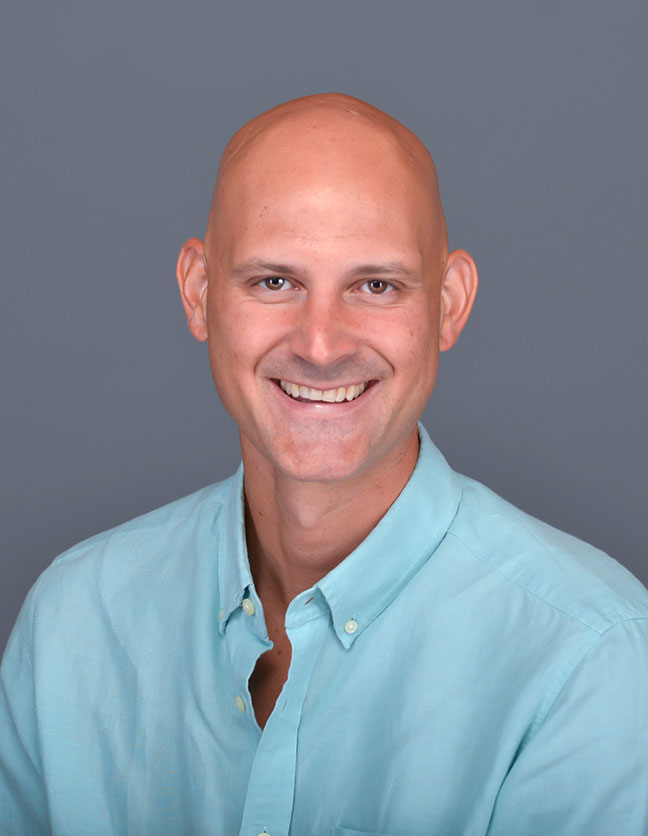
Hope College
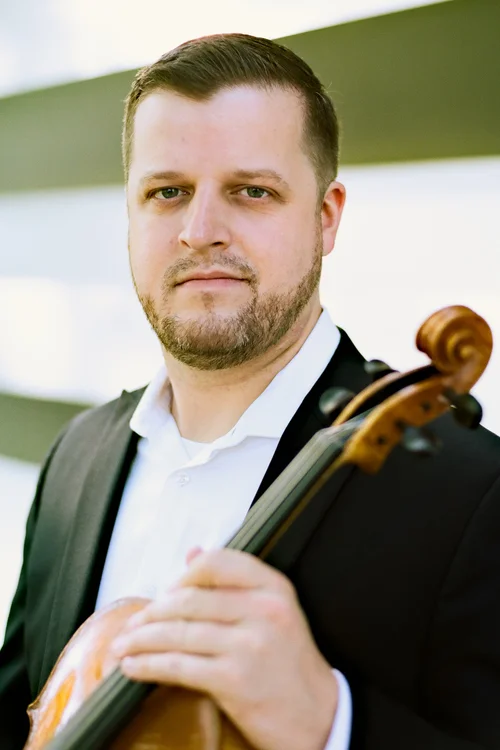
Webster University
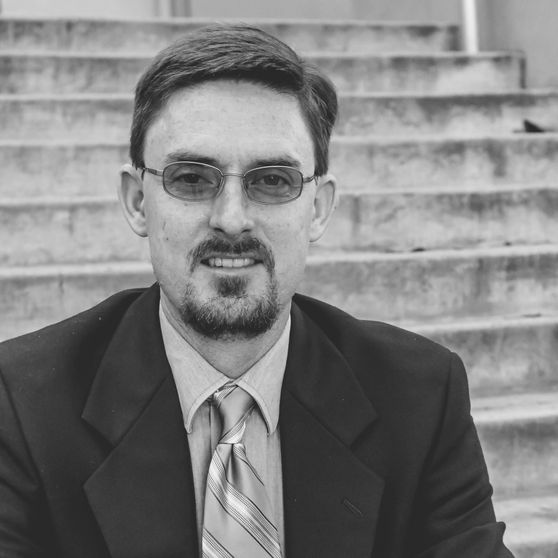
La Sierra University

Bates College

Augsburg University
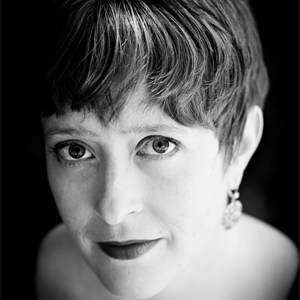
Azusa Pacific University
Albright College

Indiana University Southeast
Loyola University Chicago

Western Oregon University

Salem State University

Arizona Christian University
New Mexico State University
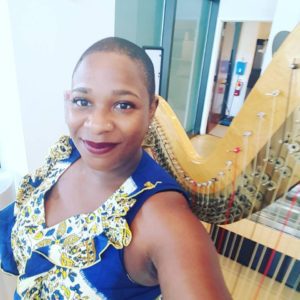
Jackson State University
University of Mount Union
What general advice would you give to a Music Professor?
Alex Holte PhD: My advice for someone new to the field of academia is to learn time management skills early and learn what type of service work you find interesting and would like to contribute to. From there, learn how to say “no” to opportunities that may not align with your goals as well. I feel a lot of new professors tend to find the need to be involved in everything, which can result in burning out later in their career.
What Music Professor skills would you recommend for someone trying to advance their career?
Alex Holte PhD: I would say being able to work with AI may be something that is more important in the next 3-5 years. Right now it’s a new technology and people are just now learning how to integrate it in the workplace, but I feel it is possible the future workforce of tomorrow will necessitate some form of being able to use AI technology.
What will help Music Professors increase their earning potential?
Alex Holte PhD: When you are starting out at any career, it is important to negotiate your salary. Many candidates feel that they have to accept their first offer, but in reality, at many jobs, there is some room for negotiation. Be mindful however, to not request a salary that is much higher than what is being offered as they may feel like a compromise would not be possible and move on to the next candidate.
What general advice would you give to a Music Professor?
Justin Whitehill Ph.D.: Perseverance pays off. Its worth it to pursue the career you want and not settle and be unhappy.
What will help Music Professors increase their earning potential?
Justin Whitehill Ph.D.: I wouldn’t know, I’m a professor.
Jane Kuandre
Associate ProfessorWhat general advice would you give to a Music Professor?
Jane Kuandre: My advice for someone looking to pursue a career in academia would be to focus on building a strong publication record, developing a network of collaborators, and continuously seeking opportunities for professional development.
What will help Music Professors increase their earning potential?
Jane Kuandre: Networking is crucial for career advancement in academia as it allows individuals to establish collaborations, gain access to resources, and stay updated on the latest research trends.
Aurelie Matheron
Assistant Professor of FrenchSkidmore College
Romance Languages, Literatures, And Linguistics
What Music Professor skills would you recommend for someone trying to advance their career?
Aurelie Matheron: Leadership: you will be in positions of leading a program/department. Learn from current chairs by observing their own skills during meetings and moments of decision. Collaboration: develop interpersonal and interprofessional relationships that will allow you to build collaborative projects (interdepartmental courses, for instance).
What will help Music Professors increase their earning potential?
Aurelie Matheron: Do some research online about how much someone earns at your stage of the career. If there is a significant gap, point out (diplomatically) that, because of your extensive experience in XYZ, you would like to get a X% increase in your salary. Be reasonable: if you want a 3% increase, ask for 5% (not 10% or more). Justify your negotiation: why should they pay me more? What experience can I show them to justify my request? If you have a higher offer from another place, you can say that “I have received another generous offer and would like to know about the possibility for matching that offer.” Salary is not the only thing you can negotiate: office space, computer/laptop, sabbaticals, course release, etc. Again, be reasonable: if you think you are entitled to XYZ requests, you also have to show why.
Dr. Christopher Fashun
Assistant Professor of MusicHope College
Music Department
What skills stand out on Music Professor resumes?
Dr. Christopher Fashun: 1. Must have completed a doctorate in the specific field of the job they are applying for (e.g., Music Performance (a specific instrument), Conducting (Choral, Orchestral, Band), Musicology, Ethnomusicology, Music Education, Recording Arts, Music Theory, Music Composition, Music Therapy)
2. Must have teaching experience at the college/university level and preferably at the secondary level. For graduate students, having a teaching or research assistantship would be ideal for gaining college/university teaching experience.
3. Need good communication skills and know-how to work and collaborate with others.
4. Need to have an area of scholarship and creativity (e.g., writing a book, recording an album, guest conducting a professional orchestra or another musical group)
5. Need to understand Diversity, Equity, and Inclusion, why it's important, and how to incorporate it into one's teaching.
6. Salaries vary from college/university and are set by years of experience and accomplishments. Salaries are negotiated upon receiving an offer and cannot be renegotiated after signing a contract.
7. Other skills include being innovative, having at least one other skill set in the broader field of music. Using myself as an example, my doctorate is in Orchestral Conducting, but I also am a nationally recognized Music Educator and Percussionist who has earned a Fulbright Award in the U.S. Scholar Program (a very prestigious award), where my other area of scholarship is Afro-Brazilian Music and Culture. In addition to conducting the orchestra at Hope College, I teach a World Music class for the general education program, music education methods courses, direct the Brazilian Drumming Ensemble, and teach applied percussion.
Matt Pickart
Assistant Professor of Music, Director of Chamber MusicWebster University
Department of Music
What skills stand out on Music Professor resumes?
Matt Pickart: In today's market, it is important to be multifaceted. I've increasingly seen job postings at all levels of academia asking musicians to cover more than one area. That is not to say that we shouldn't continue to specialize in our specific instruments or fields of music study at the highest level. However, the more secondary proficiencies you can develop well, the greater your musicianship and your marketability become. Think about what secondary skill-sets will compliment your primary focus and help you grow as a musician.
Pedagogical experience and proven success is arguably the most important skill on your resume for teaching positions. Not all great musicians are great teachers. It takes time and patience, lots of trial and error, building your own unique methodologies and pedagogical insights, learning your strengths and weaknesses, etc. If you can show student achievements and growth in previous positions, that speaks volumes!
What hard/technical skills are most important for Music Professors?
Matt Pickart: Excellent musicianship, effective and high-quality practicing, music entrepreneurship, clear pedagogical knowledge and insights, owning the stage, effective programming, historical context and cultural awareness in music, physical awareness and efficiency in music-making, music technology, knowing your audience, etc.
What skills will help Music Professors earn the most?
Matt Pickart: Any of the hard and soft skills I've listed are very helpful, but I believe that being an entrepreneurial musician will help you earn the most income. As an entrepreneurial musician, you are focused on learning how to unlock value for what you are doing and create your own new opportunities. You learn to lean into the projects that you love, that speak to your artistic integrity. You flex your right brain muscles by playing in your own creative sandbox, investing time and passion into the projects that you care about most, ultimately leading to success. Musical success with clear planning and hard work at the highest level will ultimately translate into financial success.
Being an entrepreneurial musician is all about mindset. Here are a few questions to get you started: How do you describe yourself as a musician? Who is your audience? How do you deal with failure? What are your goals and dreams as a musician? What actionable steps and smaller goals do you have to get there? What makes you special as a musician?
David Kendall Ph.D.
Associate Professor of Music, Associate Chair, Director of Music History and ResearchLa Sierra University
Department of Music
What soft skills should all Music Professors possess?
David Kendall Ph.D.: If almost nothing is more important than the experience, as I noted above, then nothing is more important than people skills and maintaining positive relationships with peers, mentors, students, and employers. All of these groups may be in a position to employ you at some time in the future, and their opinion of you will largely be framed by the experiences they have had with you. I will give a personal example from my own life. After graduating with a degree in performance and spending a year teaching overseas, I found myself back in the United States without many prospects. However, over the next couple of years, I was able to put together a living because of positive past relationships with colleagues and mentors. I received music lecturing positions at the two universities I attended during my undergraduate and graduate programs, being hired by former faculty mentors who knew me and felt I could make a positive contribution. I was able to secure two more positions, one teaching lessons at a private school and the other as a music minister and choir director at a local church. Both of these came through being hired by former--and younger--classmates from university. Now that I am a full-time professor, I am constantly telling my students to maintain good relationships with all of these people and to never burn any bridges. Even now, I have run into opportunities presented to me by former students, and the cycle continues.
These soft skills are not, however, limited only to being nice and well-liked by your peers and employers. The ability to network is very important, as are the essential practices of being organized, accurate, well-prepared, and punctual. Because employers often have many applicants and choices in hiring, being well-networked and known for reliability is a distinct advantage. Being generally helpful and easy to work with makes it likely that you will be remembered by potential employers when a future position or opportunity opens up. Having a number of people who are eager to recommend you, whether by letter or word-of-mouth, is the best possible advertising.
What hard/technical skills are most important for Music Professors?
David Kendall Ph.D.: In all of the music fields, particularly in performance, the ability to self-promote is important. One should be familiar with and skilled in using the standard social and traditional media platforms. Some proficiency in web and graphic design is very helpful, as well as recording and mixing, if applicable to the sub-field. As nearly all of us have experienced some remote learning and/or teaching over the past couple of years, this has opened up new possibilities. Potential students that would never have considered taking music lessons online are now often open to it, which provides more potential opportunities for teaching remotely. Having the ability to effectively teach a class or a lesson on a platform like Zoom or Google Meet can expand your reach far beyond your geographical area. Such a remote experience should be a pleasant one for students and employers and having a clean, professional background, and at least a ring light and a decent microphone will add a touch of professionalism and added value.
What skills will help Music Professors earn the most?
David Kendall Ph.D.: Being very good at what you do is the first step in being successful in the music field, but it is not a guarantee of earning potential. The soft and hard skills noted above are at least as important, if not more so. Only a handful of the very best musicians in the world can get away with being disorganized, hard to work with, or unreliable. For the rest of us, financial success will largely depend on a combination of performing and/or teaching ability, the ability to use technology and media to our advantage, and a talent for working well with a wide range of people.
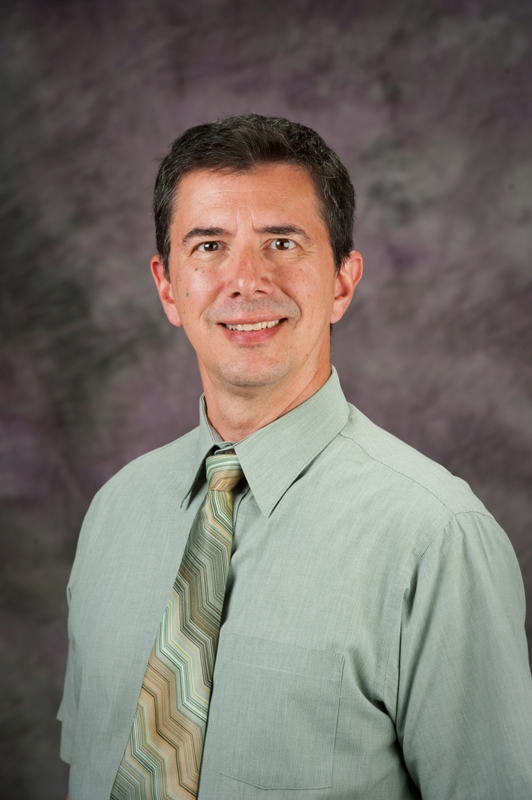
Frederick Burrack
What skills stand out on Music Professor resumes?
Frederick Burrack: -Theory skills (score analysis)
-Oral communication (clarity and focus of verbal response)
-Written communication (clarity at various levels such as administration, educated parents, uneducated parents, young kids)
-Curriculum development (determination of learning outcomes, lesson planning
-Organizational skills (curricular organization, sequencing instruction, time management)
What soft skills should all Music Professors possess?
Frederick Burrack: Personal musical performance quality.
What skills will help Music Professors earn the most?
Frederick Burrack: Organizational skills by far.
Joelle Morris
Visiting Lecturer, Director of Bates College Choir, Associate in VoiceBates College
Music Department
What skills stand out on Music Professor resumes?
Joelle Morris: I'm usually looking for someone who's had experience teaching beginners as well as advanced.
Number two is the diversity of genres of music that person is familiar with. More than ever, students are interested in a wide range of music from classical to world to pop, jazz, and so forth. It is important to be familiar and open to various styles to educate a well-rounded musician.
Number three is performance experience. How much collaborative experience do they have? Are they doing any interesting performances in the area that may inspire their students? - this requirement would be more at the collegiate level, though.
What hard/technical skills are most important for Music Professors?
Joelle Morris: As an educator? Gosh, that's a hard one. I suppose it goes back to the soft skills question. Personally, I find that the more organized I am, the better I can communicate and motivate my students.
As a performer? It never ends. I'm always learning, growing. I like to challenge myself with new compositions and new collaborations. The ability to collaborate is so incredibly important to a performer.
J. Anthony Allen
Assistant Professor - Music, Media and ManagementAugsburg University
Music, Media and Management Department
What skills stand out on Music Professor resumes?
J. Anthony Allen: Technology. First and foremost.
Not only because we are in the age of "are we online or are we not online," but because using technology in-studio lessons can be very, very beneficial. For example, having a lesson that you can record (audio and/or video) for the student to review while practicing to help that student stay on track. In addition to that, using notation software shared documents, and other online resources can really help a student learn.
Dr. Claire Fedoruk
Professor of MusicologyAzusa Pacific University
College of Music and Arts
What experience really stands out on Music Professor resumes?
Dr. Claire Fedoruk: For a performer, composer, or conductor, it is the quantity and quality of the number of performances and recordings you have under your belt. We must be seen and heard to continue working, which is why our current world is a challenge. For an educator or a musicologist, it is the record of publications that shows your level of scholarship and should be reflected. I am a hybrid of performer and scholar, so I work in both realms but am focusing on my writing and research right now, as this is work that can still continue in the current environment. I sang in five concerts over the summer when things were open for a while and even formed an ensemble. For young performers, I recommend that you have as many and varied skills sets as possible: conducting, performing, sound engineering, writing, contracting, consulting, etc. The more you are willing to do, the more longevity you will have in a notoriously challenging profession. To quote George VI's historic WW2 speech: "If one and all we keep resolutely faithful to it, ready for whatever service or sacrifice it may demand, then, with God's help, we shall prevail."
What's a good job out of college for Music Professors?
A.J. Merlino: Any job that a recent graduate feels respected and is allowed to grow personally and professionally is an excellent job out of college. College courses and degree curricula provide knowledge and experiential learning opportunities that connect theory with practice. A job that helps a recent graduate evaluate these curricular experiences with real-world situations will solidify the knowledge obtained during their studies, and allow them to create new points of view.
Joanna Goldstein Ph.D.
Professor of Music, Music Department Coordinator, Advisor for Instrumental/Vocal Performance and Pre-Music TherapyIndiana University Southeast
Music Department
What's a good job out of college for Music Professors?
Joanna Goldstein Ph.D.: Performing as soloist or with others - Musicians have multiple options depending on the skills they acquired in school. It typically takes performers some time and multiple auditions to develop a performing career or land a job playing in an orchestra and this field of music is the most difficult to attain...which is not to say that young musicians shouldn't try. However, one should be prepared to work at other music related jobs while developing a performing career - which may or may not "take off."
Working in the administrative side of an arts organization such as an orchestra, Broadway series, opera company, theatre or arts center is valuable both for the security of the job and opportunity it provides to learn needed business skills in music and network with other musicians. One can work in personnel, marketing, programming, education outreach or many other areas.. Working with arts talent agencies can provide similar skills.
Working at a music store - a steady job, develops connections with instrument retailers, develops business skills that are applicable to any area of music.
Working at a radio station - an opportunity to develop skills in music business, as well as develop familiarity with programming. This is an opportunity for both music business students and, in the more technology areas of the business, audio production and sound engineering students.
Working in "live sound" for theatre, opera or other music performances. One would likely be required to join an appropriate union. This job would be appropriate for audio production or sound engineering students.
Teaching in public or private schools. A licensed music education degree is required to teach in public schools but generally not required for teaching in private or parochial schools.
Michael Scott McBride
Instructor of VoiceLoyola University Chicago
Department of Fine and performing arts
What technical skills for a Music Professor stand out to employers?
Michael Scott McBride: There's a phrase often used in music, "happy to be here, ready to work." This shows that one of the most important skills is really a disposition that shows enthusiasm and preparedness. So many of the particular activities of a working musician are accomplished through an application of tools gained in traditional music programs rather than simply mirroring the identical circumstances. For example, a nurse might practice running an IV and then be required to do just that. A musician might practice playing a major scale at a certain tempo and then be required to perform an acoustic version of a Rihanna song at a corporate event. As a person who hires musicians myself, I look for those who have been insatiably curious of their craft to have achieved high skill levels as well as those who understand the importance of creating a positive communal work environment. Finally, that phrase also communicates the values of punctuality, dependability, and being solution-centric.
What are the biggest trends we'll see in the Music Professor job market given the pandemic?
Ethan Wilson: If there's one thing this pandemic has proven without a doubt, it's that it is possible to work remotely. No more long grueling commutes, stuck in traffic everyday, or large sterile office spaces with cubicles and horrible lighting. So don't limit your search for jobs to just your surrounding area.
Also focus on broadening your skill set to enable yourself to fill more potential roles in your field. Be ready to adapt to the unexpected.
What certifications/licenses/courses can have the biggest impact for Music Professors?
Ethan Wilson: The music teaching landscape is changing very quickly. It's becoming more important to have an understanding of how recording works and having the ability to record yourself.
Also being able to write code in something like JavaScript can provide some new and interesting avenues to help teach someone an instrument.
Mike Testa
Assistant Professor, Music Technology CoordinatorSalem State University
Music and Dance Department
What are the biggest trends we'll see in the Music Professor job market given the pandemic?
Mike Testa: Looking at how remote production has blossomed during the pandemic, I believe we are going to see this area continue to grow. Music production for social media applications and marketing were already big before the pandemic and should continue to grow. Areas where we will need to strengthen our skillsets will be in digital streaming, understanding of Networks, and understanding of IT technologies will be a must for musicians. How to actually get your music to another place on the internet or on a secured network will be crucial skills. Pro-Audio Sales and consulting is also a big area now. People need experts who can clearly communicate how to set up and use pro/consumer equipment.
Writing music for social media, for TV and for other platforms will be huge areas of growth.
Finally, education. With schools still remote, people are looking to teach their kids an instrument, or take music lessons. To be able to navigate the technology to do this remotely is a massive advantage over less computer literate teachers.
What soft skills should all Music Professors possess?
Mike Testa: Time management. Project management. Clear, effective communication.
If you don't have these, you need to start learning about them immediately.
What's a day at work look like for a Music Professor?
Mike Testa: As much as I hate to say it, a day at work will probably look like a retail job for now with passion projects on the side since most touring is shut down. If the graduate gets a job, most likely it will be with a bigger company helping out with their marketing department, doing production work or composing. I don't see concerts kick-starting again until Fall of 2021 or even spring of 2022.
What every graduate SHOULD be doing? Practicing, learning new skills and preparing for the job market to open again. When concerts and the entertainment industry opens back up, there is going to be a FLOOD of work for musicians, and a FLOOD of musicians looking for work. If you are not prepared to stand above the crowd, you are doing yourself a disservice and need to work at honing your craft. What does that also mean? Continue with education, continue with lessons, get advanced graduate degrees, get professional certificates showing you completed course work (like we offer at Salem State University). Be as marketable on your resume as you are on your TikTok.
Gerald Fercho
Assistant Professor of Music, Music Department ChairArizona Christian University
Music Department
What Music Professor skills would you recommend for someone trying to advance their career?
Gerald Fercho: - Students taking a GAP Year will find it beneficial to enroll in some online courses. I would recommend taking General Ed classes that can transfer to your University. This will "check-off" required coursework and allow student more time in selected discipline of study.
- For music students, I would also recommend to sign up for private lessons on your primary instrument. The better you are on your instrument, the more successful you will be. The music should also brush up on Intro to Music Theory.
What general advice would you give to a Music Professor?
Gerald Fercho: Start networking with peer groups to find job opportunities and maintain cutting edge practices within your discipline. Stay curious and keep growing.
Dr. Michael Mapp
Director of Bands, Professor of ConductingNew Mexico State University
Department of Music
What are the biggest trends we'll see in the Music Professor job market given the pandemic?
Dr. Michael Mapp: It is no secret that the arts community is quickly embracing online performance opportunities and creative endeavors are evolving to meet the challenges that the current situation has produced. Although, I am optimistic that we will return to a sense of normalcy, there is no doubt, the pandemic has given rise to exciting new ways for musicians to reach larger audiences. Music technology has taken a huge step forward and thus, the necessity to know one's way around that technology will be needed in the future. Musicians will always desire the in-person performance, but this situation has proven, that those that work in the arts must be able to adapt and modify century old practices to that of the 21st Century.
What are the biggest trends we'll see in the Music Professor job market given the pandemic?
Dr. Lisa Beckley-Roberts Ph.D.: I expect that musicians will be expected to be much more technologically savvy. Musicians have always been business people who balance performance with teaching and managing themselves. I expect that there will continue to be more demand for virtual teaching. Moreover, the possibilities of what can be achieved artistically from a distance have increased exponentially. Collaborations using technology are going to continue to be the trend in my opinion. However, we have received tremendous confirmation on the importance and value of art and in particular music as an outlet, an extension of our culture, and as a means of restoring emotional health in times of extreme disturbances. I don't think there is in any way a chance of our relevance changing but we will have to continue to think and work creatively.
What Music Professor skills would you recommend for someone trying to advance their career?
Dr. Lisa Beckley-Roberts Ph.D.: I would recommend students be very familiar with digital audiovisual software as well as composition and arranging software. I've always been an advocate for business training and marketing skills so these would be my recommendations.
Dr. Jerome Miksell
Professor (Musicianship, Technology, Viola), Department ChairUniversity of Mount Union
Music Department
What experience really stands out on Music Professor resumes?
Dr. Jerome Miksell: The short answer is an experience that is similar to the desired job and place. This is undoubtedly true of very specialized university jobs.
In the performance world, a resume for entry-level jobs is a secondary matter. Your playing ability matters first and foremost. For example, most symphony orchestra auditions are blind, and resumes are not looked at until the final round.
For someone interested in music, sales experience with the products is critical.