Explore jobs
Find specific jobs
Explore careers
Explore professions
Best companies
Explore companies
Job outlook for project managers/consultant management in the United States
Project manager/consultant management job growth summary. After extensive research, interviews, and analysis, Zippia's data science team found that:
The projected project manager/consultant management job growth rate is 11% from 2018-2028.
About 108,400 new jobs for project managers/consultant management are projected over the next decade.
Project manager/consultant management salaries have increased 8% for project managers/consultant management in the last 5 years.
There are over 48,937 project managers/consultant management currently employed in the United States.
There are 202,348 active project manager/consultant management job openings in the US.
The average project manager/consultant management salary is $114,409.
Are project manager/consultant management jobs in demand?
Project manager/consultant management job and salary trends over time
Project manager/consultant management jobs over time
Project manager/consultant management job growth rate over time
| Year | # of jobs | % of population |
|---|---|---|
| 2021 | 48,937 | 0.01% |
| 2020 | 65,990 | 0.02% |
| 2019 | 66,636 | 0.02% |
| 2018 | 43,457 | 0.01% |
| 2017 | 41,128 | 0.01% |
Average project manager/consultant management salary over time
Project manager/consultant management salary by year
| Year | Avg. salary | Hourly rate | % Change |
|---|---|---|---|
| 2026 | $114,409 | $55.00 | +2.8% |
| 2025 | $111,277 | $53.50 | +2.0% |
| 2024 | $109,124 | $52.46 | +1.4% |
| 2023 | $107,610 | $51.74 | +1.4% |
| 2022 | $106,148 | $51.03 | +0.0% |
Project manager/consultant management jobs by state
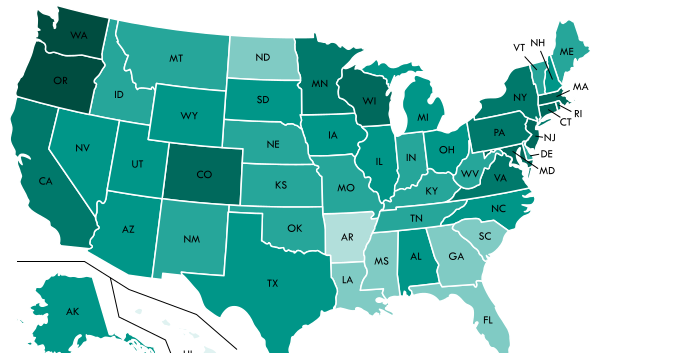
Most common states for project managers/consultant management
| Rank | State | Population | # of jobs | Employment/ 1000ppl |
|---|---|---|---|---|
| 1 | District of Columbia | 693,972 | 890 | 128% |
| 2 | Vermont | 623,657 | 295 | 47% |
| 3 | Wyoming | 579,315 | 263 | 45% |
| 4 | Rhode Island | 1,059,639 | 436 | 41% |
| 5 | North Dakota | 755,393 | 300 | 40% |
| 6 | Virginia | 8,470,020 | 3,263 | 39% |
| 7 | Washington | 7,405,743 | 2,869 | 39% |
| 8 | Massachusetts | 6,859,819 | 2,444 | 36% |
| 9 | Utah | 3,101,833 | 1,125 | 36% |
| 10 | New Hampshire | 1,342,795 | 486 | 36% |
| 11 | Delaware | 961,939 | 342 | 36% |
| 12 | South Dakota | 869,666 | 314 | 36% |
| 13 | New Mexico | 2,088,070 | 731 | 35% |
| 14 | Oregon | 4,142,776 | 1,395 | 34% |
| 15 | Minnesota | 5,576,606 | 1,829 | 33% |
| 16 | Maine | 1,335,907 | 429 | 32% |
| 17 | Illinois | 12,802,023 | 3,826 | 30% |
| 18 | Tennessee | 6,715,984 | 2,026 | 30% |
| 19 | Indiana | 6,666,818 | 1,989 | 30% |
| 20 | North Carolina | 10,273,419 | 3,016 | 29% |
Most common cities for project managers/consultant management
| Rank | City | # of jobs | Employment/ 1000ppl | Avg. salary |
|---|---|---|---|---|
| 1 | Frankfort | 1 | 4% | $100,844 |
| 2 | Annapolis | 1 | 3% | $125,824 |
| 3 | Dover | 1 | 3% | $104,836 |
| 4 | Juneau | 1 | 3% | $114,672 |
| 5 | Boston | 4 | 1% | $123,295 |
| 6 | Atlanta | 3 | 1% | $96,082 |
| 7 | Hartford | 1 | 1% | $125,975 |
| 8 | Lansing | 1 | 1% | $113,745 |
| 9 | Chicago | 2 | 0% | $112,912 |
| 10 | Denver | 2 | 0% | $124,640 |
| 11 | Detroit | 2 | 0% | $113,941 |
| 12 | Indianapolis | 2 | 0% | $99,849 |
| 13 | Minneapolis | 2 | 0% | $118,717 |
| 14 | Phoenix | 2 | 0% | $108,751 |
| 15 | Sacramento | 2 | 0% | $133,165 |
| 16 | Washington | 2 | 0% | $121,065 |
| 17 | Baton Rouge | 1 | 0% | $93,259 |
| 18 | Des Moines | 1 | 0% | $107,080 |
Project Manager/Consultant Management job outlook: Expert opinions
Our panel of project manager/consultant management experts
Ohio State University
Heidelberg University

Lewis-Clark State College
University of Wisconsin - Eau Claire
Florida State University
Kansas State University
University of Central Missouri
University of Tennessee
Auburn University at Montgomery
Maryville University

Azusa Pacific University

Arlington Baptist University
University of Minnesota Crookston
Penn State Behrend

Wofford College
University of Kansas
Northeastern University

Franklin and Marshall College

Binghamton University
Old Dominion University
Dr. Laura Deeter PhD
Professor of Practice: Horticulture and Crop ScienceOhio State University
Applied Horticulture And Horticultural Business Services
What general advice would you give to a Project Manager/Consultant Management?
Dr. Laura Deeter PhD: Be open to learning and trying something outside of your comfort zone.
Be willing to work hard and don't expect to be project manager right out of school. Hard work will get you there fast enough.
What Project Manager/Consultant Management skills would you recommend for someone trying to advance their career?
Dr. Laura Deeter PhD: There are more than enough positions out there to find one with a good starting salary. Apply for as many as you can.
Be willing to relocate to another city or state.
What will help Project Managers/Consultant Management increase their earning potential?
Dr. Laura Deeter PhD: There are more than enough positions out there to find one with a good starting salary. Apply for as many as you can.
Be willing to relocate to another city or state.
Dr. Trish Berg
Associate Professor of Management, Heidelberg University, Tiffin, OhioHeidelberg University
Business Administration, Management And Operations
What general advice would you give to a Project Manager/Consultant Management?
Dr. Trish Berg: Being a project manager involves constant change, learning, and interaction with diverse teams in various departments of an organization. The best parts of being a project manager include working with diverse people, building relationships, creating something new with each new project, empowering and motivating teams, gaining global knowledge, collaboration, impacting organizational culture, and delivering value with completed projects. Some of the difficult parts of working as a project manager include sometimes having accountability without the needed authority to be successful, not having diverse enough skills and having to use estimation and guesswork at times and relying on others for their knowledge. Project managers deal with a lot of uncertainty and must be resilient in how they react to each bump in the road.
What Project Manager/Consultant Management skills would you recommend for someone trying to advance their career?
Dr. Trish Berg: Daily, project managers create plans, create work schedules, build, and motivate teams, assign, and track work from start to finish, set project setting scopes and budgets, create workflow plans, and define what key performance indicators (KPIs) are which is how they can measure project success. Project managers must be both people focused, and task focused. Successful project managers understand what Sinek calls the power of the why in order to successfully motivate teams towards success.
What will help Project Managers/Consultant Management increase their earning potential?
Dr. Trish Berg: One career field that is in high demand and growing is project management. With the complexity and flexibility needed in today's fast-paced culture, many organizations in diverse industries rely on project managers to complete jobs and organize teams to meet the needs of customers.
Daily, project managers create plans, create work schedules, build, and motivate teams, assign, and track work from start to finish, set project setting scopes and budgets, create workflow plans, and define what key performance indicators (KPIs) are which is how they can measure project success.
Project managers must be both people focused, and task focused. Successful project managers understand what Sinek calls the power of the why in order to successfully motivate teams towards success.
What skills will help Project Managers/Consultant Management earn the most?
Jenny Scott: -Emotional Intelligence
-Relevant industry experience (expertise)
-Written and oral presentation communication
-Ability to relate and connect . . .the best strategy in the world will live on paper only if the leader is not able to relate to their people (all stakeholder groups) and connect. Leadership involves three key elements: People - Influence - Goals. The most effective leaders are able to ethically influence their followers for the purpose of attaining the organization's mission and goals.
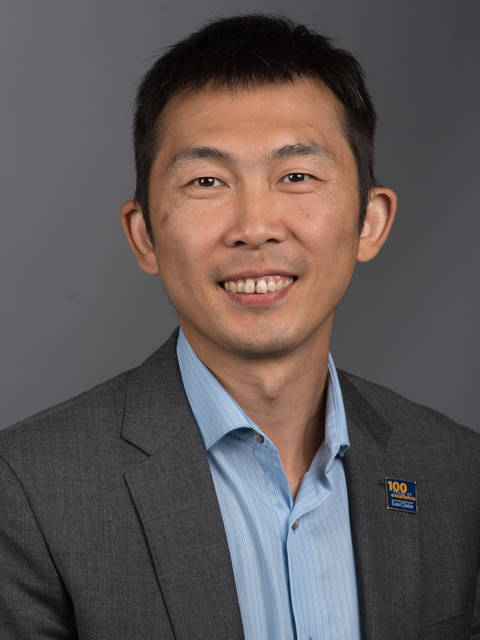
Dr. Longzhu Dong Ph.D.
Assistant ProfessorUniversity of Wisconsin - Eau Claire
Management + Marketing Department
What soft skills should all Project Managers/Consultant Management possess?
Dr. Longzhu Dong Ph.D.: The world of international business has changed a great deal in the past few years. Due to increased globalization, massive technological advances in online coordination, and the Covid pandemic, the need to develop project managers who can lead fully functioning global virtual teams (GVTs) has never been greater. Indeed, studies show that virtual teams are becoming the norm, and more and more multinational companies rely on GVTs to deal with their day-to-day challenges.
However, leading and working in GVTs poses unique challenges that traditional leadership approaches do not seem suited to tackling well. Such challenges include cross-cultural misunderstandings, lack of trust and spontaneity, poor communication, hard to focus and hold teammates accountable, all of which may result in low productivity. Therefore, to thrive in the international business world today, a manager may need an entirely different set of skills.
Perhaps the most important soft skill is cultural intelligence (CQ). CQ refers to the ability to relate and work effectively across different cultures, triggering a train reaction in GVTs. It first requires people to have an open mindset, which helps them realize that cultural differences are just differences and that every culture has its own way of defining "right" and "wrong." Just as the famous Confucius teaching goes, "all people are the same; only their habits differ." Indeed, when differences are seen as something neutral, the negative consequences of cultural bias can be minimized. CQ can also improve GVT communication effectiveness by better understanding visual and auditory cues such as body language and facial expressions so that GVT members will not form false impressions based on stereotypes. When everyone on your team is ready for open dialogue, GVTs can easily clarify shared team goals and guidelines, set clear expectations of each role, and foster trust along the way.
If CQ is the most important soft skill, then being tech-savvy would be the most important hard skill. Technological advances in online coordination/communication make global virtual teams possible and function well. As of right now, there are a lot of great online tools (e.g., Zoom, Google Meet, etc.) that integrate all key types of communication: conference call, breakout rooms, text messaging, file sharing, and online collaboration. However, simply being able to use various virtual meeting tools well is not enough because there's no one-size-fits-all tool for every team all the time. Being tech-savvy asks managers to steer the digital transformation in their teams promptly. It requires managers to constantly evaluate the emerging new technologies and make sure their choice of the tools "fits" their teams' needs over time, which may include members' network conditions, tool preferences, work style, tech skill levels, and the nature of the task/project.
Working in a global virtual team isn't necessarily only about challenges and lower productivity. It can become a valuable advantage and even build a 24/7 work cycle in teams, with proper training on CQ and technological skills.
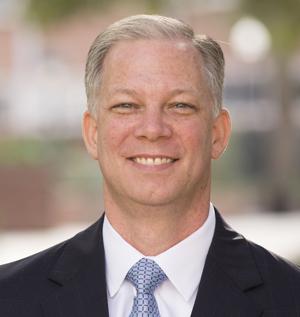
C. Darren Brooks Ph.D.
Assistant Department Chair and Executive Director, Center for Human Resource ManagementFlorida State University
Department of Management and the Center for Human Resource Management
What soft skills should all Project Managers/Consultant Management possess?
C. Darren Brooks Ph.D.: While advancements in technology, artificial intelligence (AI), and data analytics occupy center stage in many areas of management practice, soft skills continue to be seen as equally or even more important skills for success in the field of management. Soft skills are typically described as personal attributes, qualities, and characteristics that enable us to interact more effectively with others. In most fields of management, our ability to communicate, work with, and interact with other people constitutes a significant portion of the work we do. Consequently, employers are focused on identifying candidates who possess strong skills are areas of communication (verbal, written, and non-verbal), leadership and followership, collaboration, an ability to work in teams, intellectual curiosity, adaptability, conflict management, problem-solving, creativity.
What hard/technical skills are most important for Project Managers/Consultant Management?
C. Darren Brooks Ph.D.: As stated earlier, the field of management is broad and encompasses all industries and sectors. Consequently, the technical skills necessary to succeed will vary according to the specific knowledge and experiences required to understand the nuances of an organization. Accordingly, graduates who have business acumen and technical competency in a particular discipline or industry would be better positioned for employment opportunities. As a result, I always place emphasis on gaining internships and work experience concurrently with academic study. These experiences will provide a real-world understanding of the type of skills necessary to succeed in organizations as well as offer industry-specific knowledge. However, for many graduates, their practical skills are limited. In this case, it is important to ensure you have more generalizable skills that are applicable across industries, such as building digital fluency, analytical fluency, writing skills, and strong Excel skills. When speaking with consulting firms and industry employers, they repeatedly reference the need for graduates to demonstrate more advanced Excel skills.
What skills will help Project Managers/Consultant Management earn the most?
C. Darren Brooks Ph.D.: According to the Bureau of Labor Statistics, employment in management occupations will grow over the next decade by 9%. Due to the broad array of management opportunities, variations in skills necessary for success are likely to exist based on the type of management work being performed and the industry or sector. However, there are general management skills or competencies necessary for success, including management consulting, that employers continually seek from graduates. The ten most sought-after skills include the following: critical thinking, intellectual curiosity, innovation/creativity, problem-solving, analytical fluency, digital fluency, adaptability, resilience, aptitude for collaboration and teamwork, and human capital management.
What skills stand out on Project Manager/Consultant Management resumes?
C. Darren Brooks Ph.D.: Requisite skills relevant for management consulting roles that should be visible to employers can be grouped into the following three broad categories : (1) functional expertise and/or specialization of knowledge in particular areas or disciplines, (2) strong business analytics skills, and (3) the ability to lead projects or teams. Considering the broad nature of management, and particularly management consulting, skills should reflect the specific needs of the organization or industry of practice. For example, individuals working in executive compensation would require a different set of demonstrated skills on their resume than someone engaging in performance systems analysis to support process re-engineering within a manufacturing setting. Additionally, since management professionals work in and/or lead teams, being personable, engaging, proactive, demonstrated leadership, and an ability to handle difficult situations are all skills and competencies highly sought after. In sum, regardless of the industry or sector, most employers look for skills displayed both on a resume and then demonstrated during the selection process that shows the applicant possesses the capability to work within a team, has sound analytical skills, the ability to communicate complex information, resolve conflict and solve problems.
Will there be an enduring impact of the coronavirus pandemic on Project Managers/Consultant Management?
Brett Horton Ph.D.: - The enduring impact is the opportunity to experience first hand coming out of a major hospitality economic downturn. Many hotels and hospitality operations are rebounding from near or complete closure. Such an amazing time to get in on the fast track to the top of an organization. There will be numerous opportunities that did not exist in March of 2020.
- Graduates are positioned to thrive more than the graduates in 2020 in that the number of open positions is huge. They have the opportunity to start with a career with great companies and great leaders and grow as fast as they so desire.
- The only downside may be moving up too fast and now being completely grounded in the basics due to being hired and put in positions of authority before they may be fully prepared.
What certifications/licenses/courses can have the biggest impact for Project Managers/Consultant Management?
Brett Horton Ph.D.: The successful leaders are those who:
- Have a degree in hospitality management and understand what just occurred.
-There are few certifications necessary for work in the hospitality. Food safety is required for some positions, but this has likely been obtained while in school. Additional certifications may be obtained in the first 5 years of employment.
What will help Project Managers/Consultant Management increase their earning potential?
Brett Horton Ph.D.: - Willingness to take on increased responsibility
- Willingness to move locations
- Willingness to work in different departments to learn and grow with the organization
What are the biggest trends we'll see in the Project Manager/Consultant Management job market given the pandemic?
Dr. Dan Jensen: There will be a combination of opportunities and losses across the next 3-5 years because of the COVID-19 pandemic. Many industries will find it difficult to recover such as hospitality (hotels, restaurants, etc.), entertainment (movie theatres, night clubs, casinos, etc.), manufacturing, and educational services. But many industries and career pathways are opening up because of the use of online technologies. Positions that include remote work that leverage technology will remain and probably increase across time. Supply chain, project management, eCommerce, computer science, data science ("big data"), digital content, and artificial intelligence specialists will continue to increasingly be in demand. The healthcare industry has been in flux because of increasing costs but will emerge on the other side of the pandemic with opportunities for nurses, healthcare support staff, and related technologies (e.g., the "electronic healthcare record"). Irrespective of the pandemic, careers in sales or customer relationship management (CRM) will continue to be a popular launching point for recent college graduates.
The recruitment/hiring process is likely to become much longer than in the past and will rely on virtual interviews instead of face-to-face. With a high unemployment rate, it will be more difficult for younger, less experienced candidates to get hired. This is not great news for recent college graduates, but all is not lost.
Networking has always been the number one way that people find work opportunities. The skill is more important than ever. My recommended approach is to: identify a list of companies where you would like to work; research job postings within the company (and apply!) while simultaneously identifying contacts at the company (LinkedIn is a great tool to do this); then reaching out to contacts by using your existing network for an introduction (identify someone you know is already connected to the person you want to meet and ask them to forward a letter of introduction on your behalf). This leads to an "informational interview" (not a job interview); a chance to speak with someone about the company and its culture.
Scott Gilpatric
Professor and Department HeadUniversity of Tennessee
Department of Economics, Haslam College of Business
What will help Project Managers/Consultant Management increase their earning potential?
Scott Gilpatric: The easy answer is being really proficient with handling data, including being comfortable with learning to code in whatever manner might be needed. There's no question those skills are likely to open doors. But in a very different way, one thing that really matters is being able to talk comfortably about ideas and developments in economics, business, or policy areas, signaling a strong base of knowledge. Towards that end, reading deeply, not just the headlines but long-form analysis in places like The Economist and other high-quality publications can be really beneficial.
What soft skills should all Project Managers/Consultant Management possess?
TeWhan Hahn Ph.D.: Writing skills including email writing, being able to work in teams, and knowing the workplace etiquettes.
Meaghan Goodman Ph.D.
Program Director & Assistant ProfessorMaryville University
Speech-Language Pathology
What's a day at work look like for a Project Manager/Consultant Management?
Meaghan Goodman Ph.D.: A bachelor's in communication sciences and disorders can prepare you for three different tracks. First, it can prepare you to become a licensed Speech-Language Pathology Assistant (SLPA). This is someone who works under a fully credential speech-language pathologist. Often times, they carryout intervention plans developed by a fully credentialed speech-language pathologist. If graduate school is on your horizon, a bachelor's degree in communication sciences and disorders will prepare you for acceptance into a Speech-Language Pathology program, or an Audiology program. If you are not accepted into a graduate program right away, working as a speech-language pathology assistant (SLPA) is a great way to get experience in the field!
What's a good job out of college for Project Managers/Consultant Management?
Bala Musa Ph.D.: A good job out of college is one that allows you to apply creative and critical thinking skills. Future work environments will require employees to innovate and adapt. Any job that helps you cultivate, sharpen and apply those skills will serve you and your organization well. It will prepare you to adapt in the face of change and future disruptions.
What are the biggest trends we'll see in the Project Manager/Consultant Management job market given the pandemic?
Peggy Smith: As a result of the pandemic which has created life anew to include social distancing, quarantining, virtual learning, an increase in home schooling and working from home, etc., telecommuting will no longer be considered a luxury for companies to offer as a special benefit. In an effort to remain solvent, companies are and will continue to revisit the way that their businesses are structured thereby offering more telecommuting opportunities. Thus, hiring workers with the requisite technical savvy has become, without equivocation, a must! As a result, what we may see is that those workers who are either approaching or have reached retirement age may opt to literally retire now as opposed to putting it off to a later date (which may have been a part of their original plan). In so doing, this will very likely provide a myriad of opportunities for the younger workforce.
What skills stand out on Project Manager/Consultant Management resumes?
Rutherford Johnson Ph.D.: Well, familiarity and proficiency with the technology I just described is now important. I also always promote language as a highly valuable skill -- and if you are working internationally, even remotely, it is a definite skill that makes you stand out. Even though English is now the main international language, do not just rely on that if that is your main language. Knowing the language of your clients, for example, even just a little of it, can pay off and make you get noticed. It also helps you understand the culture and people of that country a lot better.
Are there any particularly good places in the United States for Project Managers/Consultant Management to find work opportunities?
Rutherford Johnson Ph.D.: With the remote working possibilities, graduates could work for a company in a big city without leaving their hometown. As for classic jobs with relocation involved, that really depends on the field. For international business, the major international and finance cities such as New York, Boston, and Atlanta are always significant -- though with definite cost of living problems. My advice is to look everywhere and be willing to give a city or region you never thought of living in a try. The less-traveled path can often lead to great success.
What are the biggest trends we'll see in the Project Manager/Consultant Management job market given the pandemic?
Rutherford Johnson Ph.D.: People and companies have seen that many jobs can be done from home or remotely, and the technology exists and is improving to allow that. It also allows for more work-life balance, which is, in my opinion, important both for health and for worker productivity. I expect this trend will continue to one degree or another, even as more in-person interaction returns. The same mindset and technology also allows for more international engagement without travel or relocation. So, perhaps now we will see graduates in the USA working for companies in Germany, or from France working for Polish companies, and so on -- all without relocating. That is a great way to expand opportunities as well for those in developing countries who might not otherwise have access to such jobs.
Will there be an enduring impact of the coronavirus pandemic on Project Managers/Consultant Management?
Phil Stuczynski: Yes, and no. On the one hand, we can look back to something as recent as the "Great Recession" from a little over a decade, and in some ways we are still seeing the impact from that generation. Rather than graduates being able to step into a strong entry level position in a desired field, you had many individuals who literally would take any job that was available. And, while it was admirable for individuals to go into a job (something is better than nothing), if you find yourself in a different career path or even in a job that may not need as much training in the skills you specifically went to school for, it can make an improper fit.
Now, the good news here is that students who have been trained in economics, or many business students in general tend to understand the broader vantage point of business. In times like these, even if unemployment starts to creep up, there will be businesses climbing over one another to try and secure talent that can understand data. Certain computer skills, forecasting skills, drawing connections between differing levels of business, any every other combination of resource and household management will be useful to a business.
So, will there be an impact? Perhaps. Jobs are probably just a bit more difficult to come by right now as compared to even one calendar year ago. That being said, many universities have continued to not only have students positioned well so they can plug right in and be effective remotely, but many of those students are as good or better with the technology and software as those in the private sector.
What type of skills will young Project Managers/Consultant Management need?
Phil Stuczynski: Hitting just a few of the big ones, computer skills are going to be as important as ever. We have seen individuals in many fields embrace the idea of technology. Supply chains are being tested, and with that comes the financial capacity to build those facilities and shipping routes. International skills including trade and negotiations will be key. And truly any of the numbers from data analysis, to software that helps understand and manipulate said data, and especially financial and accounting. The long story short is probably three major skills.
1) Communication (with people and computers / software). 2) Analysis (economic at the macro level, and business specific / financial / accounting at the micro level). and 3) Self learning. As we have seen through this pandemic, we have seen processes, systems, products, and entire operations literally change overnight in response to biological threats, supply chains being broken, or by government decree. Individuals who can adapt on the fly and go find a new solution (even if it means they need to teach themselves the system, teach themselves the technology or software, teach themselves the coding, etc.), those are the types of graduates that employers are not just going to like, but are actively looking for.
What experience really stands out on Project Manager/Consultant Management resumes?
Phil Stuczynski: Currently? I think a big one is going to be being flexible, showing you are able to adapt, and having any example of continuing to push through during these recent times.
We have had students who have literally been stuck. They have been in an apartment or a dormitory hours (or countries) away from home. And yet they still managed. They still did their coursework, they learned new software on the fly, they felt comfortable asking more questions than ever and even teaching themselves more as needed.
When we go back to something such as the great financial crisis, you had individuals who would sort of get burnt out when searching for a job. And to be fair, who could blame them. This was a strained economy and even the most qualified of candidates were hard pressed to find employment coming out of college when you had people with decades of experience competing just to continue bringing a paycheck in. However, you also had some individuals who would do what was necessary. For example I am keenly aware of an individual student I had years ago who was qualified for almost any job in a normal economy. That being said, he took a job with a bank where his degree wasn't even required. He was overqualified and knew it, but he would rather get experience than just sit around and do nothing. Fast forward a few years and he was not only at that bank only a short time before being promoted, but he used that promotion to move into yet a higher role later and has continued to enjoy success he may not have had if he was just waiting on a good job to come along.
What I'm saying is, the parallels here are through no fault of their own, students are going to enter an economy where things aren't as normal as they were just weeks before. This is going to sort itself out, but the students who push forward and adapt and just do something will stand out compared to those who sit on the sidelines and wait. Anything that highlights they are flexible and able to work in the face of disjointed operations or new limitations will not just find themselves being sought after, but because businesses need employees who can make quick changes on the fly more than ever, those students who can prove they can do it? They're going to be the ones who get ahead.
Dr. Smriti Bhargava Ph.D.
Assistant Professor of EconomicsWofford College
Economics Department
What are the biggest trends we'll see in the Project Manager/Consultant Management job market given the pandemic?
Dr. Smriti Bhargava Ph.D.: This is a hard question to answer given the uncertainty that exists. One trend that is likely to stay is the possibility of working remotely or working-from-home. More and more companies are gravitating towards this trend, and this may open many exciting and flexible opportunities for new graduates and current workers. It may also take a while for the job market to heat up again and to create new jobs.
What skills stand out on Project Manager/Consultant Management resumes?
Dr. Smriti Bhargava Ph.D.: I think skills of data analysis in addition to knowledge of software programs (through prior experience in terms of a research project with a faculty member or an internship) will stand out on a resume as college graduates search for jobs. Such experience signals abilities of quantitative reasoning and critical thinking, which are highly valued. In addition, good communication skills, both written and verbal, are extremely important.
Are there any particularly good places in the United States for Project Managers/Consultant Management to find work opportunities?
Dr. Smriti Bhargava Ph.D.: It depends on what the student likes doing- if they enjoy working with numbers and data, they would be well suited for industry as data analysts. They may want to work in policy think tanks or government organizations as research associates of policy analysts if they want to learn about the effect of legislations. If math is their forte, Graduate school is also an interesting path to take if they are hoping to work in academia or pursue high-ranking positions in the government, research, and policy.
Will there be an enduring impact of the coronavirus pandemic on Project Managers/Consultant Management?
Milena Stanislavova Ph.D.: Along with all the obvious negatives, I feel that we were forced to experiment and innovate the way we teach and learn, and it has brought a lot of ingenuity and creativity on the part of both professors and students. This past semester I have seen so much depth of experiences and focus on what really matters, optimization of the amount of facts versus hands on problem solving techniques, and just sheer planning of the time spent in the classroom time on the part of professors. At the same time, students are forced to be more organized and self-sufficient, skills that will serve them well on the job market and beyond. This new and more focused way of teaching and learning, using every instrument in our toolbox and varying the virtual, in-person and hands-on practical will definitely remain after the pandemic is over.
What certifications/licenses/courses can have the biggest impact for Project Managers/Consultant Management?
Milena Stanislavova Ph.D.: In today's highly technological world, strong quantitative skills are a must for every job. These come with deep mathematical foundations, but more is needed - knowledge of statistics and computational techniques or programing languages, ability to read and interpret data in various formats and familiarity with economics are all great prerequisites. Such courses and technical skills allow one to gain a deep understanding of how the world really works and to create quantitative mathematical models for it. The more we ask students to work on real world research projects that emphasize these skills, the better prepared and competitive they become.
What soft skills should all Project Managers/Consultant Management possess?
Milena Stanislavova Ph.D.: Working and collaborating in groups, presenting to different audiences, writing technical reports, grant applications and researching new topics are all essential soft skills. Much of today's world relies on data, so collecting, summarizing, organizing and presenting data is also an important soft skill that is becoming quite fundamental.
What are the biggest trends we'll see in the Project Manager/Consultant Management job market given the pandemic?
Ravi Sarathy Ph.D.: Growth in global supply chain and their management, AI and cloud-based software development and solutions, in areas such as global payments, and crowdfunding, and healthcare, using remote healthcare counseling and links to healthcare monitoring devices, developed in global innovation teams, as well as home healthcare combining remote personnel with intelligent health monitoring devices. And more broadly, a significant increase in remote working, on a global scale and through global virtual collaboration.
What skills stand out on Project Manager/Consultant Management resumes?
Ravi Sarathy Ph.D.: Business analytics capability, with facility in both data gathering and data analysis; understanding of and ability to work with global supply chains; experience and expertise in using global collaboration tools and in managing global virtual teams; and skills and experience in using AI, applied in fields as diverse as healthcare, education, gaming and entertainment.
Are there any particularly good places in the United States for Project Managers/Consultant Management to find work opportunities?
Ravi Sarathy Ph.D.: Given the interest and acceptance of remote working, geographic location is less likely to be of primary importance. Having said that, cities such as Boston, New York, LA, San Francisco, Austin (TX), Seattle, Miami, Atlanta, Nashville and Miami are all likely to be significant growth centers for such jobs and skills.
What general advice would you give to a Project Manager/Consultant Management?
Nicole Jones Young Ph.D.: Be flexible. The COVID-19 pandemic has resulted in a lot of uncertainty, but has created new opportunities in others. Staying flexible allows individuals to shift focus away from industries or occupations that may be in decline, and re-focus on employment opportunities that may be more aligned with our current moment.
What are the biggest trends we'll see in the Project Manager/Consultant Management job market given the pandemic?
Nicole Jones Young Ph.D.: One big trend we will see is the continuation of working from home. It may not be for all employees every day, but I think that is definitely here to stay. Many employees have been asking for this benefit for years. After almost a year of working from home, many employers that were reluctant in the past have likely realized that employees can still be very productive and they can decrease expenses related to office space.
Another is related to the focus on diversity, equity, and inclusion related efforts. While the majority of the country was quarantined, we all witnessed the same horrific murder of George Floyd, and there was nothing else to distract us from finally directly addressing issues related to race in this country. Many employees of color, and particularly Black employees, are no longer interested in making everyone else around them feel comfortable. Organizations that issued statements and initiatives in the spring will likely be held more accountable than ever before.
Another trend may be the elimination of jobs in their previous iteration. Many companies that have survived, or even thrived, during COVID likely did so by adapting. As such, these organizations may not return to their prior ways of doing business, which may require employees and applicants to increase or highlight a different skill set.
What Project Manager/Consultant Management skills would you recommend for someone trying to advance their career?
Nicole Jones Young Ph.D.: Gap years are interesting to me. There is a difference between someone who has ample monetary resources and voluntarily decides to take a "gap" year to travel the world, as opposed to someone who involuntarily takes a "gap" year because they legitimately cannot find a job.
For students who opt not enter the workforce immediately upon graduation, I would recommend that they utilize this time in a strategic fashion, primarily expanding their network, increasing their skills related to data analytics/analysis, and reading or researching within the broader business field as well as their particular field of interest. Expanding your network is always beneficial because of the value employers place on referrals. If students do not know where to start, I would recommend they join their applicable professional organization and begin attending events (virtual events can still help build relationships).
While specific job duties may differ, the ability to understand and utilize data is in high demand in virtually every job role. Having comfort with data-both quantitative and qualitative--can be a highly beneficial skill that many in the job market may not have to offer.
I also recommend continued reading and researching, as whenever you do enter the workforce you want to know what is going on. I am never surprised, but always disappointed when I ask my students if they heard the latest job numbers or if they saw a recent news article. It is hard to articulate your value to an organization's problems if you are unaware of what they are. Stay current.
Interestingly, I would not recommend that someone enroll in a graduate program simply to take up time. If you just love school, have a clear focus, or had already planned to enroll in graduate school prior to COVID, then proceed. However, if you are unsure about your interests or future career goals, enrolling in a graduate program may be a large investment of time and money that may not result in securing a job of interest upon completion.
Denise Lorenzetti
Director of Binghamton University's Fleishman Center for Career and Professional DevelopmentBinghamton University
Fleishman Center for Career and Professional Development
What are the biggest trends we'll see in the Project Manager/Consultant Management job market given the pandemic?
Denise Lorenzetti: It is likely to see a continuation of remote job opportunities even after the pandemic is resolved. Many positions that have been successfully moved to remote options may in fact stay remote, depending on the employer.
The pandemic has increased the number of jobs available in specific industries and decreased the amount in others.
Industries and fields that have and will likely continue to grow include:
Supply chain/logistics and positions related to production, distribution, and selling of goods such as e-commerce
Technology and industries that help support businesses such as software, developers, artificial intelligence.
Healthcare
Biotechnology
The service industries were affected by the pandemic, making these positions harder to come by. This would include entertainment, travel, lodging, and full-service restaurants among others.
Are there any particularly good places in the United States for Project Managers/Consultant Management to find work opportunities?
Denise Lorenzetti: This will vary from industry to industry.
Many organizations have seen success with the transition of jobs to a virtual environment. It is uncertain how things will progress, however we anticipate there to be less of an emphasis on geographic region as a part of the job search than pre-pandemic. The pandemic has opened up opportunities for new graduates to find opportunities that traditionally were only available in large metropolitan areas such as Silicon Valley or NYC.
Many companies are still providing flexibility with working from home and/or not needing to be physically located in the city where the position resides. Some are work-from-home indefinitely and others are offering the flexibility to telecommute more than physically being in a location every day.
Large cities will likely continue to be a major hub for industries that will continue to require in-person jobs, such as healthcare roles.
What skills stand out on Project Manager/Consultant Management resumes?
Denise Lorenzetti: Employers have been placing a large emphasis on finding candidates with skills that demonstrate the ability to utilize technology and demonstrate adaptability, resilience and taking initiative.
Tech skills such as programming, coding, and Excel continue to be valuable to employers for both tech and non-tech roles.
Employers are also interested in learning how graduates spent their time during the pandemic. If internships were not an option, continuing to build skills through online classes such as LinkedIn Learning or Coursera, virtually volunteering, and demonstrating to employers a commitment to growing during the pandemic is critically important.
Job seekers can demonstrate this by earning microcredentials and digital badges relevant to the industry they are interested in or in areas they are passionate about.
What type of skills will young Project Managers/Consultant Management need?
Robert Mcnab Ph.D.: Young graduates must be able to effectively communicate as they enter the workforce. Analytical skills are continuing to increase in importance also and graduates who are unable or unwilling to develop these skills will quickly fall behind their peers. If you are unable to work with data and cannot communicate the results of your analysis, then your value to future employers is diminished. Graduates need to realize that they must continue to learn after graduation, not only to improve their existing skills but to adapt to the demands of a changing workplace.
What experience really stands out on Project Manager/Consultant Management resumes?
Robert Mcnab Ph.D.: Young graduates need to think about the job market in terms of signaling. How do you tell a prospective employer that you have a unique set of skills? Graduates often fail to understand that there are hundreds of applicants with similar traits competing for the same job, so you need a strong signal to the employer that separates you from the crowd. One such signal is practical experience. Have you been able to apply the concepts and tools from your college experience in the workplace? Did you seek out and find an internship, externship, or other type of formative experience that shows initiative, responsibility, and the acquisition of experience? If you don't have a strong signal, then you need to develop a plan. Find more experience economists in your area, ask questions, and develop a network. Figure out what you can do to separate yourself. It may sound like a cliche, but you need to market yourself.
Will there be an enduring impact of the coronavirus pandemic on Project Managers/Consultant Management?
Robert Mcnab Ph.D.: Graduates will enter a workplace that is dramatically different than a couple of years ago. Remote work, which once was frowned upon by many managers, has become commonplace for many organizations. It is likely that many graduates will do most of their interviewing on Zoom or similar software and some may start their jobs remotely. We should not expect remote interviewing to go away as it increases efficiency and effectiveness. Economics graduates are likely to be in demand given the numerous economic shocks from the pandemic. Understanding how to communicate economic concepts and apply tools and techniques is of increasing importance.