Explore jobs
Find specific jobs
Explore careers
Explore professions
Best companies
Explore companies
Job outlook for public health representatives in the United States
Are public health representative jobs in demand?
Public health representative job and salary trends over time
Public health representative jobs over time
Public health representative job growth rate over time
| Year | # of jobs | % of population |
|---|---|---|
| 2021 | 958 | 0.00% |
| 2020 | 994 | 0.00% |
| 2019 | 1,006 | 0.00% |
| 2018 | 1,009 | 0.00% |
| 2017 | 996 | 0.00% |
Average public health representative salary over time
Public health representative salary by year
| Year | Avg. salary | Hourly rate | % Change |
|---|---|---|---|
| 2026 | $52,050 | $25.02 | +2.3% |
| 2025 | $50,870 | $24.46 | +1.8% |
| 2024 | $49,949 | $24.01 | +0.5% |
| 2023 | $49,691 | $23.89 | +1.6% |
| 2022 | $48,890 | $23.50 | +2.1% |
Public health representative jobs by state
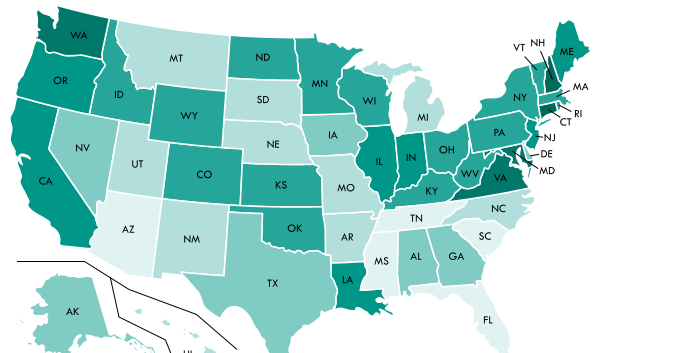
Most common states for public health representatives
| Rank | State | Population | # of jobs | Employment/ 1000ppl |
|---|---|---|---|---|
| 1 | District of Columbia | 693,972 | 251 | 36% |
| 2 | Minnesota | 5,576,606 | 874 | 16% |
| 3 | Indiana | 6,666,818 | 988 | 15% |
| 4 | Washington | 7,405,743 | 1,017 | 14% |
| 5 | Idaho | 1,716,943 | 232 | 14% |
| 6 | South Carolina | 5,024,369 | 666 | 13% |
| 7 | Iowa | 3,145,711 | 399 | 13% |
| 8 | Delaware | 961,939 | 124 | 13% |
| 9 | North Carolina | 10,273,419 | 1,200 | 12% |
| 10 | Wisconsin | 5,795,483 | 683 | 12% |
| 11 | Arkansas | 3,004,279 | 365 | 12% |
| 12 | Rhode Island | 1,059,639 | 128 | 12% |
| 13 | Wyoming | 579,315 | 70 | 12% |
| 14 | Michigan | 9,962,311 | 1,080 | 11% |
| 15 | Virginia | 8,470,020 | 954 | 11% |
| 16 | Arizona | 7,016,270 | 800 | 11% |
| 17 | Missouri | 6,113,532 | 672 | 11% |
| 18 | Maryland | 6,052,177 | 667 | 11% |
| 19 | Alabama | 4,874,747 | 524 | 11% |
| 20 | Ohio | 11,658,609 | 1,215 | 10% |
Most common cities for public health representatives
| Rank | City | # of jobs | Employment/ 1000ppl | Avg. salary |
|---|---|---|---|---|
| 1 | Portland | 1 | 1% | $57,779 |
| 2 | Saint Charles | 1 | 1% | $46,396 |
| 3 | Detroit | 2 | 0% | $48,484 |
| 4 | Tampa | 1 | 0% | $41,965 |
Public Health Representative job outlook: Expert opinions
Our panel of public health representative experts
SUNY Polytechnic Institute
Texas A&M University San Antonio
University of South Florida
Texas Tech University Health Sciences Center

University of Indianapolis
Creighton University

University of California, Merced

BU School of Public Health

Bowling Green State University
Georgia Institute of Technology
University of Maryland
Arizona State University
University of Maryland
University of North Florida
New York University

Hunter College of the City University of New York
Public Health Foundation (PHF)
Worcester State University

Keene State College
What will help Public Health Representatives increase their earning potential?
Catherine Annis Ph.D.: Seek out those in the career paths that you are interested in and ask to meet. Ask them questions about how they got there and details about their work. In this way, you can assess whether that career trajectory fits you while also building your professional network.
What Public Health Representative skills would you recommend for someone trying to advance their career?
Natalie Stepanian Ph.D., RN: Having a degree in Public Health can provide you many opportunities in the job market. There are a wide variety and levels of jobs that are available depending on the degree or degrees you hold. When you are first starting to look at possible venues you would like to work for start with a good internet search. There are many opportunities within the U.S. Public Health Service which most people are unaware of. You can also look at the Department of Health and Human Services with the federal government where Public Health is under their umbrella. This is a federal agency, there are also state and local Public Health Departments that have a variety of jobs. Some of the categories for jobs are: Epidemiology, Disaster and Emergency Specialists, Natural Science Managers, Public Health Nurses, Water Quality Planner, Healthcare Manager, Public Health Educator, Environmental Health Scientist, Biostatistician, Infection Preventionist, Public Health Consultant, Public Health Nutritionist, Health Policy Analyst, Biomedical Researcher, Occupational Health and Safety Specialist, Clinical Research Coordinator, Research Assistant, Nonprofit Coordinator, Nonprofit Executive Director, Social and Community Service Manager, just to name a few. Before you jump in see if you can arrange to shadow someone that is in a Public Health job so you can really see what the job will entail before you pursue it.
What will help Public Health Representatives increase their earning potential?
Natalie Stepanian Ph.D., RN: Since the Covid Pandemic of 2020 happened it has been very apparent that our Public Health infrastructure needs to be strengthened at the local, state, and federal levels. Currently there is a great need for individuals with Public Health degrees and training. I only see this need to continue to rise. The U.S. government is making efforts to fortify and strengthen our Public Health services. Between climate change, manmade and natural disasters, viral, bacterial, prion, and vector born illnesses new or emerging outbreaks are continuing.
What general advice would you give to a Public Health Representative?
Shawn Gibbs PhD, MBA, CIH: There are plenty of jobs available in the field of public health. However, the exact position you want may not be in the exact location you want at the exact time that you want. So, it is important to be flexible in your job search. Setting yourself apart from the rest of the applicant pool is also important, you can demonstrate this through your skillsets or through additional certifications that others may not have. Of course, I am biased, but I would also recommend a Texas A&M; University School of Public Health degree; we are a land-grant, space-grant, sea-grant, member of the Association of American Universities so we have everything you could need to set you up for success in your career.
What will help Public Health Representatives increase their earning potential?
Shawn Gibbs PhD, MBA, CIH: Public Health has a rich history. I think the ability to manage change in the field, including the applicability of new and evolving technologies. Communication is a skillset that always has value, you need to know your audience and be able to meet your audience where they are with your communications.
What general advice would you give to a Public Health Representative?
Maureen Chiodini-Rinaldo: God gave you two ears and one mouth. Listen twice as much as you talk. Remain open-minded and stay in touch with your mentors. We should always be learning. Find your path and your niche by doing what makes you happy. Don't chase the money. If you are happy and doing what you love and are passionate about, the money will come.
What Public Health Representative skills would you recommend for someone trying to advance their career?
Gerard Carrino PhD, MPH: Public health professionals must be curious, open-minded, systematic, and adaptable to rapidly changing situations. Now and in the near future, being creative and cool-headed and having an entrepreneurial spirit will certainly help too. At the Julia Jones Matthews School of Population and Public Health, we teach all our students to think critically; to evaluate facts and evidence fairly, systematically, and dispassionately; and to make tough decisions when situations are uncertain. By the time you graduate from a public health program, you should have a command of common tools like Microsoft Excel, you should understand the great promise and potential peril of artificial intelligence, you should be able to interpret Big Data to make important decisions, and you should be able to spot misinformation and disinformation from a mile away.
Dr. Kara Cecil
Assistant Professor of Public HealthUniversity of Indianapolis
Department Of Kinesiology, Health & Sport Science
What skills stand out on Public Health Representative resumes?
Dr. Kara Cecil: When reviewing a number of resumes with similar academic preparation, it is the real-world experience that stands out. Students and graduates who have applied their growing skillset in the field bring a different level of preparation to the workforce. We all begin our education in the classroom with textbooks. However, students who have taken the initiative to apply what they have learned in the real work have much more to offer. Students with this experience have already started to identify strategies to address office politics, communication styles and expectations, and how to apply theories to real-world situations. When we teach from a textbook, we are doing so in a sterile environment. In the real world, things go wrong, projects are underfunded, and unexpected competing priorities emerge. That all requires flexibility and a problem-solving mindset. The best way to develop those skills is to practice.
What soft skills should all Public Health Representatives possess?
Dr. Kara Cecil: There is more to success in the workplace than technical understand and a mastery of the literature and best practice. The most expert practitioner in the world makes no difference if he or she cannot work and communicate well with a variety of people. That requires two-way communication skills, e.g., listening for understanding, listening for what isn't said aloud, and speaking up when something is unclear. Graduates today are digital natives, but they also likely spent significant time learning remotely. As such, they likely missed out on key opportunities to develop important skills. The sheer task of showing up to the right place at the right time and being well-prepared is a baseline requirement of success in the workplace. Graduates who completed much of their coursework online may have missed some of this skill development. It may sound small or obvious, but think back to your first job and recall all the details you had to learn from where to park, what clothing is office appropriate, anticipating small delays, and still arriving on time.
What hard/technical skills are most important for Public Health Representatives?
Dr. Kara Cecil: I hear from our internship supervisors and managers in the field that many graduates lack adequate skills in common word processing systems like Excel. So many school systems have moved to a Google-based system. Students may be proficient in these systems, but in the workforce, I am hearing most workplaces utilize traditional Word programs such as Microsoft Office. Students can intentionally develop this skill set by choosing to complete some work in these programs. Proficiency in one will facilitate the use of another. But, when a graduate has a new position with 40 hours per week of work expected, spending time learning the idiosyncrasies of an unfamiliar program gets in the way of success. In addition to this, I would suggest graduates keep a lifelong learning mindset. Your coursework cannot possibly prepare you for every work challenge. The field is evolving too fast to rest on your laurels. We should always stay curious, keep reading, and continue to look for new ways to improve our work and world.
What skills will help Public Health Representatives earn the most?
Dr. Kara Cecil: There are certainly subfields in public health that command higher salaries. Typically, careers in biostatistics, healthcare informatics, health and safety engineers, and epidemiologist result in the highest earning potential. Students that excel in statistics, computing, and management will likely earn the most in these areas. However, I encourage students to think about what they want out of life besides money. Absolutely, a decent salary is necessary to pay for necessities. But, I also encourage students to think through what they want their typical workday to include. I always encourage students looking to learn more about a particular field to ask a few working professionals for a short informational interview and to include questions about a day in the life of that job. Some people may thrive with unpredictable schedules, projects, and quick timelines. Other students may find success with more consistent and predictable hours and work. I think it is important for students to think about what they want their life to look like and not just how much they want to earn.
Leland Barker Ph.D.
Assistant ProfessorCreighton University
Department of Exercise Science & Pre-Health Professions
What certifications/licenses/courses can have the biggest impact for Public Health Representatives?
Leland Barker Ph.D.: Certifications and licenses are very different in our field. A certification demonstrates basic knowledge of subject material, but can also be a trap for both professionals and clients. Certifications can involve a short course and final test, but can also be a test you complete in an afternoon. Other certifications may require a 4-year degree. The type of certification is very dependent on the field--fitness, athletic training, strength and conditioning, etc all have multiple certifications. Young professionals should find quality role models that do what they want to do and figure out what certifications they have. Licensure, on the other hand, is required to do certain jobs. In our field, a physical therapist must be licensed to practice. Again, young professionals in exercise science/kinesiology will have many available routes, so due diligence will be necessary to find any required licenses for their career.
What's a good job out of college for Public Health Representatives?
Leland Barker Ph.D.: A good job out of college is one that provides you with a place to express your current skills and develop new ones. Out of college, you are looking to begin practicing your trade as soon as possible and in as many environments as possible. Gaining exposure and experience will aid in your development. Money is less important than growth and experience but shouldn't be a non-factor. Make sure to know your worth and be confident in your current skills--know what you can offer and how it benefits others or an organization. It is always important for every employee to have a fair deal with their employer.
What are the biggest trends we'll see in the Public Health Representative job market given the pandemic?
Leland Barker Ph.D.: In general, I think communication versatility, work ethic and motivation, and the ability to learn and think critically are some of the most valuable qualities to look for in job applicants. Those are not pandemic-specific qualities, but we may see some different views on these qualities. For example, communication may mean building relationships through email, text, and video; work ethic may now require staying on task when at home; and critical thinking may involve finding creative ways to bring people together when not physically together.
What are the biggest trends we'll see in the Public Health Representative job market given the pandemic?
Sandie Ha Ph.D.: In recent decades, the field of public health enjoyed rather successful efforts to prevent infectious diseases (e.g., better sanitation, vaccination, antibiotics, nutrition, improved environmental/occupational health, etc). However, the pandemic reminds us the importance of the resurgence/emergence of infectious disease. Such crisis highlighted the demands for expertise in public health and specific topics including emergency/crisis management, health services/management, and infectious disease epidemiology. It also helped us further realize the increasing importance of mental health, health equity, health communication/education, and telehealth. In addition, given the many unanswered questions about the health impacts of COVID-19 (and many other health outcomes) at the population level, there is already a big need to link and analyze large population-based data. As such, data science, bioinformatics, epidemiology, and biostatistics will be increasingly important moving forward.
Lastly, with the sudden transition to remote work, many people are now facing work-related health issues due to the lack of ergonomic furniture/equipment at home. It is likely that remote work will expand, and there is going to be an increased demand for expertise in occupational health to understand and device creative solutions for these new occupational challenges.
What skills stand out on Public Health Representative resumes?
Sandie Ha Ph.D.: The answer to this question depends on the position an applicant is targeting. It is important that the applicant examines the job description and preferred qualifications section carefully, and prepare their resume using the exact action verb on these sections. Regardless of position and sector, below are some skills that are important to highlight (it is best accompanied with concrete examples).
Soft skills
- Time/task management
- Teamwork and collaboration (with healthcare workers and/or policy makers)
- Leadership/taking initiatives
- Critical thinking and problem solving
Technical skills
- Data collection, management, and analysis
- Communication (writing, oral, interpersonal)
- Laboratory work
- Needs assessment
- Program development, management, and evaluation
- Community-based participatory research
For students who will be graduating soon, here is something you can do now to prepare yourself. First, go to go a search engine and type in your ideal job title. Then, examine the job description and preferred qualification section to see which skills you may be lacking. This will give you an idea on which skills you should develop further, perhaps by taking an additional class, getting some internship experience, or even volunteering.
Are there any particularly good places in the United States for Public Health Representatives to find work opportunities?
Sandie Ha Ph.D.: This depends on the targeted job sector: private industry, non-profit organization, academia, or government (federal, state, local). Most geographic areas in the US are now projected to have population growth. This, coupled with the COVID19 crisis, highlights the importance, and needs for more public health jobs. Thus, it would make sense that public health jobs will generally grow, but this also depends on the availability of funding at the federal, state and local levels. Public health jobs are typically available throughout the country but are more concentrated in populous metropolitans, and areas with federal agencies (e.g., MD/DC/VA area; Atlanta, GA; Research Triangle, NC), state capitals, large academic/research institutions, non-profit organizations, and/or large regional medical centers.
The COVID crisis will likely have an impact on work opportunities for upcoming graduates. It is difficult to predict the exact impact but the movement to remote work will likely continue to expand for many public health related jobs. Thus, it is possible that location will become less of a determining factor when one makes work decisions.
Lisa Metropolis Toby
Assistant Dean for Career and PracticumBU School of Public Health
Career Services
What are the biggest trends we'll see in the Public Health Representative job market given the pandemic?
Lisa Metropolis Toby: Just like before the pandemic, we are seeing a huge demand for data science skills. For public health grads, that could mean analyzing health outcomes data that will inform policy and funding decisions; for example, data is needed to decide if states should close schools or keep them open and to ensure health equity across all policies, programs, and services. The pandemic has put a huge spotlight on health disparities across vulnerable populations. Public health grads will see even more jobs that require taking a "health equity lens" to all that we do in terms of public health and health care. Lastly, jobs that require project management and critical thinking and analytical skills will continue to be in demand. We see that growing. For example, implementing telehealth programs is an area that is rapidly growing. It was starting to grow before the pandemic, and now that telehealth visits are being reimbursed, we think there will be lots more job opportunities for public health grads. These need to be implemented, monitored, and evaluated.
What skills stand out on Public Health Representative resumes?
Lisa Metropolis Toby: Employers are looking for public health grads to showcase technical skills used to collect, synthesize, analyze, and visualize data. In addition to the basics like Excel and PowerPoint, some of the popular software programs in demand include R, SAS, SQL, Tableau, Power BI, Python, and project management software. Show that you have led or managed a project, even if it's a volunteer project. Show that you have collaborated successfully in a team. Show that you have been adaptable and flexible. Since the public health and healthcare landscape is changing so rapidly, employers need candidates who can switch gears easily and figure things out. For example, if you can think of a time when you had to change a project mid-stream, that could be great to showcase. Lastly, while showing work experience is number one, if you're just starting out, remember to add course deliverables onto your resume, especially if you had a class with a "real client" component. Many graduate courses have these types of consulting courses.
Are there any particularly good places in the United States for Public Health Representatives to find work opportunities?
Lisa Metropolis Toby: If you want to work in health policy or global health, target Washington, D.C. All major markets across the U.S. have hospital jobs if you want management. Additionally, look at places that are growing in terms of healthcare employers. Some of those include Austin, Raleigh-Durham, Salt Lake City, Minneapolis, Pittsburgh, and Atlanta (beyond only the CDC). Of course, it goes without saying that Boston is probably the best place in the country for public health and healthcare jobs. Fun fact: Boston had the first health department in the country in 1799, and it was led by Paul Revere. Of course, I'm probably biased being based in Boston!
Dr. Lauren Maziarz Ph.D.
Assistant ProfessorBowling Green State University
Department of Public and Allied Health
Will there be an enduring impact of the coronavirus pandemic on Public Health Representatives?
Dr. Lauren Maziarz Ph.D.: Students have to build the skills necessary to navigate a rapidly changing work environment, one I believe will endure indefinitely. Fully remote work and more generous telecommuting policies will become the norm, which is excellent on the surface but requires being more autonomous and flexible as an employee. As a new graduate, working your way up the leadership ladder may also be more challenging. Being in a traditional office environment can encourage more collaboration and teamwork, often the earmarks for promotion.
What type of skills will young Public Health Representatives need?
Dr. Lauren Maziarz Ph.D.: I believe skill-building should first be an individual endeavor, where students reflect on what skills they have to offer and then utilize those skills to gain experience. For example, BGSU is encouraging both public health and Medical Laboratory Science students to volunteer as contact tracers and COVID testers to utilize their skills to be part of the solution. As a whole, graduates will need to demonstrate compassion for each other, flexibility, autonomy, and ingenuity. Employers have had to change protocols, work-flow assignments quickly, and procedures to adapt to the pandemic. Graduates should be ready to speak to how they can contribute to innovation within a facility and provide leadership during crisis times.
What experience really stands out on Public Health Representative resumes?
Dr. Lauren Maziarz Ph.D.: While it is not always feasible right now, finding ways to intern or volunteer, even remotely, is beneficial for building skills and networking for a potential employer. I would recommend using this time to reflect on your career path, gather any credentials necessary or useful for a job (such as certifications or licenses if appropriate), and reach out to employers to see if they are willing to take on an intern. Demonstrating that you have taken this time to grow as an individual and future employee will benefit from traditional coursework.
What general advice would you give to a Public Health Representative?
Mark Braunstein: This is a very hard question to answer in general. A lot depends on the interests of the student and their comfort with risk. I did three health IT startups, and I tend to spend time advising entrepreneurs. A student who is so inclined will not lack for opportunities to provide innovative technology-based services in support of public health, since we are in 'the golden age' of the health informatics field with enormous investments being made. I would advise a student who is inclined to join a startup to think long and hard about what actual value it is providing to its intended customers. Far too often, technology entrepreneurs fall in love with their ideas and their technological solutions and fail to validate that they are solving a problem that potential clients agree they have and would therefore be willing to pay for a solution. I would provide the same advice to a student entrepreneur who wants to do a startup.
What technology do you think will become more important and prevalent for Public Health Representatives in the next 3-5 years?
Mark Braunstein: This is an easy one. Fast Healthcare Interoperability Resources (FHIR) is transforming the entire healthcare industry. It is the first practical solution to interoperability, meaning that, for the first time, healthcare data can be shared with relative ease. The implications of that for patient care, research, education, and public health, in particular, are far-reaching. FHIR uses web standards to package health data into JSON formatted packages called resources. Resources are created, read, updated, and deleted using the FHIR REST API. FHIR has already become the basis for some stunning innovations. For example, Apple now provides a tool for iPhone users to download their digital medical records to their phone and use special FHIR health apps to help them stay well and manage any diseases they may have. Just as they can connect to the data on the phone, FHIR apps can connect to EHRs. This has enormous implications for public health reporting, which has always been a manual or semi-automated process entirely removed from the clinician's workflow. CDC and others are now seriously exploring how EHR-connected FHIR apps could automate reporting so that the data already recorded in the EHR is automatically placed in the digital report, saving the clinician time and improving the accuracy of the report. As with virtually all fields, AI is a potentially important new technology in healthcare that is already being deployed for many use cases. Exploratory work done at Georgia Tech suggests that it could be deployed to help clinicians elucidate the sequence of clinical events that led to a patient's death, thereby substantially increasing the value of the death report for research and public health.
Kerry Tripp
Principal Lecturer & Faculty Lead for Online and Hybrid InstructionUniversity of Maryland
Department of Family Science, School of Public Health
What are the biggest trends we'll see in the Public Health Representative job market given the pandemic?
Kerry Tripp: Of course, the current job market reflects the more considerable uncertainty of society. When COVID hit, graduates went from a promising job market to one with rising unemployment and a precarious economy. One rare silver lining is that the pandemic has shone a light on the importance of public health and the type of work that public health professionals do.
In our department of Family Science, students look at public health from the lens of the family and family well-being. Our undergrads get jobs in communities and government human services programs at the assistant and associate level. Because students in graduate programs in public health schools have a narrower, more in-depth focus, they are often hired at the director level for those programs. Our department is research-focused, and so students work for governments and organizations researching issues in public health, too.
Of course, the pandemic has created new jobs like virus trackers that our students are exceptionally qualified for. The rollout of vaccines also creates more employment opportunities for public health graduates. Finally, the virus's impact on mental health has opened more opportunities for our students in fields already in demand, like substance abuse and addiction. But the pandemic is a double-edged sword; with new job opportunities, there are opportunities lost.
Many of our School of Public Health graduate students go on to teach and research in academia. Now, many higher education institutions have hiring freezes. Despite this, many departments in our School of Public Health see an uptick in graduate school applications this year, perhaps because of this spotlight on the field during the pandemic.
What skills stand out on Public Health Representative resumes?
Kerry Tripp: One of the skills that stand out for our graduates is experience. Our undergraduate department students are required to do a 120-hour internship in the field as a requirement for the major. We continued this requirement, but during the pandemic, but we had to transition to virtual internships. Realizing that geography is no longer limiting.
As a result, I have started a virtual global internship program where students can work with international companies or institutions or on international issues. As a result, some of our students in SPH are currently working on a project to map the expansion of COVID-19 infections in Africa. In a tough job market, this experience gives our graduates a leg up. Also, students studying public health develop essential critical thinking and analysis skills that allow success in employment.
Are there any particularly good places in the United States for Public Health Representatives to find work opportunities?
Kerry Tripp: I don't research this area, but it is clear that Maryland has a demand for public health-related workers if you look at sites like Ziprecruiter (e.g., ziprecruiter). Of course, there is a demand for public health workers during a pandemic. But I think that this pandemic has taught us that we can't be flat-footed again. We have to continue to prepare and keep a skilled workforce to combat future pandemics and public health issues, from areas such as substance abuse and addiction to measles, and more.
What are the biggest trends we'll see in the Public Health Representative job market given the pandemic?
Maureen McCoy: The biggest trend in the health and nutrition job market would be telemedicine and telehealth. Consumers need an alternate option to attending anything in person, and the telehealth option is a great fit. When looking at job postings with students that are getting ready to graduate, many of the postings are for options that can be done from home.
What skills stand out on Public Health Representative resumes?
Maureen McCoy: For graduates in health and nutrition, due to the trends in the job market with telehealth, it is vital that graduates are able to clearly communicate in a variety of mediums and have experience working with people from different backgrounds. Communication skills both in the written form, verbal and familiarity with professional social media channels will serve a student well. It is also nice to see that a student has experience in a variety of different types of work/internship opportunities such as food service, clinical, research, and community/volunteering. Entrepreneurial skills and creativity are also valuable - due to the changing workplace, it is important that graduates can think outside of the box, and figure out their own solutions to new problems.
Are there any particularly good places in the United States for Public Health Representatives to find work opportunities?
Maureen McCoy: With telehealth growing, it expands options for graduates as they can work from anywhere with internet access! According to recent statistics, some of the states with the highest employment for graduates in nutrition include California, Texas, New York, Pennsylvania and Florida.
Lester Andrist Ph.D.
Program Director Master of Professional Studies in Public Safety Leadership and AdministrationUniversity of Maryland
Department of Sociology
What are the biggest trends we'll see in the Public Health Representative job market given the pandemic?
Lester Andrist Ph.D.: Unfortunately, the economic stress of a pandemic likely includes job loss and unemployment. On the one hand, many organizations are cutting jobs or folding altogether. On the other hand, those organizations which survive are likely learning how to automate pre-pandemic positions or do without them. In short, we may very well see a jobless recovery, and the jobs that remain will be ones that cannot yet be easily automated, such as those in healthcare, public safety, and research institutions. The ability to think critically about emergent problems and to clearly communicate complex ideas will continue to be a valuable skill set on the job market.
What Public Health Representative skills would you recommend for someone trying to advance their career?
Lester Andrist Ph.D.: The answer to this question will vary, based on the resources and ambitions of the student taking a gap year, but in general, I recommend students continue building the kind of skills they can list on a resume or c.v. Developing a new skill is valuable in and of itself, but it can also be an opportunity to meet new people and network. For example, a person might decide to begin attending an inexpensive class at a local community center one night a week with the goal of learning Chinese, but in the process, they might meet other people who share their professional interests and can open doors for them once they return to more formal education.
What general advice would you give to a Public Health Representative?
Lester Andrist Ph.D.: My advice is to remain in close contact with your graduate school contacts, especially your classmates. While on the job market, reach out to these contacts for information about job openings and feedback on your resume and other application materials. When starting a new position, reach out again for advice on navigating the politics of your organization. And don't forget to return the favor and pay it forward.
Julie Williams Merten PhD, MCHES
Associate Professor of Public Health Program Director, Interdisciplinary Health Studies Community Engagement CoordinatorUniversity of North Florida
Brooks College of Health
What are the biggest trends we'll see in the Public Health Representative job market given the pandemic?
Julie Williams Merten PhD, MCHES: We are witnessing a renaissance in the job market, and each industry, including public health, is experiencing the transformation differently, whether it be a reduction in middle management, a shift to automation, an increased (seems unbelievable) reliance on technology, or more hiring in part-time positions. It would be impossible to make a blanket statement about the job market because organizations are adapting, surviving, thriving, and unfortunately dying in their own ways.
However, what is certain is the innovators and visionaries will thrive during this pandemic because they are the minds that will be able to forecast our needs as a society in our post-Covid-19 world. Just as Jeff Bezos knew we needed our cat food delivered in two days long before we knew we needed that - someone is dreaming up what the world will want.
In addition to the job market changing, we, as humans and employees, have changed. Many people tasted the sweet fruit of the freedom of working from home without a long commute and were reminded of the old saying that "we work to live rather than live to work." Among higher-skilled workers in industries with the ability for remote work, we will see a shift toward companies that embrace flexibility.
Specific to public health, our graduates have never had more opportunities. This is truly their time to shine. Our profession has the Help Wanted sign in the window, but the sticky part is that many applicants do not have the right skill set and work ethic. Organizations are seeking public health professionals with an understanding of how to collect, use, and analyze data with the ability to manage large projects on their own. In addition to a master of handling data, the individuals need to be able to work with people - there's a significant "customer service" component to public health because we have to be able to successfully communicate with people in our communities as well as scholars, medical professionals, and legislators.
What skills stand out on Public Health Representative resumes?
Julie Williams Merten PhD, MCHES: As with everything, it is all in the eye of the beholder. However, most astute hiring officials are keen to look for trends in the resume. For instance, they want to see that a person has been striving and accomplishing throughout their career; call it a pattern of ambition, if you will. For recent graduates, that can be tricky, but they can demonstrate ambition by showing their involvement in university leadership positions, philanthropic work, and experience via internships, field experiences, or paid employment. Many employers have shared that they can teach a new graduate the skill they will need for the job, but they can't teach work ethic, a good attitude, commitment to excellence, and the ability to get along with others.
For more seasoned public health professionals, employers are looking at the same patterns of success but also for the required experience, whether it be management experience or proficiency with certain programs or systems.
Are there any particularly good places in the United States for Public Health Representatives to find work opportunities?
Julie Williams Merten PhD, MCHES: We are seeing concentrations of hiring in the state and local hubs that are managing and supporting the Covid-19 response. For instance, we see surges in hiring for state surveillance positions and infection control and prevention lines at the local level.
Miriam Miller
Senior Assistant Director, Graduate Student Career Development, Program Director, Coverdell FellowshipNew York University
Wasserman Center for Career Development
What type of skills will young Public Health Representatives need?
Miriam Miller: The skills needed most for public health graduates entering the workforce will vary by position type, but there are some overarching trends. I see a strong interest from employers finding candidates who are comfortable with ambiguity and who can adapt quickly to changing priorities. (This can be shown by demonstrating experience in a wide variety of areas.) Critical thinking and problem-solving skills are also crucial, and individuals working independently and as part of a cross-functional team are increasingly desirable. Depending on the nature of the role, research and data skills can be incredibly useful; I think we will see an uptick in the number of roles that require or prefer candidates who have experience working with large volumes of data.
Are there any particularly good places in the United States for Public Health Representatives to find work opportunities?
Miriam Miller: Public health opportunities are widespread across the United States, but I probably see the largest concentration of options in California, the New York metro area, Washington D.C., and Atlanta. That said, these are areas with higher volumes of qualified public health professionals competing for roles. Whenever possible, I encourage students and recent graduates to consider conducting their search in various regions, since there are often great opportunities that can be overlooked simply because they're located in areas that are sometimes less known to young professionals.
What type of skills will young Public Health Representatives need?
Stephanie Woolhandler: Good quantitative skills and working knowledge of standard computer programs, such as spreadsheets and basic statistical programs are helpful.
Are there any particularly good places in the United States for Public Health Representatives to find work opportunities?
Stephanie Woolhandler: Biotech opportunities are expanding in many parts of the country, so job seekers should look beyond the Boston area's usual locations.
What type of skills will young Public Health Representatives need?
Vanessa Lamers: The public health workforce has been rapidly changing, even prior to the COVID-19 pandemic. Epidemiology is an interdisciplinary field that requires expertise in qualitative and quantitative science, but also the ability to interpret and communicate complex data, and a strong understanding of how a variety of items influence health, including laws and policies, housing, segregation, racism, health care, and education. Recent public health graduates can assess their skills using the Core Competencies for Public Health Professionals and access additional training on the TRAIN Learning Network.
How do you envision technology impacting Public Health Representatives in the next 5 years?
Vanessa Lamers: Technology provides important support for epidemiologists, including data management, tracking, analysis, and reporting. Reporting and data visualization technologies have become more advanced over the last few years and are very helpful for epidemiologists and public health experts to communicate with non-public health leadership, such as elected officials, partners, and policymakers. However, it's absolutely crucial that as technology evolves, public health objectives drive the use of technology, and not the other way around.
Dr. Andrew Piazza Ph.D.
Assistant ProfessorWorcester State University
Department of Health Sciences
What type of skills will young Public Health Representatives need?
Dr. Andrew Piazza Ph.D.: Already important in a pre-COVID era, but more important now more than ever, graduates need computer skills. Smartphones have gained tremendous capability over the past decade, such that many people have little need for a desktop or laptop computer in their personal lives. In many workplaces, though, computers are still the dominant method by which work is expected to be done. If you are not comfortable with using a computer, you are behind before you even start working. My advice is to buy a computer now and begin using it to complete and submit assignments. If you have any credits remaining to graduate, take an intro to computers class at your college. Video tutorials can also be found online.
Are there any particularly good places in the United States for Public Health Representatives to find work opportunities?
Dr. Andrew Piazza Ph.D.: I am not sure of specific areas of the US, but this is a challenging time to be seeking employment. The good news is that health is interdisciplinary, meaning the skills you learn in a health major can be applied almost anywhere. Begin your job search by looking for jobs in the health field, but -- if current hiring freezes seem boundless -- don't be afraid to extend your job search to a related field. For example, when I graduated with my undergraduate degree in health education, I secured a job in a physical therapy clinic as an exercise specialist. I would never have imagined how much I would enjoy this job, but my interest in exercise and my academic background in health education was a perfect fit! During the interview, I was able to convince the company that my background in health education gave me an edge over the rest of the applicants who may be coming from a purely exercise physiology academic background.
Stephanie Chmielecki
Program MenagerKeene State College
Keene State College Dietetic Internship
Are there any particularly good places in the United States for Public Health Representatives to find work opportunities?
Stephanie Chmielecki: Employment of dietitians seems to be consistently greatest in a handful of geographic regions, including New York, New Jersey, and Pennsylvania, California, Boston, and the surrounding areas, the Mid-Atlantic region of Washington, D.C, Virginia, and Maryland as well as Texas and Florida.
How do you envision technology impacting Public Health Representatives in the next 5 years?
Stephanie Chmielecki: The way we collect, access, and use data is changing. Dietitians, regardless of the scope of practice, will need to be digitally literate. Health care, including nutrition services, are becoming automated, through mobile applications or remotely through telehealth, and dietitians will need to be involved in the development of these technologies. While the use of the Electronic Health Record (EHR) has become standard, opportunities to positively affect public health through WIC/SNAP electronic benefit transfer, using data to track food-borne illnesses, and improve access to food and health care are also tools to ensure the health of communities. In higher education, educators are using learning management systems, and schools and hospitals are using complex software to track food delivery to students and patients. Mobile apps allow health care providers to work with individuals to monitor their food intake, physical activity, sleep hygiene, and blood glucose levels.