Explore jobs
Find specific jobs
Explore careers
Explore professions
Best companies
Explore companies
Job outlook for security project managers in the United States
Are security project manager jobs in demand?
Security project manager job and salary trends over time
Security project manager jobs over time
Security project manager job growth rate over time
| Year | # of jobs | % of population |
|---|---|---|
| 2021 | 2,879 | 0.00% |
| 2020 | 3,645 | 0.00% |
| 2019 | 3,459 | 0.00% |
| 2018 | 2,390 | 0.00% |
| 2017 | 2,230 | 0.00% |
Average security project manager salary over time
Security project manager salary by year
| Year | Avg. salary | Hourly rate | % Change |
|---|---|---|---|
| 2026 | $97,285 | $46.77 | +4.2% |
| 2025 | $93,319 | $44.86 | +1.3% |
| 2024 | $92,113 | $44.29 | +1.8% |
| 2023 | $90,510 | $43.51 | +0.6% |
| 2022 | $89,962 | $43.25 | +0.1% |
Security project manager jobs by state
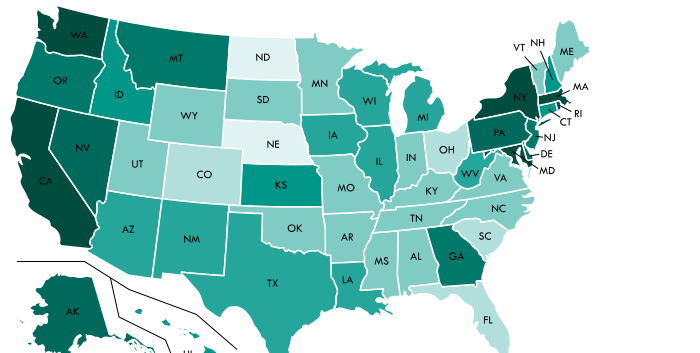
Most common states for security project managers
| Rank | State | Population | # of jobs | Employment/ 1000ppl |
|---|---|---|---|---|
| 1 | District of Columbia | 693,972 | 873 | 126% |
| 2 | Minnesota | 5,576,606 | 2,231 | 40% |
| 3 | Washington | 7,405,743 | 2,857 | 39% |
| 4 | Delaware | 961,939 | 354 | 37% |
| 5 | New Hampshire | 1,342,795 | 483 | 36% |
| 6 | Vermont | 623,657 | 217 | 35% |
| 7 | North Dakota | 755,393 | 255 | 34% |
| 8 | Massachusetts | 6,859,819 | 2,199 | 32% |
| 9 | Nebraska | 1,920,076 | 592 | 31% |
| 10 | Alaska | 739,795 | 227 | 31% |
| 11 | Rhode Island | 1,059,639 | 323 | 30% |
| 12 | Wyoming | 579,315 | 173 | 30% |
| 13 | Virginia | 8,470,020 | 2,446 | 29% |
| 14 | Oregon | 4,142,776 | 1,186 | 29% |
| 15 | Montana | 1,050,493 | 294 | 28% |
| 16 | Illinois | 12,802,023 | 3,516 | 27% |
| 17 | North Carolina | 10,273,419 | 2,772 | 27% |
| 18 | New Jersey | 9,005,644 | 2,363 | 26% |
| 19 | Wisconsin | 5,795,483 | 1,507 | 26% |
| 20 | Iowa | 3,145,711 | 828 | 26% |
Most common cities for security project managers
| Rank | City | # of jobs | Employment/ 1000ppl | Avg. salary |
|---|---|---|---|---|
| 1 | Pleasant Grove | 2 | 5% | $78,510 |
| 2 | San Leandro | 3 | 3% | $122,638 |
| 3 | Livonia | 2 | 2% | $88,385 |
| 4 | Brea | 1 | 2% | $112,410 |
| 5 | Broomfield | 1 | 2% | $72,067 |
| 6 | Atlanta | 4 | 1% | $98,295 |
| 7 | Denver | 4 | 1% | $72,068 |
| 8 | Washington | 4 | 1% | $111,172 |
| 9 | Orlando | 3 | 1% | $74,478 |
| 10 | Arlington | 2 | 1% | $82,408 |
| 11 | Aurora | 2 | 1% | $72,051 |
| 12 | Allen | 1 | 1% | $83,618 |
| 13 | Cambridge | 1 | 1% | $112,961 |
| 14 | Boston | 3 | 0% | $113,120 |
| 15 | Seattle | 2 | 0% | $118,133 |
| 16 | Birmingham | 1 | 0% | $81,394 |
| 17 | Charlotte | 1 | 0% | $75,462 |
| 18 | Chicago | 1 | 0% | $87,661 |
| 19 | Cincinnati | 1 | 0% | $71,611 |
Security Project Manager job outlook: Expert opinions
Our panel of security project manager experts
Heidelberg University
University of Wisconsin - Eau Claire

Swarthmore College
Western Carolina University
Auburn University at Montgomery
Maryville University
Davenport University

University of Kansas
Dr. Trish Berg
Associate Professor of Management, Heidelberg University, Tiffin, OhioHeidelberg University
Business Administration, Management And Operations
What Security Project Manager skills would you recommend for someone trying to advance their career?
Dr. Trish Berg: Daily, project managers create plans, create work schedules, build, and motivate teams, assign, and track work from start to finish, set project setting scopes and budgets, create workflow plans, and define what key performance indicators (KPIs) are which is how they can measure project success. Project managers must be both people focused, and task focused. Successful project managers understand what Sinek calls the power of the why in order to successfully motivate teams towards success.
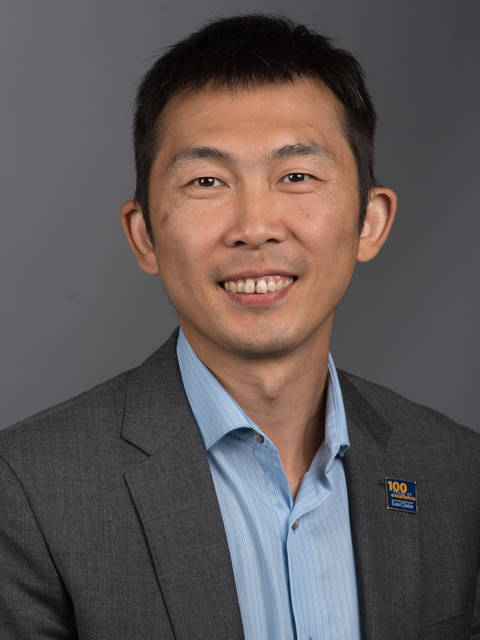
Dr. Longzhu Dong Ph.D.
Assistant ProfessorUniversity of Wisconsin - Eau Claire
Management + Marketing Department
What soft skills should all Security Project Managers possess?
Dr. Longzhu Dong Ph.D.: The world of international business has changed a great deal in the past few years. Due to increased globalization, massive technological advances in online coordination, and the Covid pandemic, the need to develop project managers who can lead fully functioning global virtual teams (GVTs) has never been greater. Indeed, studies show that virtual teams are becoming the norm, and more and more multinational companies rely on GVTs to deal with their day-to-day challenges.
However, leading and working in GVTs poses unique challenges that traditional leadership approaches do not seem suited to tackling well. Such challenges include cross-cultural misunderstandings, lack of trust and spontaneity, poor communication, hard to focus and hold teammates accountable, all of which may result in low productivity. Therefore, to thrive in the international business world today, a manager may need an entirely different set of skills.
Perhaps the most important soft skill is cultural intelligence (CQ). CQ refers to the ability to relate and work effectively across different cultures, triggering a train reaction in GVTs. It first requires people to have an open mindset, which helps them realize that cultural differences are just differences and that every culture has its own way of defining "right" and "wrong." Just as the famous Confucius teaching goes, "all people are the same; only their habits differ." Indeed, when differences are seen as something neutral, the negative consequences of cultural bias can be minimized. CQ can also improve GVT communication effectiveness by better understanding visual and auditory cues such as body language and facial expressions so that GVT members will not form false impressions based on stereotypes. When everyone on your team is ready for open dialogue, GVTs can easily clarify shared team goals and guidelines, set clear expectations of each role, and foster trust along the way.
If CQ is the most important soft skill, then being tech-savvy would be the most important hard skill. Technological advances in online coordination/communication make global virtual teams possible and function well. As of right now, there are a lot of great online tools (e.g., Zoom, Google Meet, etc.) that integrate all key types of communication: conference call, breakout rooms, text messaging, file sharing, and online collaboration. However, simply being able to use various virtual meeting tools well is not enough because there's no one-size-fits-all tool for every team all the time. Being tech-savvy asks managers to steer the digital transformation in their teams promptly. It requires managers to constantly evaluate the emerging new technologies and make sure their choice of the tools "fits" their teams' needs over time, which may include members' network conditions, tool preferences, work style, tech skill levels, and the nature of the task/project.
Working in a global virtual team isn't necessarily only about challenges and lower productivity. It can become a valuable advantage and even build a 24/7 work cycle in teams, with proper training on CQ and technological skills.
What's a good job out of college for Security Project Managers?
Stephen O'Connell: Work that uses your skills and builds new ones. There is a premium on your own flexibility over the couple of years, with a lot of job-market volatility due to uncertain structural impacts of the pandemic.
Will there be an enduring impact of the coronavirus pandemic on Security Project Managers?
Angela Sebby Ph.D.: While jobs may be slower to return to the capacity pre-Covid, the industry and tourism employment will rebound as people still want to travel and explore diverse foods, cultures, and experiences. However, the enduring impact will be the rapid onset of technology that allowed for limited contact with employees and others has become the new norm. Although human interaction is an important aspect of service in the tourism industry, employers have found that they can reduce the number of personal interactions but still deliver an acceptable level of quality service. What would have taken years to adopt, COVID created an amplified adoption.
What soft skills should all Security Project Managers possess?
TeWhan Hahn Ph.D.: Writing skills including email writing, being able to work in teams, and knowing the workplace etiquettes.
Meaghan Goodman Ph.D.
Program Director & Assistant ProfessorMaryville University
Speech-Language Pathology
What's a day at work look like for a Security Project Manager?
Meaghan Goodman Ph.D.: A bachelor's in communication sciences and disorders can prepare you for three different tracks. First, it can prepare you to become a licensed Speech-Language Pathology Assistant (SLPA). This is someone who works under a fully credential speech-language pathologist. Often times, they carryout intervention plans developed by a fully credentialed speech-language pathologist. If graduate school is on your horizon, a bachelor's degree in communication sciences and disorders will prepare you for acceptance into a Speech-Language Pathology program, or an Audiology program. If you are not accepted into a graduate program right away, working as a speech-language pathology assistant (SLPA) is a great way to get experience in the field!
What soft skills should all Security Project Managers possess?
Todd Terry: Graduates as they prepare to enter the workforce should pay particular attention to their ability to communicate with coworkers. This communication could happen through face-to-face interactions, remote meetings with the aid of technology for example, meeting by computer software, written communication through instant messaging, or emails. Also, part of communicating is being a good listener.
Graduates should have good critical thinking skills. They will need to be adaptive and able to analyze data to make good informed decisions.
In today's work environment, working on teams is a regular function. Therefore, employers are looking for the candidate who can professionally interact with other team members, have a positive attitude and a good work ethic.
Will there be an enduring impact of the coronavirus pandemic on Security Project Managers?
Milena Stanislavova Ph.D.: Along with all the obvious negatives, I feel that we were forced to experiment and innovate the way we teach and learn, and it has brought a lot of ingenuity and creativity on the part of both professors and students. This past semester I have seen so much depth of experiences and focus on what really matters, optimization of the amount of facts versus hands on problem solving techniques, and just sheer planning of the time spent in the classroom time on the part of professors. At the same time, students are forced to be more organized and self-sufficient, skills that will serve them well on the job market and beyond. This new and more focused way of teaching and learning, using every instrument in our toolbox and varying the virtual, in-person and hands-on practical will definitely remain after the pandemic is over.