Explore jobs
Find specific jobs
Explore careers
Explore professions
Best companies
Explore companies
Job outlook for senior laboratory specialists in the United States
Are senior laboratory specialist jobs in demand?
Senior laboratory specialist job and salary trends over time
Senior laboratory specialist jobs over time
Senior laboratory specialist job growth rate over time
| Year | # of jobs | % of population |
|---|---|---|
| 2021 | 227 | 0.00% |
| 2020 | 232 | 0.00% |
| 2019 | 232 | 0.00% |
| 2018 | 229 | 0.00% |
| 2017 | 229 | 0.00% |
Average senior laboratory specialist salary over time
Senior laboratory specialist salary by year
| Year | Avg. salary | Hourly rate | % Change |
|---|---|---|---|
| 2026 | $55,556 | $26.71 | +2.8% |
| 2025 | $54,046 | $25.98 | --0.7% |
| 2024 | $54,436 | $26.17 | +2.5% |
| 2023 | $53,084 | $25.52 | +2.0% |
| 2022 | $52,061 | $25.03 | --0.1% |
Senior laboratory specialist jobs by state
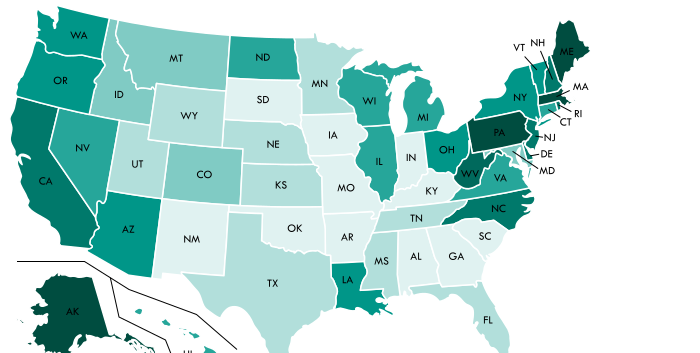
Most common states for senior laboratory specialists
| Rank | State | Population | # of jobs | Employment/ 1000ppl |
|---|---|---|---|---|
| 1 | South Dakota | 869,666 | 176 | 20% |
| 2 | New Hampshire | 1,342,795 | 240 | 18% |
| 3 | District of Columbia | 693,972 | 126 | 18% |
| 4 | Vermont | 623,657 | 112 | 18% |
| 5 | Iowa | 3,145,711 | 549 | 17% |
| 6 | North Dakota | 755,393 | 131 | 17% |
| 7 | Massachusetts | 6,859,819 | 1,128 | 16% |
| 8 | Minnesota | 5,576,606 | 783 | 14% |
| 9 | Alaska | 739,795 | 104 | 14% |
| 10 | Montana | 1,050,493 | 137 | 13% |
| 11 | Wyoming | 579,315 | 76 | 13% |
| 12 | Maryland | 6,052,177 | 731 | 12% |
| 13 | Nebraska | 1,920,076 | 239 | 12% |
| 14 | Delaware | 961,939 | 120 | 12% |
| 15 | Pennsylvania | 12,805,537 | 1,428 | 11% |
| 16 | Washington | 7,405,743 | 779 | 11% |
| 17 | Wisconsin | 5,795,483 | 619 | 11% |
| 18 | Kansas | 2,913,123 | 334 | 11% |
| 19 | Idaho | 1,716,943 | 197 | 11% |
| 20 | Maine | 1,335,907 | 147 | 11% |
Most common cities for senior laboratory specialists
| Rank | City | # of jobs | Employment/ 1000ppl | Avg. salary |
|---|---|---|---|---|
| 1 | Aurora | 11 | 3% | $51,858 |
| 2 | Woburn | 1 | 3% | $70,517 |
| 3 | Boston | 1 | 0% | $70,647 |
| 4 | Los Angeles | 1 | 0% | $60,364 |
Senior Laboratory Specialist job outlook: Expert opinions
Our panel of senior laboratory specialist experts
University of Alabama in Huntsville

Saint Cloud State University
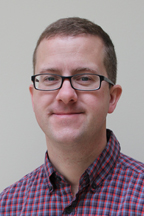
Wenatchee Valley College
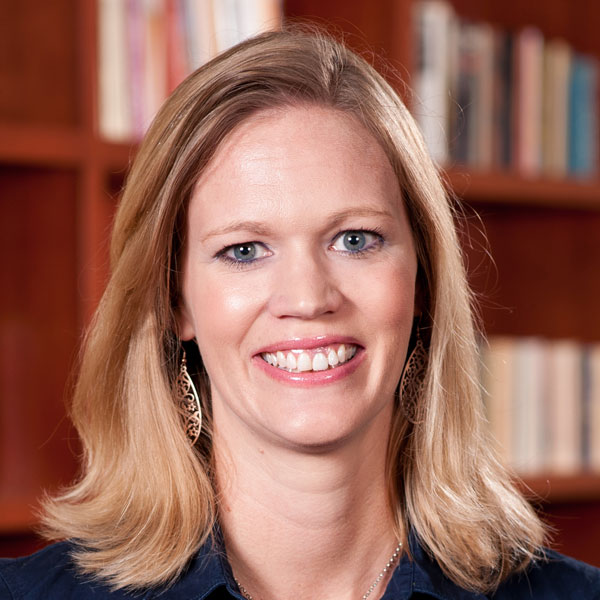
Agnes Scott College
The University of Akron

University of North Carolina at Greensboro

Kettering University
Eastern Kentucky University
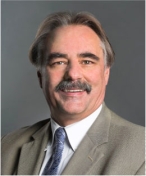
Missouri University of Science and Technology
Palm Beach State College
Southeastern Louisiana University

The University of New Hampshire's Central Science
Dr. Luis Rogelio Cruz-Vera
Associate ProfessorUniversity of Alabama in Huntsville
Department of Biological Sciences
What soft skills should all Senior Laboratory Specialists possess?
Dr. Luis Rogelio Cruz-Vera: Planification.
What hard/technical skills are most important for Senior Laboratory Specialists?
Dr. Luis Rogelio Cruz-Vera: Pipetting, quantitative analysis, computer writing.
Louise Millis
Medical Laboratory Science and Histotechnician Program Director, Associate Professor of BiologySaint Cloud State University
Medical Laboratory Science
What skills will help Senior Laboratory Specialists earn the most?
Louise Millis: -Problem solving gives you the ability to see opportunities, to take on additional tasks or projects
-Careful work: Precision, accuracy, reproducibility
-Ability to work with others
-Work experience with the above and also furthering your education
-Work experience which enhance base knowledge and technical skills
-Educational
-MBA for some positions (depends on the size of the hospital), management
-MS/Ph.D. for some positions
-Depends on the size of the hospital
-Also, needed for an academic position, MS for some, others require PhD
What skills stand out on Senior Laboratory Specialist resumes?
Patrick Tracy: -Good critical-thinking skills
-Good problem-solving skills
-Able to prioritize tasks
-Pay attention to detail
-Take a process from beginning to end
-Maintain focus for periods
Jennifer Larimore Ph.D.
Associate ProfessorAgnes Scott College
Biology and Neuroscience Department
What skills stand out on Senior Laboratory Specialist resumes?
Jennifer Larimore Ph.D.: Animal handling or work with animal model systems, science presentations at the symposium, internships or independent research projects, inquiry-given lab experiences
What's a good job out of college for Senior Laboratory Specialists?
Dr. Ajay Mahajan: Professional areas, such as engineering, medical, law, business, etc., should not see much change except the requirement of new skills that allow them to work with less social interaction. What may change are jobs in some areas such as hospitality, entertainment, transportation, etc., as many of these jobs will be lost to automation. Hence, any job that resists automation should do fine. Certain areas that have to do with climate change, advanced manufacturing, sustainability, health care, etc will do better than others based on the new administration priorities.
What will help Senior Laboratory Specialists increase their earning potential?
Dr. Ajay Mahajan: Anyone that can and has adapted to remote working will do fine. Remote working also comes with the caveat that you have to sometimes work alone, without supervision, make decisions on your own, and yet be a team player. Learning new platforms for meetings, business operations, project management and effective leadership will help in increased earning potential. In engineering, being involved in robotics, automation, sustainability, advanced manufacturing, Industry 4.0, smart systems, cyber-security, biomedical innovation, etc., is a plus.
Will there be an enduring impact of the coronavirus pandemic on Senior Laboratory Specialists?
Nicholas Oberlies Ph.D.: The entire world is affected by COVID. I'm sure that is true for Chemistry and Biochemistry majors. In the short term, it likely means that the students may be behind a semester. In addition, students likely lost opportunities for networking via canceled conferences. While virtual conferences were a nice bandaid, nothing replaces meeting people in person. This is probably especially true for graduate students.
For the long term, however, I believe the world is starting to recognize that science matters. Recently, I just read an article about one of the first biologists (Professor Tom Brock) to study bacteria in hydrothermal vents. He was doing this in the 1960s, and his basic research helped pave the way for the Nobel Prize winning work in the PCR and the life-saving work that is needed for COVID screening. This was an article about a basic scientist but published in USA Today. Not only does the public need to know more about what scientists are doing, I believe that the public seems to have a hunger for such knowledge. So, while the short term might look a little messy and less than ideal, perhaps the long term horizon for science will be improving.
What Senior Laboratory Specialist skills would you recommend for someone trying to advance their career?
Daniel Ludwigsen: Graduates from our programs often find that graduate degrees, masters, or even doctorates, fit into their career trajectories well. If I were advising a graduating senior considering a gap year, I would suggest a certificate program in a relevant field, such as programming, data science, or similar areas. While these incorporate broadly applicable skills as well as valuable disciplinary perspective, these certificate programs often offer credit that can later be applied toward a graduate degree.
What general advice would you give to a Senior Laboratory Specialist?
Dr. Tanea Reed Ph.D.: To a graduate just starting out, I would highly recommend establishing a list of short-term and long-term goals. Think about where they see themselves in the next 5 to 10 years and how they plan to reach them using SMART goals (specific, measurable, achievable, relevant, and time-bound). Additionally, if they have not already done so, they should set up a LinkedIn account as many jobs can be found on that platform. New graduates should plan on making multiple resumes that can be used when applying to different jobs based on the criteria (i.e., skills, academic, etc.). Lastly, I would recommend making a list of their "dream jobs and companies" and research the skills needed to perform the duties of their dream job and learn more about the company itself.
Dr. Rainer Glaser
Professor and ChairMissouri University of Science and Technology
Chemistry Department
What skills stand out on Senior Laboratory Specialist resumes?
Dr. Rainer Glaser: Chemistry competence is key, of course. As a close second, chemists need to demonstrate effective team player competence. Communication skills are essential, in conversation and in writing. Effective collaboration requires highly developed skills to work with team members, peers, and leadership.
What type of skills will young Senior Laboratory Specialists need?
Dr. Alexandra Gorgevska Ph.D.: Graduates [of all ages] will continue to need hands-on skills, the ability to work both in the group and individual settings, and, most importantly, be curious and teachable. Soft skills have taken on greater importance over the years, so we provide ongoing events for outreach, scientific communication, interview preparation, etc., to help provide students with ways to improve and grow their soft skills.
We are seeing scientific communications transitioning from in-person to remote settings, and our students are excelling at rising to the challenges. South Florida has a diverse life science career field, and our students continue to be well prepared to enter the job market and succeed in their career paths.
What experience really stands out on Senior Laboratory Specialist resumes?
Dr. Alexandra Gorgevska Ph.D.: The Palm Beach State College Biotechnology Program is a very hands-on intensive training program that ensures our graduates are well versed in fundamental life science laboratory techniques and sterile/aseptic techniques and instrumentation skills. As part of our program, students can earn two College Credit Certificates along with an A.S. degree that includes an industry internship experience.
We are very fortunate to have an excellent relationship with our business partners who are familiar with our facilities, worked with us for many years, and are aware of the vast instrumentation and hands-on training our students receive. They continue to provide career opportunities for our students and interns.
Mohammad Saadeh Ph.D.
Department HeadSoutheastern Louisiana University
Department of Industrial and Engineering Technology
What technology do you think will become more important and prevalent for Senior Laboratory Specialists in the next 3-5 years?
Mohammad Saadeh Ph.D.: IoT and automation.
How do you envision technology impacting Senior Laboratory Specialists in the next 5 years?
Glen P. Miller: The chemistry field is constantly impacted by advancements in scientific instrumentation, hardware, and software, especially those that cut across adjacent fields like biology and materials science. Job seekers should be well-grounded in current technologies while aware of recent developments and trends.
What experience really stands out on Senior Laboratory Specialist resumes?
Glen P. Miller: Research experiences stand out on a resume, especially those leading to scientific publication in peer-reviewed journals or professional presentations (either poster or oral) at scientific meetings. Internships and/or previous employment in the field also stand out.