Explore jobs
Find specific jobs
Explore careers
Explore professions
Best companies
Explore companies
Job outlook for senior medical laboratory technicians in the United States
Senior medical laboratory technician job and salary trends over time
Senior medical laboratory technician jobs over time
Senior medical laboratory technician job growth rate over time
| Year | # of jobs | % of population |
|---|---|---|
| 2021 | 1,109 | 0.00% |
| 2020 | 1,135 | 0.00% |
| 2019 | 1,134 | 0.00% |
| 2018 | 1,118 | 0.00% |
| 2017 | 1,122 | 0.00% |
Average senior medical laboratory technician salary over time
Senior medical laboratory technician salary by year
| Year | Avg. salary | Hourly rate | % Change |
|---|---|---|---|
| 2026 | $54,289 | $26.10 | +2.8% |
| 2025 | $52,813 | $25.39 | --0.7% |
| 2024 | $53,194 | $25.57 | +2.5% |
| 2023 | $51,873 | $24.94 | +2.0% |
| 2022 | $50,874 | $24.46 | --0.1% |
Senior medical laboratory technician jobs by state
Most common states for senior medical laboratory technicians
| Rank | State | Population | # of jobs | Employment/ 1000ppl |
|---|---|---|---|---|
| 1 | District of Columbia | 693,972 | 216 | 31% |
| 2 | Minnesota | 5,576,606 | 1,552 | 28% |
| 3 | New Mexico | 2,088,070 | 499 | 24% |
| 4 | Idaho | 1,716,943 | 370 | 22% |
| 5 | South Dakota | 869,666 | 187 | 22% |
| 6 | Georgia | 10,429,379 | 2,151 | 21% |
| 7 | Missouri | 6,113,532 | 1,273 | 21% |
| 8 | Delaware | 961,939 | 204 | 21% |
| 9 | Illinois | 12,802,023 | 2,507 | 20% |
| 10 | Kentucky | 4,454,189 | 783 | 18% |
| 11 | Nevada | 2,998,039 | 535 | 18% |
| 12 | West Virginia | 1,815,857 | 335 | 18% |
| 13 | New Hampshire | 1,342,795 | 243 | 18% |
| 14 | Alaska | 739,795 | 136 | 18% |
| 15 | Virginia | 8,470,020 | 1,474 | 17% |
| 16 | Arkansas | 3,004,279 | 507 | 17% |
| 17 | California | 39,536,653 | 6,370 | 16% |
| 18 | Massachusetts | 6,859,819 | 1,097 | 16% |
| 19 | North Dakota | 755,393 | 119 | 16% |
| 20 | Vermont | 623,657 | 100 | 16% |
Most common cities for senior medical laboratory technicians
| Rank | City | # of jobs | Employment/ 1000ppl | Avg. salary |
|---|---|---|---|---|
| 1 | Boston | 1 | 0% | $69,779 |
Senior Medical Laboratory Technician job outlook: Expert opinions
Our panel of senior medical laboratory technician experts
Northern Michigan University
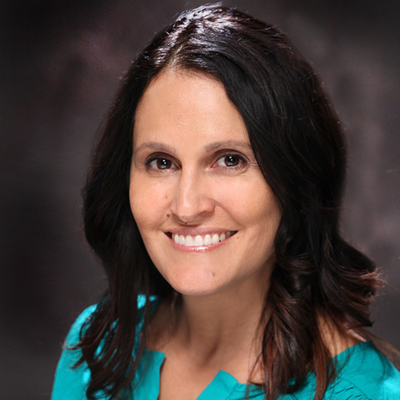
Weber State University
University of Alabama in Huntsville
Medical University of South Carolina

Saint Cloud State University

Wenatchee Valley College
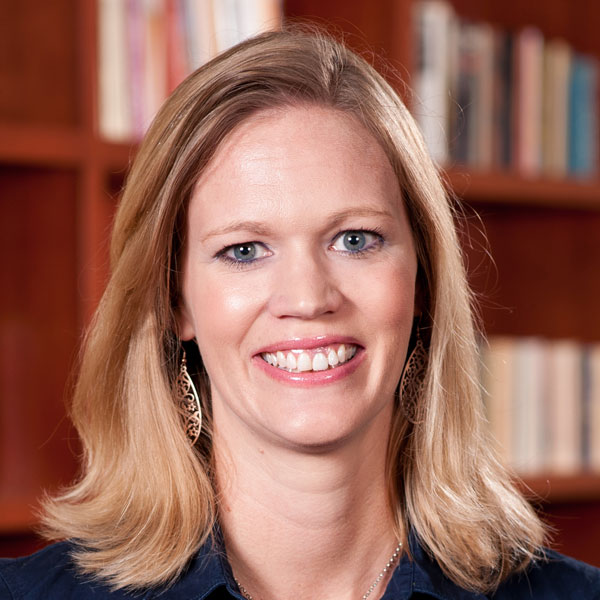
Agnes Scott College
Palm Beach State College
Southeastern Louisiana University

The University of New Hampshire's Central Science
Martin Renaldi MT (ASCP), MPA
Assistant Professor / MLS Program DirectorNorthern Michigan University
Allied Health Diagnostic, Intervention, And Treatment Professions
What general advice would you give to a Senior Medical Laboratory Technician?
Martin Renaldi MT (ASCP), MPA: Experience. I have found through my time in the realm that an experienced lab tech is going to be highly sought after and henceforth will have optimal pay opportunities. As the word implies, experience can only be achieved through 'time in the lab' which means you have to put in your time to gather that resume boosting element, experience. Once that happens, then even more doors open up in the profession.
What will help Senior Medical Laboratory Technicians increase their earning potential?
Martin Renaldi MT (ASCP), MPA: I would highly recommend that the newly graduated lab tech does not limit themself to a specific location or a specific vocation. The places to work and the types of jobs available are nearly limitless. If one thinks outside of the box, outside of the mainstream lab tech opportunities, they'll find a whole host of other intriguing possibilities. So, do not limit yourself, the world is your oyster, .......so to speak.
Dr. Janice Thomas
Professor and Program DirectorWeber State University
Department of Medical Laboratory Sciences
What general advice would you give to a Senior Medical Laboratory Technician?
Dr. Janice Thomas: Medical Laboratory Technicians (MLTs) are an integral part of the healthcare team as seventy percent (70%) of diagnoses come from laboratory results. On a day-to-day basis, the duties of an MLT can include collecting and analyzing samples, maintaining laboratory equipment, and accurately recording results for medical providers to review and consider when diagnosing patients.
What Senior Medical Laboratory Technician skills would you recommend for someone trying to advance their career?
Dr. Janice Thomas: Entering the field of Medical Laboratory Sciences is a wise choice, particularly now, due to the growing demand for healthcare services and the increasing technology in medical diagnostics. With an aging population and the continuous development of innovative medical tests and procedures, the need for skilled MLTs is more pronounced than ever. This profession not only offers job stability and opportunities for advancement but also the satisfaction of contributing to patient care and the well-being of the community.
What will help Senior Medical Laboratory Technicians increase their earning potential?
Dr. Janice Thomas: Many MLTs appreciate the variety and dynamic nature of the work. They welcome the opportunity to engage with cutting-edge technology, and the sense of fulfillment that comes from playing an important role in patient care. The profession also offers a good balance of teamwork and individual responsibilities, along with diverse disciplines and career paths. But, like any profession, there are challenges. Some may find the work mentally demanding and stressful, particularly when dealing with urgent cases or critical results. Others may prefer more patient contact than the role typically provides. It's also important to note that the profession requires meticulous attention to detail and adherence to strict protocols, which can be taxing for some individuals.
Dr. Luis Rogelio Cruz-Vera
Associate ProfessorUniversity of Alabama in Huntsville
Department of Biological Sciences
What skills stand out on Senior Medical Laboratory Technician resumes?
Dr. Luis Rogelio Cruz-Vera: Good standing on biochemical concepts.
What soft skills should all Senior Medical Laboratory Technicians possess?
Dr. Luis Rogelio Cruz-Vera: Planification.
What hard/technical skills are most important for Senior Medical Laboratory Technicians?
Dr. Luis Rogelio Cruz-Vera: Pipetting, quantitative analysis, computer writing.
What skills will help Senior Medical Laboratory Technicians earn the most?
Dr. Luis Rogelio Cruz-Vera: Commitment.
Helen Martin
Associate Professor, Division DirectorMedical University of South Carolina
Division of Physician Assistant Studies
What soft skills should all Senior Medical Laboratory Technicians possess?
Helen Martin: Computer skills within a hospital system.
What skills will help Senior Medical Laboratory Technicians earn the most?
Helen Martin: 4-year degree in laboratory science.
Louise Millis
Medical Laboratory Science and Histotechnician Program Director, Associate Professor of BiologySaint Cloud State University
Medical Laboratory Science
What skills stand out on Senior Medical Laboratory Technician resumes?
Louise Millis: Note, we offer a four-year degree, so these individuals are Medical Laboratory Scientists (MLS). The Technician is the two-year level.
-Oral and written communication with others in the lab, lab profession (doctors)
-Ability to work alone or in a group (teamwork)
-Ability to follow directions
-Problem solving
-Careful work: Precision, accuracy, reproducibility
-Ask questions when need help: Know when to ask for help, the data matters, ask to confirm a test result if in question, before sending out
-Ethical
-Time management
-Self-awareness of strengths and weaknesses
-Confidence without arrogance
-Leadership
What soft skills should all Senior Medical Laboratory Technicians possess?
Louise Millis: Understanding that a patient's sample is from a loved one. Results matter. They need to be perfect
What hard/technical skills are most important for Senior Medical Laboratory Technicians?
Louise Millis: -Careful work: Precision, accuracy, reproducibility
-Knowledge of quality control, ability to recognize when a test result looks wrong and what to do about it
What skills will help Senior Medical Laboratory Technicians earn the most?
Louise Millis: -Problem solving gives you the ability to see opportunities, to take on additional tasks or projects
-Careful work: Precision, accuracy, reproducibility
-Ability to work with others
-Work experience with the above and also furthering your education
-Work experience which enhance base knowledge and technical skills
-Educational
-MBA for some positions (depends on the size of the hospital), management
-MS/Ph.D. for some positions
-Depends on the size of the hospital
-Also, needed for an academic position, MS for some, others require PhD
What skills stand out on Senior Medical Laboratory Technician resumes?
Patrick Tracy: -Good critical-thinking skills
-Good problem-solving skills
-Able to prioritize tasks
-Pay attention to detail
-Take a process from beginning to end
-Maintain focus for periods
What soft skills should all Senior Medical Laboratory Technicians possess?
Patrick Tracy: -Work well with a team
-Work well alone
-Communicate calmly and clearly
What hard/technical skills are most important for Senior Medical Laboratory Technicians?
Patrick Tracy: -Ability to work with and repair instruments and machinery
What skills will help Senior Medical Laboratory Technicians earn the most?
Patrick Tracy: -I tend to think technical jobs like this to be fairly pegged to a salary scale rather than negotiable.
-Experience in most, if not all, clinical lab areas, but especially in blood bank and microbiology
Jennifer Larimore Ph.D.
Associate ProfessorAgnes Scott College
Biology and Neuroscience Department
What skills stand out on Senior Medical Laboratory Technician resumes?
Jennifer Larimore Ph.D.: Animal handling or work with animal model systems, science presentations at the symposium, internships or independent research projects, inquiry-given lab experiences
What soft skills should all Senior Medical Laboratory Technicians possess?
Jennifer Larimore Ph.D.: Teamwork, leadership, working with a diverse team.
What hard/technical skills are most important for Senior Medical Laboratory Technicians?
Jennifer Larimore Ph.D.: Ability to run PCRs, ability to run gel electrophoresis, statistical analysis
What skills will help Senior Medical Laboratory Technicians earn the most?
Jennifer Larimore Ph.D.: A combination of the skills listed in 1-3.
What type of skills will young Senior Medical Laboratory Technicians need?
Dr. Alexandra Gorgevska Ph.D.: Graduates [of all ages] will continue to need hands-on skills, the ability to work both in the group and individual settings, and, most importantly, be curious and teachable. Soft skills have taken on greater importance over the years, so we provide ongoing events for outreach, scientific communication, interview preparation, etc., to help provide students with ways to improve and grow their soft skills.
We are seeing scientific communications transitioning from in-person to remote settings, and our students are excelling at rising to the challenges. South Florida has a diverse life science career field, and our students continue to be well prepared to enter the job market and succeed in their career paths.
What experience really stands out on Senior Medical Laboratory Technician resumes?
Dr. Alexandra Gorgevska Ph.D.: The Palm Beach State College Biotechnology Program is a very hands-on intensive training program that ensures our graduates are well versed in fundamental life science laboratory techniques and sterile/aseptic techniques and instrumentation skills. As part of our program, students can earn two College Credit Certificates along with an A.S. degree that includes an industry internship experience.
We are very fortunate to have an excellent relationship with our business partners who are familiar with our facilities, worked with us for many years, and are aware of the vast instrumentation and hands-on training our students receive. They continue to provide career opportunities for our students and interns.
Mohammad Saadeh Ph.D.
Department HeadSoutheastern Louisiana University
Department of Industrial and Engineering Technology
What technology do you think will become more important and prevalent for Senior Medical Laboratory Technicians in the next 3-5 years?
Mohammad Saadeh Ph.D.: IoT and automation.
Will there be an enduring impact of the coronavirus pandemic on Senior Medical Laboratory Technicians?
Glen P. Miller: Yes, there will be many enduring impacts. Office spaces and buildings will be devalued somewhat, while remote work and virtual meetings have become and will remain important. In chemistry and tangential fields, there will always be a need for in-person work in specialized laboratories, but the manner in which we communicate results internally and externally has changed. There will be less emphasis on in-person communication and a greater emphasis on remote and electronic communication, including email and video reports/presentations. Business travel will drop while skills that enable effective electronic communication will play an even larger role than they already do. Writing skills, including but not limited to technical writing, will become an increasingly valued characteristic of top employees. An ability to speak in a clear, articulate manner will also be prized. None of this, however, supersedes the need for graduates with a robust background in chemistry and a strong work ethic to match.