Explore jobs
Find specific jobs
Explore careers
Explore professions
Best companies
Explore companies
Job outlook for tax interns in the United States
Tax internship job growth summary. After extensive research, interviews, and analysis, Zippia's data science team found that:
The projected tax internship job growth rate is 6% from 2018-2028.
About 81,800 new jobs for tax interns are projected over the next decade.
Tax internship salaries have increased 21% for tax interns in the last 5 years.
There are over 42,630 tax interns currently employed in the United States.
There are 71,991 active tax internship job openings in the US.
The average tax internship salary is $46,283.
Are tax internship jobs in demand?
Tax internship job and salary trends over time
Tax internship jobs over time
Tax internship job growth rate over time
| Year | # of jobs | % of population |
|---|---|---|
| 2021 | 42,630 | 0.01% |
| 2020 | 36,118 | 0.01% |
| 2019 | 37,368 | 0.01% |
| 2018 | 37,477 | 0.01% |
| 2017 | 37,386 | 0.01% |
Average tax internship salary over time
Tax internship salary by year
| Year | Avg. salary | Hourly rate | % Change |
|---|---|---|---|
| 2026 | $46,283 | $22.25 | +2.8% |
| 2025 | $45,008 | $21.64 | +9.4% |
| 2024 | $41,153 | $19.79 | +1.7% |
| 2023 | $40,464 | $19.45 | +6.0% |
| 2022 | $38,186 | $18.36 | +0.3% |
Tax internship jobs by state
Most common states for tax interns
| Rank | State | Population | # of jobs | Employment/ 1000ppl |
|---|---|---|---|---|
| 1 | District of Columbia | 693,972 | 124 | 18% |
| 2 | Connecticut | 3,588,184 | 277 | 8% |
| 3 | Iowa | 3,145,711 | 260 | 8% |
| 4 | Rhode Island | 1,059,639 | 79 | 7% |
| 5 | Delaware | 961,939 | 71 | 7% |
| 6 | Vermont | 623,657 | 37 | 6% |
| 7 | Illinois | 12,802,023 | 659 | 5% |
| 8 | Massachusetts | 6,859,819 | 355 | 5% |
| 9 | Washington | 7,405,743 | 343 | 5% |
| 10 | Missouri | 6,113,532 | 302 | 5% |
| 11 | Minnesota | 5,576,606 | 286 | 5% |
| 12 | Colorado | 5,607,154 | 268 | 5% |
| 13 | Wisconsin | 5,795,483 | 261 | 5% |
| 14 | Utah | 3,101,833 | 147 | 5% |
| 15 | Montana | 1,050,493 | 51 | 5% |
| 16 | Alaska | 739,795 | 35 | 5% |
| 17 | California | 39,536,653 | 1,750 | 4% |
| 18 | Oregon | 4,142,776 | 181 | 4% |
| 19 | Idaho | 1,716,943 | 77 | 4% |
| 20 | New Hampshire | 1,342,795 | 59 | 4% |
Most common cities for tax interns
| Rank | City | # of jobs | Employment/ 1000ppl | Avg. salary |
|---|---|---|---|---|
| 1 | Hartford | 6 | 5% | $61,927 |
| 2 | Atlanta | 18 | 4% | $46,891 |
| 3 | Stamford | 5 | 4% | $61,224 |
| 4 | Costa Mesa | 4 | 4% | $47,136 |
| 5 | Grand Rapids | 5 | 3% | $41,256 |
| 6 | Boston | 14 | 2% | $53,073 |
| 7 | Detroit | 14 | 2% | $42,178 |
| 8 | Minneapolis | 7 | 2% | $45,712 |
| 9 | Tampa | 6 | 2% | $41,836 |
| 10 | Irvine | 5 | 2% | $47,097 |
| 11 | Chicago | 17 | 1% | $41,031 |
| 12 | San Francisco | 13 | 1% | $51,916 |
| 13 | San Jose | 9 | 1% | $51,443 |
| 14 | Baltimore | 8 | 1% | $42,547 |
| 15 | Denver | 8 | 1% | $48,125 |
| 16 | San Diego | 8 | 1% | $46,352 |
| 17 | Miami | 6 | 1% | $42,133 |
| 18 | Sacramento | 5 | 1% | $51,460 |
| 19 | Los Angeles | 13 | 0% | $47,582 |
| 20 | Phoenix | 5 | 0% | $38,923 |
Tax Internship job outlook: Expert opinions
Our panel of tax internship experts
Gonzaga University
The University of Texas at Arlington
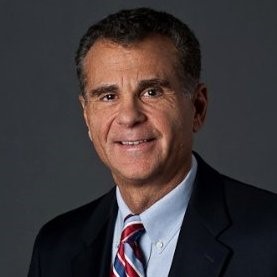
Fairleigh Dickinson University
What general advice would you give to a Tax Internship?
Andrew Brajcich: Tax technical skills will always be important. But now those are just table stakes. To be a value-adding advisor to your client or team, you need technological skills including some coding and database management skills. And it has to be more than Excel. I don’t care if it’s exposure to Python or SQL or Tableau or Alteryx or something else. You need to understand how technologies work because they will change but the fundamental concepts behind the tools remain.
What Tax Internship skills would you recommend for someone trying to advance their career?
Andrew Brajcich: Ask yourself, “What can I do to make the job of the person above me easier.” That should be your guiding light. If you approach every workday with that, you’ll soon find yourself on better clients, working with better teams, and moving up in the organization.
What will help Tax Interns increase their earning potential?
Andrew Brajcich: 1) Be open to anything. You might be surprised at what you discover. 2) Be nimble. Most career paths are a zig zag. Few are direct. 3) Learn how to leverage AI without being over reliant. In tax, it has a long ways to go so hop on for the ride but double check every aspect of the work product. You can learn with it. And of course get permission before using any tools.
What general advice would you give to a Tax Internship?
Kenton Klaus: As noted above, the best way to maximize salary potential is to quickly narrow down the areas of tax where the graduate student can separate themselves from other candidates. If the graduate student did his or her homework before finishing their graduate studies, they will be able to demonstrate to employers that they have a deeper knowledge of the technical areas in which they have an interest, along with the applicable technology.
What Tax Internship skills would you recommend for someone trying to advance their career?
Kenton Klaus: Taxation is a very broad discipline, so it's important for a new tax professional to understand all the opportunities available for them to use their graduate degree. In some cases, graduate students have already been in the workforce, and have specific plans to return to a certain area of practice. However, many students have not explored the available opportunities to see which line up best with their interests and skills. I encourage graduate students to explore the market before they graduate, reach out to alumni who work in different areas of the tax profession, and speak with the professors for the courses that most interested them.
What will help Tax Interns increase their earning potential?
Kenton Klaus: Taxation is a very broad discipline, so it's important for a new tax professional to understand all the opportunities available for them to use their graduate degree. In some cases, graduate students have already been in the workforce, and have specific plans to return to a certain area of practice. However, many students have not explored the available opportunities to see which line up best with their interests and skills. I encourage graduate students to explore the market before they graduate, reach out to alumni who work in different areas of the tax profession, and speak with the professors for the courses that most interested them.
What general advice would you give to a Tax Internship?
Dr. J. Klaus Ph.D., CPA (KY): Choosing a career in accounting today is particularly appealing due to the strong demand for skilled professionals in the field. Accounting stands out for its stability, offering a secure and reliable career path. The diversity within the profession, including areas like tax accounting and financial analysis, provides individuals with flexibility to align their work with their specific interests. With a global relevance, accountants are in high demand internationally. The current technological advancements have streamlined routine tasks, allowing professionals to focus on more strategic aspects of their roles. Pursuing well-regarded certifications, such as the CPA designation, ensures continuous learning and opens avenues for career advancement. Additionally, the flexibility for remote work and potential for entrepreneurial ventures make accounting a highly sought-after and promising choice in response to the prevalent demand for skilled professionals.
What Tax Internship skills would you recommend for someone trying to advance their career?
Dr. J. Klaus Ph.D., CPA (KY): Some individuals may find the work routine and meticulous, as attention to detail is paramount in accounting. Meeting deadlines, especially during tax season, can lead to periods of heightened stress. Additionally, the demanding nature of staying abreast of ever-changing tax laws and regulations can be seen as both a positive challenge for those who enjoy continuous learning and a potential source of stress for others. Overall, while accounting provides stability and numerous rewarding aspects, it also requires a commitment to precision and adaptability to navigate its challenges.
What will help Tax Interns increase their earning potential?
Dr. J. Klaus Ph.D., CPA (KY): Tax accountants hold a pivotal role in managing financial records, ensuring tax compliance, and offering strategic financial guidance. Their daily activities encompass preparing tax returns, conducting financial analyses, and staying abreast of dynamic tax regulations. Recent graduates embark on a fulfilling journey, starting with foundational tasks and progressing through training, collaboration with experienced professionals, and client engagement. This profession offers continuous learning opportunities, with many aspiring to attain certifications like the CPA designation. Ultimately, becoming a tax accountant is not only rewarding but also crucial in contributing to financial transparency, efficiency, and compliance for individuals and businesses alike.
Will there be an enduring impact of the coronavirus pandemic on Tax Interns?
Patrick Cozza: Certain sectors of the US economy will continue to struggle returning to pre COVID levels of productivity, namely the service industries of hotels, transportation, restaurants, etc. So those graduates looking for careers in those industries may have difficulties. Fairleigh Dickinson's Hotel School is one of the top ten in the country, so that should help students in terms of prominence. Students should also not take for granted Zooming that exists today; I fully expect businesses to continue to utilize this technology post COVID so they should understand the protocols of professionalism when Zooming. Students may be more inclined to consider jobs which allow for a flexible work schedule, permitting them to work from home as they have gotten used to that environment. This would open up opportunities beyond their geographic reach.
What certifications/licenses/courses can have the biggest impact for Tax Interns?
Patrick Cozza: I teach in the wealth management program at Fairleigh Dickinson (FDU), and in that field achieving the CFP (certified financial planner) designation would be critical to a successful career in wealth management. Fortunately, FDU's wealth management program is fully compliant with the requirements of the CFP Board which is a great first step. Upon graduating with a concentration in wealth management, a student can immediately sit for the CFP exam, then supplement that with practical training in wealth management. Other wealth management designations around the Series licenses which permit the sale of wealth management products would be helpful. Outside of that, any field which provides a level of technical rather than general expertise would be beneficial.
What will help Tax Interns increase their earning potential?
Patrick Cozza: Again, as mentioned above, achievement of the CFP designation is the single greatest way you can increase your earning potential in the field of wealth management.